 Add to Chrome
 Add to Firefox
 Add to Edge
A Resilience-as-a-Service assessment framework for coordinated disruption response in interdependent urban transit systems
Jun 07, 2026
Urban public transport disruptions require rapid response strategies, yet existing studies rarely provide a decision support framework to compare alternative disruption response solutions using a common set of dynamic, passenger, operator, and environment oriented indicators. This paper proposes a KPI-driven, time-indexed framework to assess the resilience of disruption response solutions in urban transit systems. The framework combines an optimization model with a behavioral evaluation in agent-based simulation. It also underlays the secondary service degradation induced on helper lines when in-service vehicles are withdrawn to support the disrupted corridor. Rather than treating resilience as a single score, it evaluates complementary dimensions including vulnerability, adaptability, robustness, resilience loss, responsiveness, cost-based performance, emissions, and equity. The framework is implemented for the RER B transit line in the Ile-de-France (Paris) network. Results show that the coordinated strategy provides the most balanced resilience profile, combining high service continuity with lower total disruption cost than single mode alternatives, while also improving equity and maintaining competitive environmental performance. Sensitivity analysis further identifies the disruption conditions under which coordinated multimodal response is most valuable.

A methodological framework for Resilience as a Service (RaaS) in multimodal urban transportation networks
Aug 30, 2024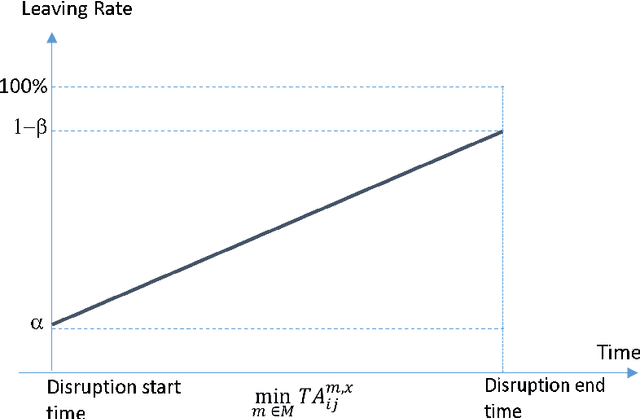
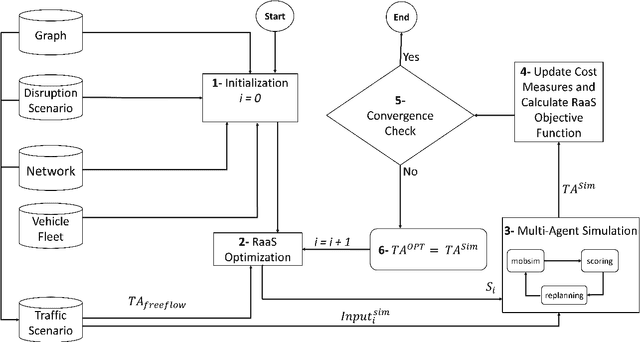
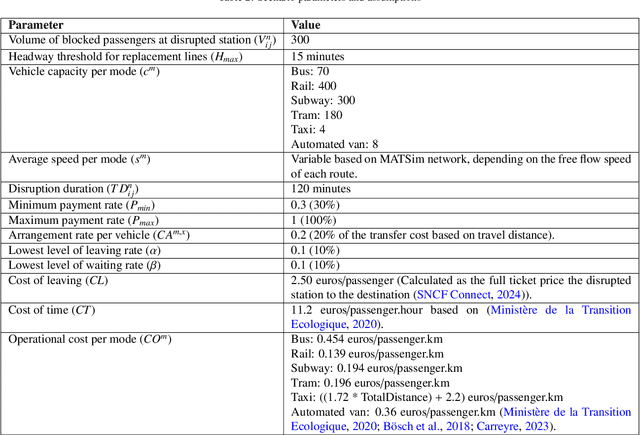
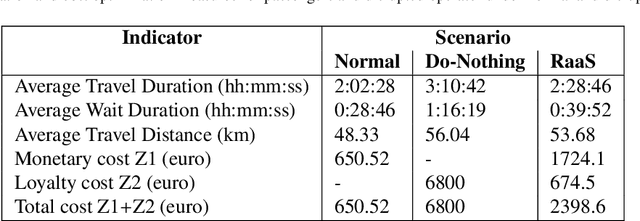
Public transportation systems are experiencing an increase in commuter traffic. This increase underscores the need for resilience strategies to manage unexpected service disruptions, ensuring rapid and effective responses that minimize adverse effects on stakeholders and enhance the system's ability to maintain essential functions and recover quickly. This study aims to explore the management of public transport disruptions through resilience as a service (RaaS) strategies, developing an optimization model to effectively allocate resources and minimize the cost for operators and passengers. The proposed model includes multiple transportation options, such as buses, taxis, and automated vans, and evaluates them as bridging alternatives to rail-disrupted services based on factors such as their availability, capacity, speed, and proximity to the disrupted station. This ensures that the most suitable vehicles are deployed to maintain service continuity. Applied to a case study in the Ile de France region, Paris and suburbs, complemented by a microscopic simulation, the model is compared to existing solutions such as bus bridging and reserve fleets. The results highlight the model's performance in minimizing costs and enhancing stakeholder satisfaction, optimizing transport management during disruptions.