 Add to Chrome
 Add to Firefox
 Add to Edge
High-dimensional Regret Minimization
Dec 30, 2025
Multi-criteria decision making in large databases is very important in real world applications. Recently, an interactive query has been studied extensively in the database literature with the advantage of both the top-k query (with limited output size) and the skyline query (which does not require users to explicitly specify their preference function). This approach iteratively asks the user to select the one preferred within a set of options. Based on rounds of feedback, the query learns the implicit preference and returns the most favorable as a recommendation. However, many modern applications in areas like housing or financial product markets feature datasets with hundreds of attributes. Existing interactive algorithms either fail to scale or require excessive user interactions (often exceeding 1000 rounds). Motivated by this, we propose FHDR (Fast High-Dimensional Reduction), a novel framework that takes less than 0.01s with fewer than 30 rounds of interaction. It is considered a breakthrough in the field of interactive queries since most, if not all, existing studies are not scalable to high-dimensional datasets. Extensive experiments demonstrate that FHDR outperforms the best-known algorithms by at least an order of magnitude in execution time and up to several orders of magnitude in terms of the number of interactions required, establishing a new state of the art for scalable interactive regret minimization.

Multimodal Content Analysis for Effective Advertisements on YouTube
Sep 12, 2017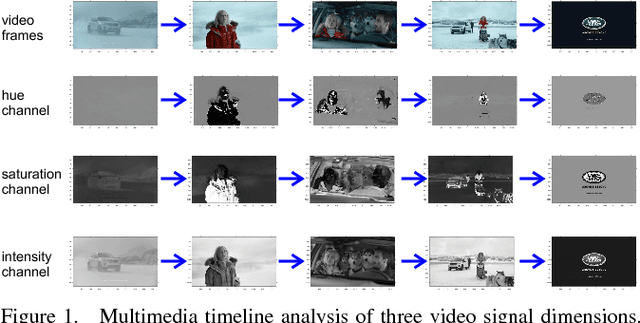
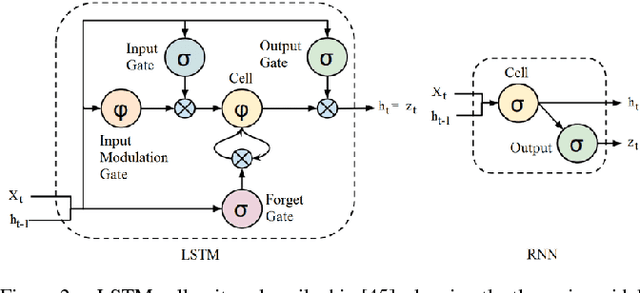
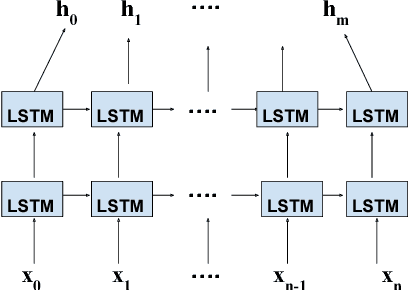
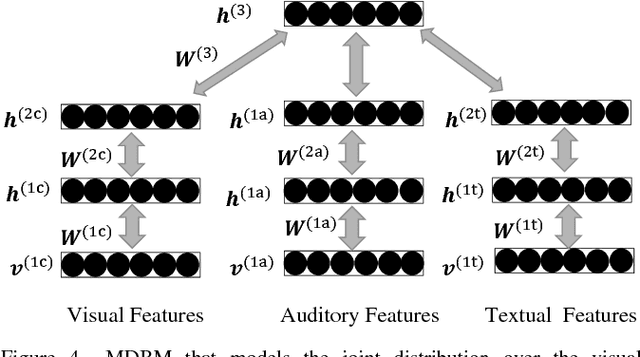
The rapid advances in e-commerce and Web 2.0 technologies have greatly increased the impact of commercial advertisements on the general public. As a key enabling technology, a multitude of recommender systems exists which analyzes user features and browsing patterns to recommend appealing advertisements to users. In this work, we seek to study the characteristics or attributes that characterize an effective advertisement and recommend a useful set of features to aid the designing and production processes of commercial advertisements. We analyze the temporal patterns from multimedia content of advertisement videos including auditory, visual and textual components, and study their individual roles and synergies in the success of an advertisement. The objective of this work is then to measure the effectiveness of an advertisement, and to recommend a useful set of features to advertisement designers to make it more successful and approachable to users. Our proposed framework employs the signal processing technique of cross modality feature learning where data streams from different components are employed to train separate neural network models and are then fused together to learn a shared representation. Subsequently, a neural network model trained on this joint feature embedding representation is utilized as a classifier to predict advertisement effectiveness. We validate our approach using subjective ratings from a dedicated user study, the sentiment strength of online viewer comments, and a viewer opinion metric of the ratio of the Likes and Views received by each advertisement from an online platform.