 Add to Chrome
 Add to Firefox
 Add to Edge
End-to-end Ensemble-based Feature Selection for Paralinguistics Tasks
Oct 28, 2022
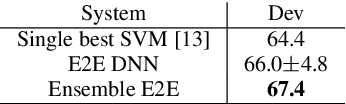
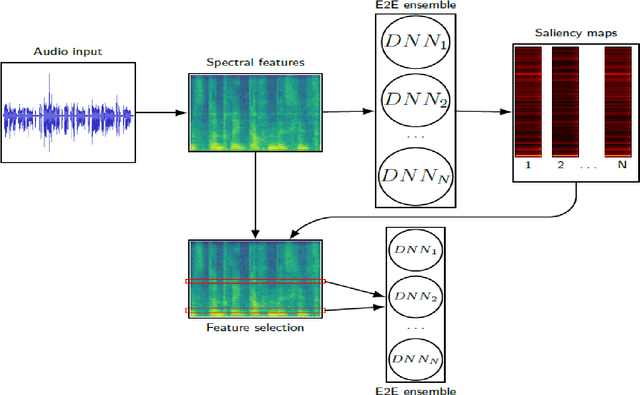
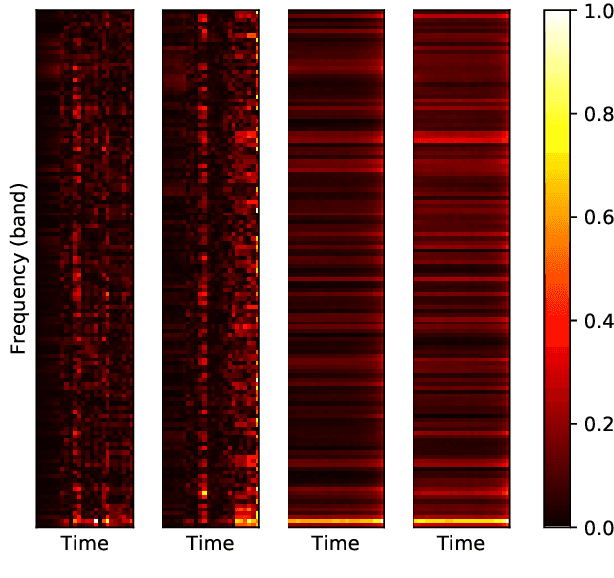
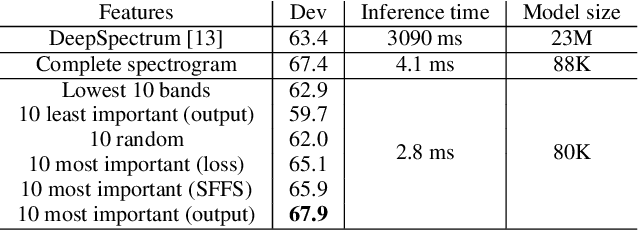
The events of recent years have highlighted the importance of telemedicine solutions which could potentially allow remote treatment and diagnosis. Relatedly, Computational Paralinguistics, a unique subfield of Speech Processing, aims to extract information about the speaker and form an important part of telemedicine applications. In this work, we focus on two paralinguistic problems: mask detection and breathing state prediction. Solutions developed for these tasks could be invaluable and have the potential to help monitor and limit the spread of a virus like COVID-19. The current state-of-the-art methods proposed for these tasks are ensembles based on deep neural networks like ResNets in conjunction with feature engineering. Although these ensembles can achieve high accuracy, they also have a large footprint and require substantial computational power reducing portability to devices with limited resources. These drawbacks also mean that the previously proposed solutions are infeasible to be used in a telemedicine system due to their size and speed. On the other hand, employing lighter feature-engineered systems can be laborious and add further complexity making them difficult to create a deployable system quickly. This work proposes an ensemble-based automatic feature selection method to enable the development of fast and memory-efficient systems. In particular, we propose an output-gradient-based method to discover essential features using large, well-performing ensembles before training a smaller one. In our experiments, we observed considerable (25-32%) reductions in inference times using neural network ensembles based on output-gradient-based features. Our method offers a simple way to increase the speed of the system and enable real-time usage while maintaining competitive results with larger-footprint ensemble using all spectral features.

Comparison and Analysis of New Curriculum Criteria for End-to-End ASR
Aug 10, 2022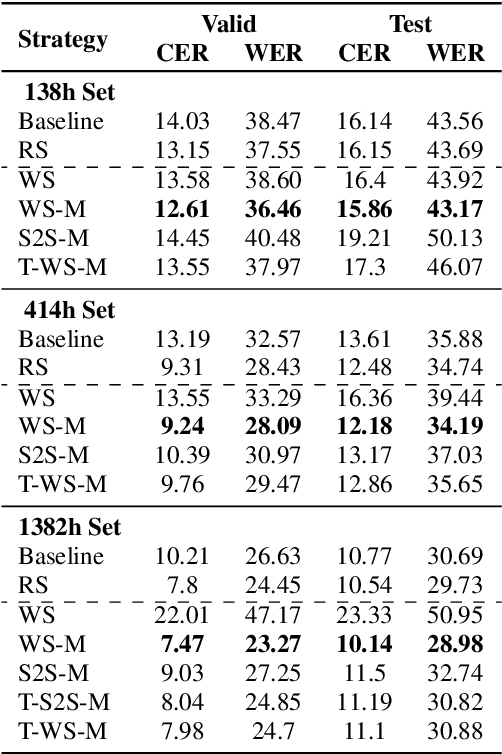
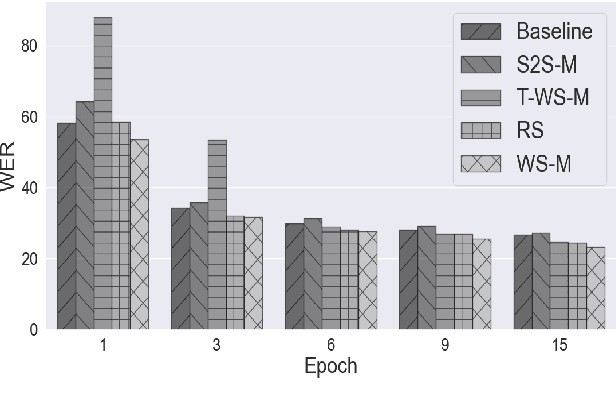
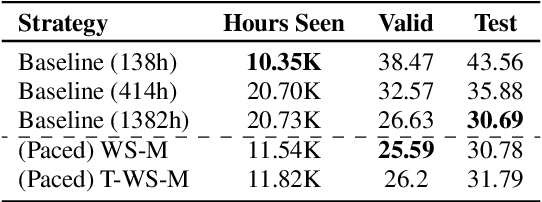
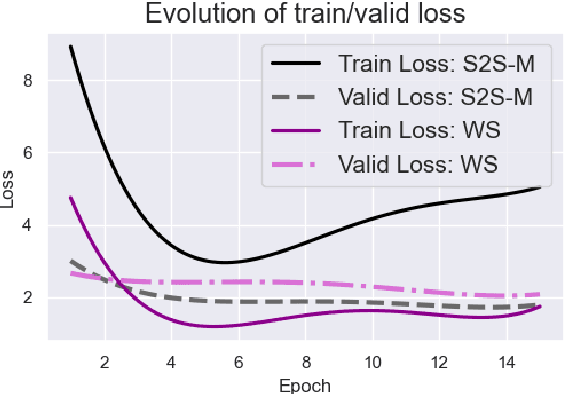
It is common knowledge that the quantity and quality of the training data play a significant role in the creation of a good machine learning model. In this paper, we take it one step further and demonstrate that the way the training examples are arranged is also of crucial importance. Curriculum Learning is built on the observation that organized and structured assimilation of knowledge has the ability to enable faster training and better comprehension. When humans learn to speak, they first try to utter basic phones and then gradually move towards more complex structures such as words and sentences. This methodology is known as Curriculum Learning, and we employ it in the context of Automatic Speech Recognition. We hypothesize that end-to-end models can achieve better performance when provided with an organized training set consisting of examples that exhibit an increasing level of difficulty (i.e. a curriculum). To impose structure on the training set and to define the notion of an easy example, we explored multiple scoring functions that either use feedback from an external neural network or incorporate feedback from the model itself. Empirical results show that with different curriculums we can balance the training times and the network's performance.
Finnish Parliament ASR corpus - Analysis, benchmarks and statistics
Mar 28, 2022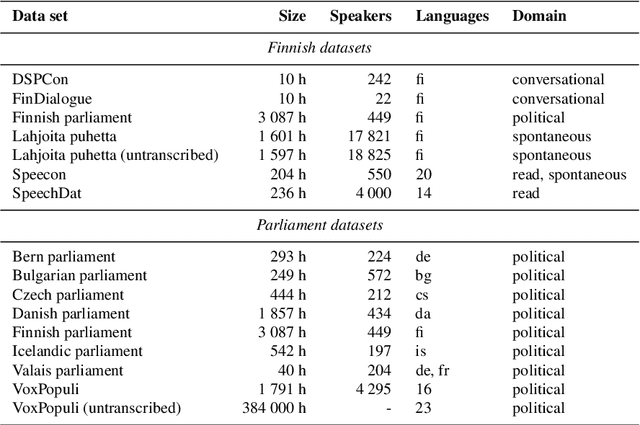
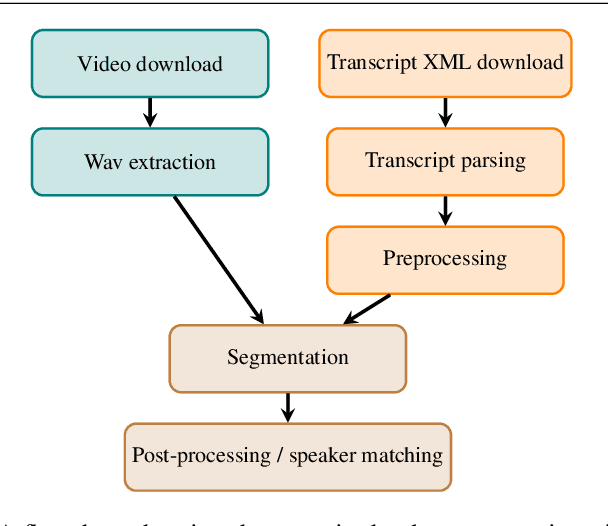

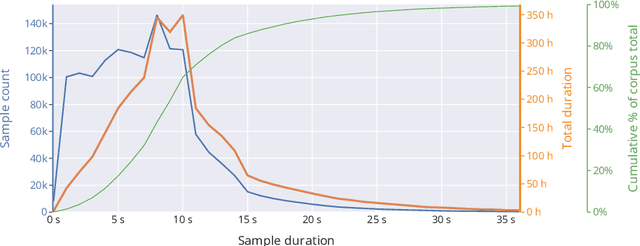
Public sources like parliament meeting recordings and transcripts provide ever-growing material for the training and evaluation of automatic speech recognition (ASR) systems. In this paper, we publish and analyse the Finnish parliament ASR corpus, the largest publicly available collection of manually transcribed speech data for Finnish with over 3000 hours of speech and 449 speakers for which it provides rich demographic metadata. This corpus builds on earlier initial work, and as a result the corpus has a natural split into two training subsets from two periods of time. Similarly, there are two official, corrected test sets covering different times, setting an ASR task with longitudinal distribution-shift characteristics. An official development set is also provided. We develop a complete Kaldi-based data preparation pipeline, and hidden Markov model (HMM), hybrid deep neural network (HMM-DNN) and attention-based encoder-decoder (AED) ASR recipes. We set benchmarks on the official test sets, as well as multiple other recently used test sets. Both temporal corpus subsets are already large, and we observe that beyond their scale, ASR performance on the official test sets plateaus, whereas other domains benefit from added data. The HMM-DNN and AED approaches are compared in a carefully matched equal data setting, with the HMM-DNN system consistently performing better. Finally, the variation of the ASR accuracy is compared between the speaker categories available in the parliament metadata to detect potential biases based on factors such as gender, age, and education.
Lahjoita puhetta -- a large-scale corpus of spoken Finnish with some benchmarks
Mar 24, 2022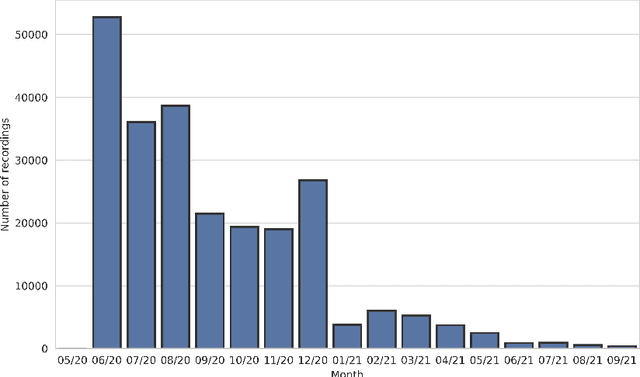
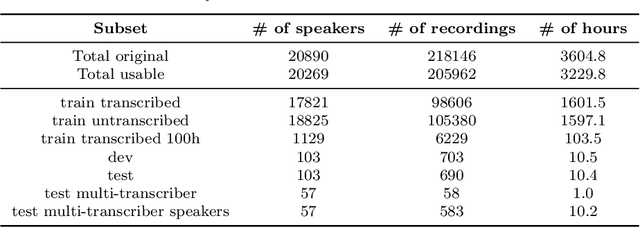
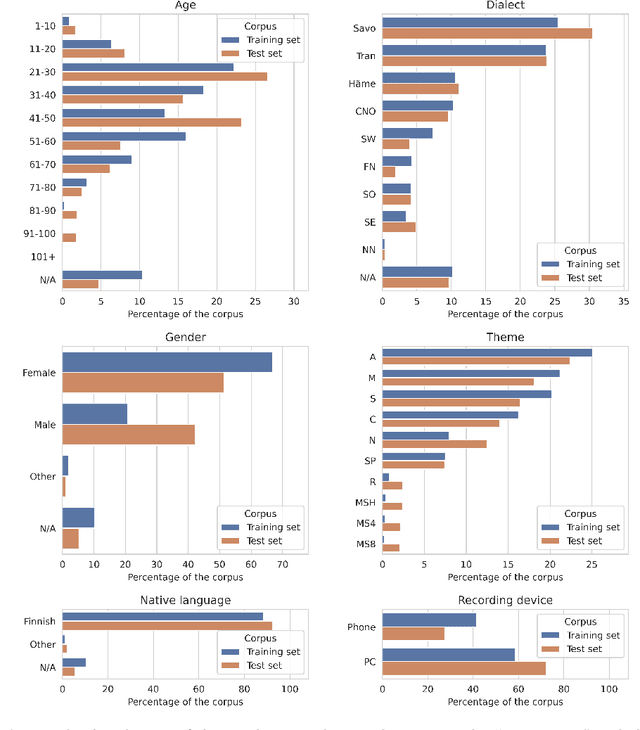
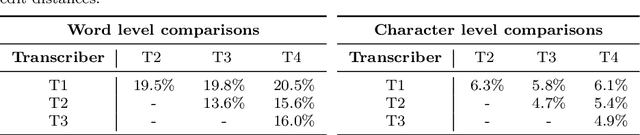
The Donate Speech campaign has so far succeeded in gathering approximately 3600 hours of ordinary, colloquial Finnish speech into the Lahjoita puhetta (Donate Speech) corpus. The corpus includes over twenty thousand speakers from all the regions of Finland and from all age brackets. The primary goals of the collection were to create a representative, large-scale resource to study spontaneous spoken Finnish and to accelerate the development of language technology and speech-based services. In this paper, we present the collection process and the collected corpus, and showcase its versatility through multiple use cases. The evaluated use cases include: automatic speech recognition of spontaneous speech, detection of age, gender, dialect and topic and metadata analysis. We provide benchmarks for the use cases, as well down loadable, trained baseline systems with open-source code for reproducibility. One further use case is to verify the metadata and transcripts given in this corpus itself, and to suggest artificial metadata and transcripts for the part of the corpus where it is missing.
Data augmentation using prosody and false starts to recognize non-native children's speech
Aug 29, 2020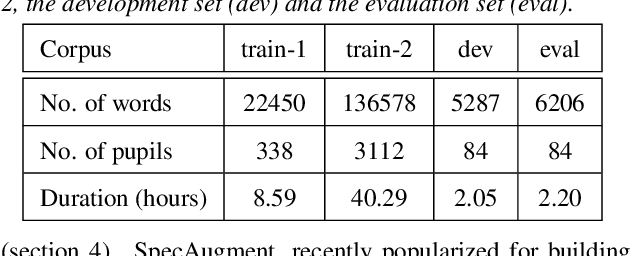
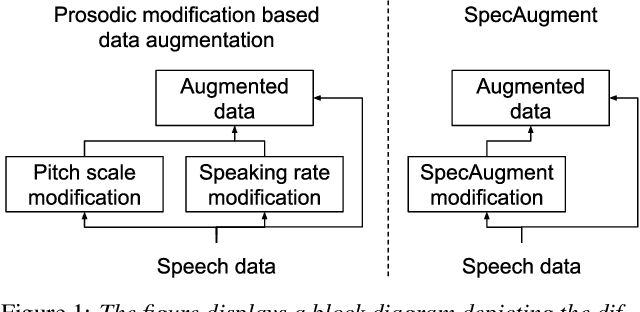
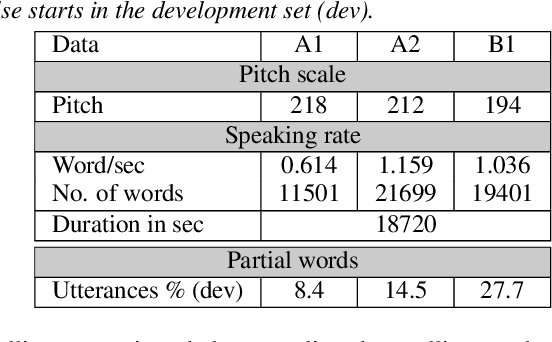
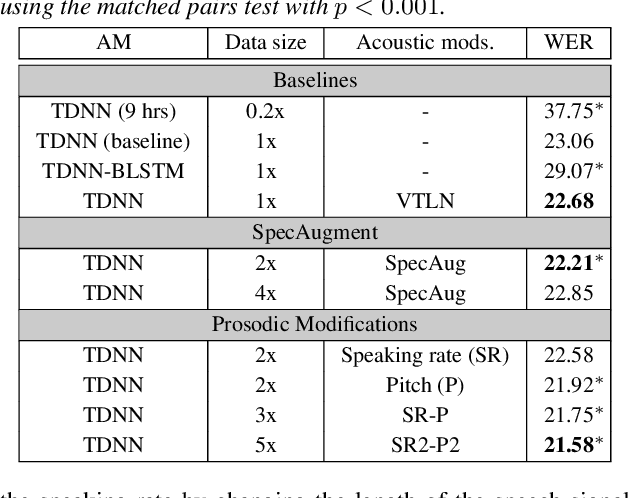
This paper describes AaltoASR's speech recognition system for the INTERSPEECH 2020 shared task on Automatic Speech Recognition (ASR) for non-native children's speech. The task is to recognize non-native speech from children of various age groups given a limited amount of speech. Moreover, the speech being spontaneous has false starts transcribed as partial words, which in the test transcriptions leads to unseen partial words. To cope with these two challenges, we investigate a data augmentation-based approach. Firstly, we apply the prosody-based data augmentation to supplement the audio data. Secondly, we simulate false starts by introducing partial-word noise in the language modeling corpora creating new words. Acoustic models trained on prosody-based augmented data outperform the models using the baseline recipe or the SpecAugment-based augmentation. The partial-word noise also helps to improve the baseline language model. Our ASR system, a combination of these schemes, is placed third in the evaluation period and achieves the word error rate of 18.71%. Post-evaluation period, we observe that increasing the amounts of prosody-based augmented data leads to better performance. Furthermore, removing low-confidence-score words from hypotheses can lead to further gains. These two improvements lower the ASR error rate to 17.99%.
FinChat: Corpus and evaluation setup for Finnish chat conversations on everyday topics
Aug 19, 2020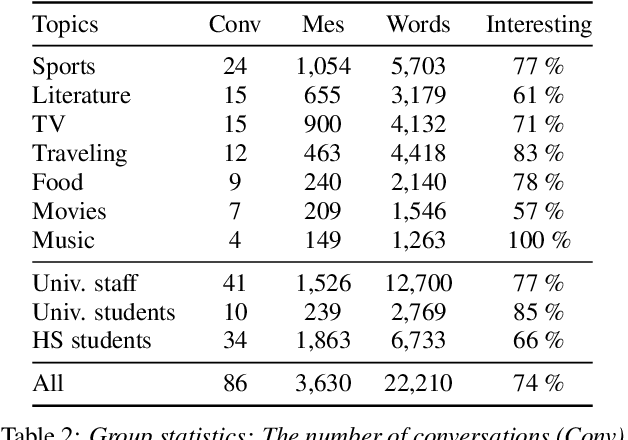
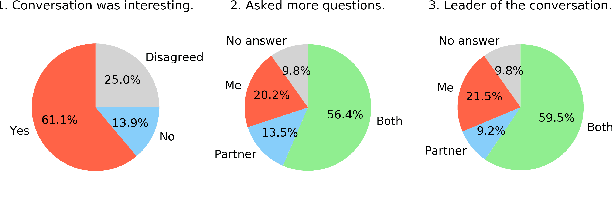
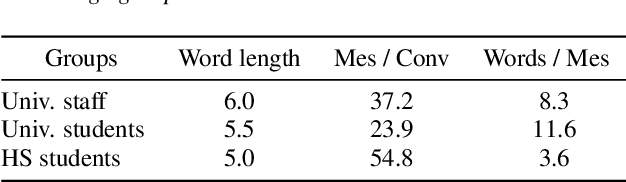
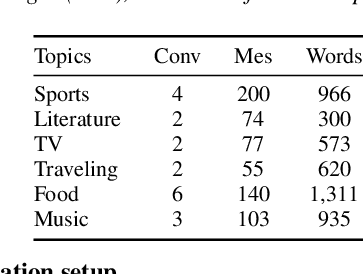
Creating open-domain chatbots requires large amounts of conversational data and related benchmark tasks to evaluate them. Standardized evaluation tasks are crucial for creating automatic evaluation metrics for model development; otherwise, comparing the models would require resource-expensive human evaluation. While chatbot challenges have recently managed to provide a plethora of such resources for English, resources in other languages are not yet available. In this work, we provide a starting point for Finnish open-domain chatbot research. We describe our collection efforts to create the Finnish chat conversation corpus FinChat, which is made available publicly. FinChat includes unscripted conversations on seven topics from people of different ages. Using this corpus, we also construct a retrieval-based evaluation task for Finnish chatbot development. We observe that off-the-shelf chatbot models trained on conversational corpora do not perform better than chance at choosing the right answer based on automatic metrics, while humans can do the same task almost perfectly. Similarly, in a human evaluation, responses to questions from the evaluation set generated by the chatbots are predominantly marked as incoherent. Thus, FinChat provides a challenging evaluation set, meant to encourage chatbot development in Finnish.
Aalto's End-to-End DNN systems for the INTERSPEECH 2020 Computational Paralinguistics Challenge
Aug 06, 2020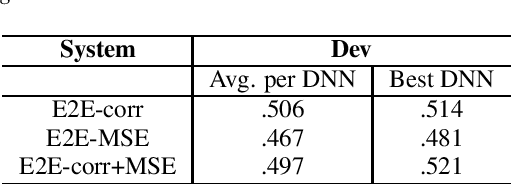
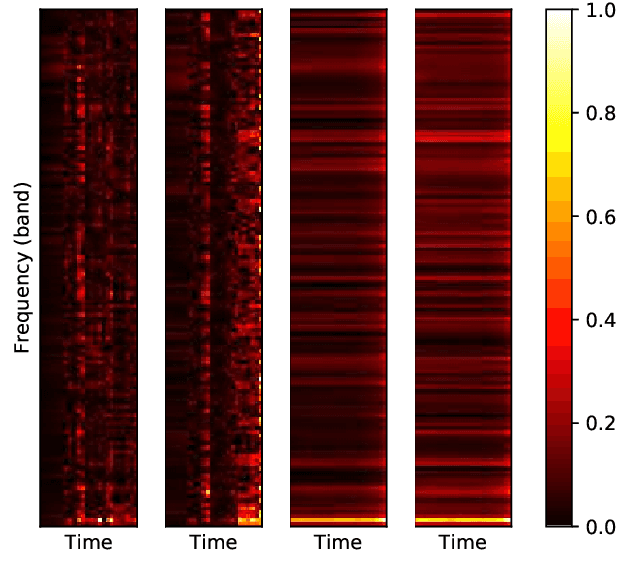
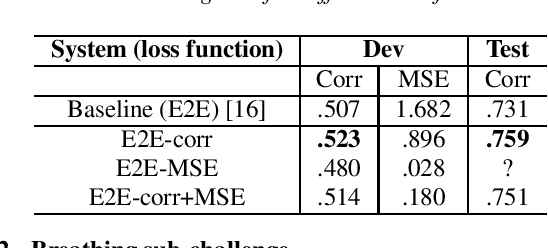
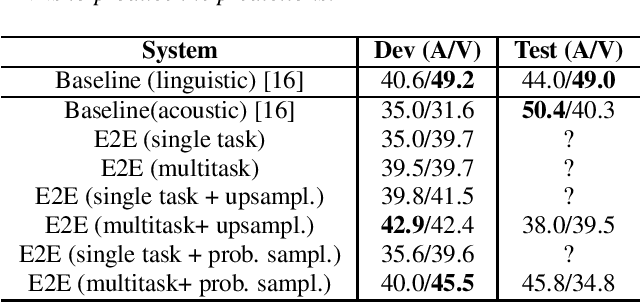
End-to-end neural network models (E2E) have shown significant performance benefits on different INTERSPEECH ComParE tasks. Prior work has applied either a single instance of an E2E model for a task or the same E2E architecture for different tasks. However, applying a single model is unstable or using the same architecture under-utilizes task-specific information. On ComParE 2020 tasks, we investigate applying an ensemble of E2E models for robust performance and developing task-specific modifications for each task. ComParE 2020 introduces three sub-challenges: the breathing sub-challenge to predict the output of a respiratory belt worn by a patient while speaking, the elderly sub-challenge to estimate the elderly speaker's arousal and valence levels and the mask sub-challenge to classify if the speaker is wearing a mask or not. On each of these tasks, an ensemble outperforms the single E2E model. On the breathing sub-challenge, we study the impact of multi-loss strategies on task performance. On the elderly sub-challenge, predicting the valence and arousal levels prompts us to investigate multi-task training and implement data sampling strategies to handle class imbalance. On the mask sub-challenge, using an E2E system without feature engineering is competitive to feature-engineered baselines and provides substantial gains when combined with feature-engineered baselines.
Effects of Language Relatedness for Cross-lingual Transfer Learning in Character-Based Language Models
Jul 22, 2020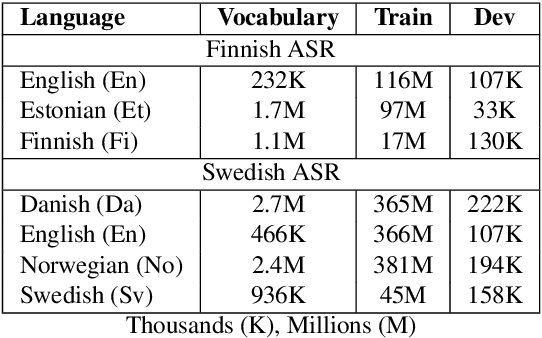
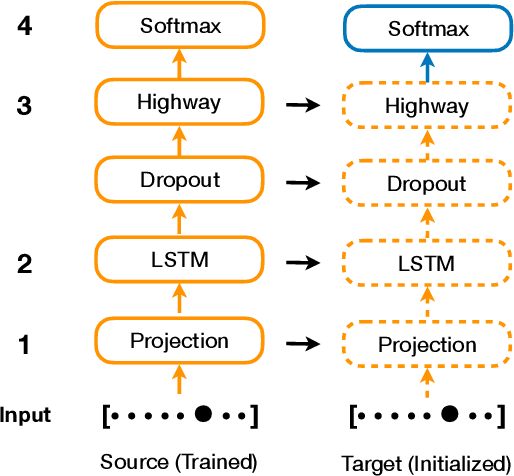
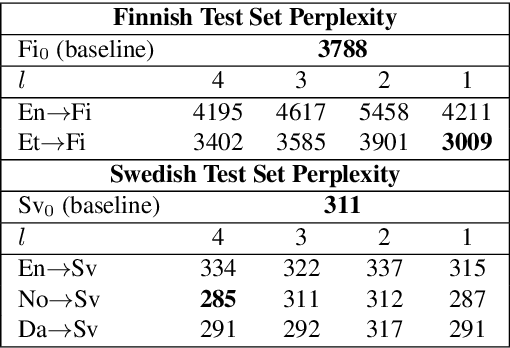
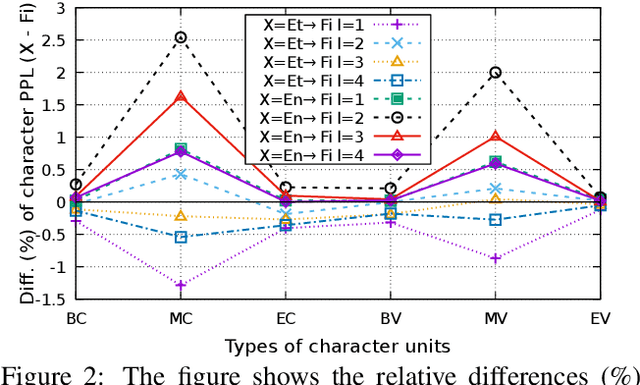
Character-based Neural Network Language Models (NNLM) have the advantage of smaller vocabulary and thus faster training times in comparison to NNLMs based on multi-character units. However, in low-resource scenarios, both the character and multi-character NNLMs suffer from data sparsity. In such scenarios, cross-lingual transfer has improved multi-character NNLM performance by allowing information transfer from a source to the target language. In the same vein, we propose to use cross-lingual transfer for character NNLMs applied to low-resource Automatic Speech Recognition (ASR). However, applying cross-lingual transfer to character NNLMs is not as straightforward. We observe that relatedness of the source language plays an important role in cross-lingual pretraining of character NNLMs. We evaluate this aspect on ASR tasks for two target languages: Finnish (with English and Estonian as source) and Swedish (with Danish, Norwegian, and English as source). Prior work has observed no difference between using the related or unrelated language for multi-character NNLMs. We, however, show that for character-based NNLMs, only pretraining with a related language improves the ASR performance, and using an unrelated language may deteriorate it. We also observe that the benefits are larger when there is much lesser target data than source data.
Subword RNNLM Approximations for Out-Of-Vocabulary Keyword Search
May 28, 2020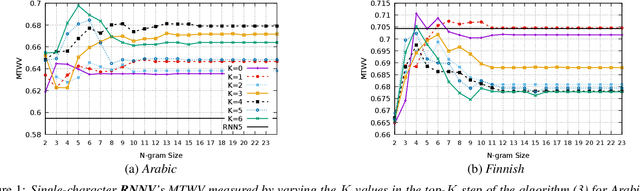
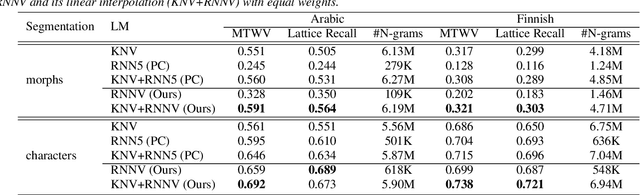
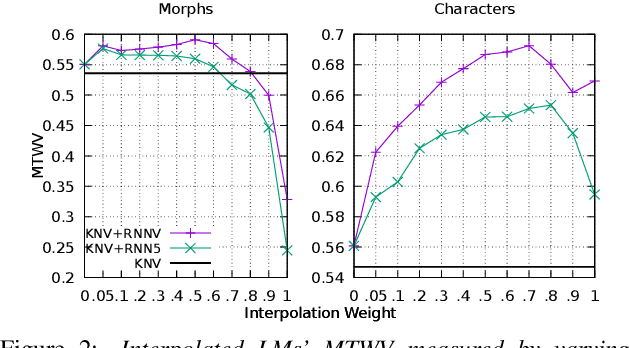
In spoken Keyword Search, the query may contain out-of-vocabulary (OOV) words not observed when training the speech recognition system. Using subword language models (LMs) in the first-pass recognition makes it possible to recognize the OOV words, but even the subword n-gram LMs suffer from data sparsity. Recurrent Neural Network (RNN) LMs alleviate the sparsity problems but are not suitable for first-pass recognition as such. One way to solve this is to approximate the RNNLMs by back-off n-gram models. In this paper, we propose to interpolate the conventional n-gram models and the RNNLM approximation for better OOV recognition. Furthermore, we develop a new RNNLM approximation method suitable for subword units: It produces variable-order n-grams to include long-span approximations and considers also n-grams that were not originally observed in the training corpus. To evaluate these models on OOVs, we setup Arabic and Finnish Keyword Search tasks concentrating only on OOV words. On these tasks, interpolating the baseline RNNLM approximation and a conventional LM outperforms the conventional LM in terms of the Maximum Term Weighted Value for single-character subwords. Moreover, replacing the baseline approximation with the proposed method achieves the best performance on both multi- and single-character subwords.
Transfer learning and subword sampling for asymmetric-resource one-to-many neural translation
Apr 08, 2020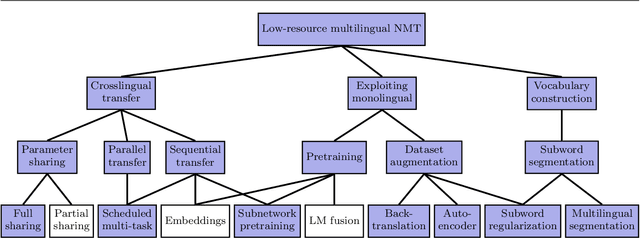
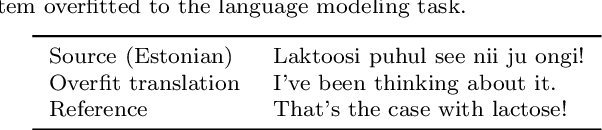
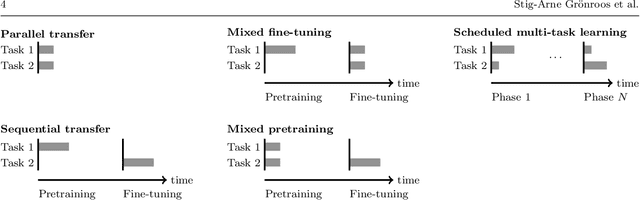
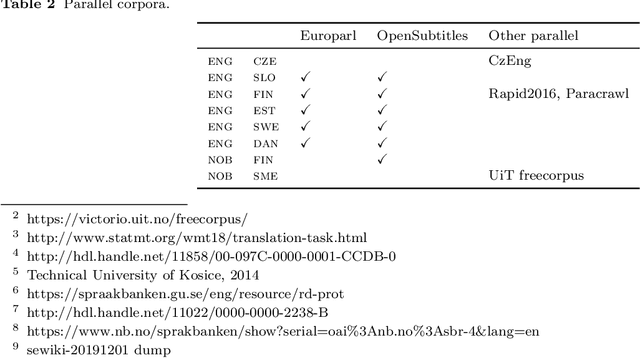
There are several approaches for improving neural machine translation for low-resource languages: Monolingual data can be exploited via pretraining or data augmentation; Parallel corpora on related language pairs can be used via parameter sharing or transfer learning in multilingual models; Subword segmentation and regularization techniques can be applied to ensure high coverage of the vocabulary. We review these approaches in the context of an asymmetric-resource one-to-many translation task, in which the pair of target languages are related, with one being a very low-resource and the other a higher-resource language. We test various methods on three artificially restricted translation tasks---English to Estonian (low-resource) and Finnish (high-resource), English to Slovak and Czech, English to Danish and Swedish---and one real-world task, Norwegian to North S\'ami and Finnish. The experiments show positive effects especially for scheduled multi-task learning, denoising autoencoder, and subword sampling.