 Add to Chrome
 Add to Firefox
 Add to Edge
Bridging Chemists and AI: An Expert-Augmented Framework for Interpretable Route Evaluation
May 27, 2026
Selecting efficient multi-step synthetic routes is a central challenge in organic synthesis, particularly in medicinal and process chemistry, where route choice directly impacts feasibility, cost, and development efficiency. Data-driven assessment systems often oversimplify the multi-objective nature of synthesis design and rely on proxy datasets, such as patent routes, rather than universally grounded criteria. To address this, we introduce an expert-augmented, data-driven scoring framework that integrates machine learning with chemists' domain knowledge for both numerical and explainable route assessment. A DeepSets-based model is trained using tree edit distance between reference and machine-generated routes, and then fine-tuned with expert evaluations to produce both quantitative scores and interpretable qualitative categories: Good, Plausible, and Bad. The resulting system achieves a Spearman correlation coefficient of 0.78 and a Pearson correlation of 0.77 for category assessment prediction, and 60.2% top-1 ranking accuracy for score prediction, substantially outperforming the previous baseline of 17.5%.

PepINVENT: Generative peptide design beyond the natural amino acids
Sep 21, 2024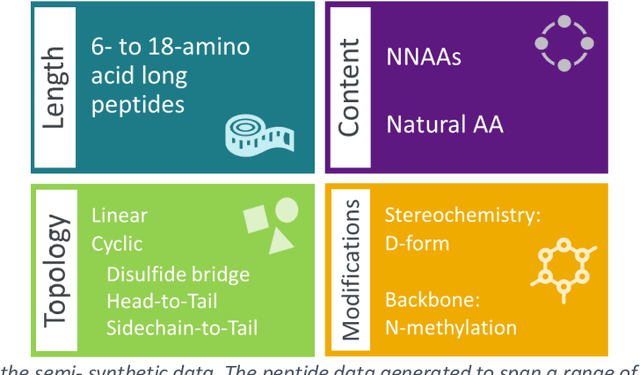

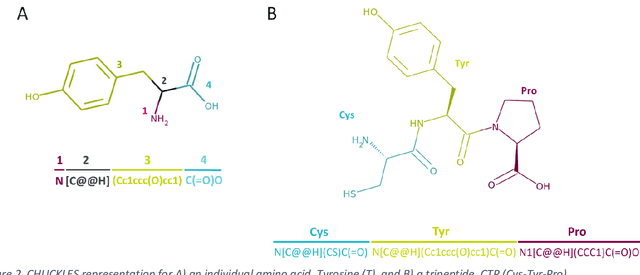

Peptides play a crucial role in the drug design and discovery whether as a therapeutic modality or a delivery agent. Non-natural amino acids (NNAAs) have been used to enhance the peptide properties from binding affinity, plasma stability to permeability. Incorporating novel NNAAs facilitates the design of more effective peptides with improved properties. The generative models used in the field, have focused on navigating the peptide sequence space. The sequence space is formed by combinations of a predefined set of amino acids. However, there is still a need for a tool to explore the peptide landscape beyond this enumerated space to unlock and effectively incorporate de novo design of new amino acids. To thoroughly explore the theoretical chemical space of the peptides, we present PepINVENT, a novel generative AI-based tool as an extension to the small molecule molecular design platform, REINVENT. PepINVENT navigates the vast space of natural and non-natural amino acids to propose valid, novel, and diverse peptide designs. The generative model can serve as a central tool for peptide-related tasks, as it was not trained on peptides with specific properties or topologies. The prior was trained to understand the granularity of peptides and to design amino acids for filling the masked positions within a peptide. PepINVENT coupled with reinforcement learning enables the goal-oriented design of peptides using its chemistry-informed generative capabilities. This study demonstrates PepINVENT's ability to explore the peptide space with unique and novel designs, and its capacity for property optimization in the context of therapeutically relevant peptides. Our tool can be employed for multi-parameter learning objectives, peptidomimetics, lead optimization, and variety of other tasks within the peptide domain.