 Add to Chrome
 Add to Firefox
 Add to Edge
Confidence is the key: how conformal prediction enhances the generative design of permeable peptides
May 07, 2026
Generative models coupled with reinforcement learning (RL), such as REINVENT and PepINVENT, have emerged as a powerful framework for de novo molecular design. During the ideation process these generative frameworks utilize various predictive models as part of the optimization objectives. However, the utility of the predictive models can be limited by their domain of applicability. When RL is used to explore the chemical space with predictive models, it can suggest molecules that lie outside the predictor's domain of applicability. As a result, the predictions may become less reliable, potentially steering designs into high reward but also high uncertainty chemical spaces. This is particularly pronounced for cyclic peptides which show therapeutic promise due to their modifiability and large interaction surfaces but are understudied compared to small molecules. While passive membrane permeation in cyclic peptides has attracted interest, identifying optimal permeable designs remains challenging yet crucial for targeting intracellular sites. We present an RL-guided generative framework that designs permeable cyclic peptides using an uncertainty-aware permeability predictor as the scoring component. To address predictive uncertainty, especially impacted by novel chemistry, we integrate conformal prediction (CP) as our uncertainty quantification method. CP assesses designs based on the calibrated model under a user-defined confidence level. We demonstrate that rewarding generated peptides with CP-informed predictions improves both reliability and efficiency of peptide optimization process. This also discourages exploration outside the predictor's applicability domain. This approach bridges the gap between predictive uncertainty and RL-guided exploration, showing how generative modelling and conformal prediction can be combined for the first time.

PepINVENT: Generative peptide design beyond the natural amino acids
Sep 21, 2024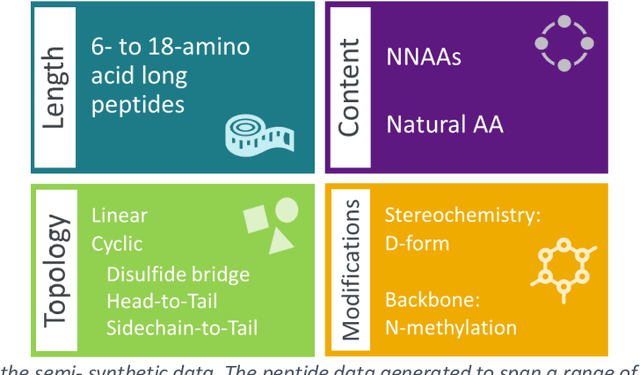

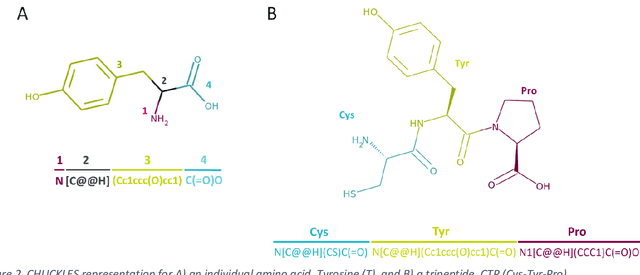

Peptides play a crucial role in the drug design and discovery whether as a therapeutic modality or a delivery agent. Non-natural amino acids (NNAAs) have been used to enhance the peptide properties from binding affinity, plasma stability to permeability. Incorporating novel NNAAs facilitates the design of more effective peptides with improved properties. The generative models used in the field, have focused on navigating the peptide sequence space. The sequence space is formed by combinations of a predefined set of amino acids. However, there is still a need for a tool to explore the peptide landscape beyond this enumerated space to unlock and effectively incorporate de novo design of new amino acids. To thoroughly explore the theoretical chemical space of the peptides, we present PepINVENT, a novel generative AI-based tool as an extension to the small molecule molecular design platform, REINVENT. PepINVENT navigates the vast space of natural and non-natural amino acids to propose valid, novel, and diverse peptide designs. The generative model can serve as a central tool for peptide-related tasks, as it was not trained on peptides with specific properties or topologies. The prior was trained to understand the granularity of peptides and to design amino acids for filling the masked positions within a peptide. PepINVENT coupled with reinforcement learning enables the goal-oriented design of peptides using its chemistry-informed generative capabilities. This study demonstrates PepINVENT's ability to explore the peptide space with unique and novel designs, and its capacity for property optimization in the context of therapeutically relevant peptides. Our tool can be employed for multi-parameter learning objectives, peptidomimetics, lead optimization, and variety of other tasks within the peptide domain.