 Add to Chrome
 Add to Firefox
 Add to Edge
ERR@HRI 3.0 Challenge: Multimodal Detection of Errors and Anticipation in Human-Robot Interactions
Jul 13, 2026
As robots become increasingly integrated into human environments, their ability to detect and respond to errors remains critical for maintaining user trust and interaction quality. While recent advances in machine learning have improved error detection capabilities, most approaches are limited to specific contexts, controlled settings, or pre-extracted features, limiting their generalizability and applicability to real-world conditions. To address this challenge, the third edition of the ERR@HRI Challenge (ERR@HRI 3.0) provided researchers with two complementary datasets that enable end-to-end innovation in methods for both detecting and preventing errors in human-robot interaction. The challenge offered raw, non-anonymized video data from naturalistic settings: (1) the Bystander Affect Detection (BAD) dataset, containing webcam recordings of 45 participants' spontaneous reactions to robot and human failure scenarios; and (2) the Bad Idea dataset, featuring 29 participants' anticipatory facial responses while predicting action outcomes before failures occur. Both datasets were collected via crowdsourcing, capturing the inherent variability of real-world conditions. This naturalistic variability, while challenging, provides an authentic testbed for developing robust error detection systems. Participants developed multimodal machine learning models for bystander reaction detection (Track 1) and anticipatory outcome prediction (Track 2), with an optional cross-dataset generalization track (Track 3). Three teams submitted valid models, all of which surpassed our convolutional neural network baselines. This paper describes the datasets, tasks, baselines, and results of ERR@HRI 3.0, and discusses implications for building generalizable, context-aware, and anticipatory error detection systems for human-robot interaction.

Understanding LLM Intervention Explanations in Multi-Party Human-Robot Interaction
Jun 28, 2026Large Language Models (LLMs) are increasingly embedded in social robots to support natural group interactions, yet their role in complex multi-party settings remains underexplored. In particular, it is unclear how LLM-driven robots decide when and why to intervene in group conversations. This paper investigates the intervention explanations generated by an LLM-based orchestrator in a multi-party interaction involving three human participants and two robots. We conducted a between-subjects study with 24 groups (66 university students), comparing a homogeneous condition (two robots with the same role, i.e., a mover) and a heterogeneous condition (two robots with different roles, i.e., a mover and an opposer). At each conversational turn, the LLM orchestrator decided whether to intervene and generated a textual explanation of its decision. We performed a thematic analysis of 610 intervention explanations, identifying five recurring themes. Results show that explanations are facilitation-oriented, emphasizing agreement, participation, and interaction flow. While patterns remain stable across conditions, role differentiation emerges: the mover supports coordination, whereas the opposer drives goal-oriented interventions. These findings contribute to explainable AI by characterizing how LLM-driven systems justify intervention decisions in real-time, multi-party human-robot interaction.
REACT 2026: The Fourth Multiple Appropriate Facial Reaction Generation Challenge: Personalised MAFRG and Appropriate EEG Reaction Prediction
Jun 06, 2026In dyadic interactions, various human facial reactions could be appropriate for responding to each human speaker behaviour. Following the successful organisation of the REACT 2023, 2024 and 2025 challenge series, a body of generative deep learning (DL) models have been developed for the problem of multiple appropriate facial reaction generation (MAFRG). This year, we propose the REACT 2026 challenge encouraging the development and benchmarking of Machine Learning (ML) models that can generate multiple personalised, appropriate, diverse, realistic and synchronised human-style facial reactions expressed by a specific human listener for responding to each given speaker behaviour. As a key of the challenge, we continuously provide challenge participants with MARS dataset introduced by REACT 2025 but additionally provide individual-level Big-Five personality labels and EEG recordings. This introduces a new one-to-many personalised facial reaction generation setting combining human expressive behavioural, affective and neurophysiological signals, which remains largely unexplored in current dyadic interaction modelling. This paper also presents the challenge guidelines and new baselines on the four proposed sub-challenges: Offline generic and personalised MAFRG as well as Online generic and personalised MAFRG, respectively, which are publicly available at https://github.com/reactmultimodalchallenge/baseline_react2026.
Inclusive AI for Group Interactions: Predicting Gaze-Direction Behaviors in People with Intellectual and Developmental Disabilities
Mar 15, 2026Artificial agents that support human group interactions hold great promise, especially in sensitive contexts such as well-being promotion and therapeutic interventions. However, current systems struggle to mediate group interactions involving people who are not neurotypical. This limitation arises because most AI detection models (e.g., for turn-taking) are trained on data from neurotypical populations. This work takes a step toward inclusive AI by addressing the challenge of eye contact detection, a core component of non-verbal communication, with and for people with Intellectual and Developmental Disabilities. First, we introduce a new dataset, Multi-party Interaction with Intellectual and Developmental Disabilities (MIDD), capturing atypical gaze and engagement patterns. Second, we present the results of a comparative analysis with neurotypical datasets, highlighting differences in class imbalance, speaking activity, gaze distribution, and interaction dynamics. Then, we evaluate classifiers ranging from SVMs to FSFNet, showing that fine-tuning on MIDD improves performance, though notable limitations remain. Finally, we present the insights gathered through a focus group with six therapists to interpret our quantitative findings and understand the practical implications of atypical gaze and engagement patterns. Based on these results, we discuss data-driven strategies and emphasize the importance of feature choice for building more inclusive human-centered tools.
ERR@HRI 2.0 Challenge: Multimodal Detection of Errors and Failures in Human-Robot Conversations
Jul 17, 2025The integration of large language models (LLMs) into conversational robots has made human-robot conversations more dynamic. Yet, LLM-powered conversational robots remain prone to errors, e.g., misunderstanding user intent, prematurely interrupting users, or failing to respond altogether. Detecting and addressing these failures is critical for preventing conversational breakdowns, avoiding task disruptions, and sustaining user trust. To tackle this problem, the ERR@HRI 2.0 Challenge provides a multimodal dataset of LLM-powered conversational robot failures during human-robot conversations and encourages researchers to benchmark machine learning models designed to detect robot failures. The dataset includes 16 hours of dyadic human-robot interactions, incorporating facial, speech, and head movement features. Each interaction is annotated with the presence or absence of robot errors from the system perspective, and perceived user intention to correct for a mismatch between robot behavior and user expectation. Participants are invited to form teams and develop machine learning models that detect these failures using multimodal data. Submissions will be evaluated using various performance metrics, including detection accuracy and false positive rate. This challenge represents another key step toward improving failure detection in human-robot interaction through social signal analysis.
Critical Insights about Robots for Mental Wellbeing
Jun 16, 2025Social robots are increasingly being explored as tools to support emotional wellbeing, particularly in non-clinical settings. Drawing on a range of empirical studies and practical deployments, this paper outlines six key insights that highlight both the opportunities and challenges in using robots to promote mental wellbeing. These include (1) the lack of a single, objective measure of wellbeing, (2) the fact that robots don't need to act as companions to be effective, (3) the growing potential of virtual interactions, (4) the importance of involving clinicians in the design process, (5) the difference between one-off and long-term interactions, and (6) the idea that adaptation and personalization are not always necessary for positive outcomes. Rather than positioning robots as replacements for human therapists, we argue that they are best understood as supportive tools that must be designed with care, grounded in evidence, and shaped by ethical and psychological considerations. Our aim is to inform future research and guide responsible, effective use of robots in mental health and wellbeing contexts.
REACT 2025: the Third Multiple Appropriate Facial Reaction Generation Challenge
May 22, 2025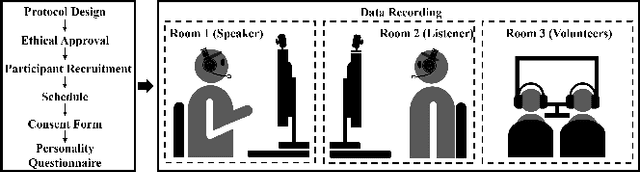

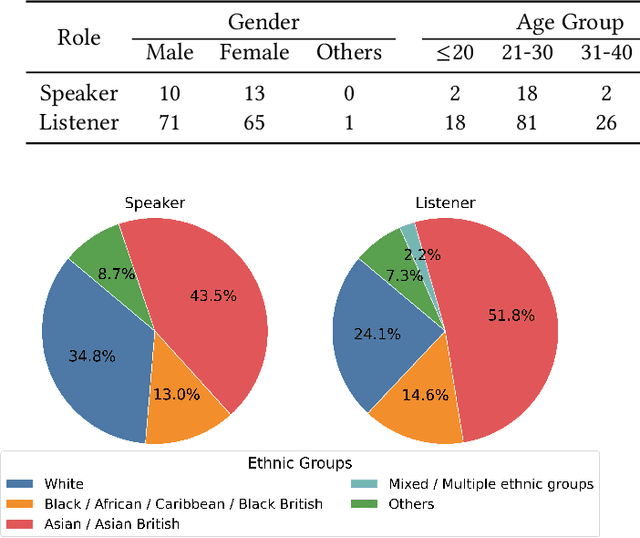
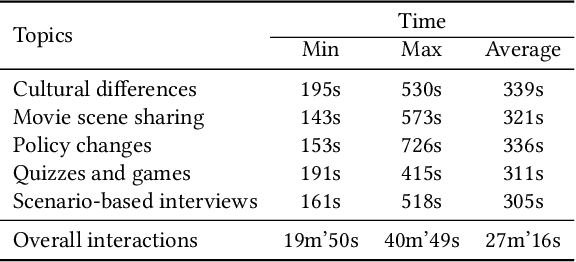
In dyadic interactions, a broad spectrum of human facial reactions might be appropriate for responding to each human speaker behaviour. Following the successful organisation of the REACT 2023 and REACT 2024 challenges, we are proposing the REACT 2025 challenge encouraging the development and benchmarking of Machine Learning (ML) models that can be used to generate multiple appropriate, diverse, realistic and synchronised human-style facial reactions expressed by human listeners in response to an input stimulus (i.e., audio-visual behaviours expressed by their corresponding speakers). As a key of the challenge, we provide challenge participants with the first natural and large-scale multi-modal MAFRG dataset (called MARS) recording 137 human-human dyadic interactions containing a total of 2856 interaction sessions covering five different topics. In addition, this paper also presents the challenge guidelines and the performance of our baselines on the two proposed sub-challenges: Offline MAFRG and Online MAFRG, respectively. The challenge baseline code is publicly available at https://github.com/reactmultimodalchallenge/baseline_react2025
Concerns and Values in Human-Robot Interactions: A Focus on Social Robotics
Jan 10, 2025Robots, as AI with physical instantiation, inhabit our social and physical world, where their actions have both social and physical consequences, posing challenges for researchers when designing social robots. This study starts with a scoping review to identify discussions and potential concerns arising from interactions with robotic systems. Two focus groups of technology ethics experts then validated a comprehensive list of key topics and values in human-robot interaction (HRI) literature. These insights were integrated into the HRI Value Compass web tool, to help HRI researchers identify ethical values in robot design. The tool was evaluated in a pilot study. This work benefits the HRI community by highlighting key concerns in human-robot interactions and providing an instrument to help researchers design robots that align with human values, ensuring future robotic systems adhere to these values in social applications.
"Can you be my mum?": Manipulating Social Robots in the Large Language Models Era
Jan 08, 2025Recent advancements in robots powered by large language models have enhanced their conversational abilities, enabling interactions closely resembling human dialogue. However, these models introduce safety and security concerns in HRI, as they are vulnerable to manipulation that can bypass built-in safety measures. Imagining a social robot deployed in a home, this work aims to understand how everyday users try to exploit a language model to violate ethical principles, such as by prompting the robot to act like a life partner. We conducted a pilot study involving 21 university students who interacted with a Misty robot, attempting to circumvent its safety mechanisms across three scenarios based on specific HRI ethical principles: attachment, freedom, and empathy. Our results reveal that participants employed five techniques, including insulting and appealing to pity using emotional language. We hope this work can inform future research in designing strong safeguards to ensure ethical and secure human-robot interactions.
Social Group Human-Robot Interaction: A Scoping Review of Computational Challenges
Dec 20, 2024Group interactions are a natural part of our daily life, and as robots become more integrated into society, they must be able to socially interact with multiple people at the same time. However, group human-robot interaction (HRI) poses unique computational challenges often overlooked in the current HRI literature. We conducted a scoping review including 44 group HRI papers from the last decade (2015-2024). From these papers, we extracted variables related to perception and behaviour generation challenges, as well as factors related to the environment, group, and robot capabilities that influence these challenges. Our findings show that key computational challenges in perception included detection of groups, engagement, and conversation information, while challenges in behaviour generation involved developing approaching and conversational behaviours. We also identified research gaps, such as improving detection of subgroups and interpersonal relationships, and recommended future work in group HRI to help researchers address these computational challenges