 Add to Chrome
 Add to Firefox
 Add to Edge
Physics-Based iOCT Sonification for Real-time Interaction Awareness in Subretinal Injection
May 14, 2026
Subretinal injection is a delicate vitreoretinal procedure requiring precise needle placement within the subretinal space while avoiding perforation of the retinal pigment epithelium (RPE), a layer directly beneath the target with extremely limited regenerative capacity. To enhance depth perception during cannula advancement, intraoperative optical coherence tomography (iOCT) offers high-resolution cross-sectional visualization of needle-tissue interaction; however, interpreting these images requires sustained visual attention alongside the en face microscope view, thereby increasing cognitive load during critical phases and placing additional demands on the surgeon's proprioceptive control. In this paper, we propose a structured, real-time sonification framework designed for extensible mapping of iOCT-derived anatomical features into perceptual auditory feedback. The method employs a physics-inspired acoustic model driven by segmented retinal layers from a stream of iOCT B-scans, with needle motion and injection-induced retinal layer displacements serving as excitation inputs to the sound model, enabling perception of tool position and retinal deformation. In a controlled user study (n=34), the proposed sonification achieved high retinal layer identification accuracy and robust detection of retinal deformation-related events, significantly outperforming a state-of-the-art baseline in overall event identification (83.4% vs. 60.6%, p < 0.001), with gains driven primarily by enhanced detection of injection-induced retinal deformation. Evaluation by experts (n=4) confirmed the clinical relevance and potential intraoperative applicability of the method. These results establish structured iOCT sonification as a viable complementary modality for real-time surgical guidance in subretinal injection.

A Framework for Multimodal Medical Image Interaction
Jul 09, 2024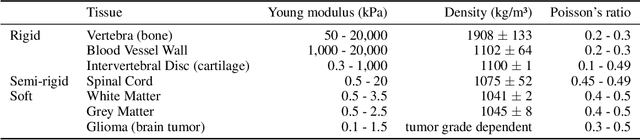
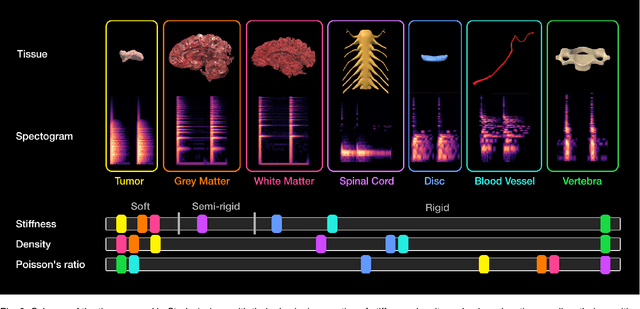
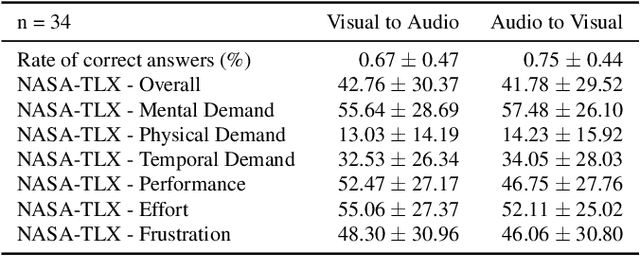
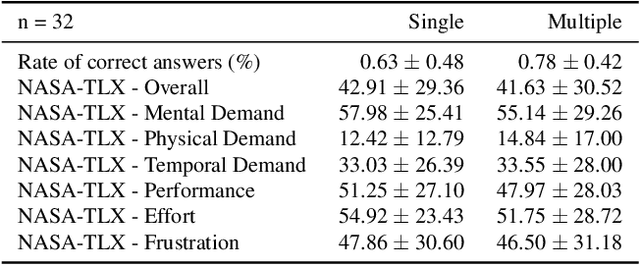
Medical doctors rely on images of the human anatomy, such as magnetic resonance imaging (MRI), to localize regions of interest in the patient during diagnosis and treatment. Despite advances in medical imaging technology, the information conveyance remains unimodal. This visual representation fails to capture the complexity of the real, multisensory interaction with human tissue. However, perceiving multimodal information about the patient's anatomy and disease in real-time is critical for the success of medical procedures and patient outcome. We introduce a Multimodal Medical Image Interaction (MMII) framework to allow medical experts a dynamic, audiovisual interaction with human tissue in three-dimensional space. In a virtual reality environment, the user receives physically informed audiovisual feedback to improve the spatial perception of anatomical structures. MMII uses a model-based sonification approach to generate sounds derived from the geometry and physical properties of tissue, thereby eliminating the need for hand-crafted sound design. Two user studies involving 34 general and nine clinical experts were conducted to evaluate the proposed interaction framework's learnability, usability, and accuracy. Our results showed excellent learnability of audiovisual correspondence as the rate of correct associations significantly improved (p < 0.001) over the course of the study. MMII resulted in superior brain tumor localization accuracy (p < 0.05) compared to conventional medical image interaction. Our findings substantiate the potential of this novel framework to enhance interaction with medical images, for example, during surgical procedures where immediate and precise feedback is needed.