 Add to Chrome
 Add to Firefox
 Add to Edge
Geometry Beats Estimated Depth: RGB-Only Multi-Camera 3D Tracking under Sim2Real
Aug 04, 2026
The AI City Challenge 2026 Track 1 evaluates multi-camera 3D perception in large indoor warehouses under a synthetic-to-real (Sim2Real) setting; depth is available only for training and validation, so inference is RGB-only. We use two RGB-only routes as a controlled test of one hypothesis: that cross-view geometric consistency, not monocular depth accuracy, governs performance under Sim2Real. The first is a geometry-first pipeline: YOLO11x detection, homography lifting to the world frame, class-level 3D size priors, multi-camera fusion, world-coordinate tracking, and offline tracklet stitching. The second is estimated-depth pseudo-LiDAR: monocular depth (D4RT, Metric3D~v2) back-projected into a fused point cloud and passed to a 3D detector (V-DETR), mirroring prior point-cloud winners that used depth. The gap is decisive: geometry-first reaches 13.0 3D HOTA (51.6 LocA), whereas pseudo-LiDAR collapses to 0.12 (9.2 LocA). We trace the collapse to cross-view inconsistency of monocular depth---scale correction is necessary but not sufficient---which domain-adaptation fine-tuning does not repair within budget. Within the geometry pipeline, offline stitching is the only intervention that helps; SAHI detection, appearance Re-ID, learned lifting, RT-DETR ensembling, test-time augmentation, and domain randomization all fail to beat the baseline detector. The bottlenecks are complementary: detection quality bounds the geometry route (DetA), localization consistency bounds pseudo-LiDAR (LocA). We release a complete, reproducible RGB-only pipeline and ablation.

Leak-Free Cross-Validated Stacking with Per-Architecture Calibration for Sand-Boil Segmentation in Earthen Levees
Jul 28, 2026Sand boils, points where water seeping beneath an earthen levee re-emerges at the surface, are early warnings of internal erosion, and deep segmentation networks are increasingly used to find them in inspection photographs. Annotated examples are scarce, and two common ways of working around that scarcity quietly inflate reported accuracy: tuning ensemble weights on the same images later used to score them, and training on synthetic images derived from the very photographs held out for testing. We present a sand-boil segmentation framework that closes both loopholes. Every synthetic image carries a pointer to its real parent, and a per-fold filter excludes any image whose parent is held out; five encoder-decoder backbones are trained under five-fold cross-validation, calibrated by one temperature scalar each, and combined by a per-pixel meta-learner fitted only on out-of-fold predictions. On the held-out test set the proposed Updated SandBoilNet reaches an intersection-over-union of 0.707 over three seeds, against 0.608 for the published original re-evaluated on the same split. Under the stacking protocol the calibrated stack reaches 0.681 against 0.694 for the strongest fold-averaged member, so it does not improve on the best single model; eight meta-learner families reproduce that outcome, which we trace to a mean pairwise error correlation of 0.894 among members. A synthetic pool filtered for label fidelity lifts the champion to 0.718 over three seeds against a 0.707 control. We also introduce a mask-conditioned synthesis route that makes the conditioning mask the label by construction, giving labelled training images at zero annotation cost.
Multi-Conditioned Diffusion Synthesis of Sand Boils for Low-Resource Earthen-Levee Inspection
Jul 08, 2026Sand boils on earthen levees are safety-critical defects, but pixel-level detection is limited by scarce annotations. We present a diffusion-based synthesis pipeline for low-resource sand-boil imagery. Using Stable Diffusion XL fine-tuned with DreamBooth and conditioned by a multi-branch ControlNet stack, the pipeline generates synthetic inspection images from a small curated reference set. A soft-mask inpainting protocol preserves the real defect pixels while re-rendering the surrounding scene, avoiding seams and color shifts from prior seamless-cloning compositing. A mask-conditioned ControlNet can also generate a new boil inside a chosen mask, making the mask the segmentation label by construction; however, because large-scale label certification remains unresolved with the available real-trained gate, we release the soft-mask preset as the default. Text conditioning is supplied by a taxonomy-driven Prompt Atlas that expands one domain specification into a stratified, CLIP-validated prompt bank and transfers to new defect classes without code changes. From the real training images, the pipeline produces 1,020 synthetic candidates, of which 815 pass a CLIP admissibility filter. We evaluate image quality using distributional and fidelity-diversity measures against the real reference set and a Poisson baseline, and audit for out-of-distribution drift and memorization. No single preset dominates; each trades off fidelity, diversity, and label reliability. We therefore release the label-reliable preset as the default and treat a curated mixture as the natural augmentation set. Our claims are limited to image quality, label provenance, and diversity; downstream segmentation is left for future work. Code and an artifact manifest are released for reproducibility.
Energy-Efficient Multi-Robot Coverage Path Planning of Non-Convex Regions of Interests
Apr 24, 2026This letter presents an energy-efficient multi-robot coverage path planning (MRCPP) framework for large, nonconvex Regions of Interest (ROI) containing obstacles and no-fly zones (NFZ). Existing minimum-energy coverage planning algorithms utilize meta-heuristic boustrophedon workspace decomposition. Therefore, even with minimum energy objectives and energy consumption constraints, they cannot achieve optimal energy efficiency. Moreover, most existing frameworks support only a single type of robotic platform. MRCPP overcomes these limitations by: generating globally-informed swath generation, creating parallel sweeping paths with minimal turns, calculating safety buffers to ensure safe turning clearance, using an efficient mTSP solver to balance workloads and minimize mission time, and connecting disjoint segments via a modified visibility graph that tracks heading angles while maintaining transitions within safe regions. The efficacy of the proposed MRCPP framework is demonstrated through real-world experiments involving autonomous aerial vehicles (AAVs) and autonomous surface vehicles (ASVs). Evaluations demonstrate that the proposed MRCPP consistently outperforms state-of-the-art planners, reducing average total energy consumption by 3\% to 40\% for a team of 3 robots and computation time by an order of magnitude, while maintaining balanced workload distribution and strong scalability across increasing fleet sizes. The MRCPP framework is released as an open-source package and videos of real-world and simulated experiments are available at https://mrc-pp.github.io.
A Novel Hybrid Deep Learning Technique for Speech Emotion Detection using Feature Engineering
Jul 09, 2025Nowadays, speech emotion recognition (SER) plays a vital role in the field of human-computer interaction (HCI) and the evolution of artificial intelligence (AI). Our proposed DCRF-BiLSTM model is used to recognize seven emotions: neutral, happy, sad, angry, fear, disgust, and surprise, which are trained on five datasets: RAVDESS (R), TESS (T), SAVEE (S), EmoDB (E), and Crema-D (C). The model achieves high accuracy on individual datasets, including 97.83% on RAVDESS, 97.02% on SAVEE, 95.10% for CREMA-D, and a perfect 100% on both TESS and EMO-DB. For the combined (R+T+S) datasets, it achieves 98.82% accuracy, outperforming previously reported results. To our knowledge, no existing study has evaluated a single SER model across all five benchmark datasets (i.e., R+T+S+C+E) simultaneously. In our work, we introduce this comprehensive combination and achieve a remarkable overall accuracy of 93.76%. These results confirm the robustness and generalizability of our DCRF-BiLSTM framework across diverse datasets.
SHARP-Net: A Refined Pyramid Network for Deficiency Segmentation in Culverts and Sewer Pipes
Aug 02, 2024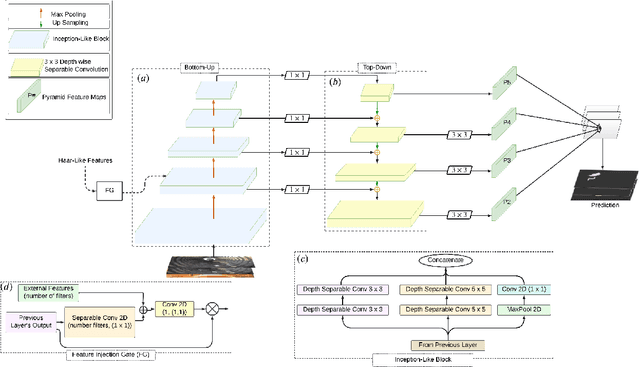
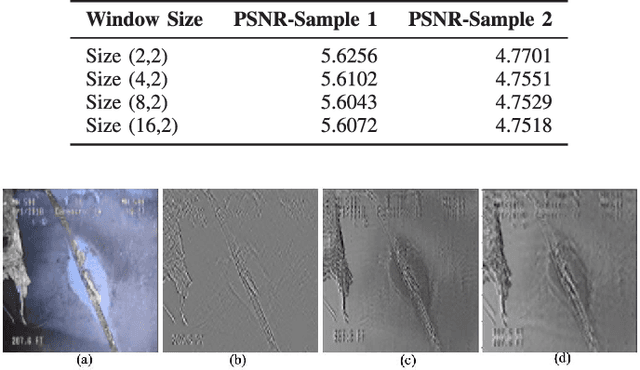
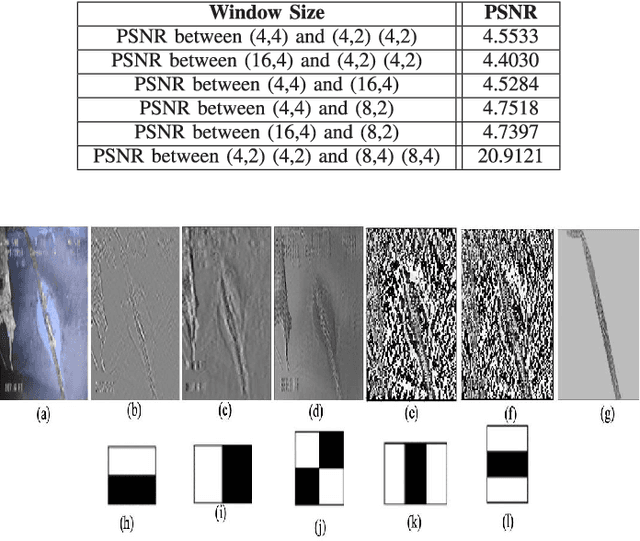
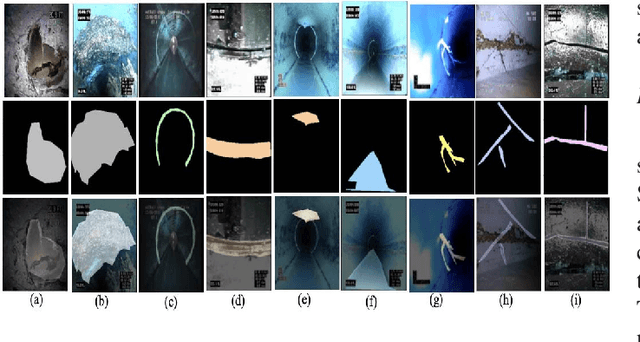
This paper introduces Semantic Haar-Adaptive Refined Pyramid Network (SHARP-Net), a novel architecture for semantic segmentation. SHARP-Net integrates a bottom-up pathway featuring Inception-like blocks with varying filter sizes (3x3$ and 5x5), parallel max-pooling, and additional spatial detection layers. This design captures multi-scale features and fine structural details. Throughout the network, depth-wise separable convolutions are used to reduce complexity. The top-down pathway of SHARP-Net focuses on generating high-resolution features through upsampling and information fusion using $1\times1$ and $3\times3$ depth-wise separable convolutions. We evaluated our model using our developed challenging Culvert-Sewer Defects dataset and the benchmark DeepGlobe Land Cover dataset. Our experimental evaluation demonstrated the base model's (excluding Haar-like features) effectiveness in handling irregular defect shapes, occlusions, and class imbalances. It outperformed state-of-the-art methods, including U-Net, CBAM U-Net, ASCU-Net, FPN, and SegFormer, achieving average improvements of 14.4% and 12.1% on the Culvert-Sewer Defects and DeepGlobe Land Cover datasets, respectively, with IoU scores of 77.2% and 70.6%. Additionally, the training time was reduced. Furthermore, the integration of carefully selected and fine-tuned Haar-like features enhanced the performance of deep learning models by at least 20%. The proposed SHARP-Net, incorporating Haar-like features, achieved an impressive IoU of 94.75%, representing a 22.74% improvement over the base model. These features were also applied to other deep learning models, showing a 35.0% improvement, proving their versatility and effectiveness. SHARP-Net thus provides a powerful and efficient solution for accurate semantic segmentation in challenging real-world scenarios.
Dual Attention U-Net with Feature Infusion: Pushing the Boundaries of Multiclass Defect Segmentation
Dec 21, 2023The proposed architecture, Dual Attentive U-Net with Feature Infusion (DAU-FI Net), addresses challenges in semantic segmentation, particularly on multiclass imbalanced datasets with limited samples. DAU-FI Net integrates multiscale spatial-channel attention mechanisms and feature injection to enhance precision in object localization. The core employs a multiscale depth-separable convolution block, capturing localized patterns across scales. This block is complemented by a spatial-channel squeeze and excitation (scSE) attention unit, modeling inter-dependencies between channels and spatial regions in feature maps. Additionally, additive attention gates refine segmentation by connecting encoder-decoder pathways. To augment the model, engineered features using Gabor filters for textural analysis, Sobel and Canny filters for edge detection are injected guided by semantic masks to expand the feature space strategically. Comprehensive experiments on a challenging sewer pipe and culvert defect dataset and a benchmark dataset validate DAU-FI Net's capabilities. Ablation studies highlight incremental benefits from attention blocks and feature injection. DAU-FI Net achieves state-of-the-art mean Intersection over Union (IoU) of 95.6% and 98.8% on the defect test set and benchmark respectively, surpassing prior methods by 8.9% and 12.6%, respectively. Ablation studies highlight incremental benefits from attention blocks and feature injection. The proposed architecture provides a robust solution, advancing semantic segmentation for multiclass problems with limited training data. Our sewer-culvert defects dataset, featuring pixel-level annotations, opens avenues for further research in this crucial domain. Overall, this work delivers key innovations in architecture, attention, and feature engineering to elevate semantic segmentation efficacy.
A LightGBM based Forecasting of Dominant Wave Periods in Oceanic Waters
May 21, 2021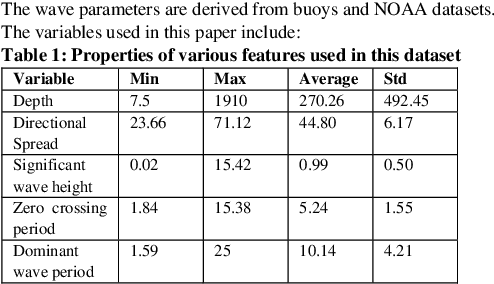
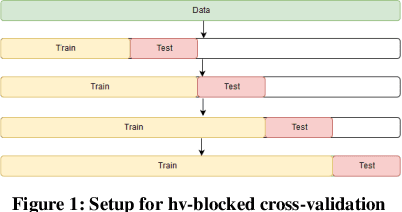
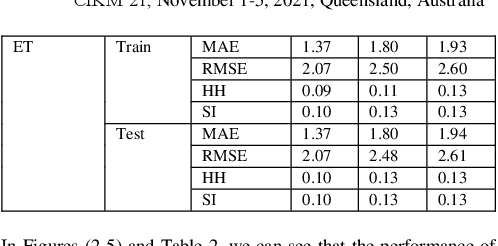
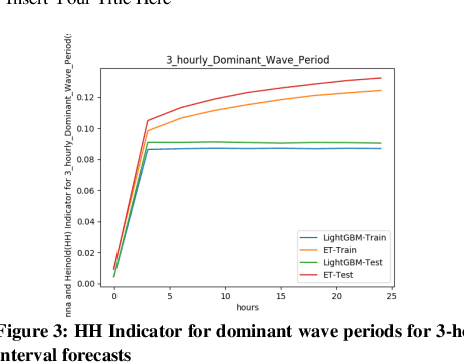
In this paper, we propose a Light Gradient Boosting (LightGBM) to forecast dominant wave periods in oceanic waters. First, we use the data collected from CDIP buoys and apply various data filtering methods. The data filtering methods allow us to obtain a high-quality dataset for training and validation purposes. We then extract various wave-based features like wave heights, periods, skewness, kurtosis, etc., and atmospheric features like humidity, pressure, and air temperature for the buoys. Afterward, we train algorithms that use LightGBM and Extra Trees through a hv-block cross-validation scheme to forecast dominant wave periods for up to 30 days ahead. LightGBM has the R2 score of 0.94, 0.94, and 0.94 for 1-day ahead, 15-day ahead, and 30-day ahead prediction. Similarly, Extra Trees (ET) has an R2 score of 0.88, 0.86, and 0.85 for 1-day ahead, 15-day ahead, and 30 day ahead prediction. In case of the test dataset, LightGBM has R2 score of 0.94, 0.94, and 0.94 for 1-day ahead, 15-day ahead and 30-day ahead prediction. ET has R2 score of 0.88, 0.86, and 0.85 for 1-day ahead, 15-day ahead, and 30-day ahead prediction. A similar R2 score for both training and the test dataset suggests that the machine learning models developed in this paper are robust. Since the LightGBM algorithm outperforms ET for all the windows tested, it is taken as the final algorithm. Note that the performance of both methods does not decrease significantly as the forecast horizon increases. Likewise, the proposed method outperforms the numerical approaches included in this paper in the test dataset. For 1 day ahead prediction, the proposed algorithm has SI, Bias, CC, and RMSE of 0.09, 0.00, 0.97, and 1.78 compared to 0.268, 0.40, 0.63, and 2.18 for the European Centre for Medium-range Weather Forecasts (ECMWF) model, which outperforms all the other methods in the test dataset.
Forecasting Significant Wave Heights in Oceanic Waters
May 18, 2021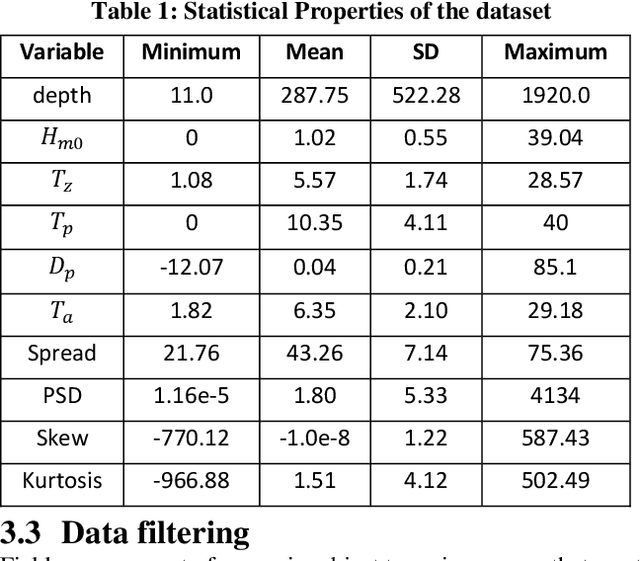
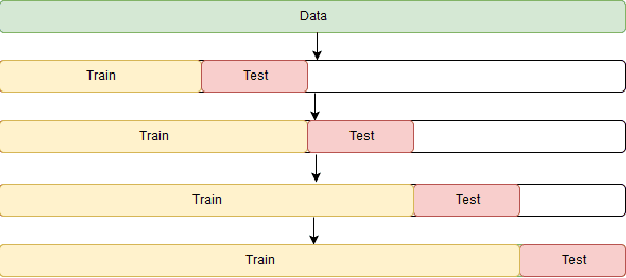
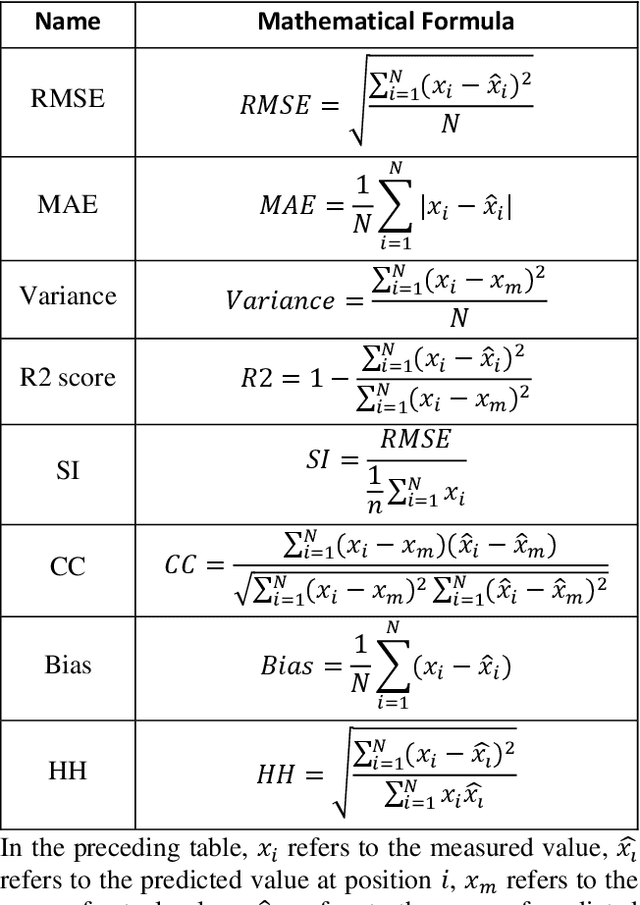
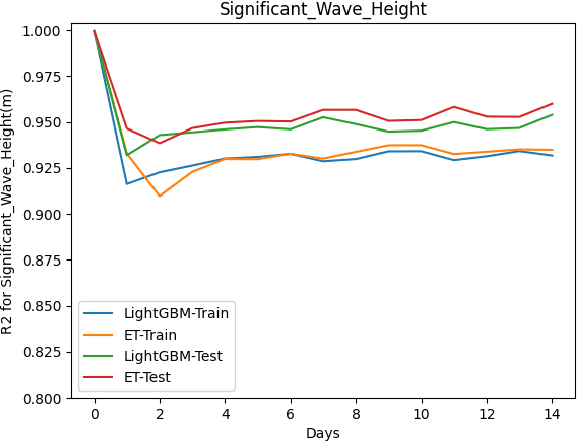
This paper proposes a machine learning method based on the Extra Trees (ET) algorithm for forecasting Significant Wave Heights in oceanic waters. To derive multiple features from the CDIP buoys, which make point measurements, we first nowcast various parameters and then forecast them at 30-min intervals. The proposed algorithm has Scatter Index (SI), Bias, Correlation Coefficient, Root Mean Squared Error (RMSE) of 0.130, -0.002, 0.97, and 0.14, respectively, for one day ahead prediction and 0.110, -0.001, 0.98, and 0.122, respectively, for 14-day ahead prediction on the testing dataset. While other state-of-the-art methods can only forecast up to 120 hours ahead, we extend it further to 14 days. This 14-day limit is not the forecasting limit, but it arises due to our experiment's setup. Our proposed setup includes spectral features, hv-block cross-validation, and stringent QC criteria. The proposed algorithm performs significantly better than the state-of-the-art methods commonly used for significant wave height forecasting for one-day ahead prediction. Moreover, the improved performance of the proposed machine learning method compared to the numerical methods, shows that this performance can be extended to even longer time periods allowing for early prediction of significant wave heights in oceanic waters.
Random Forest Classifier Based Prediction of Rogue waves on Deep Oceans
Mar 13, 2020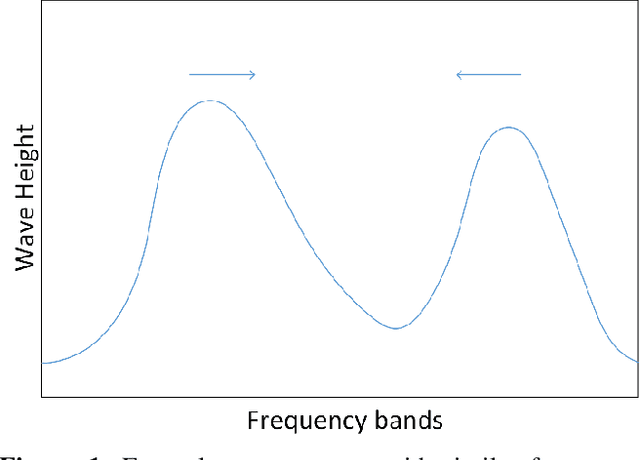
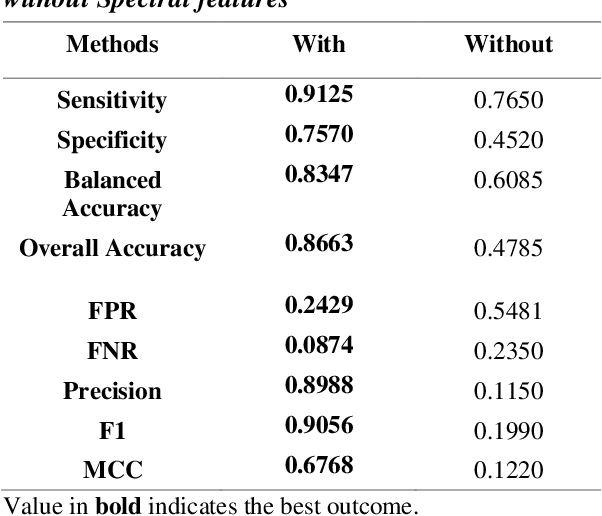
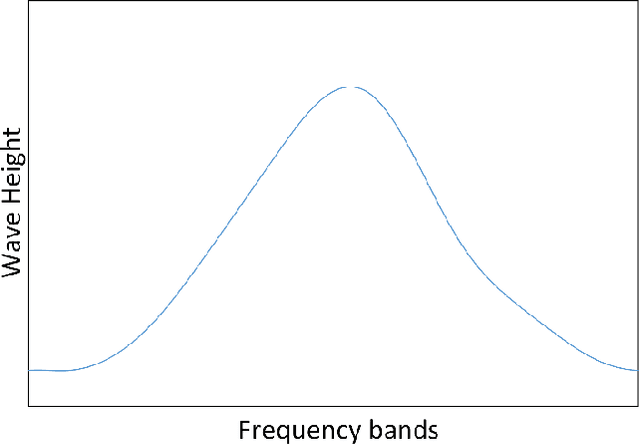
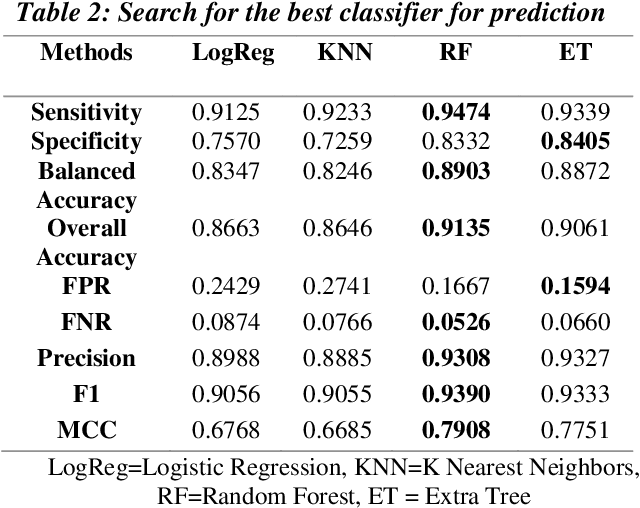
In this paper, we present a novel approach for the prediction of rogue waves in oceans using statistical machine learning methods. Since the ocean is composed of many wave systems, the change from a bimodal or multimodal directional distribution to unimodal one is taken as the warning criteria. Likewise, we explore various features that help in predicting rogue waves. The analysis of the results shows that the Spectral features are significant in predicting rogue waves. We find that nonlinear classifiers have better prediction accuracy than the linear ones. Finally, we propose a Random Forest Classifier based algorithm to predict rogue waves in oceanic conditions. The proposed algorithm has an Overall Accuracy of 89.57% to 91.81%, and the Balanced Accuracy varies between 79.41% to 89.03% depending on the forecast time window. Moreover, due to the model-free nature of the evaluation criteria and interdisciplinary characteristics of the approach, similar studies may be motivated in other nonlinear dispersive media, such as nonlinear optics, plasma, and solids, governed by similar equations, which will allow for the early detection of extreme waves