 Add to Chrome
 Add to Firefox
 Add to Edge
CoM$^3$eT: A foundation model for medical image analysis through federated, multidimensional context integration
Aug 17, 2026
Medical foundation models improve generalization when training AI models with limited labeled data, but remain confined to a single specialty, such as pathology or radiology, and to either sparse or dense outputs, such as classification or segmentation. Here, we present CoM$^3$eT (Co-representation Multidimensional Multitask Medical Transformer), a medical vision foundation model that unifies pathology and radiology, sparse and dense predictions, and two- and higher-dimensional inputs by modeling multidimensional context with attention. CoM$^3$eT outperformed other medical foundation models in an open competition spanning five tomographic, four whole-specimen, and three two-dimensional datasets, covering sparse and dense prediction tasks as well as report generation. When adapted across diverse clinical applications, training fewer than 2.5% of parameters achieved performance comparable to full fine-tuning, enabling research without access to high-performance GPU clusters. Applied to federated learning across hospitals, this approach achieved performance comparable to pooled-data training over internet connections and with consumer-grade hardware.

Calibration and Uncertainty for multiRater Volume Assessment in multiorgan Segmentation (CURVAS) challenge results
May 13, 2025
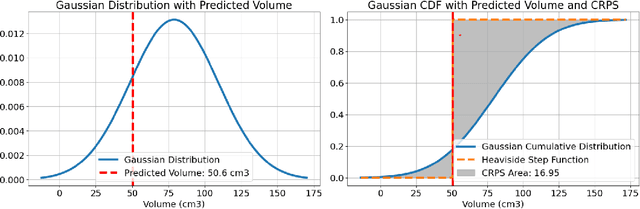
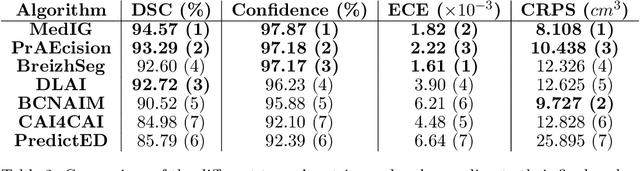
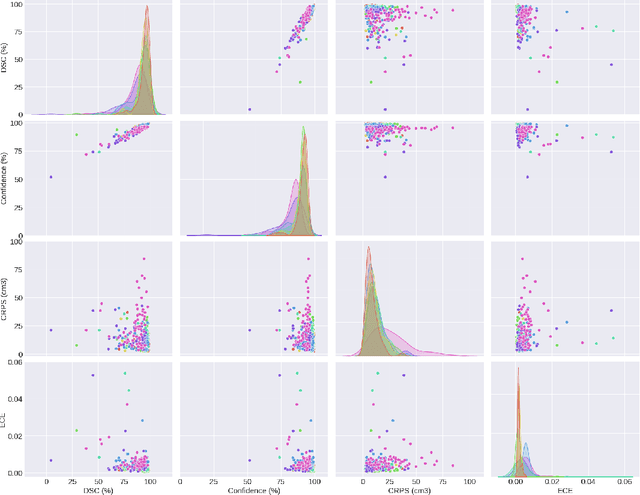
Deep learning (DL) has become the dominant approach for medical image segmentation, yet ensuring the reliability and clinical applicability of these models requires addressing key challenges such as annotation variability, calibration, and uncertainty estimation. This is why we created the Calibration and Uncertainty for multiRater Volume Assessment in multiorgan Segmentation (CURVAS), which highlights the critical role of multiple annotators in establishing a more comprehensive ground truth, emphasizing that segmentation is inherently subjective and that leveraging inter-annotator variability is essential for robust model evaluation. Seven teams participated in the challenge, submitting a variety of DL models evaluated using metrics such as Dice Similarity Coefficient (DSC), Expected Calibration Error (ECE), and Continuous Ranked Probability Score (CRPS). By incorporating consensus and dissensus ground truth, we assess how DL models handle uncertainty and whether their confidence estimates align with true segmentation performance. Our findings reinforce the importance of well-calibrated models, as better calibration is strongly correlated with the quality of the results. Furthermore, we demonstrate that segmentation models trained on diverse datasets and enriched with pre-trained knowledge exhibit greater robustness, particularly in cases deviating from standard anatomical structures. Notably, the best-performing models achieved high DSC and well-calibrated uncertainty estimates. This work underscores the need for multi-annotator ground truth, thorough calibration assessments, and uncertainty-aware evaluations to develop trustworthy and clinically reliable DL-based medical image segmentation models.