 Add to Chrome
 Add to Firefox
 Add to Edge
Who's Behind It? Annotating and Extracting Conspiratorial Actors from German Telegram Posts
Jul 06, 2026
Conspiracy theories commonly attribute important events to the actions of powerful and secretive actors. While computational research has largely focused on document-level analyses of conspiracy theories, less attention has been paid to identifying the actors that drive such narratives. We develop annotation guidelines for conspiratorial actors, present a span-annotated corpus of German Telegram posts, and investigate their automatic extraction using transformer-based models. We further apply the resulting model to the \textit{Schwurbelarchiv}, a large-scale archive of German conspiracy-related Telegram channels. Our results demonstrate that conspiratorial actors can be annotated with meaningful agreement and extracted with reasonable accuracy despite the linguistic complexity of conspiracy discourse, enabling large-scale analyses of actor representations in conspiracy narratives.

Bye Bye Perspective API: Lessons for Measurement Infrastructure in NLP, CSS and LLM Evaluation
Apr 28, 2026The closure of Perspective API at the end of 2026 discards what has functioned as the de facto standard for automated toxicity measurement in NLP, CSS, and LLM evaluation research. We document the structural dependence that the communities built on this single proprietary tool and discuss how this dependence caused epistemic problems that have affected - and will likely continue to affect - collective research efforts. Perspective's model was periodically updated without versioning or disclosure, its annotation structure reflected a single corporate operationalisation of a contested concept, and its scores were used simultaneously as an evaluation target and an evaluation standard. Its closure leaves behind non-updatable benchmarks, irreproducible results, and ultimately a field at risk of perpetuating these issues by turning to closed-source LLMs. We use Perspective's announced termination as an opportunity to call for an independent, valid, adaptable, and reproducible toxicity and hate speech measurement infrastructure, with the technical and governance requirements outlined in this paper.
Debunking with Dialogue? Exploring AI-Generated Counterspeech to Challenge Conspiracy Theories
Apr 23, 2025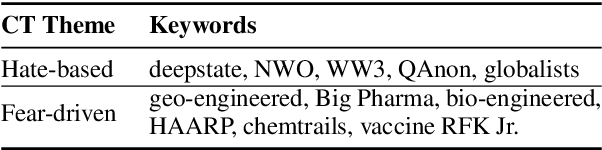
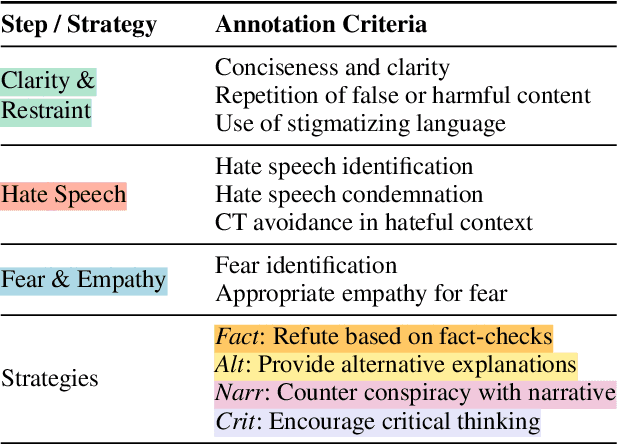
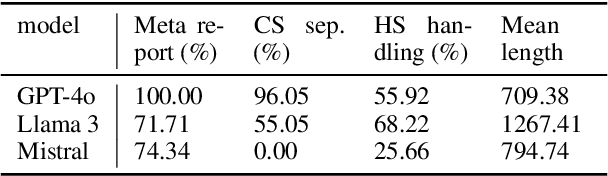
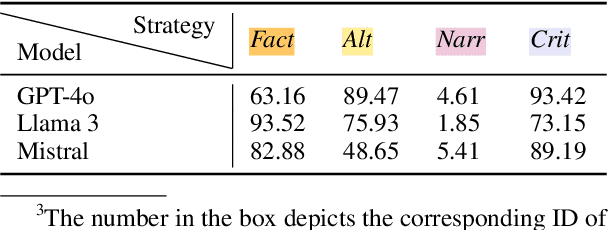
Counterspeech is a key strategy against harmful online content, but scaling expert-driven efforts is challenging. Large Language Models (LLMs) present a potential solution, though their use in countering conspiracy theories is under-researched. Unlike for hate speech, no datasets exist that pair conspiracy theory comments with expert-crafted counterspeech. We address this gap by evaluating the ability of GPT-4o, Llama 3, and Mistral to effectively apply counterspeech strategies derived from psychological research provided through structured prompts. Our results show that the models often generate generic, repetitive, or superficial results. Additionally, they over-acknowledge fear and frequently hallucinate facts, sources, or figures, making their prompt-based use in practical applications problematic.