 Add to Chrome
 Add to Firefox
 Add to Edge
Zero-shot Learning with Class Description Regularization
Jun 30, 2021
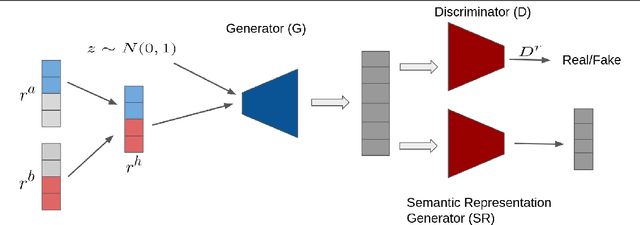
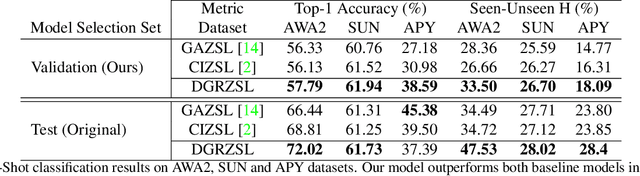
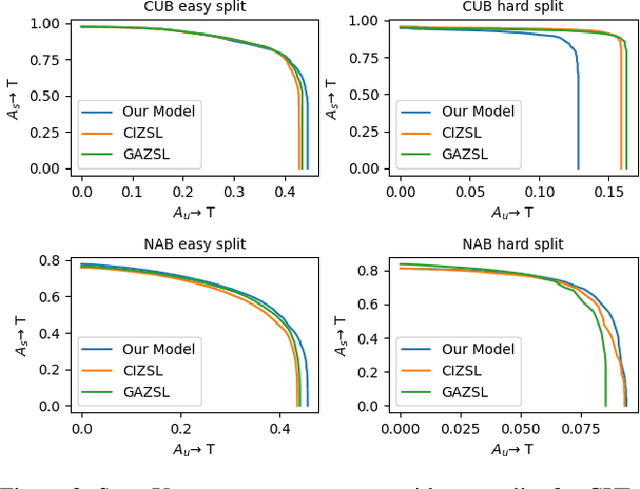
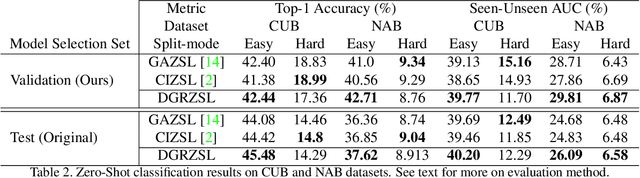
The purpose of generative Zero-shot learning (ZSL) is to learning from seen classes, transfer the learned knowledge, and create samples of unseen classes from the description of these unseen categories. To achieve better ZSL accuracies, models need to better understand the descriptions of unseen classes. We introduce a novel form of regularization that encourages generative ZSL models to pay more attention to the description of each category. Our empirical results demonstrate improvements over the performance of multiple state-of-the-art models on the task of generalized zero-shot recognition and classification when trained on textual description-based datasets like CUB and NABirds and attribute-based datasets like AWA2, aPY and SUN.

Continuous Latent Process Flows
Jun 29, 2021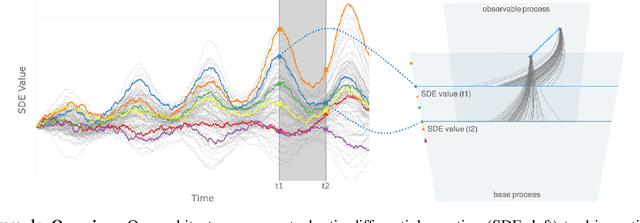
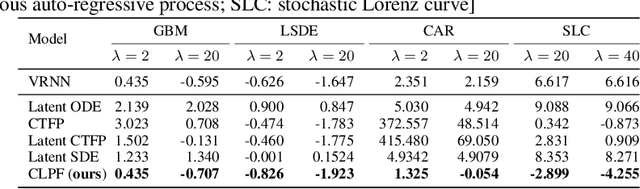
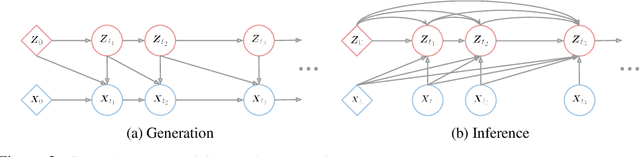
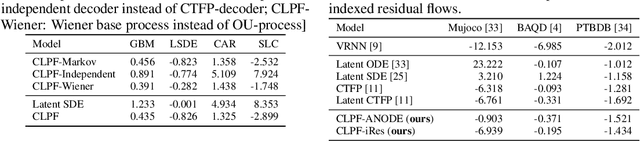
Partial observations of continuous time-series dynamics at arbitrary time stamps exist in many disciplines. Fitting this type of data using statistical models with continuous dynamics is not only promising at an intuitive level but also has practical benefits, including the ability to generate continuous trajectories and to perform inference on previously unseen time stamps. Despite exciting progress in this area, the existing models still face challenges in terms of their representational power and the quality of their variational approximations. We tackle these challenges with continuous latent process flows (CLPF), a principled architecture decoding continuous latent processes into continuous observable processes using a time-dependent normalizing flow driven by a stochastic differential equation. To optimize our model using maximum likelihood, we propose a novel piecewise construction of a variational posterior process and derive the corresponding variational lower bound using trajectory re-weighting. Our ablation studies demonstrate the effectiveness of our contributions in various inference tasks on irregular time grids. Comparisons to state-of-the-art baselines show our model's favourable performance on both synthetic and real-world time-series data.
CAMS: Color-Aware Multi-Style Transfer
Jun 26, 2021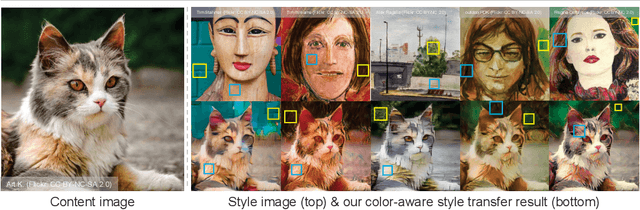
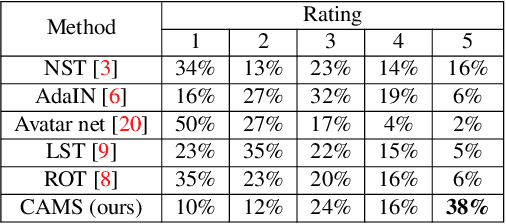

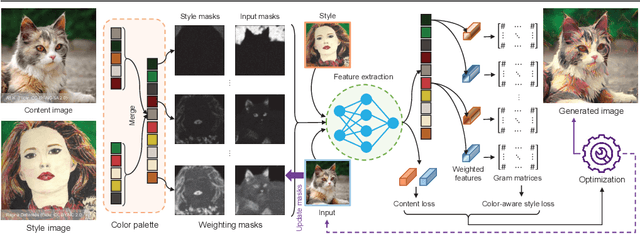
Image style transfer aims to manipulate the appearance of a source image, or "content" image, to share similar texture and colors of a target "style" image. Ideally, the style transfer manipulation should also preserve the semantic content of the source image. A commonly used approach to assist in transferring styles is based on Gram matrix optimization. One problem of Gram matrix-based optimization is that it does not consider the correlation between colors and their styles. Specifically, certain textures or structures should be associated with specific colors. This is particularly challenging when the target style image exhibits multiple style types. In this work, we propose a color-aware multi-style transfer method that generates aesthetically pleasing results while preserving the style-color correlation between style and generated images. We achieve this desired outcome by introducing a simple but efficient modification to classic Gram matrix-based style transfer optimization. A nice feature of our method is that it enables the users to manually select the color associations between the target style and content image for more transfer flexibility. We validated our method with several qualitative comparisons, including a user study conducted with 30 participants. In comparison with prior work, our method is simple, easy to implement, and achieves visually appealing results when targeting images that have multiple styles. Source code is available at https://github.com/mahmoudnafifi/color-aware-style-transfer.
Manifold Density Estimation via Generalized Dequantization
Feb 14, 2021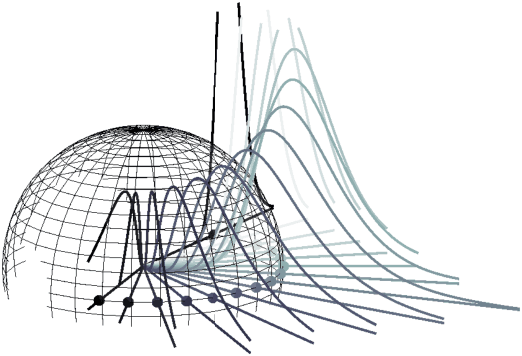

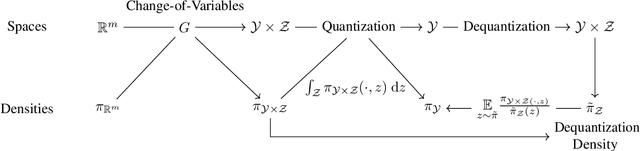

Density estimation is an important technique for characterizing distributions given observations. Much existing research on density estimation has focused on cases wherein the data lies in a Euclidean space. However, some kinds of data are not well-modeled by supposing that their underlying geometry is Euclidean. Instead, it can be useful to model such data as lying on a {\it manifold} with some known structure. For instance, some kinds of data may be known to lie on the surface of a sphere. We study the problem of estimating densities on manifolds. We propose a method, inspired by the literature on "dequantization," which we interpret through the lens of a coordinate transformation of an ambient Euclidean space and a smooth manifold of interest. Using methods from normalizing flows, we apply this method to the dequantization of smooth manifold structures in order to model densities on the sphere, tori, and the orthogonal group.
HistoGAN: Controlling Colors of GAN-Generated and Real Images via Color Histograms
Nov 23, 2020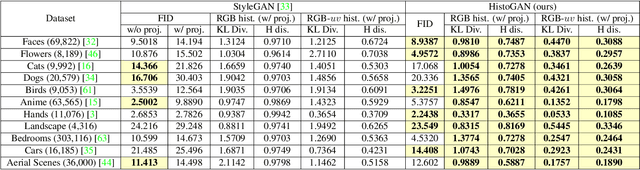
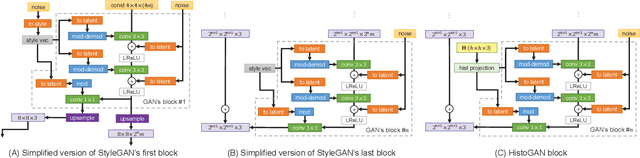
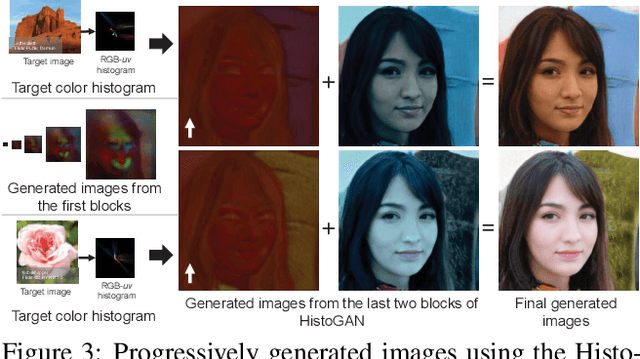
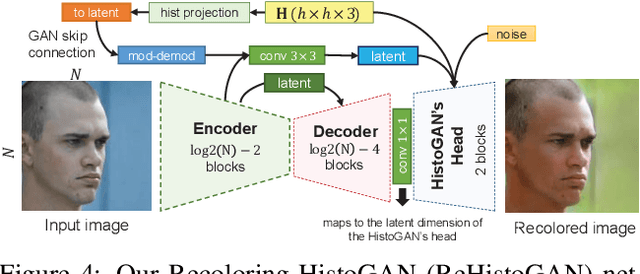
While generative adversarial networks (GANs) can successfully produce high-quality images, they can be challenging to control. Simplifying GAN-based image generation is critical for their adoption in graphic design and artistic work. This goal has led to significant interest in methods that can intuitively control the appearance of images generated by GANs. In this paper, we present HistoGAN, a color histogram-based method for controlling GAN-generated images' colors. We focus on color histograms as they provide an intuitive way to describe image color while remaining decoupled from domain-specific semantics. Specifically, we introduce an effective modification of the recent StyleGAN architecture to control the colors of GAN-generated images specified by a target color histogram feature. We then describe how to expand HistoGAN to recolor real images. For image recoloring, we jointly train an encoder network along with HistoGAN. The recoloring model, ReHistoGAN, is an unsupervised approach trained to encourage the network to keep the original image's content while changing the colors based on the given target histogram. We show that this histogram-based approach offers a better way to control GAN-generated and real images' colors while producing more compelling results compared to existing alternative strategies.
Wavelet Flow: Fast Training of High Resolution Normalizing Flows
Oct 26, 2020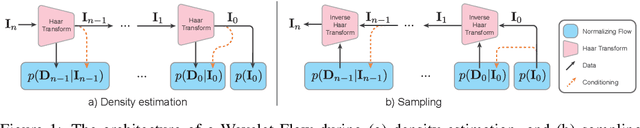
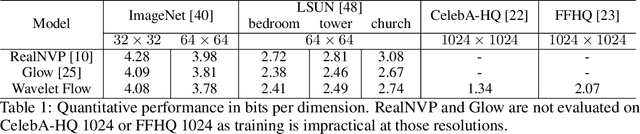
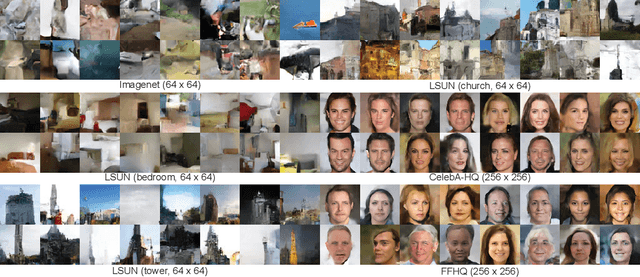
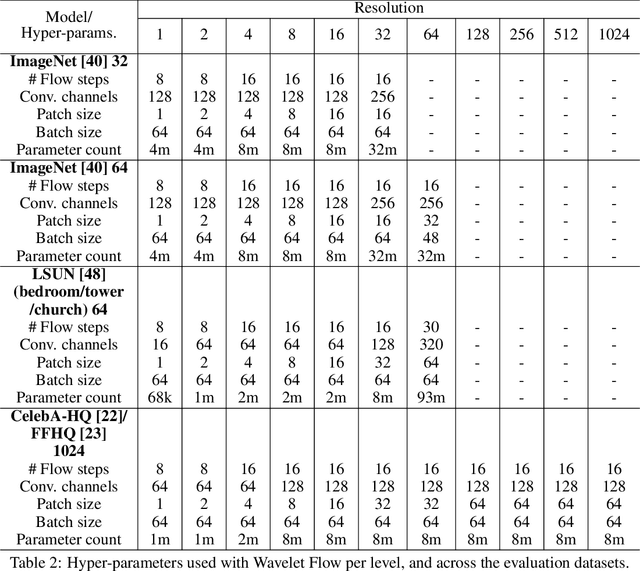
Normalizing flows are a class of probabilistic generative models which allow for both fast density computation and efficient sampling and are effective at modelling complex distributions like images. A drawback among current methods is their significant training cost, sometimes requiring months of GPU training time to achieve state-of-the-art results. This paper introduces Wavelet Flow, a multi-scale, normalizing flow architecture based on wavelets. A Wavelet Flow has an explicit representation of signal scale that inherently includes models of lower resolution signals and conditional generation of higher resolution signals, i.e., super resolution. A major advantage of Wavelet Flow is the ability to construct generative models for high resolution data (e.g., 1024 x 1024 images) that are impractical with previous models. Furthermore, Wavelet Flow is competitive with previous normalizing flows in terms of bits per dimension on standard (low resolution) benchmarks while being up to 15x faster to train.
Modeling Continuous Stochastic Processes with Dynamic Normalizing Flows
Feb 24, 2020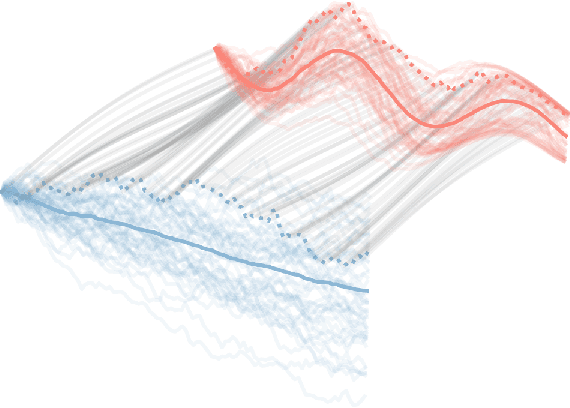
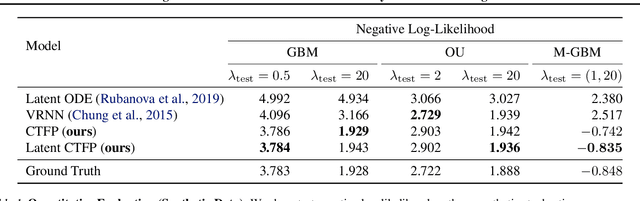
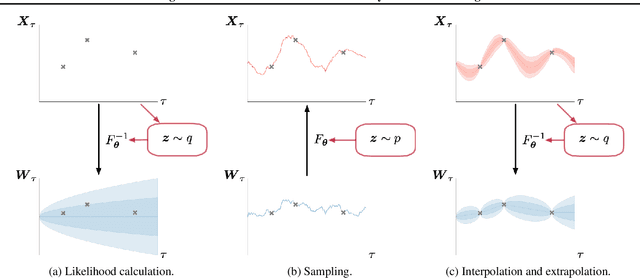
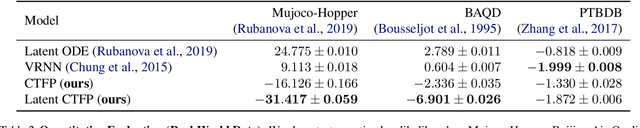
Normalizing flows transform a simple base distribution into a complex target distribution and have proved to be powerful models for data generation and density estimation. In this work, we propose a novel type of normalizing flow driven by a differential deformation of the continuous-time Wiener process. As a result, we obtain a rich time series model whose observable process inherits many of the appealing properties of its base process, such as efficient computation of likelihoods and marginals. Furthermore, our continuous treatment provides a natural framework for irregular time series with an independent arrival process, including straightforward interpolation. We illustrate the desirable properties of the proposed model on popular stochastic processes and demonstrate its superior flexibility to variational RNN and latent ODE baselines in a series of experiments on synthetic and real-world data.
Variational Hyper RNN for Sequence Modeling
Feb 24, 2020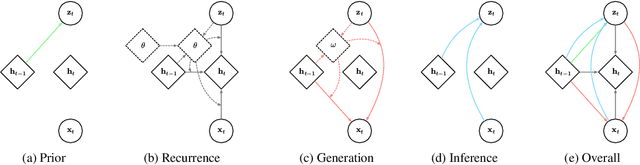

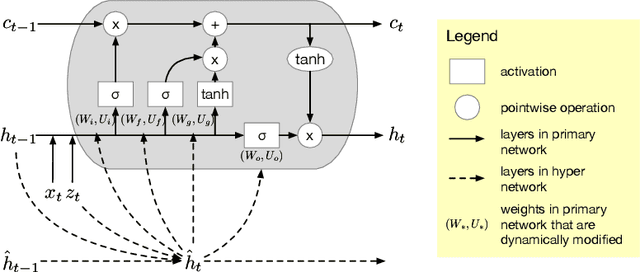
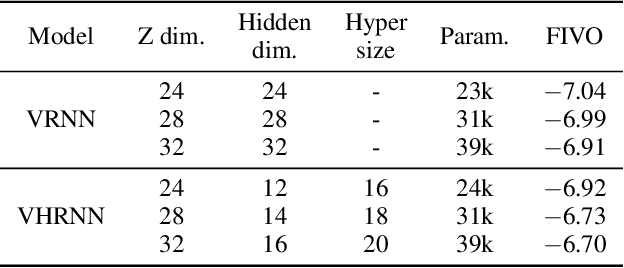
In this work, we propose a novel probabilistic sequence model that excels at capturing high variability in time series data, both across sequences and within an individual sequence. Our method uses temporal latent variables to capture information about the underlying data pattern and dynamically decodes the latent information into modifications of weights of the base decoder and recurrent model. The efficacy of the proposed method is demonstrated on a range of synthetic and real-world sequential data that exhibit large scale variations, regime shifts, and complex dynamics.
Normalizing Flows: Introduction and Ideas
Aug 25, 2019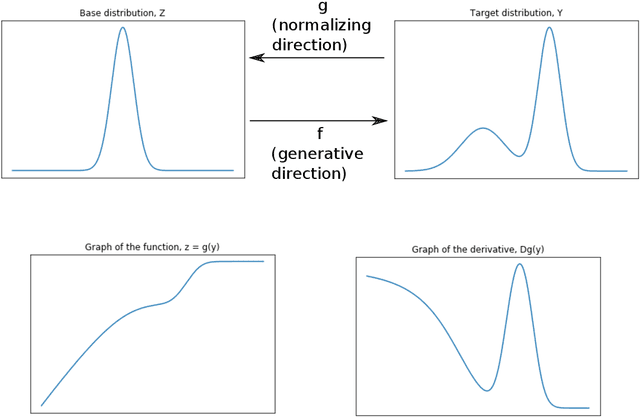
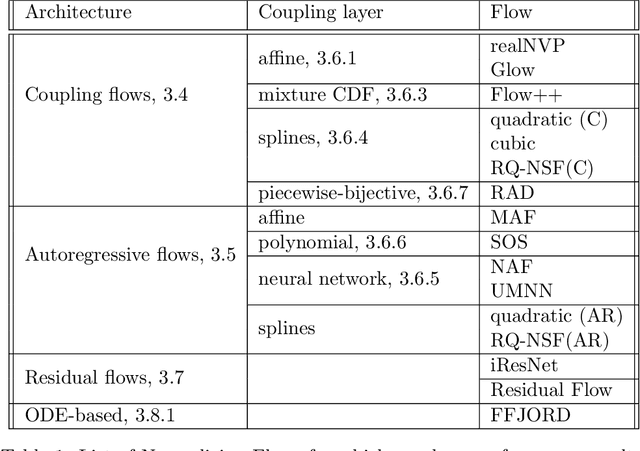
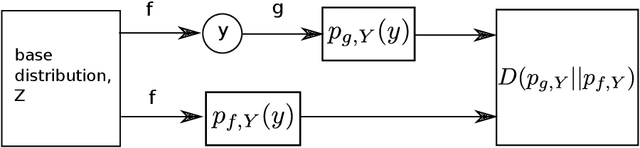

Normalizing Flows are generative models which produce tractable distributions where both sampling and density evaluation can be efficient and exact. The goal of this survey article is to give a coherent and comprehensive review of the literature around the construction and use of Normalizing Flows for distribution learning. We aim to provide context and explanation of the models, review current state-of-the-art literature, and identify open questions and promising future directions.
Noise Flow: Noise Modeling with Conditional Normalizing Flows
Aug 22, 2019



Modeling and synthesizing image noise is an important aspect in many computer vision applications. The long-standing additive white Gaussian and heteroscedastic (signal-dependent) noise models widely used in the literature provide only a coarse approximation of real sensor noise. This paper introduces Noise Flow, a powerful and accurate noise model based on recent normalizing flow architectures. Noise Flow combines well-established basic parametric noise models (e.g., signal-dependent noise) with the flexibility and expressiveness of normalizing flow networks. The result is a single, comprehensive, compact noise model containing fewer than 2500 parameters yet able to represent multiple cameras and gain factors. Noise Flow dramatically outperforms existing noise models, with 0.42 nats/pixel improvement over the camera-calibrated noise level functions, which translates to 52% improvement in the likelihood of sampled noise. Noise Flow represents the first serious attempt to go beyond simple parametric models to one that leverages the power of deep learning and data-driven noise distributions.