 Add to Chrome
 Add to Firefox
 Add to Edge
Gaussian Process-Based Extended Object Estimation for 6G ISAC at Millimeter-Wave Frequencies
May 26, 2026
This paper introduces a Gaussian process (GP)-based method for extended object estimation (EOE) in integrated sensing and communication (ISAC) scenarios, representing a promising approach to enhance environmental awareness beyond the conventional point-scatterer assumption. The suitability of the proposed GP-based method for EOE is investigated through a practical measurement setup compliant with the fifth-generation (5G) New Radio (NR) standard and employing bistatic sensing, with results evaluated for both mapping and simultaneous localization and mapping (SLAM ) cases at millimeter-wave (mmWave) frequencies. The findings reveal that the enhanced capabilities of communication networks, when combined with bistatic sensing and GP-based EOE, enable improved environmental awareness in future wireless systems. Importantly, the results demonstrate that, under practical conditions, GP effectively performs EOE in both mmWave mapping and SLAM scenarios.

Time Index Modulation-Driven Standalone RIS Mechanism for Symbiotic Radio
Jun 30, 2024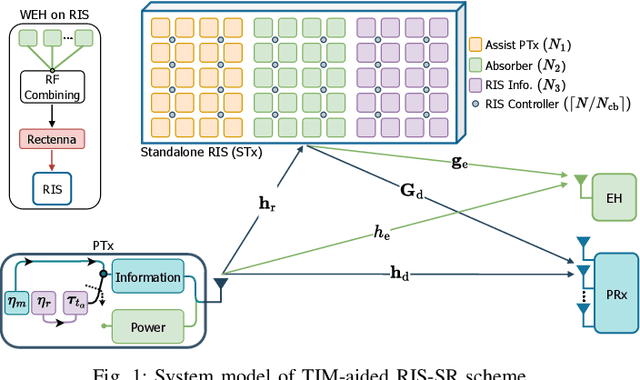
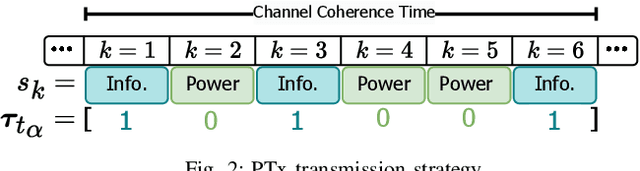
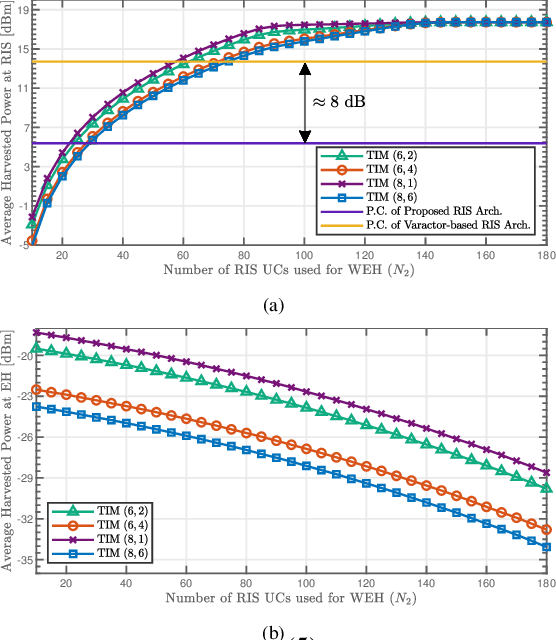
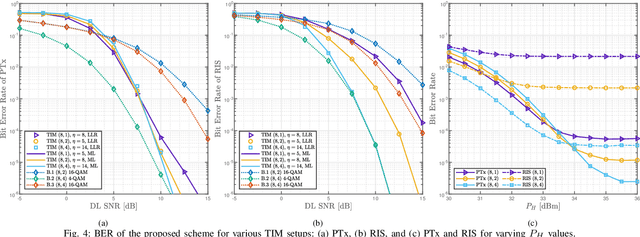
The rising demand for energy and spectrum resources in next-generation Internet-of-things (IoT) systems accounts for innovative modes of information and power transfer. One potential solution is to harness the active transmission capability of devices to facilitate data transmission and wireless energy harvesting (WEH) for backscatter communication so as to form a symbiotic radio (SR) environment in a mutualistic manner. Additionally, incorporating reconfigurable intelligent surfaces (RISs) into the SR environment can provide an additional link and enhance the reliability of backscatter communication, thereby reinforcing the symbiotic relationships between active and passive devices. This paper proposes a novel SR system where a standalone RIS sustains its functions through WEH based on a low-power RIS structure and establishes mutualistic symbiosis by utilizing a signal conveyed by the primary transmitter (PTx) to assist ongoing transmissions and convey information to the primary receiver (PRx). The PTx employs time index modulation (TIM) to transmit information to the PRx and power to the RIS and energy harvester (EH). A log-likelihood ratio (LLR)-based detector is presented to address challenges in the TIM scheme. Finally, the performance of the proposed scheme is investigated in terms of harvested direct current (DC) power at the RIS and EH, as well as the bit error rate (BER) at the PRx.
Index Modulation-based Information Harvesting for Far-Field RF Power Transfer
Sep 24, 2023While wireless information transmission (WIT) is evolving into its sixth generation (6G), maintaining terminal operations that rely on limited battery capacities has become one of the most paramount challenges for Internet-of-Things (IoT) platforms. In this respect, there exists a growing interest in energy harvesting technology from ambient resources, and wireless power transfer (WPT) can be the key solution towards enabling battery-less infrastructures referred to as zero-power communication technology. Indeed, eclectic integration approaches between WPT and WIT mechanisms are becoming a vital necessity to limit the need for replacing batteries. Beyond the conventional separation between data and power components of the emitted waveforms, as in simultaneous wireless information and power transfer (SWIPT) mechanisms, a novel protocol referred to as information harvesting (IH) has recently emerged. IH leverages existing WPT mechanisms for data communication by incorporating index modulation (IM) techniques on top of the existing far-field power transfer mechanism. In this paper, a unified framework for the IM-based IH mechanisms has been presented where the feasibility of various IM techniques are evaluated based on different performance metrics. The presented results demonstrate the substantial potential to enable data communication within existing far-field WPT systems, particularly in the context of next-generation IoT wireless networks.