 Add to Chrome
 Add to Firefox
 Add to Edge
MorVess: Morphology-Aware Pulmonary Vessel Segmentation Network
Jun 23, 2026
Accurate pulmonary vessel segmentation remains challenging due to the sparse, tortuous, and multi-scale nature of vascular structures, where small branches are easily lost and topology integrity is difficult to preserve under voxel-wise supervision. Existing deep segmentation models primarily optimize binary masks, lacking explicit geometric constraints, thus struggling to recover continuous tubular morphology and fine vascular connectivity. In this study, we introduce MorVess, a morphology-aware segmentation framework that integrates differentiable geometric priors with large-scale foundation model adaptation to achieve fine-grained vascular parsing. MorVess jointly predicts vessel masks, distance maps, and thickness maps, providing explicit supervision for vascular boundaries, centerline consistency, and smooth diameter transitions. A lightweight 2.5D adapter bridges 3D spatial context and 2D SAM representations, while a global-local fusion block aggregates multi-level semantics and geometric cues for high-fidelity topology reconstruction. Across two challenging pulmonary CT benchmarks, MorVess delivers superior Dice, clDice, and HD95 scores, substantially improving small-vessel recovery and global connectivity. These results demonstrate that embedding geometric intelligence into pretrained vision models offers a principled and scalable pathway toward precise vessel analysis and clinically reliable structural quantification. Our source code is available at https://github.com/MaoFuyou/MorVess.

Mutual Distillation of Dual-Foundation Models for Semi-Supervised PET/CT Segmentation
Jun 14, 2026Organ segmentation from PET/CT is critical for quantitative analysis and radiotherapy planning in oncology. To ease the high annotation cost of PET/CT segmentation, semi-supervised learning (SSL) provides a practical and effective solution for developing deep models with limited labeled data. Recent developments in visual foundation models have demonstrated remarkable adaptability with improved efficiency. In this work, we propose a mutual distillation framework that seamlessly exploits both structural and functional foundation models, which act as modality-specific generalists for distilling knowledge from structural CT and metabolic PET imaging. By bridging the gap between the task-specific precision of student models and the segmentation priors of generalist foundation models, we propose \textbf{MuDuo}, a mutual distillation framework that synergistically leverages SAM-Med3D for CT and SegAnyPET for PET to distill their knowledge into a lightweight student network. Our approach eliminates the need for manual prompts while maximizing the utility of unlabeled data for automatic segmentation, achieving state-of-the-art performance on the AutoPET dataset with only 5 labeled cases. Our source code is available at https://github.com/Wu-beining/MuDuo.
Cross-modal Medical Image Generation Based on Pyramid Convolutional Attention Network
Nov 26, 2024


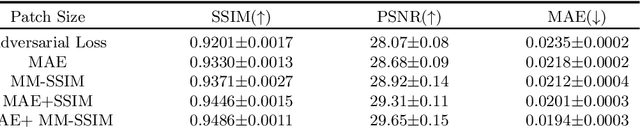
The integration of multimodal medical imaging can provide complementary and comprehensive information for the diagnosis of Alzheimer's disease (AD). However, in clinical practice, since positron emission tomography (PET) is often missing, multimodal images might be incomplete. To address this problem, we propose a method that can efficiently utilize structural magnetic resonance imaging (sMRI) image information to generate high-quality PET images. Our generation model efficiently utilizes pyramid convolution combined with channel attention mechanism to extract multi-scale local features in sMRI, and injects global correlation information into these features using self-attention mechanism to ensure the restoration of the generated PET image on local texture and global structure. Additionally, we introduce additional loss functions to guide the generation model in producing higher-quality PET images. Through experiments conducted on publicly available ADNI databases, the generated images outperform previous research methods in various performance indicators (average absolute error: 0.0194, peak signal-to-noise ratio: 29.65, structural similarity: 0.9486) and are close to real images. In promoting AD diagnosis, the generated images combined with their corresponding sMRI also showed excellent performance in AD diagnosis tasks (classification accuracy: 94.21 %), and outperformed previous research methods of the same type. The experimental results demonstrate that our method outperforms other competing methods in quantitative metrics, qualitative visualization, and evaluation criteria.