 Add to Chrome
 Add to Firefox
 Add to Edge
Reward-Adaptive Iterative Discovery: A Case Study on Automated Game Testing for NHL26
Jul 08, 2026
Testing is a major effort for the gaming industry, requiring a significant part of development budget and people power. We present a case study on a development version of the ice hockey game EA SPORTS NHL 26, for which human playtesters test the goalie AI for behavioral exploits. To reduce the effort of re-testing the goalie AI after every game or behavior modification in the development phase, we propose Reward-Adaptive Iterative Discovery (RAID), a novel approach to automatically find exploits using an iterative Reinforcement Learning (RL) approach that trains a population of goal scoring agents. While previous approaches can already successfully find exploits, RL algorithms tend to overfit to a single solution. We introduce a simple extension on top of existing RL algorithms, such that they find multiple diverse high-quality solutions. For our first deployment of this approach, within a single experiment we were able to find six hockey scoring exploit strategies that were qualitatively similar to those that playtesters had found in hours-long manual testing sessions.

Augmenting Game AI with Deep Reinforcement Learning
Jun 18, 2026Immersion in video games depends not only on graphics, audio, and game mechanics, but also on the quality of in-game characters. Producing believable characters, or game AI, remains a significant challenge as behavioral complexity is hard to capture with hand-coded systems. Game AI is a source of immersion and engagement; however, the limitations stemming from the challenges of creating game AI often lead to frustration and the breaking of the illusion of realism within the game. The introduction of machine learning models opens the door to creating more believable, authentic, and relatable characters in games. The promise is that they either learn from interacting with the game, or from player data, to develop true human-like behavior. In this paper, we envision more applications of reinforcement learning for game AI in the future. For this to materialize, current research limitations are prohibitive to broad deployment across game genres. Therefore, we propose a framework for training reinforcement learning models with a set of requirements in mind that are suited towards game AI and game development. We present examples of games with reinforcement learning-augmented game AI and describe the practicalities of deploying player-facing machine learning agents in modern games. Furthermore, we identify bottlenecks and hard problems in these areas, which we believe offer promising research directions to accelerate the adoption of machine learning in game AI for the video game industry.
Hierarchical Control in Multi-Agent Games: LLM-based Planning and RL Execution
Jun 18, 2026Reinforcement learning (RL) has achieved strong performance in sequential decision-making, yet scaling to complex multi-agent environments remains challenging due to sparse rewards, large state-action spaces, and the difficulty of learning coordinated strategies. We propose a hierarchical architecture where a pretrained large language model (LLM) acts as a centralized strategic controller that selects among specialized RL skill policies for a team of agents, while RL policies handle reactive low-level execution. We evaluate this hybrid system in a competitive 2v2 King of the Hill environment against behavior tree (BT) and \emph{``Flat''} RL (end-to-end training without skill decomposition) baselines. The LLM+RL system achieves task performance statistically equivalent to hand-crafted BT (46.4\% vs 51.5\% win rate, $p=0.103$) while both significantly outperform Flat RL trained without skill decomposition. A user study ($n=15$) reveals that 60\% of participants perceive LLM+RL agents as the most human-like ($p=0.027$), citing behavioral adaptability and tactical variability. These results demonstrate that pretrained LLM reasoning can effectively orchestrate pretrained RL skills, achieving competitive multi-agent coordination and superior perceived believability without manual rule engineering.
Towards Better Sample Efficiency in Multi-Agent Reinforcement Learning via Exploration
Mar 17, 2025Multi-agent reinforcement learning has shown promise in learning cooperative behaviors in team-based environments. However, such methods often demand extensive training time. For instance, the state-of-the-art method TiZero takes 40 days to train high-quality policies for a football environment. In this paper, we hypothesize that better exploration mechanisms can improve the sample efficiency of multi-agent methods. We propose two different approaches for better exploration in TiZero: a self-supervised intrinsic reward and a random network distillation bonus. Additionally, we introduce architectural modifications to the original algorithm to enhance TiZero's computational efficiency. We evaluate the sample efficiency of these approaches through extensive experiments. Our results show that random network distillation improves training sample efficiency by 18.8% compared to the original TiZero. Furthermore, we evaluate the qualitative behavior of the models produced by both variants against a heuristic AI, with the self-supervised reward encouraging possession and random network distillation leading to a more offensive performance. Our results highlights the applicability of our random network distillation variant in practical settings. Lastly, due to the nature of the proposed method, we acknowledge its use beyond football simulation, especially in environments with strong multi-agent and strategic aspects.
Improving Conditional Level Generation using Automated Validation in Match-3 Games
Sep 10, 2024


Generative models for level generation have shown great potential in game production. However, they often provide limited control over the generation, and the validity of the generated levels is unreliable. Despite this fact, only a few approaches that learn from existing data provide the users with ways of controlling the generation, simultaneously addressing the generation of unsolvable levels. %One of the main challenges it faces is that levels generated through automation may not be solvable thus requiring validation. are not always engaging, challenging, or even solvable. This paper proposes Avalon, a novel method to improve models that learn from existing level designs using difficulty statistics extracted from gameplay. In particular, we use a conditional variational autoencoder to generate layouts for match-3 levels, conditioning the model on pre-collected statistics such as game mechanics like difficulty and relevant visual features like size and symmetry. Our method is general enough that multiple approaches could potentially be used to generate these statistics. We quantitatively evaluate our approach by comparing it to an ablated model without difficulty conditioning. Additionally, we analyze both quantitatively and qualitatively whether the style of the dataset is preserved in the generated levels. Our approach generates more valid levels than the same method without difficulty conditioning.
* 10 pages, 5 figures, 2 tables
Reinforcement Learning for High-Level Strategic Control in Tower Defense Games
Jun 12, 2024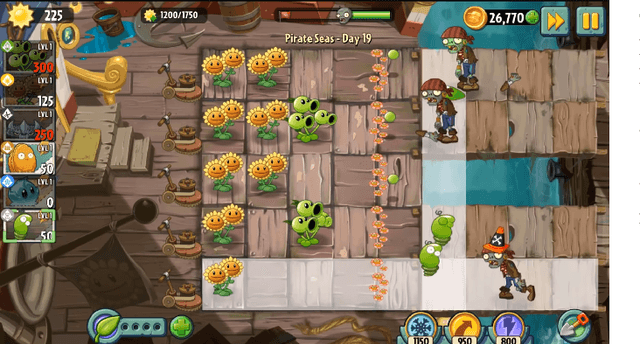
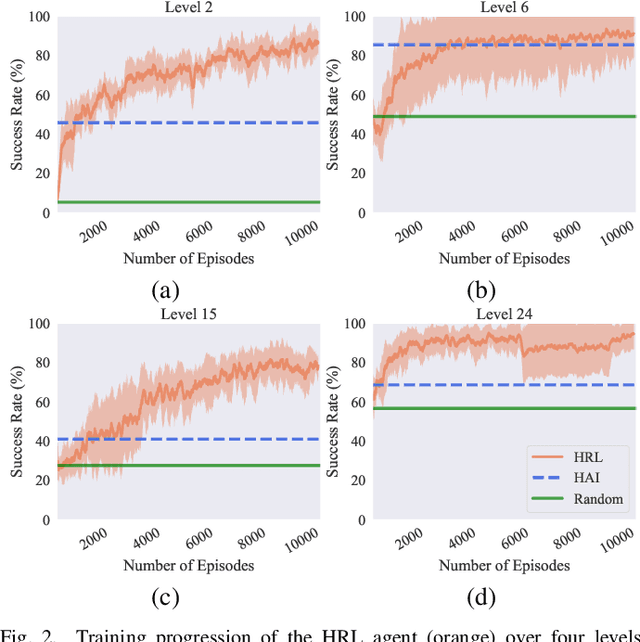
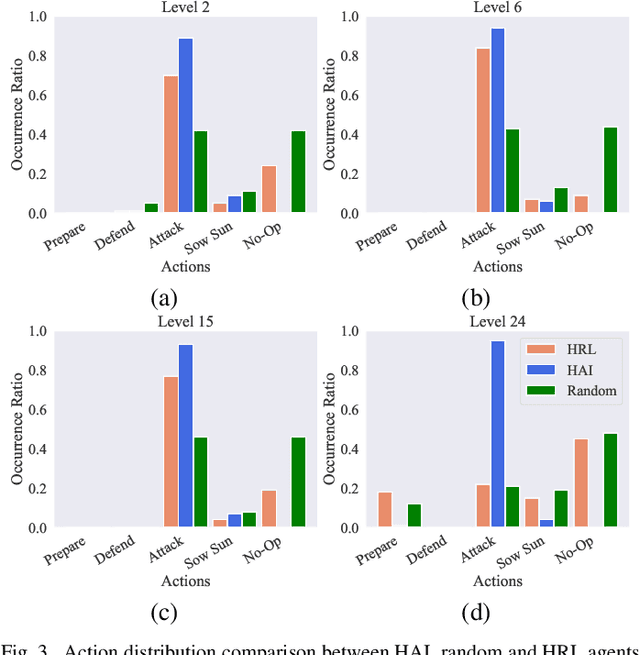

In strategy games, one of the most important aspects of game design is maintaining a sense of challenge for players. Many mobile titles feature quick gameplay loops that allow players to progress steadily, requiring an abundance of levels and puzzles to prevent them from reaching the end too quickly. As with any content creation, testing and validation are essential to ensure engaging gameplay mechanics, enjoyable game assets, and playable levels. In this paper, we propose an automated approach that can be leveraged for gameplay testing and validation that combines traditional scripted methods with reinforcement learning, reaping the benefits of both approaches while adapting to new situations similarly to how a human player would. We test our solution on a popular tower defense game, Plants vs. Zombies. The results show that combining a learned approach, such as reinforcement learning, with a scripted AI produces a higher-performing and more robust agent than using only heuristic AI, achieving a 57.12% success rate compared to 47.95% in a set of 40 levels. Moreover, the results demonstrate the difficulty of training a general agent for this type of puzzle-like game.
Improving Generalization in Game Agents with Data Augmentation in Imitation Learning
Sep 22, 2023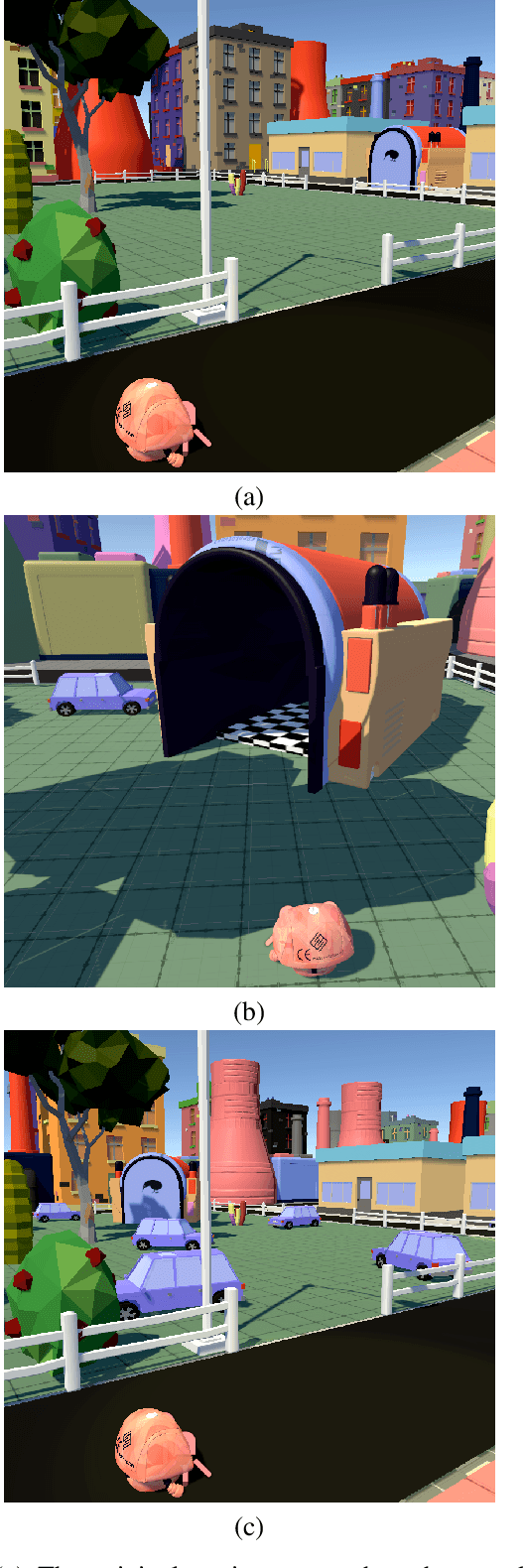
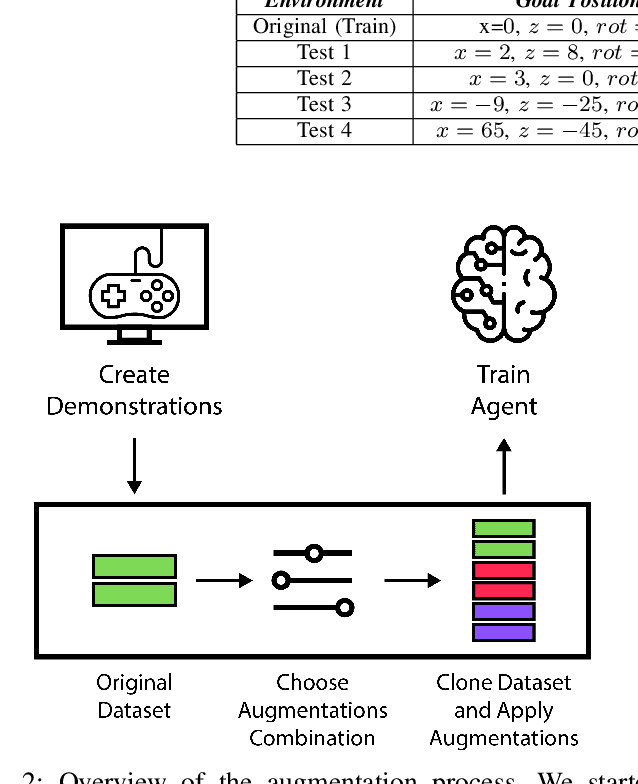
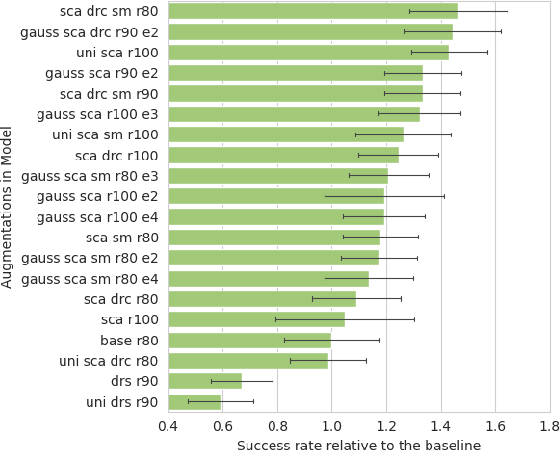
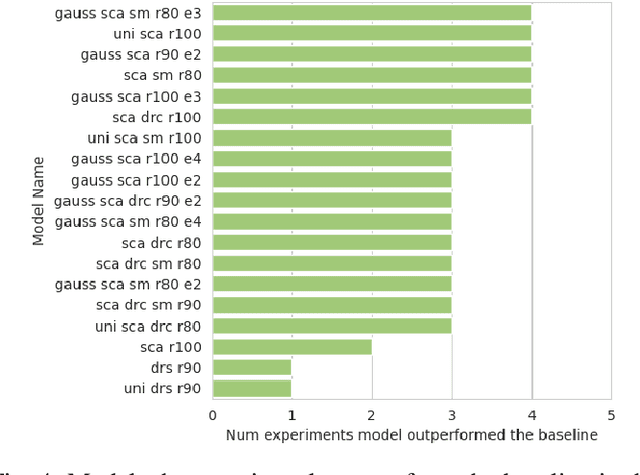
Imitation learning is an effective approach for training game-playing agents and, consequently, for efficient game production. However, generalization - the ability to perform well in related but unseen scenarios - is an essential requirement that remains an unsolved challenge for game AI. Generalization is difficult for imitation learning agents because it requires the algorithm to take meaningful actions outside of the training distribution. In this paper we propose a solution to this challenge. Inspired by the success of data augmentation in supervised learning, we augment the training data so the distribution of states and actions in the dataset better represents the real state-action distribution. This study evaluates methods for combining and applying data augmentations to observations, to improve generalization of imitation learning agents. It also provides a performance benchmark of these augmentations across several 3D environments. These results demonstrate that data augmentation is a promising framework for improving generalization in imitation learning agents.
Generating Personas for Games with Multimodal Adversarial Imitation Learning
Aug 15, 2023Reinforcement learning has been widely successful in producing agents capable of playing games at a human level. However, this requires complex reward engineering, and the agent's resulting policy is often unpredictable. Going beyond reinforcement learning is necessary to model a wide range of human playstyles, which can be difficult to represent with a reward function. This paper presents a novel imitation learning approach to generate multiple persona policies for playtesting. Multimodal Generative Adversarial Imitation Learning (MultiGAIL) uses an auxiliary input parameter to learn distinct personas using a single-agent model. MultiGAIL is based on generative adversarial imitation learning and uses multiple discriminators as reward models, inferring the environment reward by comparing the agent and distinct expert policies. The reward from each discriminator is weighted according to the auxiliary input. Our experimental analysis demonstrates the effectiveness of our technique in two environments with continuous and discrete action spaces.
Automatic Testing and Validation of Level of Detail Reductions Through Supervised Learning
Aug 25, 2022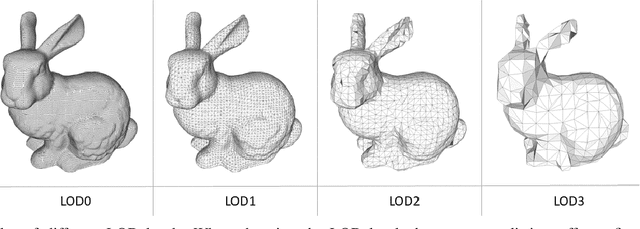
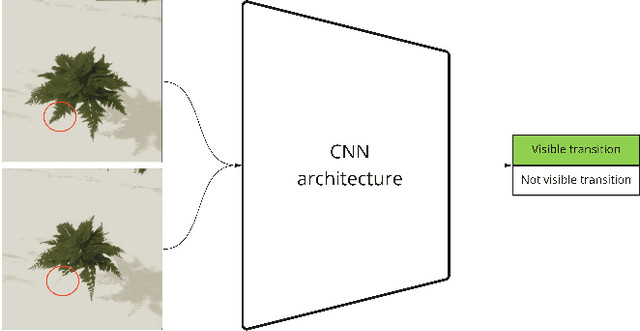
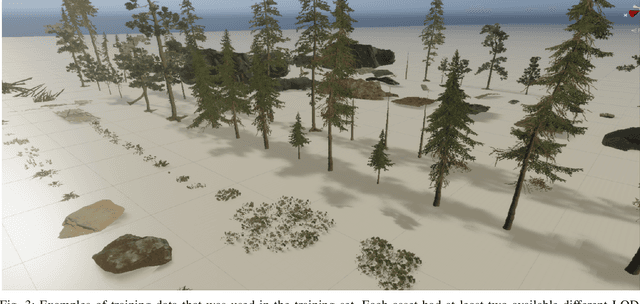
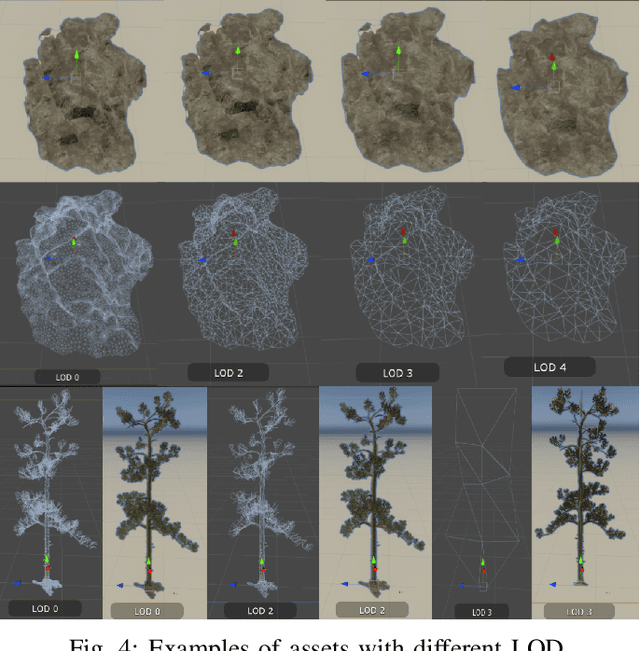
Modern video games are rapidly growing in size and scale, and to create rich and interesting environments, a large amount of content is needed. As a consequence, often several thousands of detailed 3D assets are used to create a single scene. As each asset's polygon mesh can contain millions of polygons, the number of polygons that need to be drawn every frame may exceed several billions. Therefore, the computational resources often limit how many detailed objects that can be displayed in a scene. To push this limit and to optimize performance one can reduce the polygon count of the assets when possible. Basically, the idea is that an object at farther distance from the capturing camera, consequently with relatively smaller screen size, its polygon count may be reduced without affecting the perceived quality. Level of Detail (LOD) refers to the complexity level of a 3D model representation. The process of removing complexity is often called LOD reduction and can be done automatically with an algorithm or by hand by artists. However, this process may lead to deterioration of the visual quality if the different LODs differ significantly, or if LOD reduction transition is not seamless. Today the validation of these results is mainly done manually requiring an expert to visually inspect the results. However, this process is slow, mundane, and therefore prone to error. Herein we propose a method to automate this process based on the use of deep convolutional networks. We report promising results and envision that this method can be used to automate the process of LOD reduction testing and validation.
Towards Informed Design and Validation Assistance in Computer Games Using Imitation Learning
Aug 19, 2022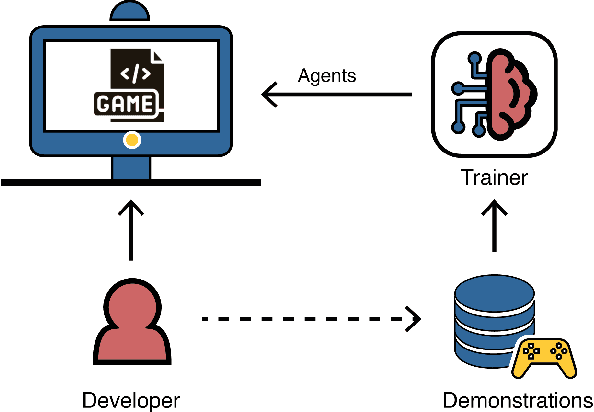
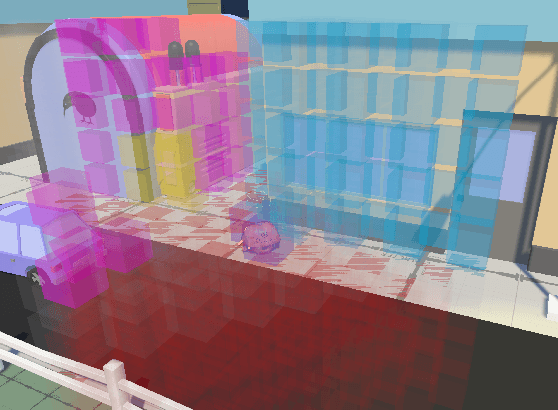
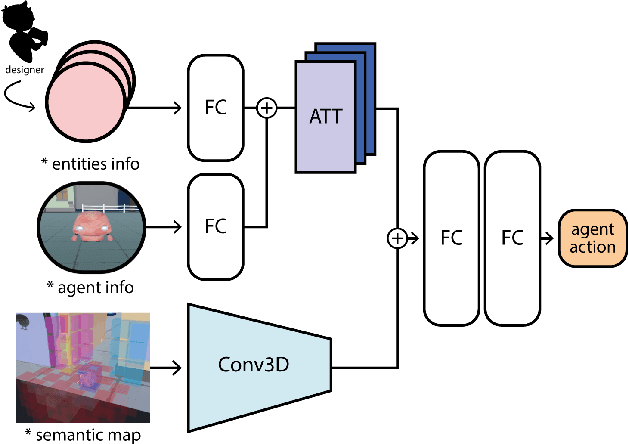

In games, as in and many other domains, design validation and testing is a huge challenge as systems are growing in size and manual testing is becoming infeasible. This paper proposes a new approach to automated game validation and testing. Our method leverages a data-driven imitation learning technique, which requires little effort and time and no knowledge of machine learning or programming, that designers can use to efficiently train game testing agents. We investigate the validity of our approach through a user study with industry experts. The survey results show that our method is indeed a valid approach to game validation and that data-driven programming would be a useful aid to reducing effort and increasing quality of modern playtesting. The survey also highlights several open challenges. With the help of the most recent literature, we analyze the identified challenges and propose future research directions suitable for supporting and maximizing the utility of our approach.