 Add to Chrome
 Add to Firefox
 Add to Edge
GaussianFusion: Unified 3D Gaussian Representation for Multi-Modal Fusion Perception
Jul 01, 2026
The bird's-eye view (BEV) representation enables multi-sensor features to be fused within a unified space, serving as the primary approach for achieving comprehensive 3D perception. However, the discrete grid representation of BEV leads to significant detail loss and limits feature alignment and cross-modal information interaction in multimodal fusion perception. In this work, we break from the conventional BEV paradigm and propose a new universal framework for multi-modal fusion based on 3D Gaussian representation. This approach naturally unifies multi-modal features within a shared and continuous 3D Gaussian space, effectively preserving edge and fine texture details. To achieve this, we design a novel forward-projection-based multi-modal Gaussian initialization module and a shared cross-modal Gaussian encoder that iteratively updates Gaussian properties based on an attention mechanism. GaussianFusion is inherently a task-agnostic model, with its unified Gaussian representation naturally supporting various 3D perception tasks. Extensive experiments demonstrate the generality and robustness of GaussianFusion. On the nuScenes dataset, it outperforms the 3D object detection baseline BEVFusion by 2.6 NDS. Its variant surpasses GaussFormer on 3D semantic occupancy with 1.55 mIoU improvement while using only 30% of the Gaussians and achieving a 450% speedup.

Unified Single-Stage Transformer Network for Efficient RGB-T Tracking
Aug 26, 2023


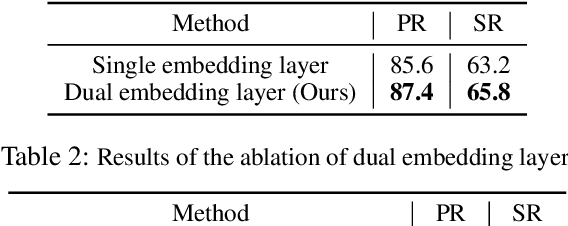
Most existing RGB-T tracking networks extract modality features in a separate manner, which lacks interaction and mutual guidance between modalities. This limits the network's ability to adapt to the diverse dual-modality appearances of targets and the dynamic relationships between the modalities. Additionally, the three-stage fusion tracking paradigm followed by these networks significantly restricts the tracking speed. To overcome these problems, we propose a unified single-stage Transformer RGB-T tracking network, namely USTrack, which unifies the above three stages into a single ViT (Vision Transformer) backbone with a dual embedding layer through self-attention mechanism. With this structure, the network can extract fusion features of the template and search region under the mutual interaction of modalities. Simultaneously, relation modeling is performed between these features, efficiently obtaining the search region fusion features with better target-background discriminability for prediction. Furthermore, we introduce a novel feature selection mechanism based on modality reliability to mitigate the influence of invalid modalities for prediction, further improving the tracking performance. Extensive experiments on three popular RGB-T tracking benchmarks demonstrate that our method achieves new state-of-the-art performance while maintaining the fastest inference speed 84.2FPS. In particular, MPR/MSR on the short-term and long-term subsets of VTUAV dataset increased by 11.1$\%$/11.7$\%$ and 11.3$\%$/9.7$\%$.