 Add to Chrome
 Add to Firefox
 Add to Edge
A Model Merging Approach for Continual MLLM Unlearning
Aug 05, 2026
Multimodal large language model (MLLM) unlearning methods have been proposed to remove private, sensitive, or proprietary information from well-trained models. However, most existing MLLM unlearning methods are designed for one-shot requests and fail to adequately address continual scenarios, as repeatedly applying one-shot operations leads to cumulative utility degradation, unlearning rebound, and retention drift. We introduce Merging for Continual Unlearning (MCU), an approach that dynamically merges multiple one-shot unlearning adapters into a unified adapter upon receiving each new unlearning request.Through a leave-one-out merging analysis, we reveal that these unlearning adapters exhibit strong cross-task dependencies. Such dependencies have two contrasting effects: they can facilitate cross-task unlearning transferability, but they can also introduce severe interference that degrades unlearning effectiveness and compromises retained knowledge. To address this challenge, MCU projects the adapters into a shared representation space, preserves their dominant directions, suppresses over-concentrated coordinates, and reconfigures cross-task dependencies to mitigate interference while enhancing transferability. Experiments on ICU-Bench and MLLMU-Bench demonstrate that MCU achieves superior unlearning effectiveness while preserving both retained knowledge and general multimodal utility.

A VLM-Enhanced Framework for Comprehensive Traffic Sign Condition Assessment Integrating Daytime Visual Performance and Nighttime Retroreflectivity Evaluation
Jul 07, 2026Traffic signs are crucial components of road safety, serving as visual tools under all lighting conditions. The Manual on Uniform Traffic Control Devices (MUTCD) specifies daytime visual factors such as legibility and color contrast, and nighttime retroreflectivity requirements. Traditional assessment methods rely on manual inspections, which the Federal Highway Administration (FHWA) notes are subjective, labor-intensive and pose safety concerns, while retroreflectometers are expensive and unaffordable for smaller agencies. Most existing studies focus on either daytime factors or nighttime retroreflectivity but rarely integrate both aspects comprehensively. This study develops a novel framework that systematically evaluates traffic signs through integrated daytime-nighttime assessment. The methodology employs three fine-tuned Vision Language Models (VLMs) for daytime visual performance assessment across four key factors: legibility, color, surface and shape integrity, and surrounding environment conditions. VLM predictions are converted to numerical scores through sentiment analysis and Contrastive Language-Image Pre-Training (CLIP) scoring, while nighttime performance is assessed using LiDAR-derived retroreflectivity following established calibration procedures. The framework integrates these components into a comprehensive Sign Condition Index (SCI) for maintenance guidance. Evaluation results demonstrated that LLaVA and Qwen outperformed InternVL, achieving bidirectional cosine similarity scores of 0.67-0.76 across all factors. Among 462 validated traffic signs, 68 were flagged by the proposed framework as requiring immediate replacement due to inadequate retroreflectivity performance. This research provides a cost-effective alternative to traditional manual inspections for comprehensive traffic sign condition assessment.
Null Space Constrained Contrastive Visual Forgetting for MLLM Unlearning
May 07, 2026The core challenge of machine unlearning is to strike a balance between target knowledge removal and non-target knowledge retention. In the context of Multimodal Large Language Models (MLLMs), this challenge becomes even more pronounced, as knowledge is further divided into visual and textual modalities that are tightly intertwined. In this paper, we introduce an MLLM unlearning approach that aims to forget target visual knowledge while preserving non-target visual knowledge and all textual knowledge. Specifically, we freeze the LLM backbone and achieve unlearning by fine-tuning the visual module. First, we propose a Contrastive Visual Forgetting (CVF) mechanism to separate target visual knowledge from retained visual knowledge, guiding the representations of target visual concepts toward appropriate regions in the feature space. Second, we identify the null space associated with retained knowledge and constrain the unlearning process within this space, thereby significantly mitigating degradation in knowledge retention. Third, beyond static unlearning scenarios, we extend our approach to continual unlearning, where forgetting requests arrive sequentially. Extensive experiments across diverse benchmarks demonstrate that our approach achieves a strong balance between effective forgetting and robust knowledge retention.
Rethinking Few-Shot Medical Image Segmentation by SAM2: A Training-Free Framework with Augmentative Prompting and Dynamic Matching
Mar 05, 2025
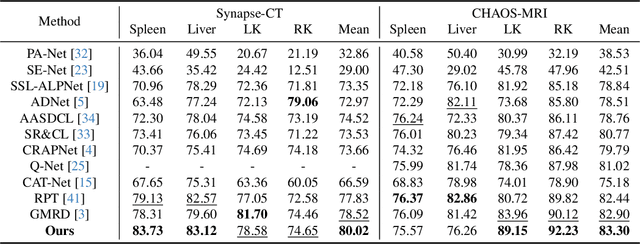
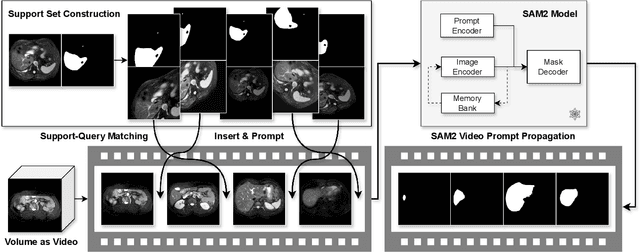
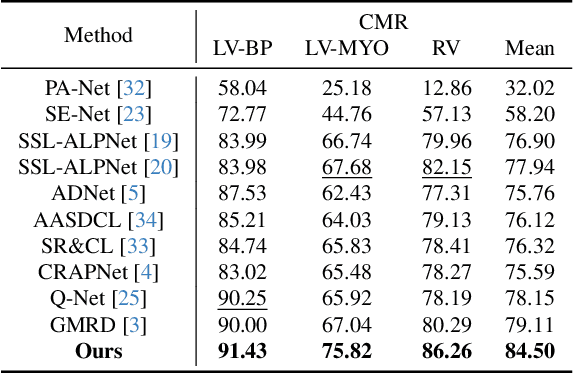
The reliance on large labeled datasets presents a significant challenge in medical image segmentation. Few-shot learning offers a potential solution, but existing methods often still require substantial training data. This paper proposes a novel approach that leverages the Segment Anything Model 2 (SAM2), a vision foundation model with strong video segmentation capabilities. We conceptualize 3D medical image volumes as video sequences, departing from the traditional slice-by-slice paradigm. Our core innovation is a support-query matching strategy: we perform extensive data augmentation on a single labeled support image and, for each frame in the query volume, algorithmically select the most analogous augmented support image. This selected image, along with its corresponding mask, is used as a mask prompt, driving SAM2's video segmentation. This approach entirely avoids model retraining or parameter updates. We demonstrate state-of-the-art performance on benchmark few-shot medical image segmentation datasets, achieving significant improvements in accuracy and annotation efficiency. This plug-and-play method offers a powerful and generalizable solution for 3D medical image segmentation.
Toward an Automated, Proactive Safety Warning System Development for Truck Mounted Attenuators in Mobile Work Zones
Dec 24, 2024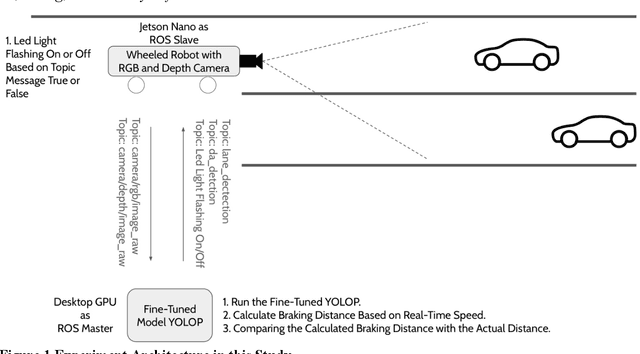
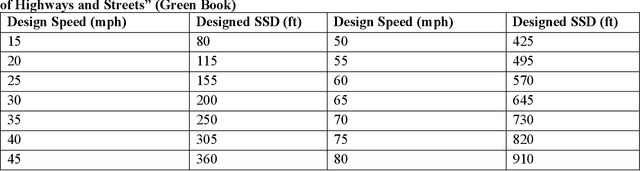
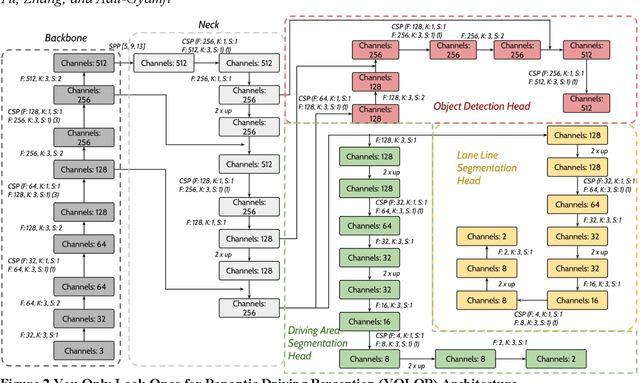
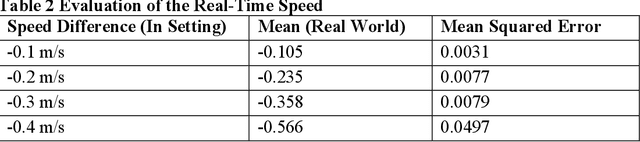
Even though Truck Mounted Attenuators (TMA)/Autonomous Truck Mounted Attenuators (ATMA) and traffic control devices are increasingly used in mobile work zones to enhance safety, work zone collisions remain a significant safety concern in the United States. In Missouri, there were 63 TMA-related crashes in 2023, a 27% increase compared to 2022. Currently, all the signs in the mobile work zones are passive safety measures, relying on drivers' recognition and attention. Some distracted drivers may ignore these signs and warnings, raising safety concerns. In this study, we proposed an additional proactive warning system that could be applied to the TMA/ATMA to improve overall safety. A feasible solution has been demonstrated by integrating a Panoptic Driving Perception algorithm into the Robot Operating System (ROS) and applying it to the TMA/ATMA systems. This enables us to alert vehicles on a collision course with the TMA. Our experimental setup, currently conducted in a laboratory environment with two ROS robots and a desktop GPU, demonstrates the system's capability to calculate real-time distance and speed and activate warning signals. Leveraging ROS's distributed computing capabilities allows for flexible system deployment and cost reduction. In future field tests, by combining the stopping sight distance (SSD) standards from the AASHTO Green Book, the system enables real-time monitoring of oncoming vehicles and provides additional proactive warnings to enhance the safety of mobile work zones.
Simple but Effective Compound Geometric Operations for Temporal Knowledge Graph Completion
Aug 13, 2024
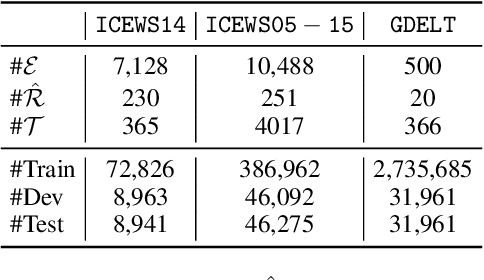
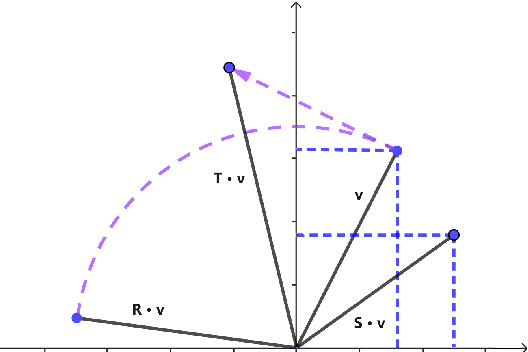
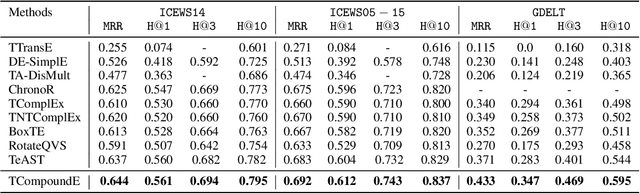
Temporal knowledge graph completion aims to infer the missing facts in temporal knowledge graphs. Current approaches usually embed factual knowledge into continuous vector space and apply geometric operations to learn potential patterns in temporal knowledge graphs. However, these methods only adopt a single operation, which may have limitations in capturing the complex temporal dynamics present in temporal knowledge graphs. Therefore, we propose a simple but effective method, i.e. TCompoundE, which is specially designed with two geometric operations, including time-specific and relation-specific operations. We provide mathematical proofs to demonstrate the ability of TCompoundE to encode various relation patterns. Experimental results show that our proposed model significantly outperforms existing temporal knowledge graph embedding models. Our code is available at https://github.com/nk-ruiying/TCompoundE.
Application of 2D Homography for High Resolution Traffic Data Collection using CCTV Cameras
Jan 14, 2024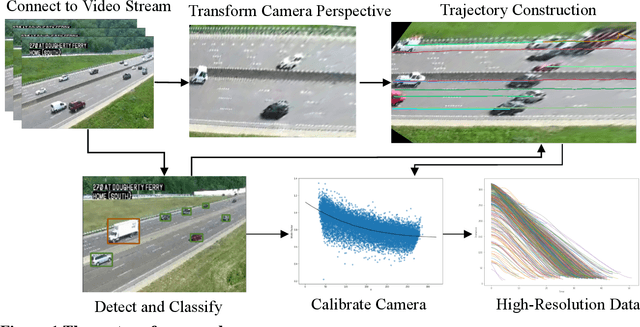
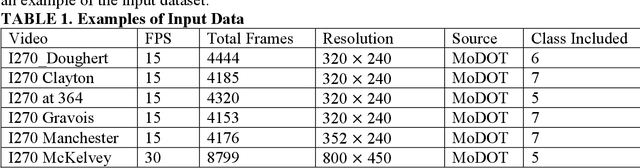
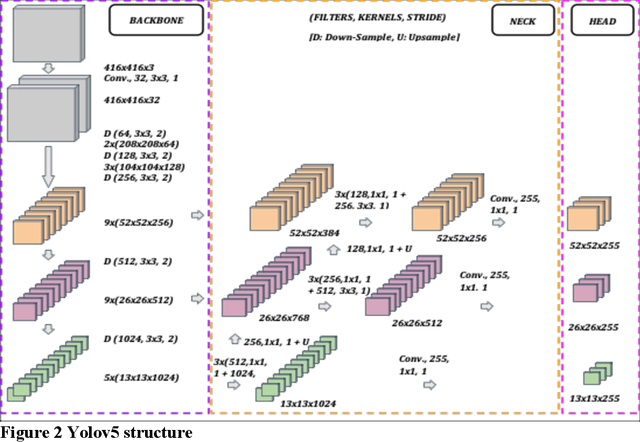
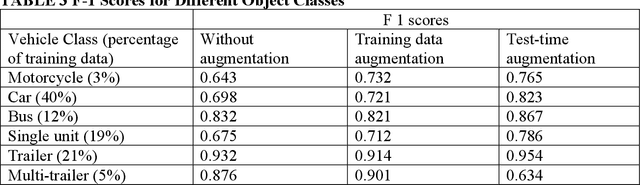
Traffic cameras remain the primary source data for surveillance activities such as congestion and incident monitoring. To date, State agencies continue to rely on manual effort to extract data from networked cameras due to limitations of the current automatic vision systems including requirements for complex camera calibration and inability to generate high resolution data. This study implements a three-stage video analytics framework for extracting high-resolution traffic data such vehicle counts, speed, and acceleration from infrastructure-mounted CCTV cameras. The key components of the framework include object recognition, perspective transformation, and vehicle trajectory reconstruction for traffic data collection. First, a state-of-the-art vehicle recognition model is implemented to detect and classify vehicles. Next, to correct for camera distortion and reduce partial occlusion, an algorithm inspired by two-point linear perspective is utilized to extracts the region of interest (ROI) automatically, while a 2D homography technique transforms the CCTV view to bird's-eye view (BEV). Cameras are calibrated with a two-layer matrix system to enable the extraction of speed and acceleration by converting image coordinates to real-world measurements. Individual vehicle trajectories are constructed and compared in BEV using two time-space-feature-based object trackers, namely Motpy and BYTETrack. The results of the current study showed about +/- 4.5% error rate for directional traffic counts, less than 10% MSE for speed bias between camera estimates in comparison to estimates from probe data sources. Extracting high-resolution data from traffic cameras has several implications, ranging from improvements in traffic management and identify dangerous driving behavior, high-risk areas for accidents, and other safety concerns, enabling proactive measures to reduce accidents and fatalities.
3D Object Detection and High-Resolution Traffic Parameters Extraction Using Low-Resolution LiDAR Data
Jan 13, 2024Traffic volume data collection is a crucial aspect of transportation engineering and urban planning, as it provides vital insights into traffic patterns, congestion, and infrastructure efficiency. Traditional manual methods of traffic data collection are both time-consuming and costly. However, the emergence of modern technologies, particularly Light Detection and Ranging (LiDAR), has revolutionized the process by enabling efficient and accurate data collection. Despite the benefits of using LiDAR for traffic data collection, previous studies have identified two major limitations that have impeded its widespread adoption. These are the need for multiple LiDAR systems to obtain complete point cloud information of objects of interest, as well as the labor-intensive process of annotating 3D bounding boxes for object detection tasks. In response to these challenges, the current study proposes an innovative framework that alleviates the need for multiple LiDAR systems and simplifies the laborious 3D annotation process. To achieve this goal, the study employed a single LiDAR system, that aims at reducing the data acquisition cost and addressed its accompanying limitation of missing point cloud information by developing a Point Cloud Completion (PCC) framework to fill in missing point cloud information using point density. Furthermore, we also used zero-shot learning techniques to detect vehicles and pedestrians, as well as proposed a unique framework for extracting low to high features from the object of interest, such as height, acceleration, and speed. Using the 2D bounding box detection and extracted height information, this study is able to generate 3D bounding boxes automatically without human intervention.
A Novel Full-Polarization SAR Images Ship Detector Based on the Scattering Mechanisms and the Wave Polarization Anisotropy
Dec 07, 2021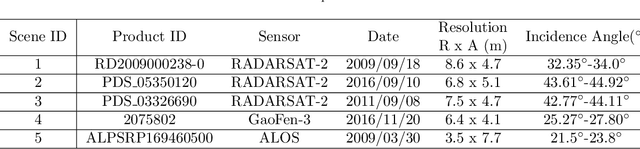
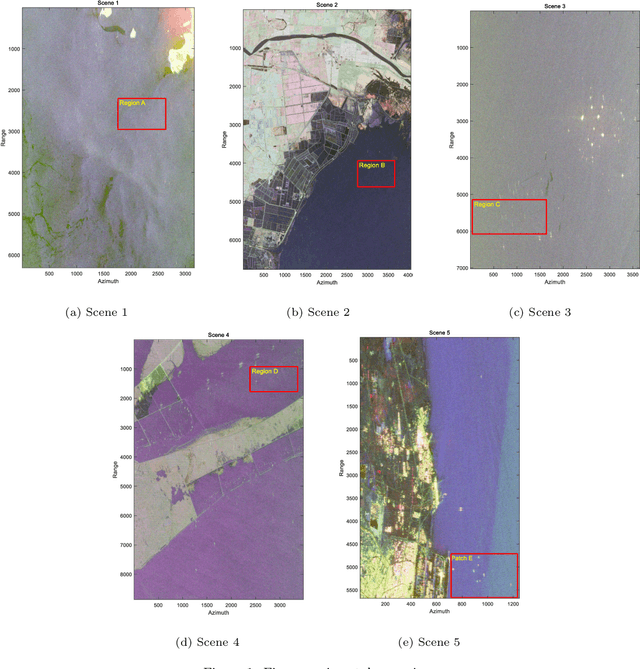
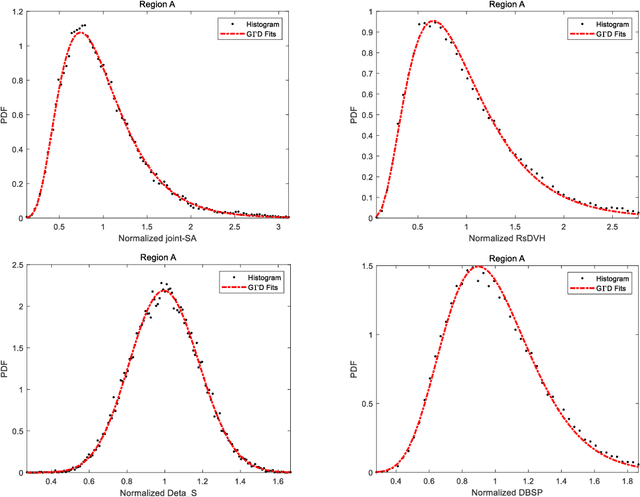
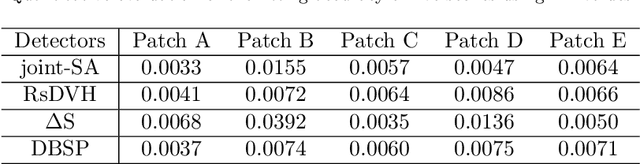
Synthetic aperture radar (SAR) is considered being a good option for earth observation with its unique advantages. In this paper, we proposed an adaptive ship detector using full-polarization SAR images. First, by thoroughly investigating the scattering characteristics between ships and their background, and the wave polarization anisotropy, a novel ship detector is proposed by jointing the two characteristics, named Scattering-Anisotropy joint (joint-SA). Based on the theoretical analysis, we showed that the joint-SA is an effective physical quantity to show the difference between the ship and its background, and thus joint-SA can be used for ship detection of full-polarization image data. Second, the generalized Gamma distribution was used to characterize the joint-SA statistics of sea clutter with a large range of homogeneity. As a result, an adaptive constant false alarm rate (CFAR) method was implemented based on the joint-SA. Finally, RADARSAT-2 and GF-3 data in C-band and ALOS data in L-band are used for verification. We tested on five datasets, and the experimental results verify the correctness and superiority of the constant false alarm rate (CFAR) method based on the joint-SA. In addition, the experimental results also showed that the signal-clutter ratio (SCR) of the proposed ship detector joint-SA (33.17 dB, 35.98 dB, 57.25 dB) is better than that of DBSP (8.92 dB, 3.43 dB, 25.40 dB) and RsDVH (17.28 dB, 11.17 dB, 54.55 dB). More importantly, the proposed detector joint-SA has higher detection accuracy and a lower false alarm rate.
Efficient Transformer for Single Image Super-Resolution
Aug 25, 2021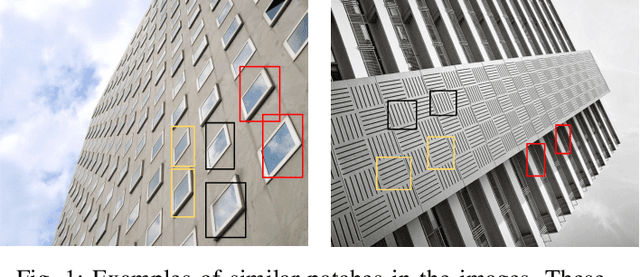
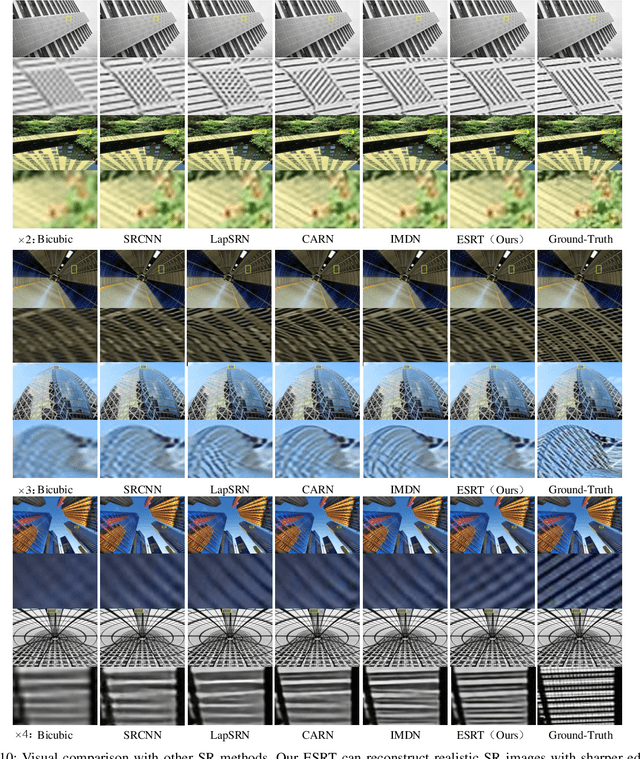
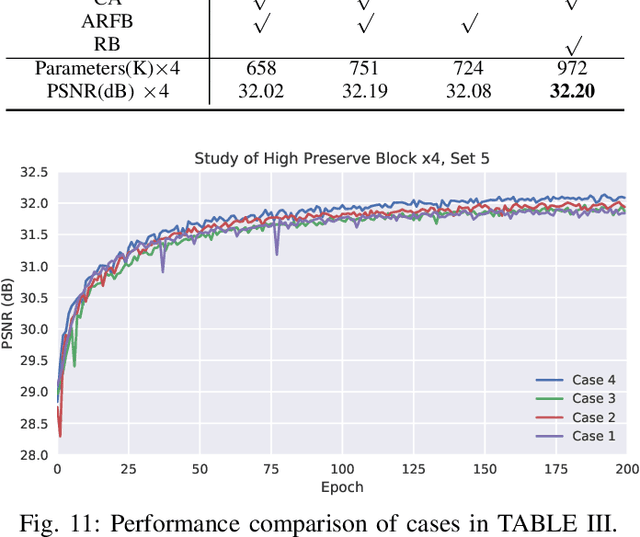
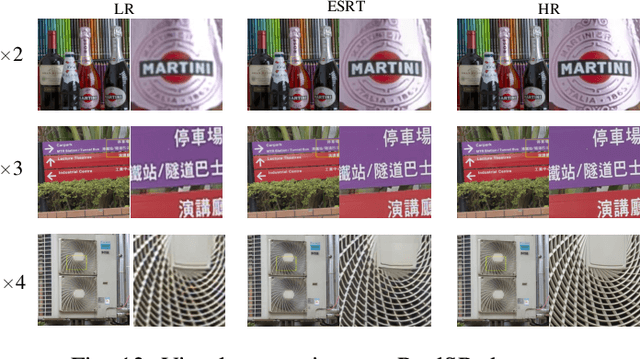
Single image super-resolution task has witnessed great strides with the development of deep learning. However, most existing studies focus on building a more complex neural network with a massive number of layers, bringing heavy computational cost and memory storage. Recently, as Transformer yields brilliant results in NLP tasks, more and more researchers start to explore the application of Transformer in computer vision tasks. But with the heavy computational cost and high GPU memory occupation of the vision Transformer, the network can not be designed too deep. To address this problem, we propose a novel Efficient Super-Resolution Transformer (ESRT) for fast and accurate image super-resolution. ESRT is a hybrid Transformer where a CNN-based SR network is first designed in the front to extract deep features. Specifically, there are two backbones for formatting the ESRT: lightweight CNN backbone (LCB) and lightweight Transformer backbone (LTB). Among them, LCB is a lightweight SR network to extract deep SR features at a low computational cost by dynamically adjusting the size of the feature map. LTB is made up of an efficient Transformer (ET) with a small GPU memory occupation, which benefited from the novel efficient multi-head attention (EMHA). In EMHA, a feature split module (FSM) is proposed to split the long sequence into sub-segments and then these sub-segments are applied by attention operation. This module can significantly decrease the GPU memory occupation. Extensive experiments show that our ESRT achieves competitive results. Compared with the original Transformer which occupies 16057M GPU memory, the proposed ET only occupies 4191M GPU memory with better performance.