 Add to Chrome
 Add to Firefox
 Add to Edge
Multi-Intent Spoken Language Understanding: Methods, Trends, and Challenges
Dec 12, 2025
Multi-intent spoken language understanding (SLU) involves two tasks: multiple intent detection and slot filling, which jointly handle utterances containing more than one intent. Owing to this characteristic, which closely reflects real-world applications, the task has attracted increasing research attention, and substantial progress has been achieved. However, there remains a lack of a comprehensive and systematic review of existing studies on multi-intent SLU. To this end, this paper presents a survey of recent advances in multi-intent SLU. We provide an in-depth overview of previous research from two perspectives: decoding paradigms and modeling approaches. On this basis, we further compare the performance of representative models and analyze their strengths and limitations. Finally, we discuss the current challenges and outline promising directions for future research. We hope this survey will offer valuable insights and serve as a useful reference for advancing research in multi-intent SLU.

TeleChat Technical Report
Jan 08, 2024
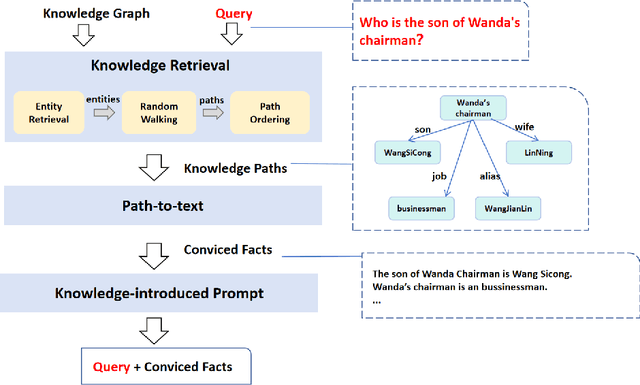


In this technical report, we present TeleChat, a collection of large language models (LLMs) with parameters of 3 billion, 7 billion and 12 billion. It includes pretrained language models as well as fine-tuned chat models that is aligned with human preferences. TeleChat is initially pretrained on an extensive corpus containing a diverse collection of texts from both English and Chinese languages, including trillions of tokens. Subsequently, the model undergoes fine-tuning to align with human preferences, following a detailed methodology that we describe. We evaluate the performance of TeleChat on various tasks, including language understanding, mathematics, reasoning, code generation, and knowledge-based question answering. Our findings indicate that TeleChat achieves comparable performance to other open-source models of similar size across a wide range of public benchmarks. To support future research and applications utilizing LLMs, we release the fine-tuned model checkpoints of TeleChat's 7B and 12B variant, along with code and a portion of our pretraining data, to the public community.