 Add to Chrome
 Add to Firefox
 Add to Edge
The PokeAgent Challenge: Competitive and Long-Context Learning at Scale
Mar 17, 2026
We present the PokeAgent Challenge, a large-scale benchmark for decision-making research built on Pokemon's multi-agent battle system and expansive role-playing game (RPG) environment. Partial observability, game-theoretic reasoning, and long-horizon planning remain open problems for frontier AI, yet few benchmarks stress all three simultaneously under realistic conditions. PokeAgent targets these limitations at scale through two complementary tracks: our Battling Track, which calls for strategic reasoning and generalization under partial observability in competitive Pokemon battles, and our Speedrunning Track, which requires long-horizon planning and sequential decision-making in the Pokemon RPG. Our Battling Track supplies a dataset of 20M+ battle trajectories alongside a suite of heuristic, RL, and LLM-based baselines capable of high-level competitive play. Our Speedrunning Track provides the first standardized evaluation framework for RPG speedrunning, including an open-source multi-agent orchestration system for modular, reproducible comparisons of harness-based LLM approaches. Our NeurIPS 2025 competition validates both the quality of our resources and the research community's interest in Pokemon, with over 100 teams competing across both tracks and winning solutions detailed in our paper. Participant submissions and our baselines reveal considerable gaps between generalist (LLM), specialist (RL), and elite human performance. Analysis against the BenchPress evaluation matrix shows that Pokemon battling is nearly orthogonal to standard LLM benchmarks, measuring capabilities not captured by existing suites and positioning Pokemon as an unsolved benchmark that can drive RL and LLM research forward. We transition to a living benchmark with a live leaderboard for Battling and self-contained evaluation for Speedrunning at https://pokeagentchallenge.com.

Knowledge Acquisition on Mass-shooting Events via LLMs for AI-Driven Justice
Apr 17, 2025
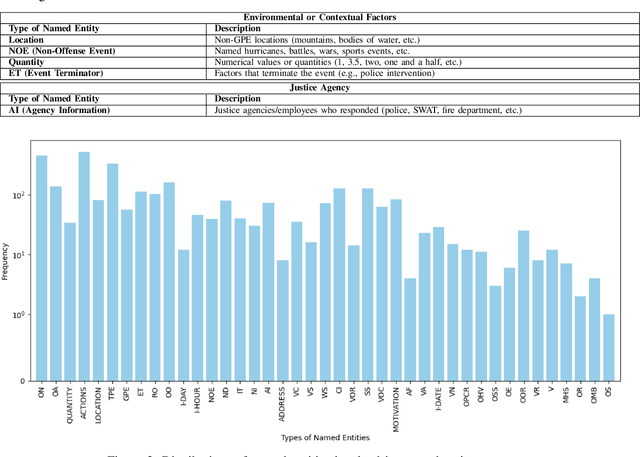
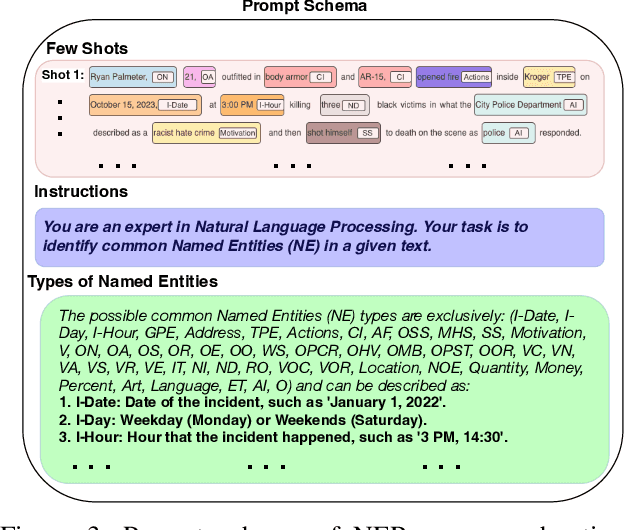
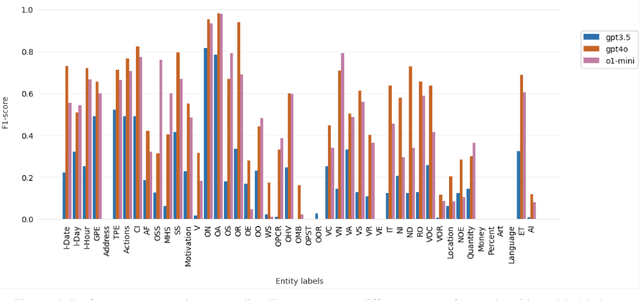
Mass-shooting events pose a significant challenge to public safety, generating large volumes of unstructured textual data that hinder effective investigations and the formulation of public policy. Despite the urgency, few prior studies have effectively automated the extraction of key information from these events to support legal and investigative efforts. This paper presented the first dataset designed for knowledge acquisition on mass-shooting events through the application of named entity recognition (NER) techniques. It focuses on identifying key entities such as offenders, victims, locations, and criminal instruments, that are vital for legal and investigative purposes. The NER process is powered by Large Language Models (LLMs) using few-shot prompting, facilitating the efficient extraction and organization of critical information from diverse sources, including news articles, police reports, and social media. Experimental results on real-world mass-shooting corpora demonstrate that GPT-4o is the most effective model for mass-shooting NER, achieving the highest Micro Precision, Micro Recall, and Micro F1-scores. Meanwhile, o1-mini delivers competitive performance, making it a resource-efficient alternative for less complex NER tasks. It is also observed that increasing the shot count enhances the performance of all models, but the gains are more substantial for GPT-4o and o1-mini, highlighting their superior adaptability to few-shot learning scenarios.