 Add to Chrome
 Add to Firefox
 Add to Edge
SkillLearnBench: Benchmarking Continual Learning Methods for Agent Skill Generation on Real-World Tasks
Apr 22, 2026
Skills have become the de facto way to enable LLM agents to perform complex real-world tasks with customized instructions, workflows, and tools, but how to learn them automatically and effectively remains unclear. We introduce SkillLearnBench, the first benchmark for evaluating continual skill learning methods, comprising 20 verified, skill-dependent tasks across 15 sub-domains derived from a real-world skill taxonomy , evaluated at three levels: skill quality, execution trajectory, and task outcome. Using this benchmark, we evaluate recent continual learning techniques, those leveraging one-shot, self/teacher feedback, and skill creator to generate skills from agent experiences. We find that all continual learning methods improve over the no-skill baseline, yet consistent gains remain elusive: no method leads across all tasks and LLMs, and scaling to stronger LLMs does not reliably help. Continual learning improves tasks with clear, reusable workflows but struggles on open-ended tasks, and using stronger LLM backbones does not consistently produce better skills. Our analysis also revealed that multiple iterations in continual learning facilitate genuine improvement via external feedback, whereas self-feedback alone induces recursive drift. Our data and code are open-source at https://github.com/cxcscmu/SkillLearnBench to enable further studies of automatic skill generation and continual learning techniques.

CM-DQN: A Value-Based Deep Reinforcement Learning Model to Simulate Confirmation Bias
Jul 10, 2024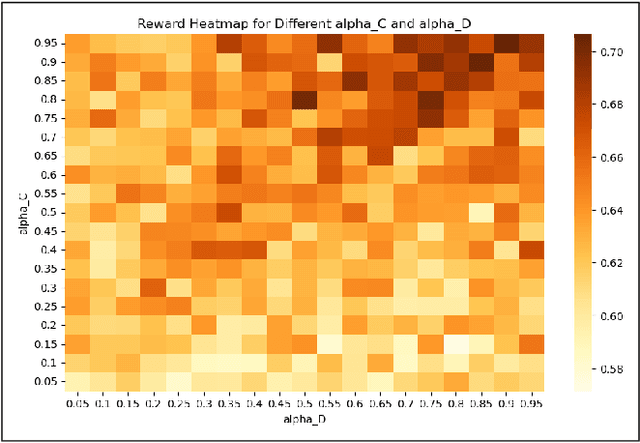
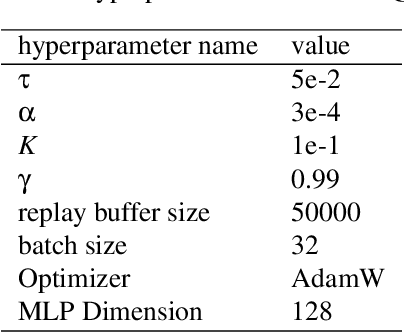
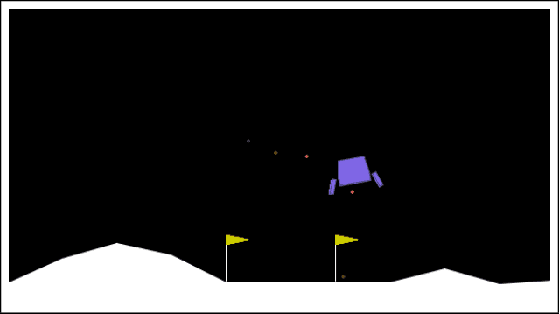
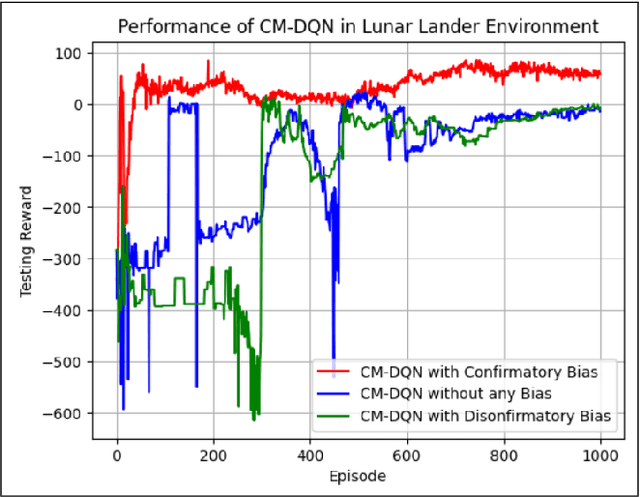
In human decision-making tasks, individuals learn through trials and prediction errors. When individuals learn the task, some are more influenced by good outcomes, while others weigh bad outcomes more heavily. Such confirmation bias can lead to different learning effects. In this study, we propose a new algorithm in Deep Reinforcement Learning, CM-DQN, which applies the idea of different update strategies for positive or negative prediction errors, to simulate the human decision-making process when the task's states are continuous while the actions are discrete. We test in Lunar Lander environment with confirmatory, disconfirmatory bias and non-biased to observe the learning effects. Moreover, we apply the confirmation model in a multi-armed bandit problem (environment in discrete states and discrete actions), which utilizes the same idea as our proposed algorithm, as a contrast experiment to algorithmically simulate the impact of different confirmation bias in decision-making process. In both experiments, confirmatory bias indicates a better learning effect. Our code can be found here https://github.com/Patrickhshs/CM-DQN.