 Add to Chrome
 Add to Firefox
 Add to Edge
TriDeliver: Cooperative Air-Ground Instant Delivery with UAVs, Couriers, and Crowdsourced Ground Vehicles
Apr 14, 2026
Instant delivery, shipping items before critical deadlines, is essential in daily life. While multiple delivery agents, such as couriers, Unmanned Aerial Vehicles (UAVs), and crowdsourced agents, have been widely employed, each of them faces inherent limitations (e.g., low efficiency/labor shortages, flight control, and dynamic capabilities, respectively), preventing them from meeting the surging demands alone. This paper proposes TriDeliver, the first hierarchical cooperative framework, integrating human couriers, UAVs, and crowdsourced ground vehicles (GVs) for efficient instant delivery. To obtain the initial scheduling knowledge for GVs and UAVs as well as improve the cooperative delivery performance, we design a Transfer Learning (TL)-based algorithm to extract delivery knowledge from couriers' behavioral history and transfer their knowledge to UAVs and GVs with fine-tunings, which is then used to dispatch parcels for efficient delivery. Evaluated on one-month real-world trajectory and delivery datasets, it has been demonstrated that 1) by integrating couriers, UAVs, and crowdsourced GVs, TriDeliver reduces the delivery cost by $65.8\%$ versus state-of-the-art cooperative delivery by UAVs and couriers; 2) TriDeliver achieves further improvements in terms of delivery time ($-17.7\%$), delivery cost ($-9.8\%$), and impacts on original tasks of crowdsourced GVs ($-43.6\%$), even with the representation of the transferred knowledge by simple neural networks, respectively.

Leveraging Large Self-Supervised Time-Series Models for Transferable Diagnosis in Cross-Aircraft Type Bleed Air System
Apr 12, 2025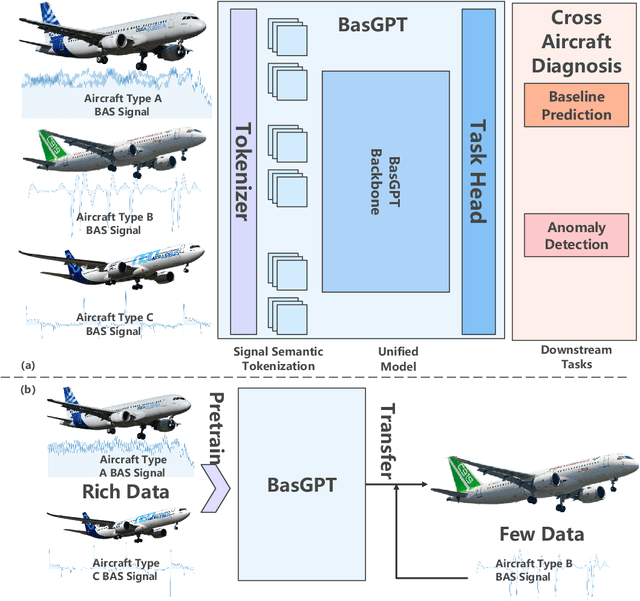
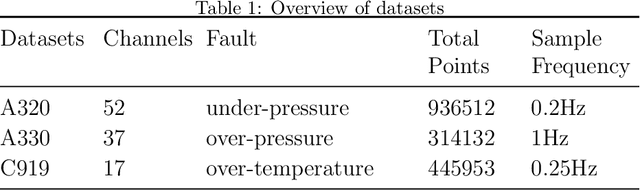
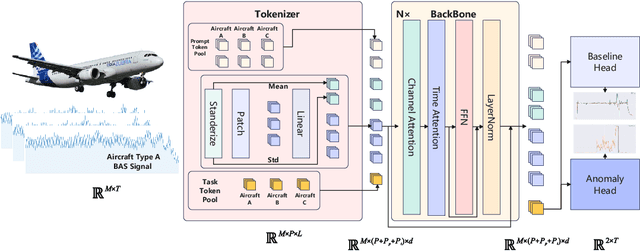
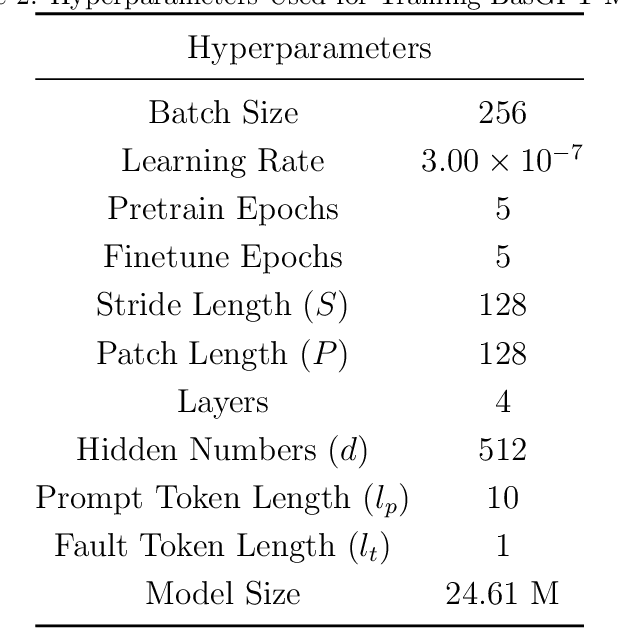
Bleed Air System (BAS) is critical for maintaining flight safety and operational efficiency, supporting functions such as cabin pressurization, air conditioning, and engine anti-icing. However, BAS malfunctions, including overpressure, low pressure, and overheating, pose significant risks such as cabin depressurization, equipment failure, or engine damage. Current diagnostic approaches face notable limitations when applied across different aircraft types, particularly for newer models that lack sufficient operational data. To address these challenges, this paper presents a self-supervised learning-based foundation model that enables the transfer of diagnostic knowledge from mature aircraft (e.g., A320, A330) to newer ones (e.g., C919). Leveraging self-supervised pretraining, the model learns universal feature representations from flight signals without requiring labeled data, making it effective in data-scarce scenarios. This model enhances both anomaly detection and baseline signal prediction, thereby improving system reliability. The paper introduces a cross-model dataset, a self-supervised learning framework for BAS diagnostics, and a novel Joint Baseline and Anomaly Detection Loss Function tailored to real-world flight data. These innovations facilitate efficient transfer of diagnostic knowledge across aircraft types, ensuring robust support for early operational stages of new models. Additionally, the paper explores the relationship between model capacity and transferability, providing a foundation for future research on large-scale flight signal models.