 Add to Chrome
 Add to Firefox
 Add to Edge
MMH-Planner: Multi-Mode Hybrid Trajectory Planning Method for UAV Efficient Flight Based on Real-Time Spatial Awareness
Mar 03, 2026
Motion planning is a critical component of intelligent unmanned systems, enabling their complex autonomous operations. However, current planning algorithms still face limitations in planning efficiency due to inflexible strategies and weak adaptability. To address this, this paper proposes a multi-mode hybrid trajectory planning method for UAVs based on real-time environmental awareness, which dynamically selects the optimal planning model for high-quality trajectory generation in response to environmental changes. First, we introduce a goal-oriented spatial awareness method that rapidly assesses flight safety in the upcoming environments. Second, a multi-mode hybrid trajectory planning mechanism is proposed, which can enhance the planning efficiency by selecting the optimal planning model for trajectory generation based on prior spatial awareness. Finally, we design a lazy replanning strategy that triggers replanning only when necessary to reduce computational resource consumption while maintaining flight quality. To validate the performance of the proposed method, we conducted comprehensive comparative experiments in simulation environments. Results demonstrate that our approach outperforms existing state-of-the-art (SOTA) algorithms across multiple metrics, achieving the best performance particularly in terms of the average number of planning iterations and computational cost per iteration. Furthermore, the effectiveness of our approach is further verified through real-world flight experiments integrated with a self-developed intelligent UAV platform.

MisinfoEval: Generative AI in the Era of "Alternative Facts"
Oct 15, 2024
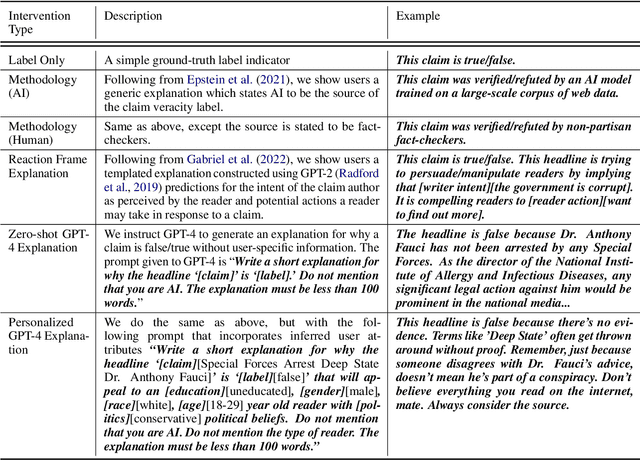
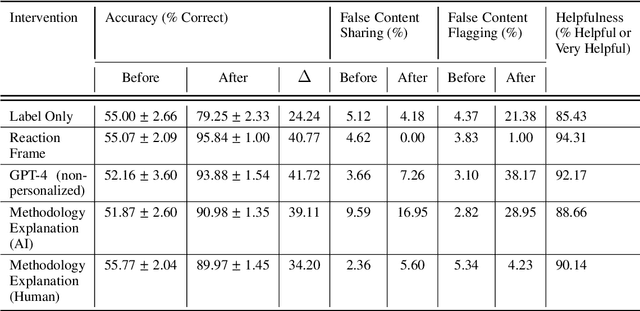
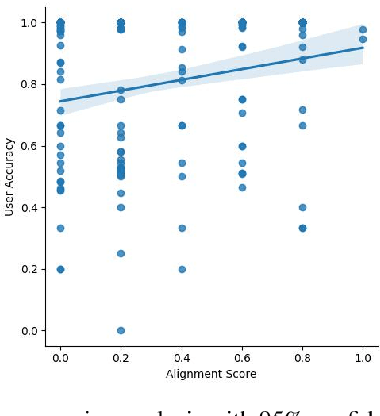
The spread of misinformation on social media platforms threatens democratic processes, contributes to massive economic losses, and endangers public health. Many efforts to address misinformation focus on a knowledge deficit model and propose interventions for improving users' critical thinking through access to facts. Such efforts are often hampered by challenges with scalability, and by platform users' personal biases. The emergence of generative AI presents promising opportunities for countering misinformation at scale across ideological barriers. In this paper, we introduce a framework (MisinfoEval) for generating and comprehensively evaluating large language model (LLM) based misinformation interventions. We present (1) an experiment with a simulated social media environment to measure effectiveness of misinformation interventions, and (2) a second experiment with personalized explanations tailored to the demographics and beliefs of users with the goal of countering misinformation by appealing to their pre-existing values. Our findings confirm that LLM-based interventions are highly effective at correcting user behavior (improving overall user accuracy at reliability labeling by up to 41.72%). Furthermore, we find that users favor more personalized interventions when making decisions about news reliability and users shown personalized interventions have significantly higher accuracy at identifying misinformation.
Matching of Users and Creators in Two-Sided Markets with Departures
Jan 17, 2024Many online platforms of today, including social media sites, are two-sided markets bridging content creators and users. Most of the existing literature on platform recommendation algorithms largely focuses on user preferences and decisions, and does not simultaneously address creator incentives. We propose a model of content recommendation that explicitly focuses on the dynamics of user-content matching, with the novel property that both users and creators may leave the platform permanently if they do not experience sufficient engagement. In our model, each player decides to participate at each time step based on utilities derived from the current match: users based on alignment of the recommended content with their preferences, and creators based on their audience size. We show that a user-centric greedy algorithm that does not consider creator departures can result in arbitrarily poor total engagement, relative to an algorithm that maximizes total engagement while accounting for two-sided departures. Moreover, in stark contrast to the case where only users or only creators leave the platform, we prove that with two-sided departures, approximating maximum total engagement within any constant factor is NP-hard. We present two practical algorithms, one with performance guarantees under mild assumptions on user preferences, and another that tends to outperform algorithms that ignore two-sided departures in practice.