 Add to Chrome
 Add to Firefox
 Add to Edge
MatrAIx: Simulating the World with 8.3 Billion Persona Agents
Aug 04, 2026
Human evaluation of AI systems and digital products is costly, slow, and difficult to scale. Offline evaluations are more scalable but often abstract away human diversity and interactive behavior. We therefore introduce MatrAIx, a population-scale simulated-user evaluation infrastructure for testing AI systems and digital products with heterogeneous users. MatrAIx has three core components: First, Persona 8B contains 8.3 billion persona records represented by 1,290 categorical dimensions. Records are either sampled from a dependency graph that preserves correlated attributes or derived from human-authored profiles. We release a quality-filtered coreset of approximately 1 million personas, comprising 599,847 human-grounded and 400,000 synthetic records. Second, the MatrAIx Playground provides four environments in which diverse users evaluate and interact with digital products: Survey, AI Chatbot, Web, and App. Third, MatrAIx provides 1,010 application tasks spanning more than 25 domains, including Commerce, Software, Finance, and Healthcare. We conducted 18,189 evaluation trials across eight representative tasks. Persona agents were powered by three LLMs: Claude Opus 4.8, GPT 5.5, and Claude Haiku 4.5. The resulting feedback captures how decisions and preferences vary across persona backgrounds, including hesitation after a price increase, willingness to continue after an AI assistant fails, and latency tolerance. We conducted two main validation studies: First, a 400-trial controlled study evaluated persona adherence across ten behavioral attributes and all four environments. The declared behavior was expressed or correctly suppressed in 366 trials (91.5%). Second, human and LLM judges evaluated the extraction quality of human-grounded personas. Overall, MatrAIx provides an end-to-end infrastructure for evaluating AI systems and digital products with diverse simulated human users.

MisinfoEval: Generative AI in the Era of "Alternative Facts"
Oct 15, 2024
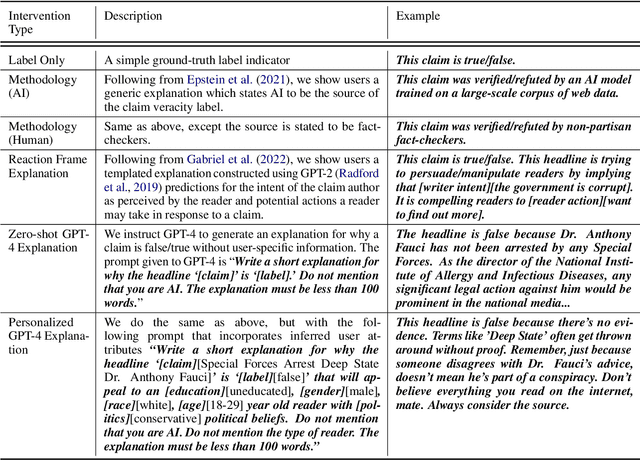
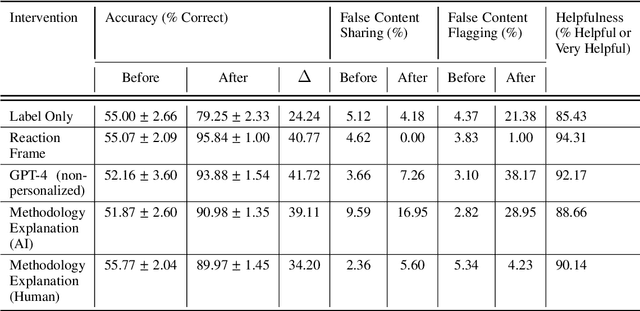
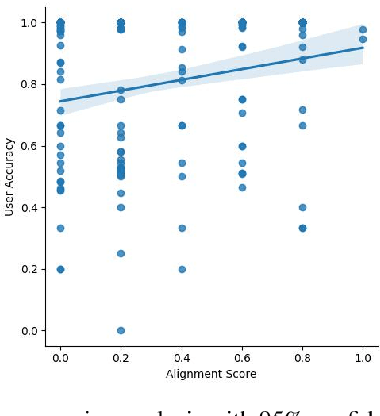
The spread of misinformation on social media platforms threatens democratic processes, contributes to massive economic losses, and endangers public health. Many efforts to address misinformation focus on a knowledge deficit model and propose interventions for improving users' critical thinking through access to facts. Such efforts are often hampered by challenges with scalability, and by platform users' personal biases. The emergence of generative AI presents promising opportunities for countering misinformation at scale across ideological barriers. In this paper, we introduce a framework (MisinfoEval) for generating and comprehensively evaluating large language model (LLM) based misinformation interventions. We present (1) an experiment with a simulated social media environment to measure effectiveness of misinformation interventions, and (2) a second experiment with personalized explanations tailored to the demographics and beliefs of users with the goal of countering misinformation by appealing to their pre-existing values. Our findings confirm that LLM-based interventions are highly effective at correcting user behavior (improving overall user accuracy at reliability labeling by up to 41.72%). Furthermore, we find that users favor more personalized interventions when making decisions about news reliability and users shown personalized interventions have significantly higher accuracy at identifying misinformation.