 Add to Chrome
 Add to Firefox
 Add to Edge
A 3D SAM-Based Progressive Prompting Framework for Multi-Task Segmentation of Radiotherapy-induced Normal Tissue Injuries in Limited-Data Settings
Apr 15, 2026
Radiotherapy-induced normal tissue injury is a clinically important complication, and accurate segmentation of injury regions from medical images could facilitate disease assessment, treatment planning, and longitudinal monitoring. However, automatic segmentation of these lesions remains largely unexplored because of limited voxel-level annotations and substantial heterogeneity across injury types, lesion size, and imaging modality. To address this gap, we curate a dedicated head-and-neck radiotherapy-induced normal tissue injury dataset covering three manifestations: osteoradionecrosis (ORN), cerebral edema (CE), and cerebral radiation necrosis (CRN). We further propose a 3D SAM-based progressive prompting framework for multi-task segmentation in limited-data settings. The framework progressively incorporates three complementary prompts: text prompts for task-aware adaptation, dose-guided box prompts for coarse localization, and click prompts for iterative refinement. A small-target focus loss is introduced to improve local prediction and boundary delineation for small and sparse lesions. Experiments on ORN, CE, and CRN demonstrate that the proposed method achieves reliable segmentation performance across diverse injury types and outperforms state-of-the-art methods.

Accurate reconstruction of image stimuli from human fMRI based on the decoding model with capsule network architecture
Jan 02, 2018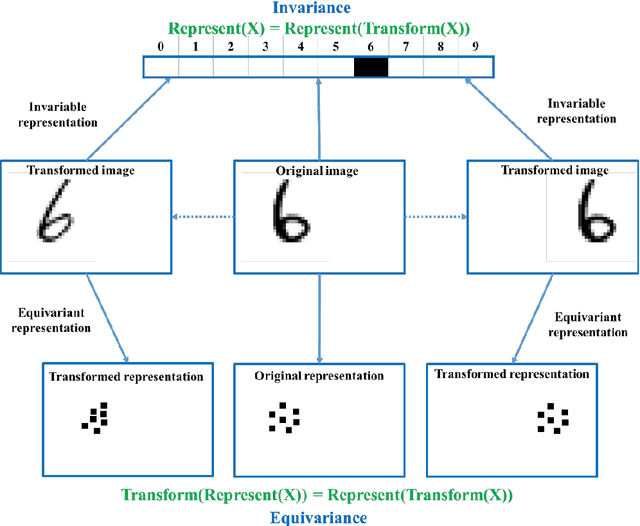
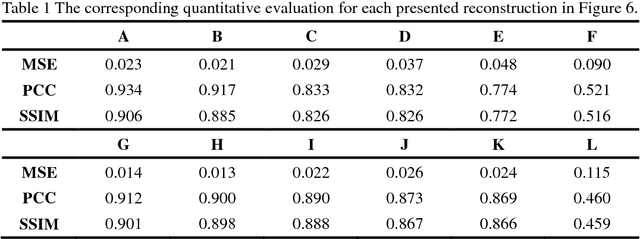
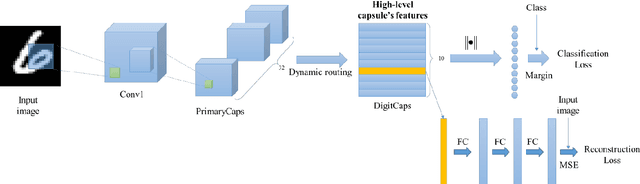
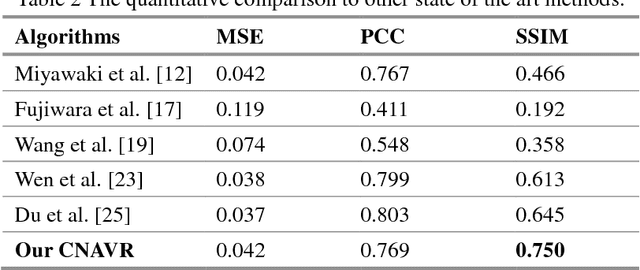
In neuroscience, all kinds of computation models were designed to answer the open question of how sensory stimuli are encoded by neurons and conversely, how sensory stimuli can be decoded from neuronal activities. Especially, functional Magnetic Resonance Imaging (fMRI) studies have made many great achievements with the rapid development of the deep network computation. However, comparing with the goal of decoding orientation, position and object category from activities in visual cortex, accurate reconstruction of image stimuli from human fMRI is a still challenging work. In this paper, the capsule network (CapsNet) architecture based visual reconstruction (CNAVR) method is developed to reconstruct image stimuli. The capsule means containing a group of neurons to perform the better organization of feature structure and representation, inspired by the structure of cortical mini column including several hundred neurons in primates. The high-level capsule features in the CapsNet includes diverse features of image stimuli such as semantic class, orientation, location and so on. We used these features to bridge between human fMRI and image stimuli. We firstly employed the CapsNet to train the nonlinear mapping from image stimuli to high-level capsule features, and from high-level capsule features to image stimuli again in an end-to-end manner. After estimating the serviceability of each voxel by encoding performance to accomplish the selecting of voxels, we secondly trained the nonlinear mapping from dimension-decreasing fMRI data to high-level capsule features. Finally, we can predict the high-level capsule features with fMRI data, and reconstruct image stimuli with the CapsNet. We evaluated the proposed CNAVR method on the dataset of handwritten digital images, and exceeded about 10% than the accuracy of all existing state-of-the-art methods on the structural similarity index (SSIM).