 Add to Chrome
 Add to Firefox
 Add to Edge
Learning-Based Phase Shift Optimization of Liquid Crystal RIS in Dynamic mmWave Networks
Dec 17, 2025
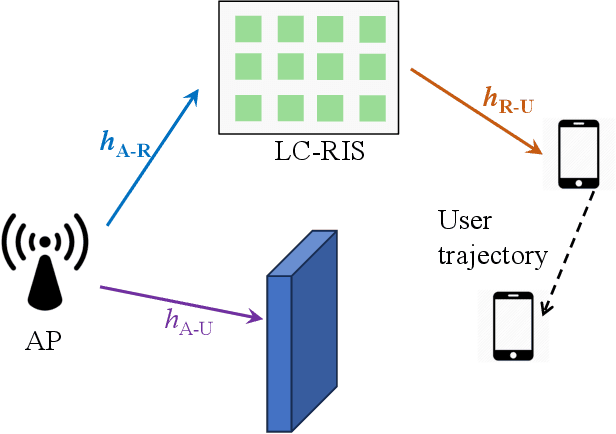
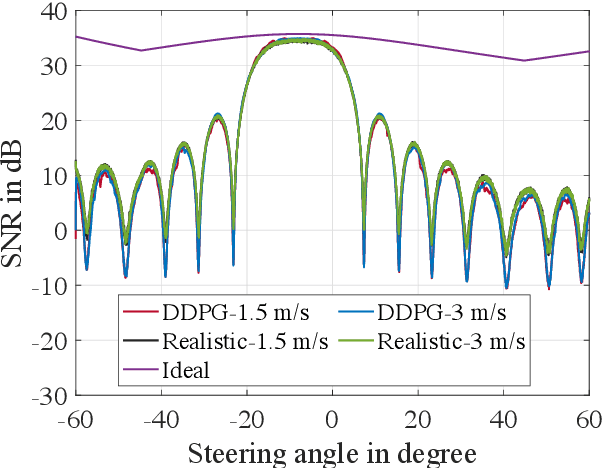
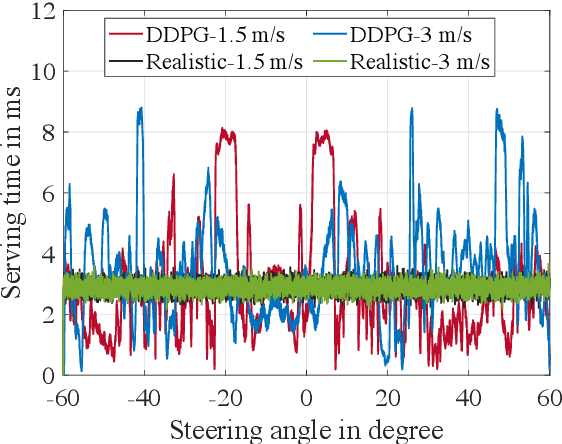
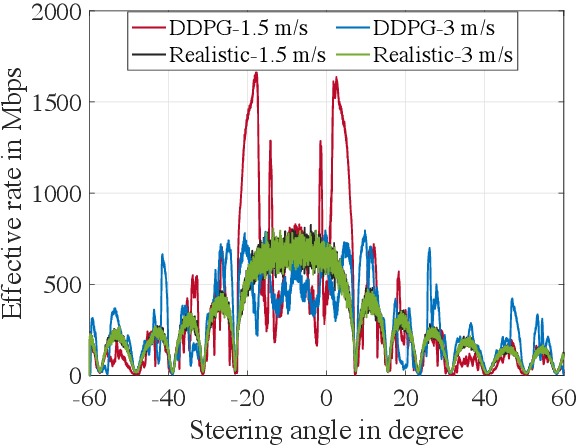
To enhance coverage and signal quality in millimeter-wave (mmWave) frequencies, reconfigurable intelligent surfaces (RISs) have emerged as a game-changing solution to manipulate the wireless environment. Traditional semiconductor-based RISs face scalability issues due to high power consumption. Meanwhile, liquid crystal-based RISs (LC-RISs) offer energy-efficient and cost-effective operation even for large arrays. However, this promise has a caveat. LC-RISs suffer from long reconfiguration times, on the order of tens of milliseconds, which limits their applicability in dynamic scenarios. To date, prior works have focused on hardware design aspects or static scenarios to address this limitation, but little attention has been paid to optimization solutions for dynamic settings. Our paper fills this gap by proposing a reinforcement learning-based optimization framework to dynamically control the phase shifts of LC-RISs and maximize the data rate of a moving user. Specifically, we propose a Deep Deterministic Policy Gradient (DDPG) algorithm that adapts the LC-RIS phase shifts without requiring perfect channel state information and balances the tradeoff between signal-to-noise ratio (SNR) and configuration time. We validate our approach through high-fidelity ray tracing simulations, leveraging measurement data from an LC-RIS prototype. Our results demonstrate the potential of our solution to bring adaptive control to dynamic LC-RIS-assisted mmWave systems.

Analysis of Scalable Anomalous Reflectors through Ray Tracing and Measurements
Jul 24, 2024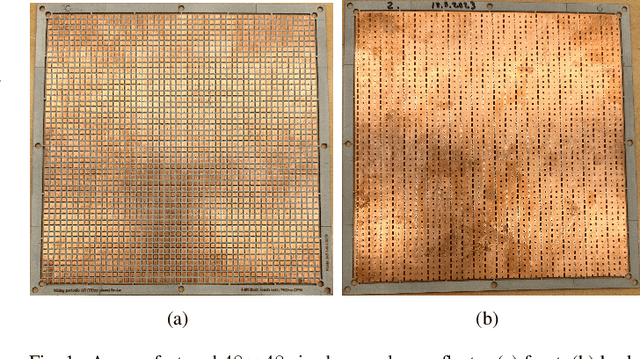
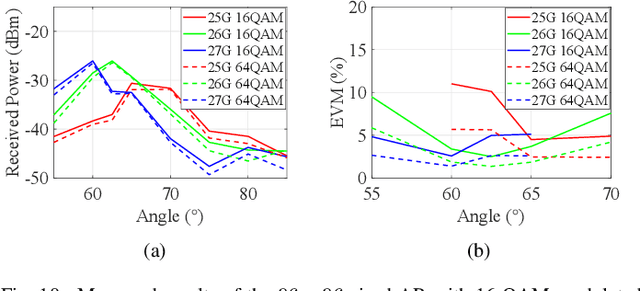
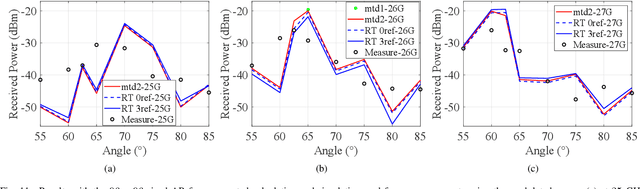
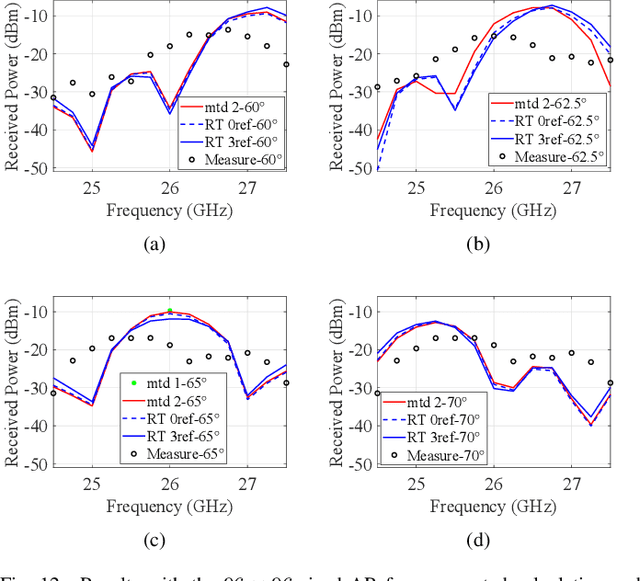
In this study, we elaborate on the concept of scalable anomalous reflector (AR) to analyze the angular response, frequency response, and spatial scalability of a designed AR across a broad range of angles and frequencies. We utilize theoretical models and ray tracing simulations to investigate the communication performance of two different-sized scalable finite ARs, one smaller configuration with 48 x 48 array of unit cells and the other constructed by combining four smaller ARs to form a larger array with 96 x 96 unit cells. To validate the developed theoretical approach, we conducted measurements in an auditorium to evaluate the received power through an AR link at different angles and frequencies. In addition, models of scalable deflectors are implemented in the MATLAB ray tracer to simulate the measurement scenario. The results from theoretical calculations and ray tracing simulations achieve good agreement with measurement results.
Modeling RIS from Electromagnetic Principles to Communication Systems--Part II: System-Level Simulation, Ray Tracing, and Measurement
Mar 20, 2024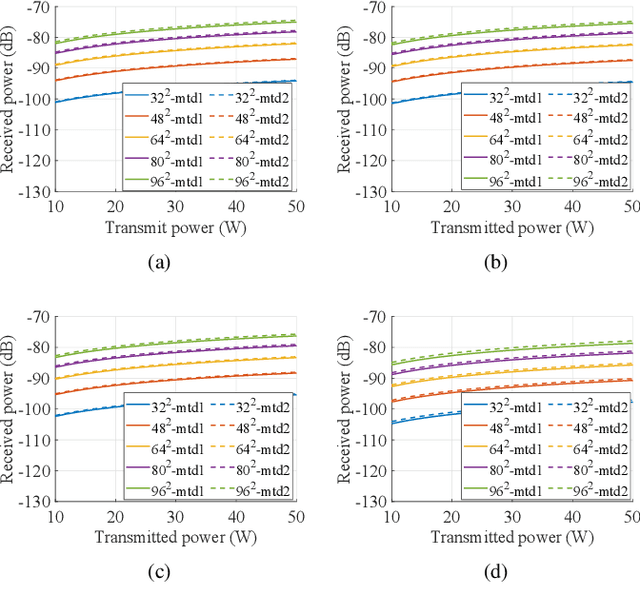
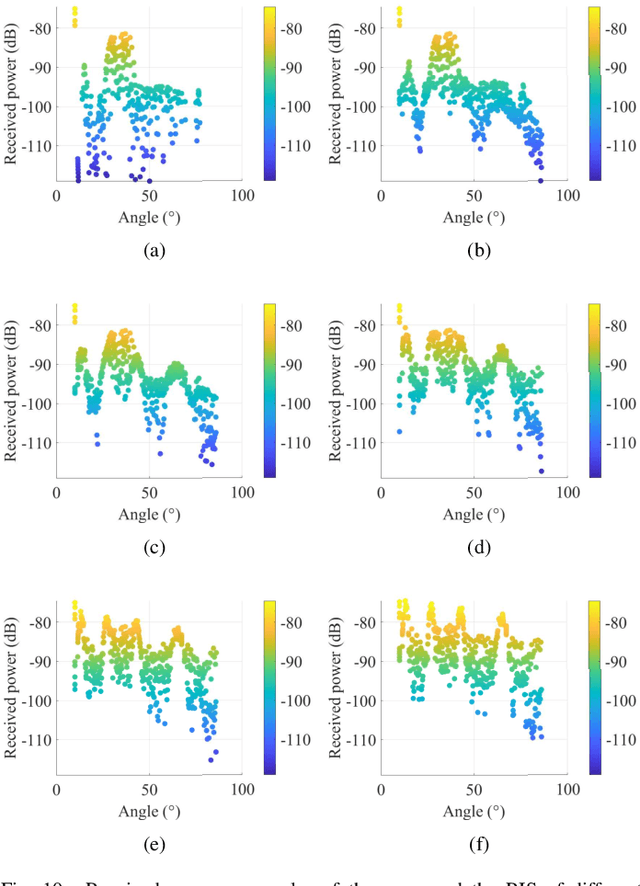
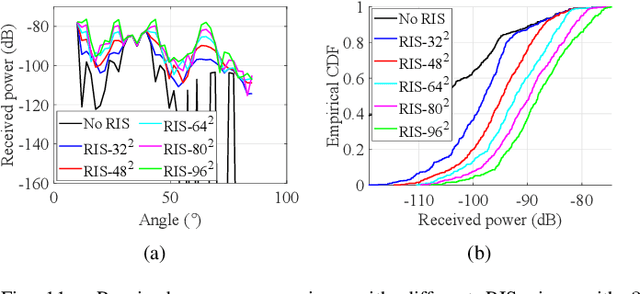
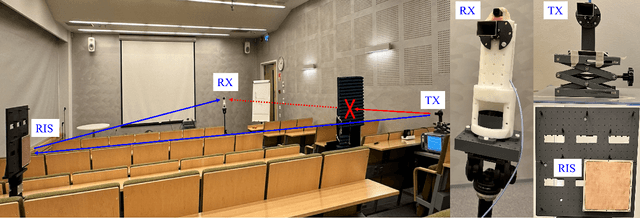
In this paper, we systematically study the electromagnetic (EM) and communication aspects of an RIS through EM simulations, system-level and ray-tracing simulations, and finally measurements. We simulate a nearly perfect, lossless RIS, and a realistic lossy anomalous reflector (AR) in different ray tracers and analyze the large-scale fading of simple RIS-assisted links. We also compare the results with continuous and quantized unit cell reflection phases with one to four-bit resolutions. Finally, we perform over-the-air communication link measurements in an indoor setting with a manufactured sample of a wide-angle AR. The EM, system-level, and ray-tracing simulation results show good agreement with the measurement results. It is proved that the introduced macroscopic model of RIS from the EM aspects is consistent with our proposed communication models, both for an ideal RIS and a realistic AR.