 Add to Chrome
 Add to Firefox
 Add to Edge
Mobile Radio Networks and Weather Radars Dualism: Rainfall Measurement Revolution in Densely Populated Areas
Mar 19, 2026
This study demonstrates, for the first time, how a network of cellular base stations (BSs) - the infrastructure of mobile radio networks - can be used as a distributed opportunistic radar for rainfall remote sensing. By adapting signal-processing techniques traditionally employed in Doppler weather radar systems, we demonstrate that BS signals can be used to retrieve typical weather radar products, including reflectivity factor, mean Doppler velocity, and spectral width. Due to the high spatial density of BS infrastructure in urban environments, combined with intrinsic technical features such as electronically steerable antenna arrays and wide receiver bandwidths, the proposed approach achieves unprecedented spatial and temporal resolutions, on the order of a few meters and several tens of seconds, respectively. Despite limitations related to low transmitted power, limited antenna gain, and other system constraints, a major challenge arises from ground clutter contamination, which is exacerbated by the nearly horizontal orientation of BS antenna beams. This work provides a thorough assessment of clutter impact and demonstrates that, through appropriate processing, the resulting clutter-filtered radar moments reach a satisfactory level of quality when compared with raw observations and with measurements from independent BSs with overlapped field-of-views. The findings highlight a transformative opportunity for urban hydrometeorology: leveraging existing telecommunications infrastructure to obtain rainfall information with a level of spatial granularity and temporal immediacy like never before.

IMT to Satellite Stochastic Interference Modeling and Coexistence Analysis of Upper 6 GHz Band Service
Sep 14, 2022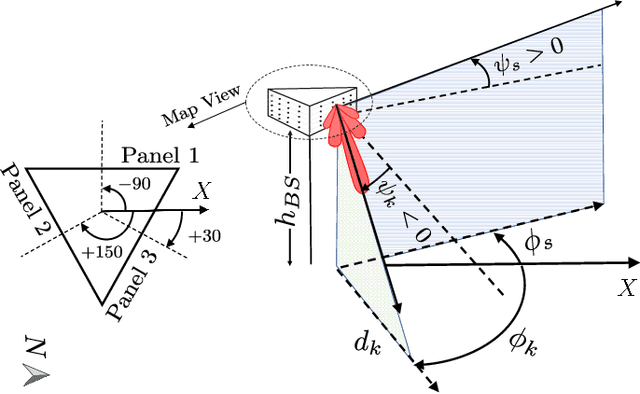
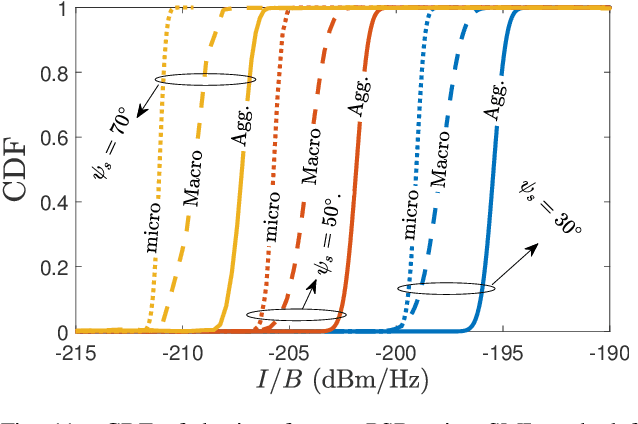
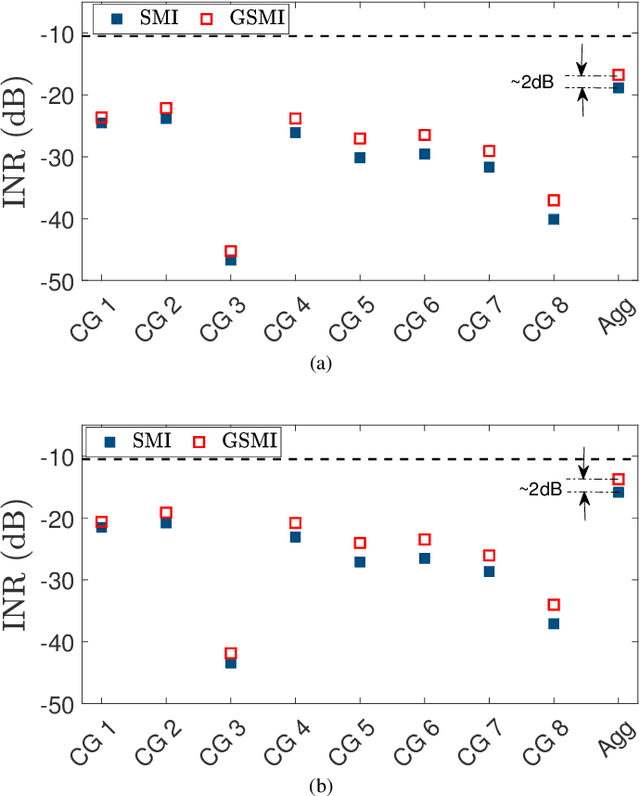
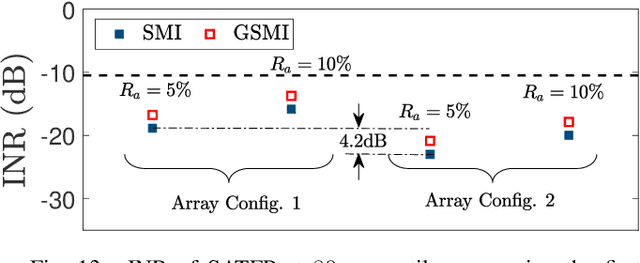
The surging capacity demands of 5G networks and the limited coverage distance of high frequencies like millimeter wave (mmW) and sub-terahertz (THz) bands have led to consider the upper 6GHz (U6G) spectrum for radio access. However, due to the presence of the existing satellite (SAT) services in these bands, it is crucial to evaluate the impact of the interference of terrestrial U6G stations to SAT systems. A comprehensive study on the aggregated U6G-to-SAT interference is still missing in the literature. In this paper, we propose a stochastic model of interference (SMI) to evaluate the U6G-to-SAT interference, including the statistical characterization of array gain and clutter loss and considering different interference modes. Furthermore, we propose an approximate geometrical-based stochastic model of interference (GSMI) as an alternative method to SMI when the clutter-loss distribution is unavailable. Our results indicate that given the typical international mobile telecommunication (IMT) parameters, the aggregated interference power is well below the relevant protection criterion, and we prove numerically that the GSMI method overestimates the aggregated interference power with only 2dB compared to the SMI method.
Conformal Metasurfaces for Recovering Dynamic Blockage in Vehicular Systems
Aug 14, 2022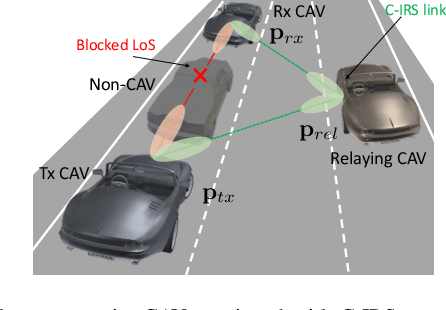
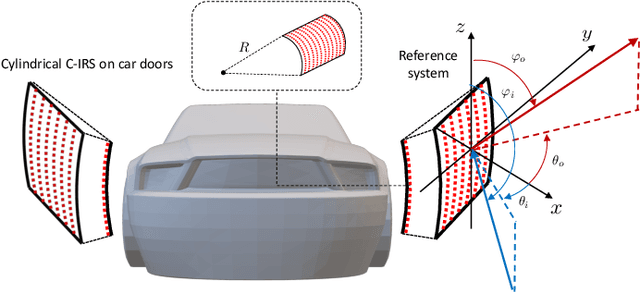
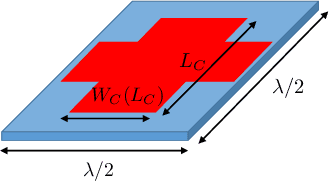
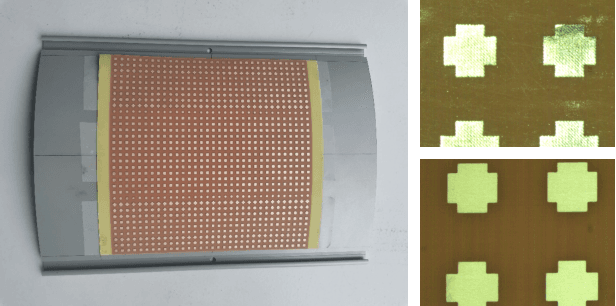
Intelligent reflecting surfaces (IRS) will represent a key technology in the upcoming sixth-generation (6G) communication networks to extend the network coverage and overcome link blockage. Research on IRS is expected to take a giant leap in the coming years to address the current technological limitations, mainly regarding the IRS re-configuration in highly dynamic scenarios, such as vehicle-to-vehicle (V2V) ones. This paper proposes a fully passive and low-cost solution based on pre-configured IRS to be lodged on the vehicle's body, which does not require any signaling for re-configuration. However, conventional IRS are planar array and cannot fit with most vehicles' silhouettes. Hence, the proposed design targets conformal surfaces (C-IRS) with an arbitrary shape. In particular, this paper reveals the first experimental findings on the realization of C-IRS operating at 26 GHz and measurements in anechoic chamber, which validate the analytical derivations. To demonstrate the benefits of the proposed solution, numerical simulations in a V2V scenario show that, when the percentage of vehicles equipping a C-IRS increases, the communication becomes more robust to vehicles' blockage and the average end-to-end SNR is enhanced up to 25 dB.