 Add to Chrome
 Add to Firefox
 Add to Edge
Safe Overtaking for Autonomous Racing Using Hierarchical Optimization and Learning-Based Control
Jul 15, 2026
Autonomous racing overtaking requires balancing competitive performance with safety under nonlinear vehicle dynamics and real-time constraints. Model Predictive Control (MPC) combined with Control Barrier Functions (CBFs) provides a principled mechanism for certifying forward invariance of a safe set. However, commonly used fixed-decay discrete-time CBF formulations can become overly conservative in interactive racing scenarios, limiting overtaking performance and requiring manual tuning across track conditions. This paper proposes a hierarchical overtaking framework that explicitly separates maneuver-level decision making from safety-certified trajectory control, reducing conservatism while preserving safety. A high-level Mixed-Integer Quadratic Program (MIQP) resolves the combinatorial passing-side selection problem by selecting a feasible overtaking topology, while a nonlinear Frenet-frame MPC enforces vehicle dynamics and safety through embedded discrete-time CBF constraints. This decomposition isolates the combinatorial complexity of maneuver selection from the continuous trajectory optimization. To further mitigate the sensitivity of fixed-decay barrier constraints, a reinforcement learning policy adapts the discrete-time CBF decay parameter online, enabling context-dependent modulation of safety margins without directly controlling vehicle inputs. Simulation and scaled-hardware experiments show that no single fixed decay parameter achieves uniformly strong performance across tracks, whereas the adaptive strategy attains the highest aggregate success rate and consistently strong safety--performance trade-offs without per-track tuning, improving robustness to environment variation while maintaining safety constraint satisfaction in nominal operation.

Learning What Matters: Adaptive Information-Theoretic Objectives for Robot Exploration
May 12, 2026Designing learnable information-theoretic objectives for robot exploration remains challenging. Such objectives aim to guide exploration toward data that reduces uncertainty in model parameters, yet it is often unclear what information the collected data can actually reveal. Although reinforcement learning (RL) can optimize a given objective, constructing objectives that reflect parametric learnability is difficult in high-dimensional robotic systems. Many parameter directions are weakly observable or unidentifiable, and even when identifiable directions are selected, omitted directions can still influence exploration and distort information measures. To address this challenge, we propose Quasi-Optimal Experimental Design (Q{\footnotesize OED}), an adaptive information objective grounded in optimal experimental design. Q{\footnotesize OED} (i) performs eigenspace analysis of the Fisher information matrix to identify an observable subspace and select identifiable parameter directions, and (ii) modifies the exploration objective to emphasize these directions while suppressing nuisance effects from non-critical parameters. Under bounded nuisance influence and limited coupling between critical and nuisance directions, Q{\footnotesize OED} provides a constant-factor approximation to the ideal information objective that explores all parameters. We evaluate Q{\footnotesize OED} on simulated and real-world navigation and manipulation tasks, where identifiable-direction selection and nuisance suppression yield performance improvements of \SI{35.23}{\percent} and \SI{21.98}{\percent}, respectively. When integrated as an exploration objective in model-based policy optimization, Q{\footnotesize OED} further improves policy performance over established RL baselines.
Adaptive Smooth Tchebycheff Attention for Multi-Objective Policy Optimization
May 12, 2026Multi-objective reinforcement learning in robotic domains requires balancing complex, non-convex trade-offs between conflicting objectives. While linear scalarization methods provide stability, they are theoretically incapable of recovering solutions within non-convex regions of the Pareto front. Conversely, static non-linear scalarizations (e.g., Tchebycheff) can theoretically access these regions but often suffer from severe gradient variance and optimization instability in deep RL. In this work, we propose an Adaptive Smooth Tchebycheff framework that resolves this tension by dynamically modulating the curvature of the optimization landscape. We introduce a novel conflict-driven controller that regulates the optimization smoothness based on real-time gradient interference. This allows the agent to anneal toward precise, non-convex scalarization when objectives align, while elastically reverting to stable, smooth approximations when destructive gradient conflicts emerge. We validate our approach on a challenging robotic stealth visual search task -- a proxy for monitoring of protected/fragile ecosystems -- where an agent must balance search, exposure/interference minimization and exploration speed. Extensive ablations confirm that our conflict-aware adaptation enables the robust discovery of Pareto-optimal policies in non-convex regions inaccessible to linear baselines and unstable for static non-linear methods. Website: https://alejandromllo.github.io/research/pasta/
ForestSim: A Synthetic Benchmark for Intelligent Vehicle Perception in Unstructured Forest Environments
Mar 30, 2026Robust scene understanding is essential for intelligent vehicles operating in natural, unstructured environments. While semantic segmentation datasets for structured urban driving are abundant, the datasets for extremely unstructured wild environments remain scarce due to the difficulty and cost of generating pixel-accurate annotations. These limitations hinder the development of perception systems needed for intelligent ground vehicles tasked with forestry automation, agricultural robotics, disaster response, and all-terrain mobility. To address this gap, we present ForestSim, a high-fidelity synthetic dataset designed for training and evaluating semantic segmentation models for intelligent vehicles in forested off-road and no-road environments. ForestSim contains 2094 photorealistic images across 25 diverse environments, covering multiple seasons, terrain types, and foliage densities. Using Unreal Engine environments integrated with Microsoft AirSim, we generate consistent, pixel-accurate labels across 20 classes relevant to autonomous navigation. We benchmark ForestSim using state-of-the-art architectures and report strong performance despite the inherent challenges of unstructured scenes. ForestSim provides a scalable and accessible foundation for perception research supporting the next generation of intelligent off-road vehicles. The dataset and code are publicly available: Dataset: https://vailforestsim.github.io Code: https://github.com/pragatwagle/ForestSim
Seeing Where to Deploy: Metric RGB-Based Traversability Analysis for Aerial-to-Ground Hidden Space Inspection
Mar 15, 2026Inspection of confined infrastructure such as culverts often requires accessing hidden spaces whose entrances are reachable primarily from elevated viewpoints. Aerial-ground cooperation enables a UAV to deploy a compact UGV for interior exploration, but selecting a suitable deployment region from aerial observations requires metric terrain reasoning involving scale ambiguity, reconstruction uncertainty, and terrain semantics. We present a metric RGB-based geometric-semantic reconstruction and traversability analysis framework for aerial-to-ground hidden space inspection. A feed-forward multi-view RGB reconstruction backbone produces dense geometry, while temporally consistent semantic segmentation yields a 3D semantic map. To enable deployment-relevant measurements without LiDAR-based dense mapping, we introduce an embodied motion prior that recovers metric scale by enforcing consistency between predicted camera motion and onboard platform egomotion. From the metrically grounded reconstruction, we construct a confidence-aware geometric-semantic traversability map and evaluate candidate deployment zones under explicit reachability constraints. Experiments on a tethered UAV-UGV platform demonstrate reliable deployment-zone identification in hidden space scenarios.
LPV-MPC for Lateral Control in Full-Scale Autonomous Racing
Mar 14, 2026Autonomous racing has attracted significant attention recently, presenting challenges in selecting an optimal controller that operates within the onboard system's computational limits and meets operational constraints such as limited track time and high costs. This paper introduces a Linear Parameter-Varying Model Predictive Controller (LPV-MPC) for lateral control. Implemented on an IAC AV-24, the controller achieved stable performance at speeds exceeding 160 mph (71.5 m/s). We detail the controller design, the methodology for extracting model parameters, and key system-level and implementation considerations. Additionally, we report results from our final race run, providing a comprehensive analysis of both vehicle dynamics and controller performance. A Python implementation of the framework is available at: https://tinyurl.com/LPV-MPC-acados
MiniUGV$_2$: A Compact UAV-Deployable Tracked Ground Vehicle with Manipulation Capabilities
Mar 01, 2026Exploring and inspecting \emph{Hidden Spaces}, defined as environments whose entrances are accessible only to aerial robots but remain unexplored due to geometric constraints, limited flight time, and communication loss, remains a major challenge. We present miniUGV$_2$, a compact UAV-deployable tracked ground vehicle that extends UAV capabilities into confined environments. The system introduces dual articulated arms, integrated LiDAR and depth sensing, and modular electronics for enhanced autonomy. A novel tether module with an electro-permanent magnetic head enables safe deployment, retrieval, and optional detachment, thereby overcoming prior entanglement issues. Experiments demonstrate robust terrain navigation, self-righting, and manipulation of objects up to 3.5 kg, validating miniUGV$_2$ as a versatile platform for hybrid aerial-ground robotics.
Navigating the Wild: Pareto-Optimal Visual Decision-Making in Image Space
Nov 11, 2025Navigating complex real-world environments requires semantic understanding and adaptive decision-making. Traditional reactive methods without maps often fail in cluttered settings, map-based approaches demand heavy mapping effort, and learning-based solutions rely on large datasets with limited generalization. To address these challenges, we present Pareto-Optimal Visual Navigation, a lightweight image-space framework that combines data-driven semantics, Pareto-optimal decision-making, and visual servoing for real-time navigation.
AFRDA: Attentive Feature Refinement for Domain Adaptive Semantic Segmentation
Jul 23, 2025In Unsupervised Domain Adaptive Semantic Segmentation (UDA-SS), a model is trained on labeled source domain data (e.g., synthetic images) and adapted to an unlabeled target domain (e.g., real-world images) without access to target annotations. Existing UDA-SS methods often struggle to balance fine-grained local details with global contextual information, leading to segmentation errors in complex regions. To address this, we introduce the Adaptive Feature Refinement (AFR) module, which enhances segmentation accuracy by refining highresolution features using semantic priors from low-resolution logits. AFR also integrates high-frequency components, which capture fine-grained structures and provide crucial boundary information, improving object delineation. Additionally, AFR adaptively balances local and global information through uncertaintydriven attention, reducing misclassifications. Its lightweight design allows seamless integration into HRDA-based UDA methods, leading to state-of-the-art segmentation performance. Our approach improves existing UDA-SS methods by 1.05% mIoU on GTA V --> Cityscapes and 1.04% mIoU on Synthia-->Cityscapes. The implementation of our framework is available at: https://github.com/Masrur02/AFRDA
Situationally-Aware Dynamics Learning
May 26, 2025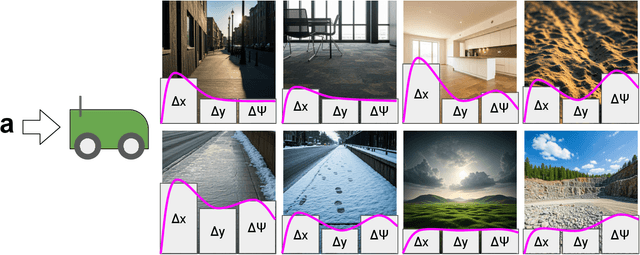
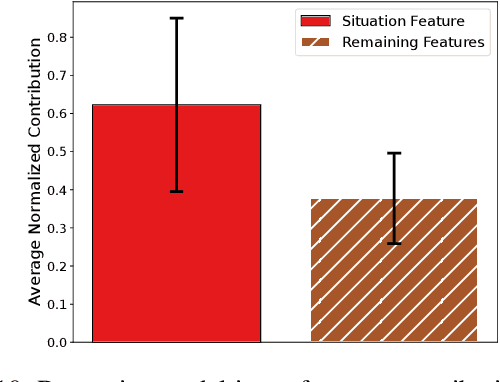
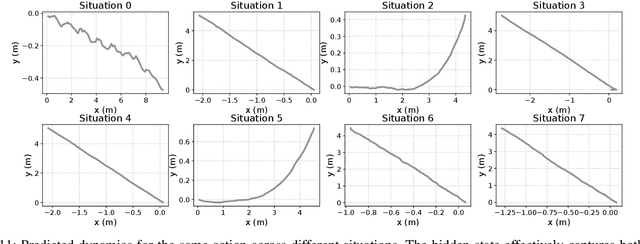
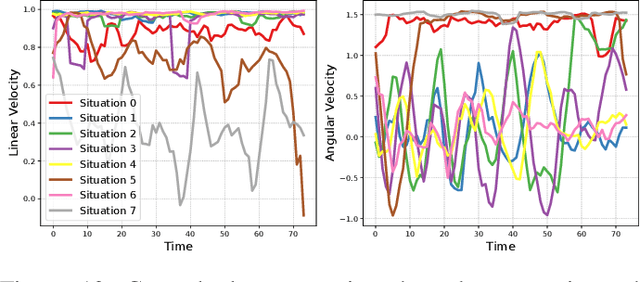
Autonomous robots operating in complex, unstructured environments face significant challenges due to latent, unobserved factors that obscure their understanding of both their internal state and the external world. Addressing this challenge would enable robots to develop a more profound grasp of their operational context. To tackle this, we propose a novel framework for online learning of hidden state representations, with which the robots can adapt in real-time to uncertain and dynamic conditions that would otherwise be ambiguous and result in suboptimal or erroneous behaviors. Our approach is formalized as a Generalized Hidden Parameter Markov Decision Process, which explicitly models the influence of unobserved parameters on both transition dynamics and reward structures. Our core innovation lies in learning online the joint distribution of state transitions, which serves as an expressive representation of latent ego- and environmental-factors. This probabilistic approach supports the identification and adaptation to different operational situations, improving robustness and safety. Through a multivariate extension of Bayesian Online Changepoint Detection, our method segments changes in the underlying data generating process governing the robot's dynamics. The robot's transition model is then informed with a symbolic representation of the current situation derived from the joint distribution of latest state transitions, enabling adaptive and context-aware decision-making. To showcase the real-world effectiveness, we validate our approach in the challenging task of unstructured terrain navigation, where unmodeled and unmeasured terrain characteristics can significantly impact the robot's motion. Extensive experiments in both simulation and real world reveal significant improvements in data efficiency, policy performance, and the emergence of safer, adaptive navigation strategies.