 Add to Chrome
 Add to Firefox
 Add to Edge
Towards Engineering Scaling Laws with Pretraining Data Composition
Jun 18, 2026
Neural scaling laws describe how model performance improves as a power law in compute, model size, and dataset size. While well-established for large language models, these relationships are emerging for large models in particle physics. As with language, empirical studies show that the performance scales as a power law. However, unlike natural language or image domains, fundamental physics has high-fidelity simulators that produce synthetic data cheaply. This favors scaling regimes where additional data is cheaper than additional parameters, and allows the pretraining dataset itself to be engineered to influence the scaling. For the task of classifying hadronic jets produced in collisions of high-energy particle beams, we show that the scaling behavior can be engineered towards requiring more data rather than larger models by inclusion of pretraining data which is more diverse and better aligned with the downstream classification task.

The Landscape of Unfolding with Machine Learning
Apr 29, 2024

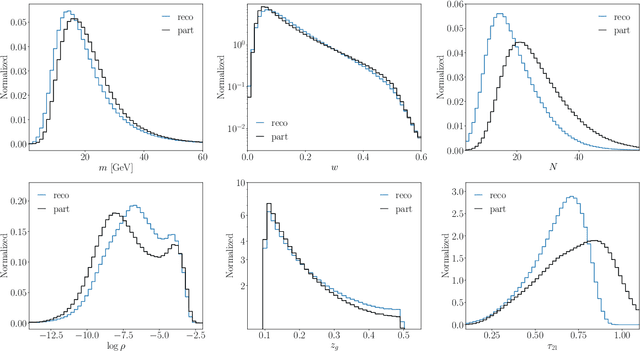

Recent innovations from machine learning allow for data unfolding, without binning and including correlations across many dimensions. We describe a set of known, upgraded, and new methods for ML-based unfolding. The performance of these approaches are evaluated on the same two datasets. We find that all techniques are capable of accurately reproducing the particle-level spectra across complex observables. Given that these approaches are conceptually diverse, they offer an exciting toolkit for a new class of measurements that can probe the Standard Model with an unprecedented level of detail and may enable sensitivity to new phenomena.
Full Event Particle-Level Unfolding with Variable-Length Latent Variational Diffusion
Apr 22, 2024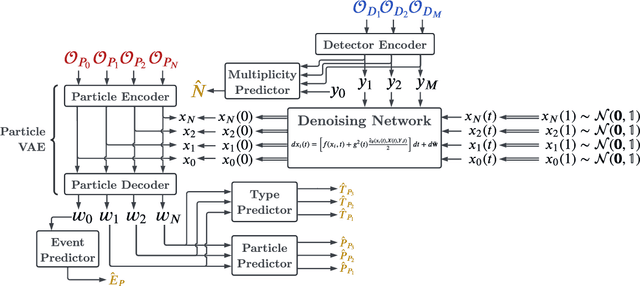
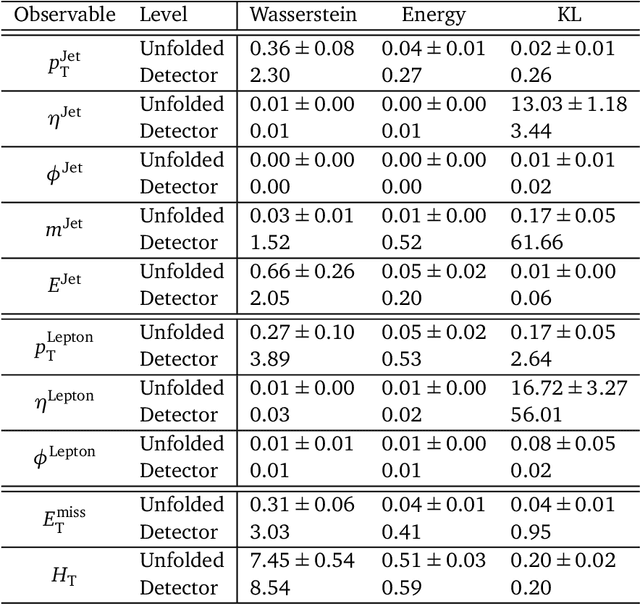
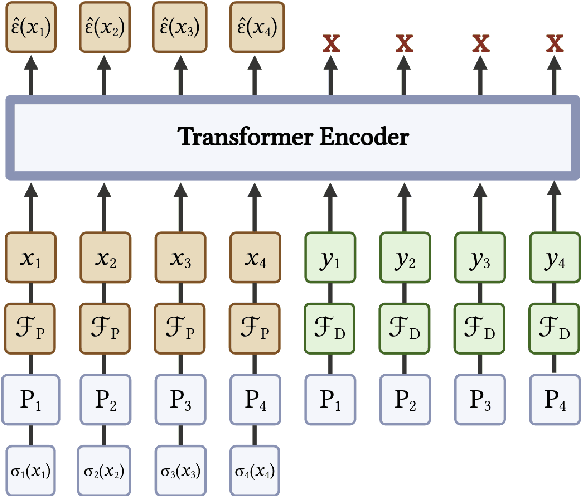
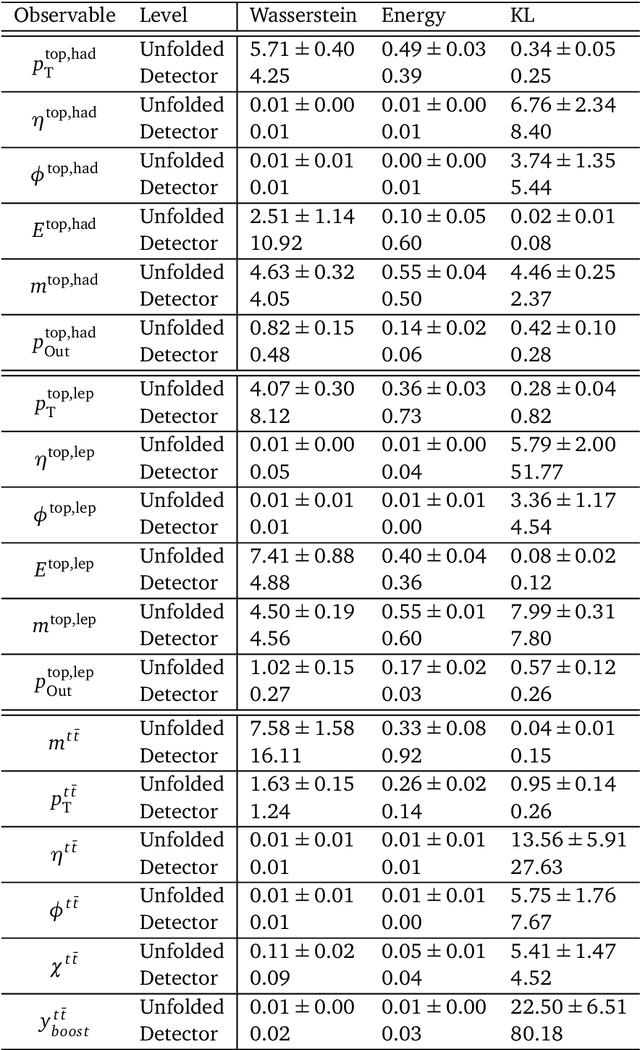
The measurements performed by particle physics experiments must account for the imperfect response of the detectors used to observe the interactions. One approach, unfolding, statistically adjusts the experimental data for detector effects. Recently, generative machine learning models have shown promise for performing unbinned unfolding in a high number of dimensions. However, all current generative approaches are limited to unfolding a fixed set of observables, making them unable to perform full-event unfolding in the variable dimensional environment of collider data. A novel modification to the variational latent diffusion model (VLD) approach to generative unfolding is presented, which allows for unfolding of high- and variable-dimensional feature spaces. The performance of this method is evaluated in the context of semi-leptonic top quark pair production at the Large Hadron Collider.
End-To-End Latent Variational Diffusion Models for Inverse Problems in High Energy Physics
May 17, 2023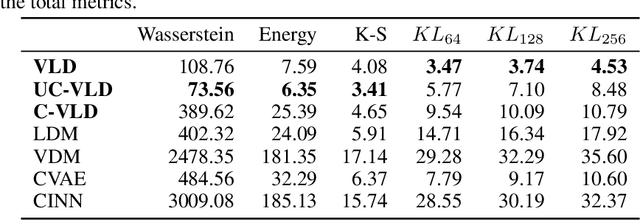
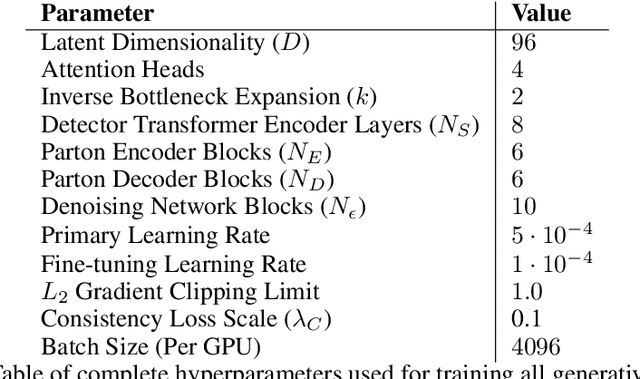
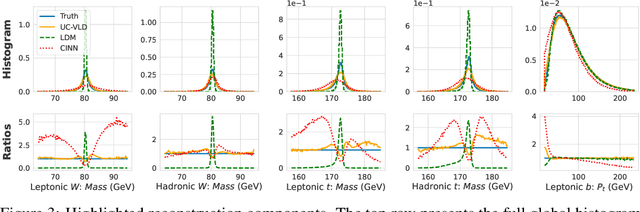
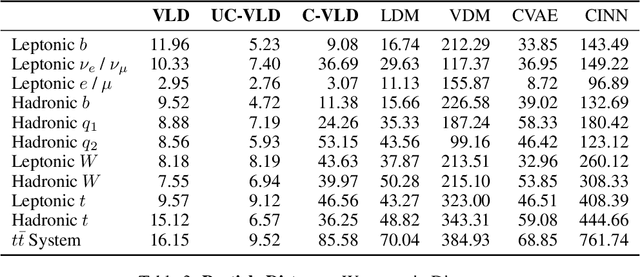
High-energy collisions at the Large Hadron Collider (LHC) provide valuable insights into open questions in particle physics. However, detector effects must be corrected before measurements can be compared to certain theoretical predictions or measurements from other detectors. Methods to solve this \textit{inverse problem} of mapping detector observations to theoretical quantities of the underlying collision are essential parts of many physics analyses at the LHC. We investigate and compare various generative deep learning methods to approximate this inverse mapping. We introduce a novel unified architecture, termed latent variation diffusion models, which combines the latent learning of cutting-edge generative art approaches with an end-to-end variational framework. We demonstrate the effectiveness of this approach for reconstructing global distributions of theoretical kinematic quantities, as well as for ensuring the adherence of the learned posterior distributions to known physics constraints. Our unified approach achieves a distribution-free distance to the truth of over 20 times less than non-latent state-of-the-art baseline and 3 times less than traditional latent diffusion models.