 Add to Chrome
 Add to Firefox
 Add to Edge
Neural Reconstruction of LiDAR Point Clouds under Jamming Attacks via Full-Waveform Representation and Simultaneous Laser Sensing
Apr 01, 2026
LiDAR sensors are critical for autonomous driving perception, yet remain vulnerable to spoofing attacks. Jamming attacks inject high-frequency laser pulses that completely blind LiDAR sensors by overwhelming authentic returns with malicious signals. We discover that while point clouds become randomized, the underlying full-waveform data retains distinguishable signatures between attack and legitimate signals. In this work, we propose PULSAR-Net, capable of reconstructing authentic point clouds under jamming attacks by leveraging previously underutilized intermediate full-waveform representations and simultaneous laser sensing in modern LiDAR systems. PULSAR-Net adopts a novel U-Net architecture with axial spatial attention mechanisms specifically designed to identify attack-induced signals from authentic object returns in the full-waveform representation. To address the lack of full-waveform representations in existing LiDAR datasets under jamming attacks, we introduce a physics-aware dataset generation pipeline that synthesizes realistic full-waveform representations under jamming attacks. Despite being trained exclusively on synthetic data, PULSAR-Net achieves reconstruction rates of 92% and 73% for vehicles obscured by jamming attacks in real-world static and driving scenarios, respectively.

Ghost-FWL: A Large-Scale Full-Waveform LiDAR Dataset for Ghost Detection and Removal
Mar 30, 2026LiDAR has become an essential sensing modality in autonomous driving, robotics, and smart-city applications. However, ghost points (or ghosts), which are false reflections caused by multi-path laser returns from glass and reflective surfaces, severely degrade 3D mapping and localization accuracy. Prior ghost removal relies on geometric consistency in dense point clouds, failing on mobile LiDAR's sparse, dynamic data. We address this by exploiting full-waveform LiDAR (FWL), which captures complete temporal intensity profiles rather than just peak distances, providing crucial cues for distinguishing ghosts from genuine reflections in mobile scenarios. As this is a new task, we present Ghost-FWL, the first and largest annotated mobile FWL dataset for ghost detection and removal. Ghost-FWL comprises 24K frames across 10 diverse scenes with 7.5 billion peak-level annotations, which is 100x larger than existing annotated FWL datasets. Benefiting from this large-scale dataset, we establish a FWL-based baseline model for ghost detection and propose FWL-MAE, a masked autoencoder for efficient self-supervised representation learning on FWL data. Experiments show that our baseline outperforms existing methods in ghost removal accuracy, and our ghost removal further enhances downstream tasks such as LiDAR-based SLAM (66% trajectory error reduction) and 3D object detection (50x false positive reduction). The dataset and code is publicly available and can be accessed via the project page: https://keio-csg.github.io/Ghost-FWL
D-SLAMSpoof: An Environment-Agnostic LiDAR Spoofing Attack using Dynamic Point Cloud Injection
Mar 11, 2026In this work, we introduce Dynamic SLAMSpoof (D-SLAMSpoof), a novel attack that compromises LiDAR SLAM even in feature-rich environments. The attack leverages LiDAR spoofing, which injects spurious measurements into LiDAR scans through external laser interference. By designing both spatial injection shapes and temporally coordinated dynamic injection patterns guided by scan-matching principles, D-SLAMSpoof significantly improves attack success rates in real-world, feature-rich environments such as urban areas and indoor spaces, where conventional LiDAR spoofing methods often fail. Furthermore, we propose a practical defense method, ISD-SLAM, that relies solely on inertial dead reckoning signals commonly available in autonomous systems. We demonstrate that ISD-SLAM accurately detects LiDAR spoofing attacks, including D-SLAMSpoof, and effectively mitigates the resulting position drift. Our findings expose inherent vulnerabilities in LiDAR-based SLAM and introduce the first practical defense against LiDAR-based SLAM spoofing using only standard onboard sensors, providing critical insights for improving the security and reliability of autonomous systems.
MirrorDrift: Actuated Mirror-Based Attacks on LiDAR SLAM
Mar 11, 2026LiDAR SLAM provides high-accuracy localization but is fragile to point-cloud corruption because scan matching assumes geometric consistency. Prior physical attacks on LiDAR SLAM largely rely on LiDAR spoofing via external signal injection, which requires sensor-specific timing knowledge and is increasingly mitigated by modern defense mechanisms such as timing obfuscation and injection rejection. In this work, we show that specular reflection offers an injection-free alternative and demonstrate an attack, MirrorDrift, that uses an actuated planar mirror to cause ghost points in LiDAR scans and systematically bias scan-matching correspondences. MirrorDrift optimizes mirror placement, alignment, and actuation. In simulation, it increases the average pose error (APE) by 6.1x over random placement, degrading three SLAM systems to 2.29-3.31 m mean APE. In real-world experiments on a modern LiDAR with state-of-the-art interference mitigation, it induces localization errors of up to 6.03 m. To the best of our knowledge, this is the first successful SLAM-targeted attack against production-grade secure LiDARs.
D4C: Data-free Quantization for Contrastive Language-Image Pre-training Models
Nov 19, 2025Data-Free Quantization (DFQ) offers a practical solution for model compression without requiring access to real data, making it particularly attractive in privacy-sensitive scenarios. While DFQ has shown promise for unimodal models, its extension to Vision-Language Models such as Contrastive Language-Image Pre-training (CLIP) models remains underexplored. In this work, we reveal that directly applying existing DFQ techniques to CLIP results in substantial performance degradation due to two key limitations: insufficient semantic content and low intra-image diversity in synthesized samples. To tackle these challenges, we propose D4C, the first DFQ framework tailored for CLIP. D4C synthesizes semantically rich and structurally diverse pseudo images through three key components: (1) Prompt-Guided Semantic Injection aligns generated images with real-world semantics using text prompts; (2) Structural Contrastive Generation reproduces compositional structures of natural images by leveraging foreground-background contrastive synthesis; and (3) Perturbation-Aware Enhancement applies controlled perturbations to improve sample diversity and robustness. These components jointly empower D4C to synthesize images that are both semantically informative and structurally diverse, effectively bridging the performance gap of DFQ on CLIP. Extensive experiments validate the effectiveness of D4C, showing significant performance improvements on various bit-widths and models. For example, under the W4A8 setting with CLIP ResNet-50 and ViT-B/32, D4C achieves Top-1 accuracy improvement of 12.4% and 18.9% on CIFAR-10, 6.8% and 19.7% on CIFAR-100, and 1.4% and 5.7% on ImageNet-1K in zero-shot classification, respectively.
AHCPTQ: Accurate and Hardware-Compatible Post-Training Quantization for Segment Anything Model
Mar 05, 2025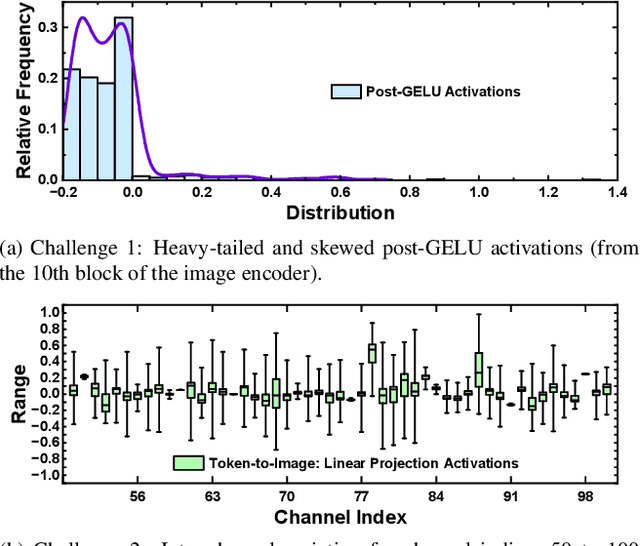
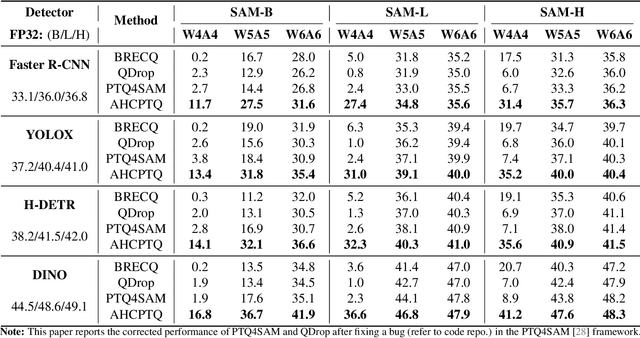
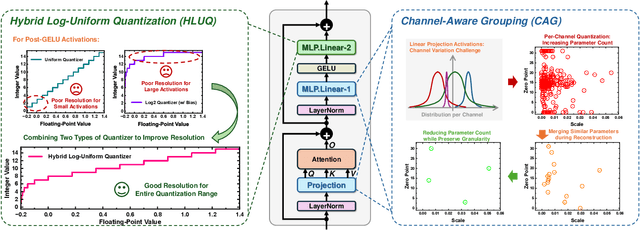
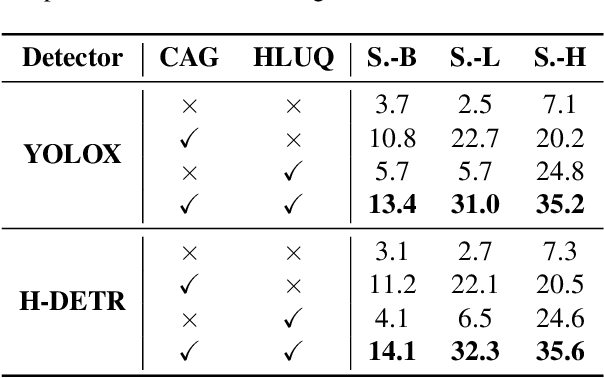
The Segment Anything Model (SAM) has demonstrated strong versatility across various visual tasks. However, its large storage requirements and high computational cost pose challenges for practical deployment. Post-training quantization (PTQ) has emerged as an effective strategy for efficient deployment, but we identify two key challenges in SAM that hinder the effectiveness of existing PTQ methods: the heavy-tailed and skewed distribution of post-GELU activations, and significant inter-channel variation in linear projection activations. To address these challenges, we propose AHCPTQ, an accurate and hardware-efficient PTQ method for SAM. AHCPTQ introduces hardware-compatible Hybrid Log-Uniform Quantization (HLUQ) to manage post-GELU activations, employing log2 quantization for dense small values and uniform quantization for sparse large values to enhance quantization resolution. Additionally, AHCPTQ incorporates Channel-Aware Grouping (CAG) to mitigate inter-channel variation by progressively clustering activation channels with similar distributions, enabling them to share quantization parameters and improving hardware efficiency. The combination of HLUQ and CAG not only enhances quantization effectiveness but also ensures compatibility with efficient hardware execution. For instance, under the W4A4 configuration on the SAM-L model, AHCPTQ achieves 36.6% mAP on instance segmentation with the DINO detector, while achieving a 7.89x speedup and 8.64x energy efficiency over its floating-point counterpart in FPGA implementation.
SLAMSpoof: Practical LiDAR Spoofing Attacks on Localization Systems Guided by Scan Matching Vulnerability Analysis
Feb 19, 2025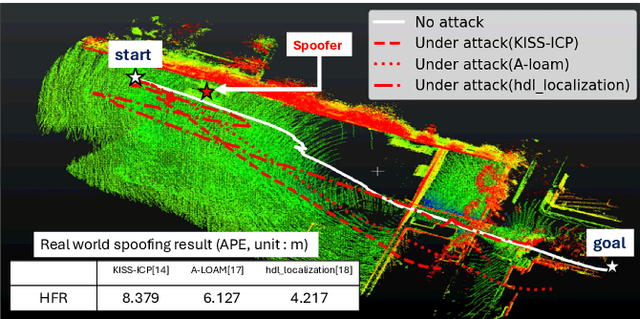

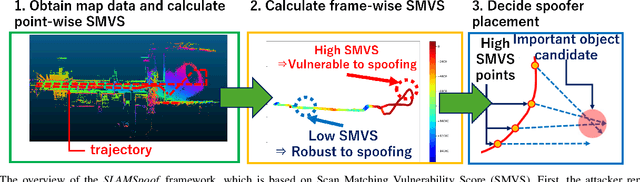
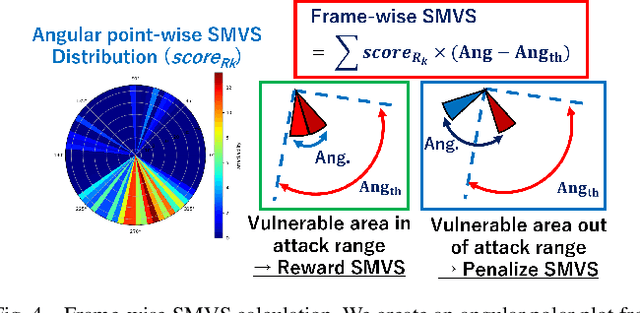
Accurate localization is essential for enabling modern full self-driving services. These services heavily rely on map-based traffic information to reduce uncertainties in recognizing lane shapes, traffic light locations, and traffic signs. Achieving this level of reliance on map information requires centimeter-level localization accuracy, which is currently only achievable with LiDAR sensors. However, LiDAR is known to be vulnerable to spoofing attacks that emit malicious lasers against LiDAR to overwrite its measurements. Once localization is compromised, the attack could lead the victim off roads or make them ignore traffic lights. Motivated by these serious safety implications, we design SLAMSpoof, the first practical LiDAR spoofing attack on localization systems for self-driving to assess the actual attack significance on autonomous vehicles. SLAMSpoof can effectively find the effective attack location based on our scan matching vulnerability score (SMVS), a point-wise metric representing the potential vulnerability to spoofing attacks. To evaluate the effectiveness of the attack, we conduct real-world experiments on ground vehicles and confirm its high capability in real-world scenarios, inducing position errors of $\geq$4.2 meters (more than typical lane width) for all 3 popular LiDAR-based localization algorithms. We finally discuss the potential countermeasures of this attack. Code is available at https://github.com/Keio-CSG/slamspoof
LiSA: Leveraging Link Recommender to Attack Graph Neural Networks via Subgraph Injection
Feb 13, 2025Graph Neural Networks (GNNs) have demonstrated remarkable proficiency in modeling data with graph structures, yet recent research reveals their susceptibility to adversarial attacks. Traditional attack methodologies, which rely on manipulating the original graph or adding links to artificially created nodes, often prove impractical in real-world settings. This paper introduces a novel adversarial scenario involving the injection of an isolated subgraph to deceive both the link recommender and the node classifier within a GNN system. Specifically, the link recommender is mislead to propose links between targeted victim nodes and the subgraph, encouraging users to unintentionally establish connections and that would degrade the node classification accuracy, thereby facilitating a successful attack. To address this, we present the LiSA framework, which employs a dual surrogate model and bi-level optimization to simultaneously meet two adversarial objectives. Extensive experiments on real-world datasets demonstrate the effectiveness of our method.
PACiM: A Sparsity-Centric Hybrid Compute-in-Memory Architecture via Probabilistic Approximation
Aug 29, 2024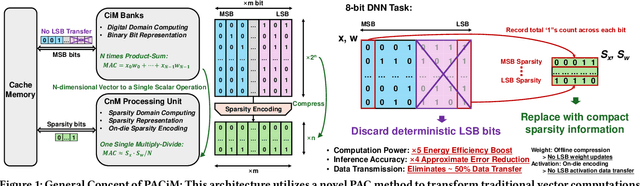
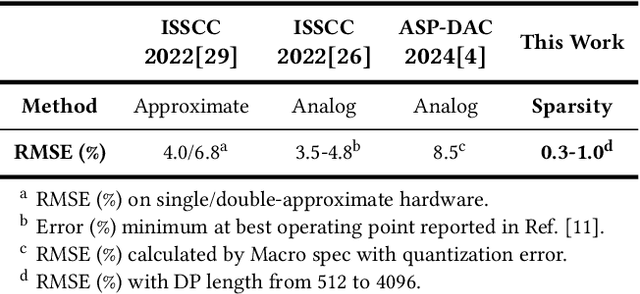
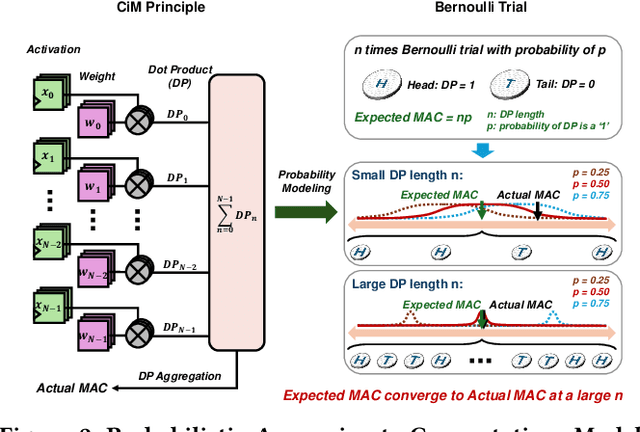
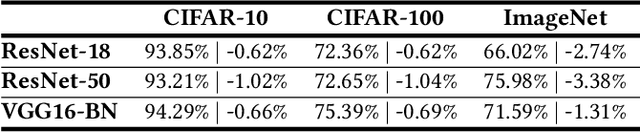
Approximate computing emerges as a promising approach to enhance the efficiency of compute-in-memory (CiM) systems in deep neural network processing. However, traditional approximate techniques often significantly trade off accuracy for power efficiency, and fail to reduce data transfer between main memory and CiM banks, which dominates power consumption. This paper introduces a novel probabilistic approximate computation (PAC) method that leverages statistical techniques to approximate multiply-and-accumulation (MAC) operations, reducing approximation error by 4X compared to existing approaches. PAC enables efficient sparsity-based computation in CiM systems by simplifying complex MAC vector computations into scalar calculations. Moreover, PAC enables sparsity encoding and eliminates the LSB activations transmission, significantly reducing data reads and writes. This sets PAC apart from traditional approximate computing techniques, minimizing not only computation power but also memory accesses by 50%, thereby boosting system-level efficiency. We developed PACiM, a sparsity-centric architecture that fully exploits sparsity to reduce bit-serial cycles by 81% and achieves a peak 8b/8b efficiency of 14.63 TOPS/W in 65 nm CMOS while maintaining high accuracy of 93.85/72.36/66.02% on CIFAR-10/CIFAR-100/ImageNet benchmarks using a ResNet-18 model, demonstrating the effectiveness of our PAC methodology.
Revisiting LiDAR Spoofing Attack Capabilities against Object Detection: Improvements, Measurement, and New Attack
Mar 19, 2023
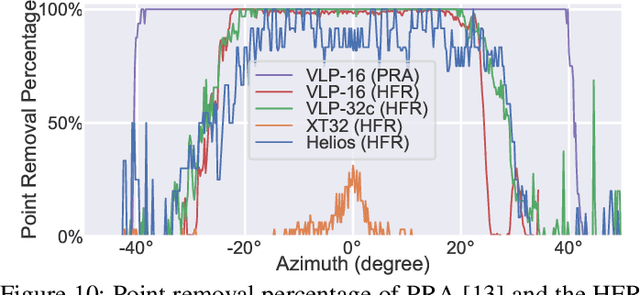
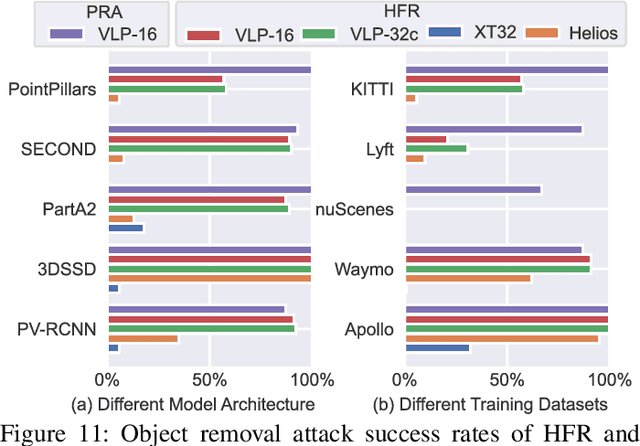
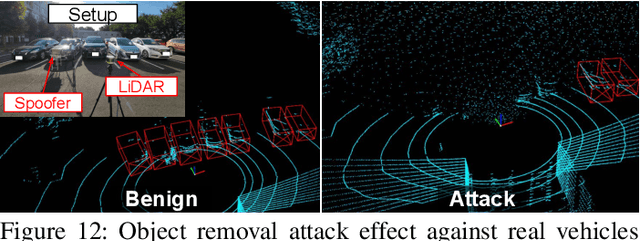
LiDAR (Light Detection And Ranging) is an indispensable sensor for precise long- and wide-range 3D sensing, which directly benefited the recent rapid deployment of autonomous driving (AD). Meanwhile, such a safety-critical application strongly motivates its security research. A recent line of research demonstrates that one can manipulate the LiDAR point cloud and fool object detection by firing malicious lasers against LiDAR. However, these efforts face 3 critical research gaps: (1) evaluating only on a specific LiDAR (VLP-16); (2) assuming unvalidated attack capabilities; and (3) evaluating with models trained on limited datasets. To fill these critical research gaps, we conduct the first large-scale measurement study on LiDAR spoofing attack capabilities on object detectors with 9 popular LiDARs in total and 3 major types of object detectors. To perform this measurement, we significantly improved the LiDAR spoofing capability with more careful optics and functional electronics, which allows us to be the first to clearly demonstrate and quantify key attack capabilities assumed in prior works. However, we further find that such key assumptions actually can no longer hold for all the other (8 out of 9) LiDARs that are more recent than VLP-16 due to various recent LiDAR features. To this end, we further identify a new type of LiDAR spoofing attack that can improve on this and be applicable to a much more general and recent set of LiDARs. We find that its attack capability is enough to (1) cause end-to-end safety hazards in simulated AD scenarios, and (2) remove real vehicles in the physical world. We also discuss the defense side.