 Add to Chrome
 Add to Firefox
 Add to Edge
Landmark shape spaces with induced metrics
Jul 30, 2026
We present a unification of Kendall's landmark shape spaces, where rigid motions are factored out and scale fixed on landmark configurations equipped with Euclidean geometry, with landmark configuration spaces carrying Riemannian metrics descending from right-invariant Sobolev metrics on the diffeomorphism group. The resulting new landmark shape spaces achieve the defining properties of both approaches: The regularity of the descending metric prevents landmarks from colliding, the metric is defined in the ambient space independent of the number of landmarks, local rigid transformations are preserved, global rigid motions are removed, and scale fixed. To achieve this, we define a particular Sobolev-type operator, the screened elasticity operator, whose null-space consists exactly of the rigid motions, we show how this operator descends to achieve the desired geometry, and we present approaches to solving matching problems and computing geodesics numerically. The resulting construction allows the use of landmark configuration spaces with sufficiently regular metrics in applications while retaining the shape invariances that are a hallmark of Kendall's shape spaces.

A Diffeomorphism Groupoid and Algebroid Framework for Discontinuous Image Registration
Mar 12, 2026In this paper, we propose a novel mathematical framework for piecewise diffeomorphic image registration that involves discontinuous sliding motion using a diffeomorphism groupoid and algebroid approach. The traditional Large Deformation Diffeomorphic Metric Mapping (LDDMM) registration method builds on Lie groups, which assume continuity and smoothness in velocity fields, limiting its applicability in handling discontinuous sliding motion. To overcome this limitation, we extend the diffeomorphism Lie groups to a framework of discontinuous diffeomorphism Lie groupoids, allowing for discontinuities along sliding boundaries while maintaining diffeomorphism within homogeneous regions. We provide a rigorous analysis of the associated mathematical structures, including Lie algebroids and their duals, and derive specific Euler-Arnold equations to govern optimal flows for discontinuous deformations. Some numerical tests are performed to validate the efficiency of the proposed approach.
Neural Backward Filtering Forward Guiding
Jan 30, 2026Inference in non-linear continuous stochastic processes on trees is challenging, particularly when observations are sparse (leaf-only) and the topology is complex. Exact smoothing via Doob's $h$-transform is intractable for general non-linear dynamics, while particle-based methods degrade in high dimensions. We propose Neural Backward Filtering Forward Guiding (NBFFG), a unified framework for both discrete transitions and continuous diffusions. Our method constructs a variational posterior by leveraging an auxiliary linear-Gaussian process. This auxiliary process yields a closed-form backward filter that serves as a ``guide'', steering the generative path toward high-likelihood regions. We then learn a neural residual--parameterized as a normalizing flow or a controlled SDE--to capture the non-linear discrepancies. This formulation allows for an unbiased path-wise subsampling scheme, reducing the training complexity from tree-size dependent to path-length dependent. Empirical results show that NBFFG outperforms baselines on synthetic benchmarks, and we demonstrate the method on a high-dimensional inference task in phylogenetic analysis with reconstruction of ancestral butterfly wing shapes.
Stochastics of shapes and Kunita flows
Dec 12, 2025Stochastic processes of evolving shapes are used in applications including evolutionary biology, where morphology changes stochastically as a function of evolutionary processes. Due to the non-linear and often infinite-dimensional nature of shape spaces, the mathematical construction of suitable stochastic shape processes is far from immediate. We define and formalize properties that stochastic shape processes should ideally satisfy to be compatible with the shape structure, and we link this to Kunita flows that, when acting on shape spaces, induce stochastic processes that satisfy these criteria by their construction. We couple this with a survey of other relevant shape stochastic processes and show how bridge sampling techniques can be used to condition shape stochastic processes on observed data thereby allowing for statistical inference of parameters of the stochastic dynamics.
Neural Guided Diffusion Bridges
Feb 18, 2025We propose a novel method for simulating conditioned diffusion processes (diffusion bridges) in Euclidean spaces. By training a neural network to approximate bridge dynamics, our approach eliminates the need for computationally intensive Markov Chain Monte Carlo (MCMC) methods or reverse-process modeling. Compared to existing methods, it offers greater robustness across various diffusion specifications and conditioning scenarios. This applies in particular to rare events and multimodal distributions, which pose challenges for score-learning- and MCMC-based approaches. We propose a flexible variational family for approximating the diffusion bridge path measure which is partially specified by a neural network. Once trained, it enables efficient independent sampling at a cost comparable to sampling the unconditioned (forward) process.
Parameter Inference via Differentiable Diffusion Bridge Importance Sampling
Nov 13, 2024
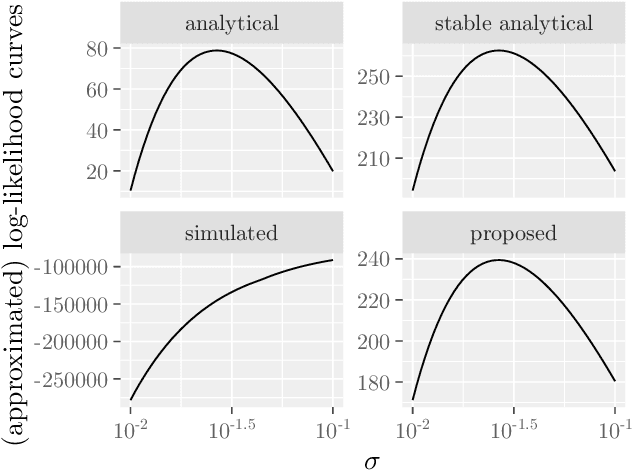
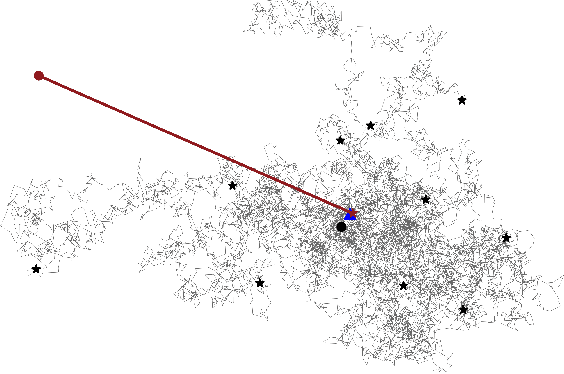
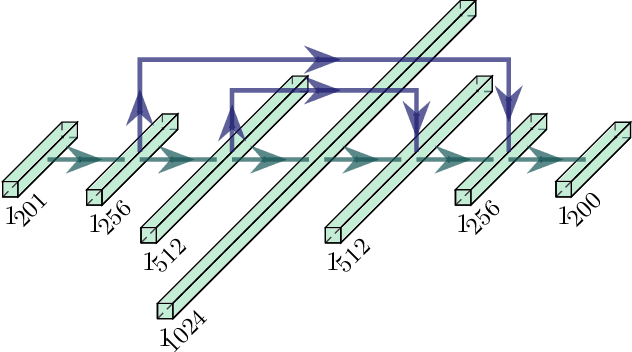
We introduce a methodology for performing parameter inference in high-dimensional, non-linear diffusion processes. We illustrate its applicability for obtaining insights into the evolution of and relationships between species, including ancestral state reconstruction. Estimation is performed by utilising score matching to approximate diffusion bridges, which are subsequently used in an importance sampler to estimate log-likelihoods. The entire setup is differentiable, allowing gradient ascent on approximated log-likelihoods. This allows both parameter inference and diffusion mean estimation. This novel, numerically stable, score matching-based parameter inference framework is presented and demonstrated on biological two- and three-dimensional morphometry data.
Parallel transport on matrix manifolds and Exponential Action
Aug 12, 2024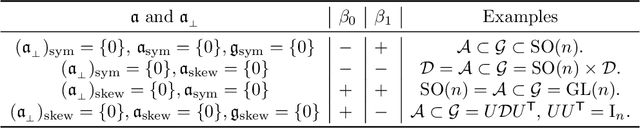
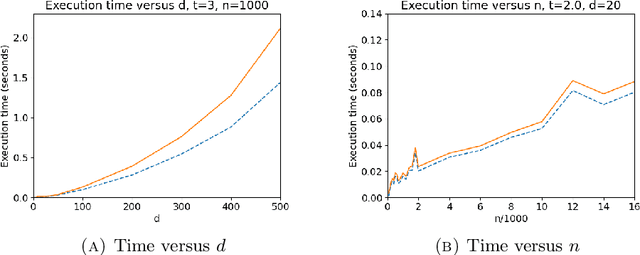
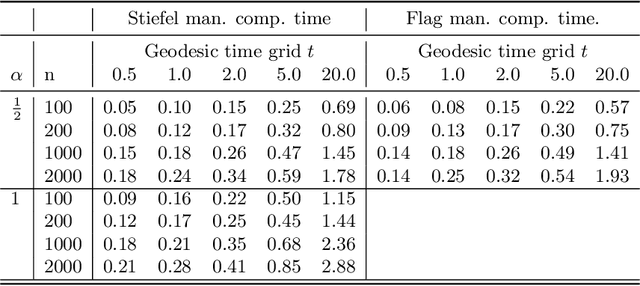

We express parallel transport for several common matrix Lie groups with a family of pseudo-Riemannian metrics in terms of matrix exponential and exponential actions. The expression for parallel transport is preserved by taking the quotient under certain scenarios. In particular, for a Stiefel manifold of orthogonal matrices of size $n\times d$, we give an expression for parallel transport along a geodesic from time zero to $t$, that could be computed with time complexity of $O(nd^2)$ for small $t$, and of $O(td^3)$ for large t, contributing a step in a long-standing open problem in matrix manifolds. A similar result holds for flag manifolds with the canonical metric. We also show the parallel transport formulas for the generalized linear group, and the special orthogonal group under these metrics.
Score matching for bridges without time-reversals
Jul 23, 2024We propose a new algorithm for learning a bridged diffusion process using score-matching methods. Our method relies on reversing the dynamics of the forward process and using this to learn a score function, which, via Doob's $h$-transform, gives us a bridged diffusion process; that is, a process conditioned on an endpoint. In contrast to prior methods, ours learns the score term $\nabla_x \log p(t, x; T, y)$, for given $t, Y$ directly, completely avoiding the need for first learning a time reversal. We compare the performance of our algorithm with existing methods and see that it outperforms using the (learned) time-reversals to learn the score term. The code can be found at https://github.com/libbylbaker/forward_bridge.
Second-order differential operators, stochastic differential equations and Brownian motions on embedded manifolds
Jun 05, 2024We specify the conditions when a manifold M embedded in an inner product space E is an invariant manifold of a stochastic differential equation (SDE) on E, linking it with the notion of second-order differential operators on M. When M is given a Riemannian metric, we derive a simple formula for the Laplace-Beltrami operator in terms of the gradient and Hessian on E and construct the Riemannian Brownian motions on M as solutions of conservative Stratonovich and Ito SDEs on E. We derive explicitly the SDE for Brownian motions on several important manifolds in applications, including left-invariant matrix Lie groups using embedded coordinates. Numerically, we propose three simulation schemes to solve SDEs on manifolds. In addition to the stochastic projection method, to simulate Riemannian Brownian motions, we construct a second-order tangent retraction of the Levi-Civita connection using a given E-tubular retraction. We also propose the retractive Euler-Maruyama method to solve a SDE, taking into account the second-order term of a tangent retraction. We provide software to implement the methods in the paper, including Brownian motions of the manifolds discussed. We verify numerically that on several compact Riemannian manifolds, the long-term limit of Brownian simulation converges to the uniform distributions, suggesting a method to sample Riemannian uniform distributions
Simulating infinite-dimensional nonlinear diffusion bridges
May 28, 2024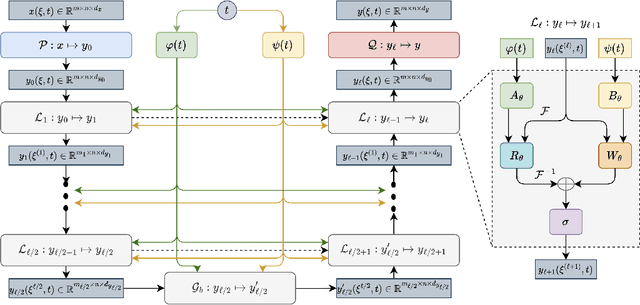
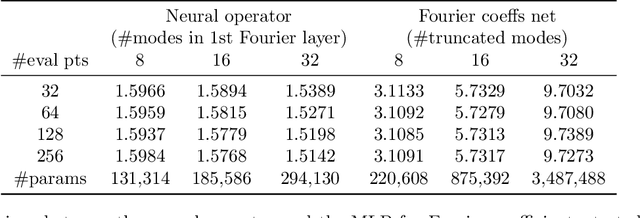
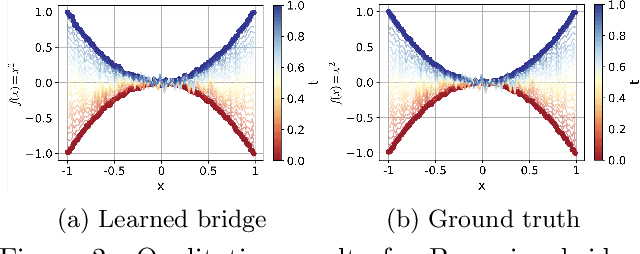
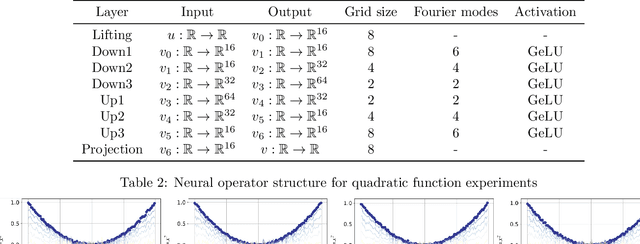
The diffusion bridge is a type of diffusion process that conditions on hitting a specific state within a finite time period. It has broad applications in fields such as Bayesian inference, financial mathematics, control theory, and shape analysis. However, simulating the diffusion bridge for natural data can be challenging due to both the intractability of the drift term and continuous representations of the data. Although several methods are available to simulate finite-dimensional diffusion bridges, infinite-dimensional cases remain unresolved. In the paper, we present a solution to this problem by merging score-matching techniques with operator learning, enabling a direct approach to score-matching for the infinite-dimensional bridge. We construct the score to be discretization invariant, which is natural given the underlying spatially continuous process. We conduct a series of experiments, ranging from synthetic examples with closed-form solutions to the stochastic nonlinear evolution of real-world biological shape data, and our method demonstrates high efficacy, particularly due to its ability to adapt to any resolution without extra training.