 Add to Chrome
 Add to Firefox
 Add to Edge
GAUGE: Granularity-Adaptive Counterfactual Gating of Evidence for Incomplete Multimodal Classification
Aug 06, 2026
Multimodal classification typically assumes all modalities are available, yet real-world inputs are often incomplete. Imputation and dynamic fusion can mitigate such incompleteness, but existing methods operate at a coarse modality level and thus cannot retain reliable components while suppressing misleading ones within the same recovered modality, compromising prediction reliability. To address this issue, we propose GAUGE, a lightweight counterfactual gating framework for incomplete multimodal classification. GAUGE first imputes missing modalities with a frozen imputer and encodes observed and recovered inputs uniformly as fine-grained evidence units. Rather than intervening on each unit explicitly, GAUGE scores the counterfactual effect of replacing every unit with a reference representation through prediction-aware Taylor evidence scores, all obtained in a single forward-backward pass. These scores are mapped to continuous gates, which are converted into additive attention-logit biases for unit-wise evidence modulation without altering the backbone architecture. Experiments across six benchmarks demonstrate that GAUGE outperforms strong baselines across diverse incomplete-input settings. Furthermore, a Taylor remainder theoretical analysis characterizes the error of the first-order approximation relative to the exact counterfactual effect, establishing GAUGE as a principled and scalable framework for fine-grained evidence control under modality incompleteness.

Human Machine Co-Adaptation Model and Its Convergence Analysis
Mar 10, 2025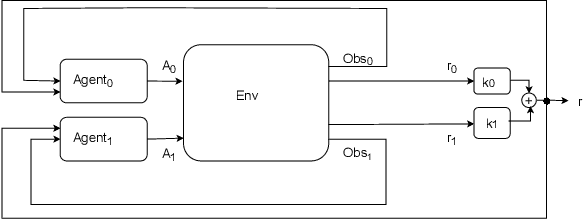
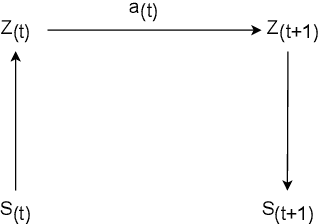
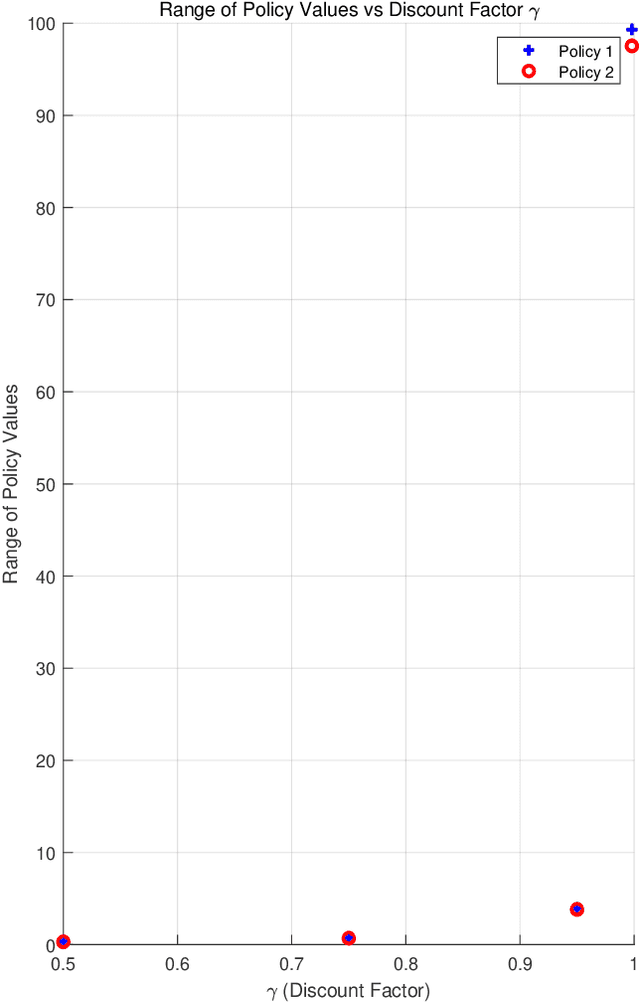

The key to robot-assisted rehabilitation lies in the design of the human-machine interface, which must accommodate the needs of both patients and machines. Current interface designs primarily focus on machine control algorithms, often requiring patients to spend considerable time adapting. In this paper, we introduce a novel approach based on the Cooperative Adaptive Markov Decision Process (CAMDPs) model to address the fundamental aspects of the interactive learning process, offering theoretical insights and practical guidance. We establish sufficient conditions for the convergence of CAMDPs and ensure the uniqueness of Nash equilibrium points. Leveraging these conditions, we guarantee the system's convergence to a unique Nash equilibrium point. Furthermore, we explore scenarios with multiple Nash equilibrium points, devising strategies to adjust both Value Evaluation and Policy Improvement algorithms to enhance the likelihood of converging to the global minimal Nash equilibrium point. Through numerical experiments, we illustrate the effectiveness of the proposed conditions and algorithms, demonstrating their applicability and robustness in practical settings. The proposed conditions for convergence and the identification of a unique optimal Nash equilibrium contribute to the development of more effective adaptive systems for human users in robot-assisted rehabilitation.
Human Machine Co-adaption Interface via Cooperation Markov Decision Process System
May 03, 2023
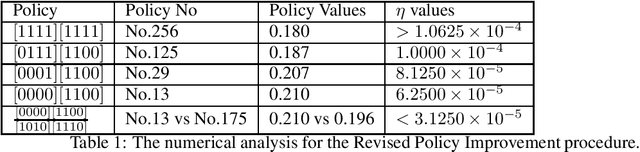
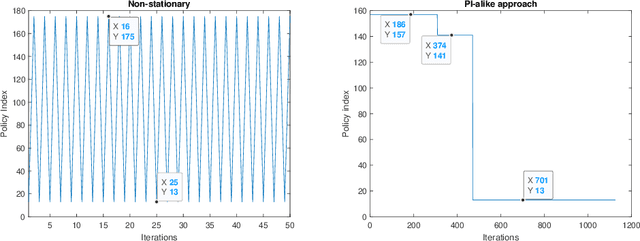
This paper aims to develop a new human-machine interface to improve rehabilitation performance from the perspective of both the user (patient) and the machine (robot) by introducing the co-adaption techniques via model-based reinforcement learning. Previous studies focus more on robot assistance, i.e., to improve the control strategy so as to fulfill the objective of Assist-As-Needed. In this study, we treat the full process of robot-assisted rehabilitation as a co-adaptive or mutual learning process and emphasize the adaptation of the user to the machine. To this end, we proposed a Co-adaptive MDPs (CaMDPs) model to quantify the learning rates based on cooperative multi-agent reinforcement learning (MARL) in the high abstraction layer of the systems. We proposed several approaches to cooperatively adjust the Policy Improvement among the two agents in the framework of Policy Iteration. Based on the proposed co-adaptive MDPs, the simulation study indicates the non-stationary problem can be mitigated using various proposed Policy Improvement approaches.