 Add to Chrome
 Add to Firefox
 Add to Edge
A3M: Adaptive, Adversarial and Multi-Objective Learning for Strategic Bidding in Repeated Auctions
Jun 27, 2026
Learning to bid in repeated multi-unit auctions with bandit feedback poses a fundamental challenge. Existing methods often rely on rigid explore-then-exploit schedules, assume stationary adversaries, and optimize solely for bidder utility, thereby limiting adaptability and strategic robustness. To address these limitations, we introduce the A3M framework, which integrates adaptive deep reinforcement learning (DRL), explicit adversarial reasoning, and principled multi-objective reward design for online auction strategy optimization. A3M employs an actor-critic DRL backbone to dynamically balance exploration and exploitation, an opponent model for fictitious play against non-stationary adversaries, and a composite reward function to jointly maximize utility, auctioneer revenue, and fairness. We provide the first comprehensive empirical evaluation of this integrated approach against established baselines in both discriminatory and uniform price auctions. Results show that A3M reduces final regret by 30--40\% in standard settings, maintains robust performance against adversarial strategy shifts, scales favorably with the number of units $K$, and enables tunable multi-objective trade-offs. An extensive ablation study confirms the necessity of each core component. Our work establishes A3M as a powerful and flexible framework for learning in complex auction environments.

FaultNet: A Deep Convolutional Neural Network for bearing fault classification
Oct 05, 2020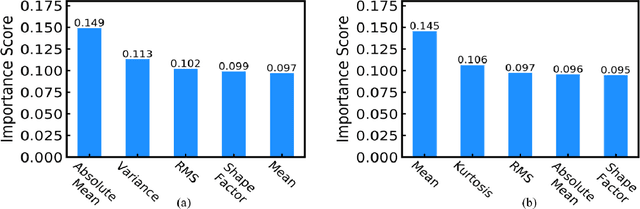
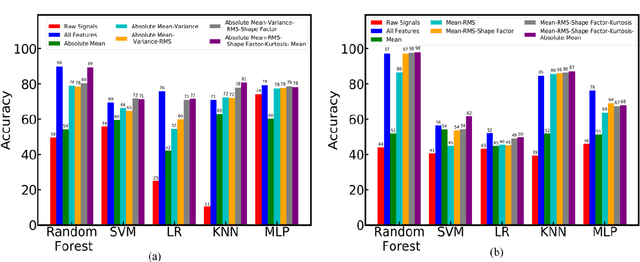
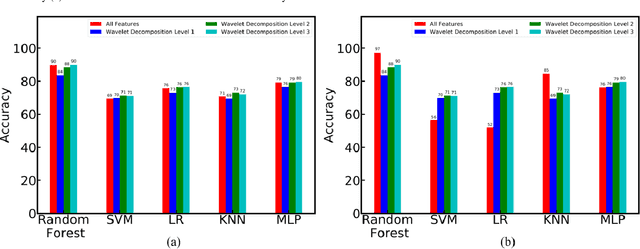
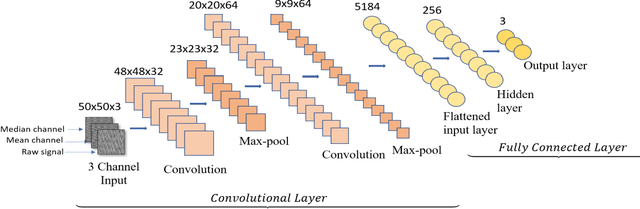
The increased presence of advanced sensors on the production floors has led to collection of datasets that can provide significant insights into machine health. An important and reliable indicator of machine health, vibration signal data can provide us a greater understanding of different faults occurring in mechanical systems. In this work, we analyze vibration signal data of mechanical systems with bearings by combining different signal processing techniques and coupling them machine learning techniques to classify different types of bearing faults. We also highlight the importance of using of different signal processing methods and analyze their effect on bearing fault detection. Apart from the traditional machine learning algorithms we also propose a convolutional neural network FaultNet which can effectively determine the type of bearing fault with a high degree of accuracy. The distinguishing factor of this work is the idea of channels proposed to extract more information from the signal, we have stacked the mean and median channels to raw signal to extract more useful features to classify the signals with greater accuracy