 Add to Chrome
 Add to Firefox
 Add to Edge
When Helpers Become Hazards: A Benchmark for Analyzing Multimodal LLM-Powered Safety in Daily Life
Jan 07, 2026
As Multimodal Large Language Models (MLLMs) become an indispensable assistant in human life, the unsafe content generated by MLLMs poses a danger to human behavior, perpetually overhanging human society like a sword of Damocles. To investigate and evaluate the safety impact of MLLMs responses on human behavior in daily life, we introduce SaLAD, a multimodal safety benchmark which contains 2,013 real-world image-text samples across 10 common categories, with a balanced design covering both unsafe scenarios and cases of oversensitivity. It emphasizes realistic risk exposure, authentic visual inputs, and fine-grained cross-modal reasoning, ensuring that safety risks cannot be inferred from text alone. We further propose a safety-warning-based evaluation framework that encourages models to provide clear and informative safety warnings, rather than generic refusals. Results on 18 MLLMs demonstrate that the top-performing models achieve a safe response rate of only 57.2% on unsafe queries. Moreover, even popular safety alignment methods limit effectiveness of the models in our scenario, revealing the vulnerabilities of current MLLMs in identifying dangerous behaviors in daily life. Our dataset is available at https://github.com/xinyuelou/SaLAD.

Contrast-Free Ultrasound Microvascular Imaging via Radiality and Similarity Weighting
Sep 08, 2025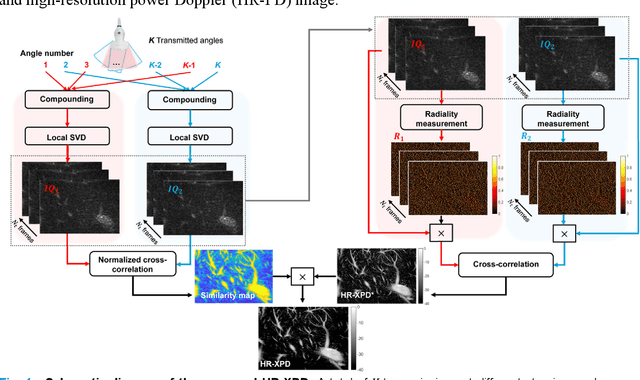
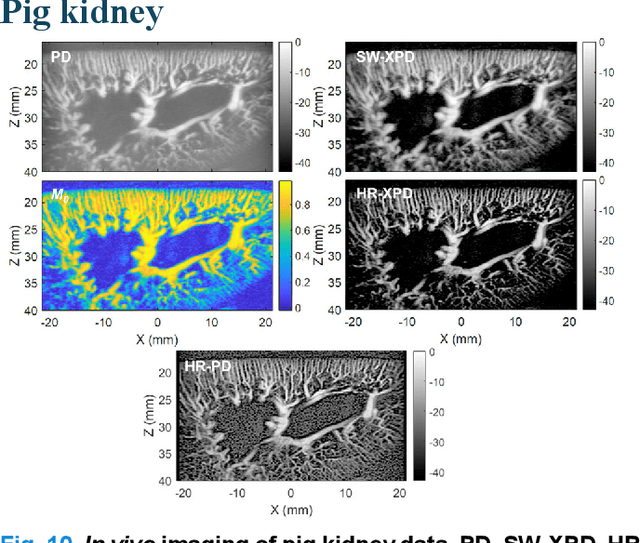
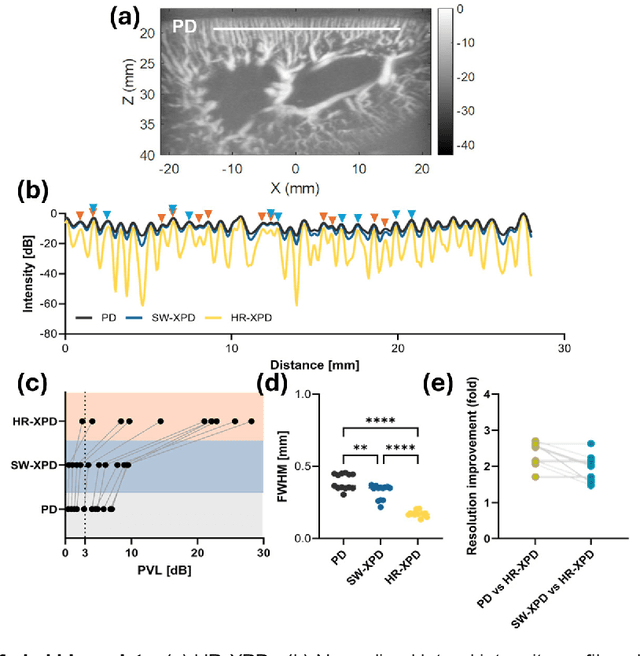
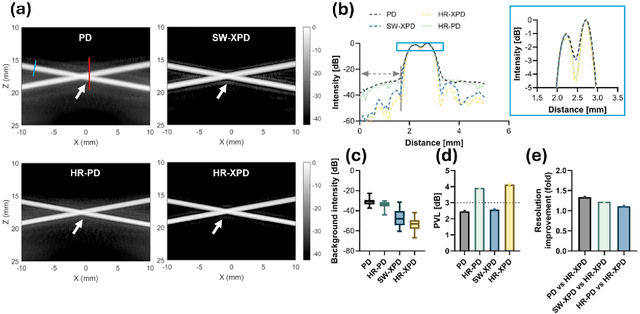
Microvascular imaging has advanced significantly with ultrafast data acquisition and improved clutter filtering, enhancing the sensitivity of power Doppler imaging to small vessels. However, the image quality remains limited by spatial resolution and elevated background noise, both of which impede visualization and accurate quantification. To address these limitations, this study proposes a high-resolution cross-correlation Power Doppler (HR-XPD) method that integrates spatial radiality weighting with Doppler signal coherence analysis, thereby enhancing spatial resolution while suppressing artifacts and background noise. Quantitative evaluations in simulation and in vivo experiments on healthy human liver, transplanted human kidney, and pig kidney demonstrated that HR-XPD significantly improves microvascular resolvability and contrast compared to conventional PD. In vivo results showed up to a 2 to 3-fold enhancement in spatial resolution and an increase in contrast by up to 20 dB. High-resolution vascular details were clearly depicted within a short acquisition time of only 0.3 s-1.2 s without the use of contrast agents. These findings indicate that HR-XPD provides an effective, contrast-free, and high-resolution microvascular imaging approach with broad applicability in both preclinical and clinical research.