 Add to Chrome
 Add to Firefox
 Add to Edge
Think over Trajectories: Leveraging Video Generation to Reconstruct GPS Trajectories from Cellular Signaling
Mar 27, 2026
Mobile devices continuously interact with cellular base stations, generating massive volumes of signaling records that provide broad coverage for understanding human mobility. However, such records offer only coarse location cues (e.g., serving-cell identifiers) and therefore limit their direct use in applications that require high-precision GPS trajectories. This paper studies the Sig2GPS problem: reconstructing GPS trajectories from cellular signaling. Inspired by domain experts often lay the signaling trace on the map and sketch the corresponding GPS route, unlike conventional solutions that rely on complex multi-stage engineering pipelines or regress coordinates, Sig2GPS is reframed as an image-to-video generation task that directly operates in the map-visual domain: signaling traces are rendered on a map, and a video generation model is trained to draw a continuous GPS path. To support this paradigm, a paired signaling-to-trajectory video dataset is constructed to fine-tune an open-source video model, and a trajectory-aware reinforcement learning-based optimization method is introduced to improve generation fidelity via rewards. Experiments on large-scale real-world datasets show substantial improvements over strong engineered and learning-based baselines, while additional results on next GPS prediction indicate scalability and cross-city transferability. Overall, these results suggest that map-visual video generation provides a practical interface for trajectory data mining by enabling direct generation and refinement of continuous paths under map constraints.

An Empirical Study of OpenAI API Discussions on Stack Overflow
May 07, 2025The rapid advancement of large language models (LLMs), represented by OpenAI's GPT series, has significantly impacted various domains such as natural language processing, software development, education, healthcare, finance, and scientific research. However, OpenAI APIs introduce unique challenges that differ from traditional APIs, such as the complexities of prompt engineering, token-based cost management, non-deterministic outputs, and operation as black boxes. To the best of our knowledge, the challenges developers encounter when using OpenAI APIs have not been explored in previous empirical studies. To fill this gap, we conduct the first comprehensive empirical study by analyzing 2,874 OpenAI API-related discussions from the popular Q&A forum Stack Overflow. We first examine the popularity and difficulty of these posts. After manually categorizing them into nine OpenAI API-related categories, we identify specific challenges associated with each category through topic modeling analysis. Based on our empirical findings, we finally propose actionable implications for developers, LLM vendors, and researchers.
Improve ROI with Causal Learning and Conformal Prediction
Jul 01, 2024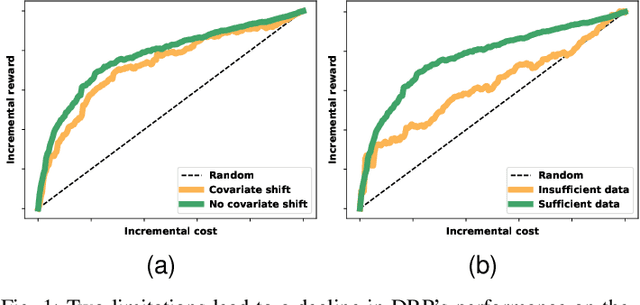
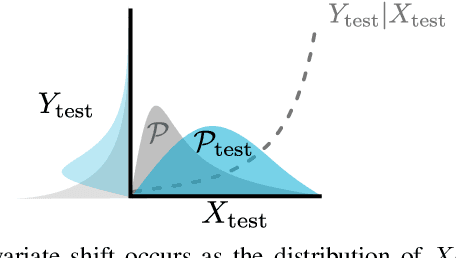
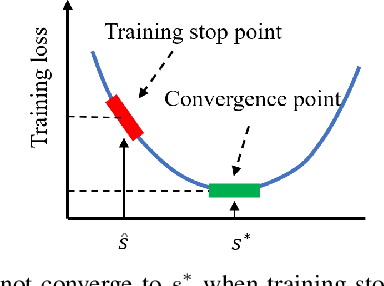
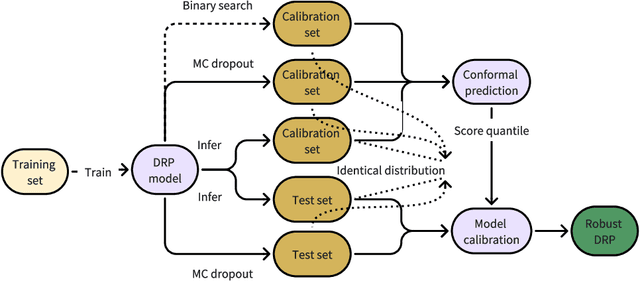
In the commercial sphere, such as operations and maintenance, advertising, and marketing recommendations, intelligent decision-making utilizing data mining and neural network technologies is crucial, especially in resource allocation to optimize ROI. This study delves into the Cost-aware Binary Treatment Assignment Problem (C-BTAP) across different industries, with a focus on the state-of-the-art Direct ROI Prediction (DRP) method. However, the DRP model confronts issues like covariate shift and insufficient training data, hindering its real-world effectiveness. Addressing these challenges is essential for ensuring dependable and robust predictions in varied operational contexts. This paper presents a robust Direct ROI Prediction (rDRP) method, designed to address challenges in real-world deployment of neural network-based uplift models, particularly under conditions of covariate shift and insufficient training data. The rDRP method, enhancing the standard DRP model, does not alter the model's structure or require retraining. It utilizes conformal prediction and Monte Carlo dropout for interval estimation, adapting to model uncertainty and data distribution shifts. A heuristic calibration method, inspired by a Kaggle competition, combines point and interval estimates. The effectiveness of these approaches is validated through offline tests and online A/B tests in various settings, demonstrating significant improvements in target rewards compared to the state-of-the-art method.
Regions are Who Walk Them: a Large Pre-trained Spatiotemporal Model Based on Human Mobility for Ubiquitous Urban Sensing
Nov 17, 2023User profiling and region analysis are two tasks of significant commercial value. However, in practical applications, modeling different features typically involves four main steps: data preparation, data processing, model establishment, evaluation, and optimization. This process is time-consuming and labor-intensive. Repeating this workflow for each feature results in abundant development time for tasks and a reduced overall volume of task development. Indeed, human mobility data contains a wealth of information. Several successful cases suggest that conducting in-depth analysis of population movement data could potentially yield meaningful profiles about users and areas. Nonetheless, most related works have not thoroughly utilized the semantic information within human mobility data and trained on a fixed number of the regions. To tap into the rich information within population movement, based on the perspective that Regions Are Who walk them, we propose a large spatiotemporal model based on trajectories (RAW). It possesses the following characteristics: 1) Tailored for trajectory data, introducing a GPT-like structure with a parameter count of up to 1B; 2) Introducing a spatiotemporal fine-tuning module, interpreting trajectories as collection of users to derive arbitrary region embedding. This framework allows rapid task development based on the large spatiotemporal model. We conducted extensive experiments to validate the effectiveness of our proposed large spatiotemporal model. It's evident that our proposed method, relying solely on human mobility data without additional features, exhibits a certain level of relevance in user profiling and region analysis. Moreover, our model showcases promising predictive capabilities in trajectory generation tasks based on the current state, offering the potential for further innovative work utilizing this large spatiotemporal model.