 Add to Chrome
 Add to Firefox
 Add to Edge
TraceCoder: A Trace-Driven Multi-Agent Framework for Automated Debugging of LLM-Generated Code
Feb 06, 2026
Large Language Models (LLMs) often generate code with subtle but critical bugs, especially for complex tasks. Existing automated repair methods typically rely on superficial pass/fail signals, offering limited visibility into program behavior and hindering precise error localization. In addition, without a way to learn from prior failures, repair processes often fall into repetitive and inefficient cycles. To overcome these challenges, we present TraceCoder, a collaborative multi-agent framework that emulates the observe-analyze-repair process of human experts. The framework first instruments the code with diagnostic probes to capture fine-grained runtime traces, enabling deep insight into its internal execution. It then conducts causal analysis on these traces to accurately identify the root cause of the failure. This process is further enhanced by a novel Historical Lesson Learning Mechanism (HLLM), which distills insights from prior failed repair attempts to inform subsequent correction strategies and prevent recurrence of similar mistakes. To ensure stable convergence, a Rollback Mechanism enforces that each repair iteration constitutes a strict improvement toward the correct solution. Comprehensive experiments across multiple benchmarks show that TraceCoder achieves up to a 34.43\% relative improvement in Pass@1 accuracy over existing advanced baselines. Ablation studies verify the significance of each system component, with the iterative repair process alone contributing a 65.61\% relative gain in accuracy. Furthermore, TraceCoder significantly outperforms leading iterative methods in terms of both accuracy and cost-efficiency.

Commenting Higher-level Code Unit: Full Code, Reduced Code, or Hierarchical Code Summarization
Mar 13, 2025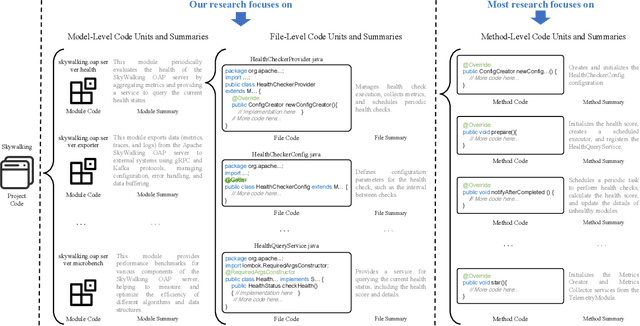
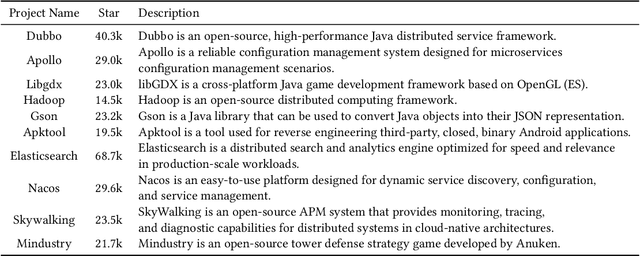
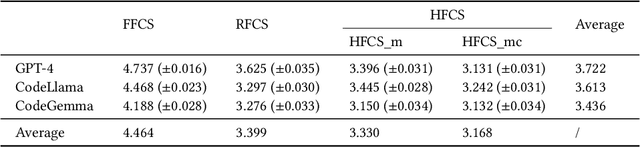
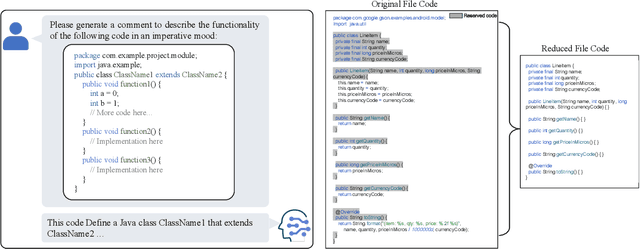
Commenting code is a crucial activity in software development, as it aids in facilitating future maintenance and updates. To enhance the efficiency of writing comments and reduce developers' workload, researchers has proposed various automated code summarization (ACS) techniques to automatically generate comments/summaries for given code units. However, these ACS techniques primarily focus on generating summaries for code units at the method level. There is a significant lack of research on summarizing higher-level code units, such as file-level and module-level code units, despite the fact that summaries of these higher-level code units are highly useful for quickly gaining a macro-level understanding of software components and architecture. To fill this gap, in this paper, we conduct a systematic study on how to use LLMs for commenting higher-level code units, including file level and module level. These higher-level units are significantly larger than method-level ones, which poses challenges in handling long code inputs within LLM constraints and maintaining efficiency. To address these issues, we explore various summarization strategies for ACS of higher-level code units, which can be divided into three types: full code summarization, reduced code summarization, and hierarchical code summarization. The experimental results suggest that for summarizing file-level code units, using the full code is the most effective approach, with reduced code serving as a cost-efficient alternative. However, for summarizing module-level code units, hierarchical code summarization becomes the most promising strategy. In addition, inspired by the research on method-level ACS, we also investigate using the LLM as an evaluator to evaluate the quality of summaries of higher-level code units. The experimental results demonstrate that the LLM's evaluation results strongly correlate with human evaluations.