 Add to Chrome
 Add to Firefox
 Add to Edge
MedXIAOHE: A Comprehensive Recipe for Building Medical MLLMs
Feb 16, 2026
We present MedXIAOHE, a medical vision-language foundation model designed to advance general-purpose medical understanding and reasoning in real-world clinical applications. MedXIAOHE achieves state-of-the-art performance across diverse medical benchmarks and surpasses leading closed-source multimodal systems on multiple capabilities. To achieve this, we propose an entity-aware continual pretraining framework that organizes heterogeneous medical corpora to broaden knowledge coverage and reduce long-tail gaps (e.g., rare diseases). For medical expert-level reasoning and interaction, MedXIAOHE incorporates diverse medical reasoning patterns via reinforcement learning and tool-augmented agentic training, enabling multi-step diagnostic reasoning with verifiable decision traces. To improve reliability in real-world use, MedXIAOHE integrates user-preference rubrics, evidence-grounded reasoning, and low-hallucination long-form report generation, with improved adherence to medical instructions. We release this report to document our practical design choices, scaling insights, and evaluation framework, hoping to inspire further research.

BaseReward: A Strong Baseline for Multimodal Reward Model
Sep 19, 2025

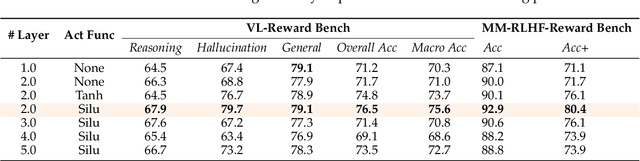
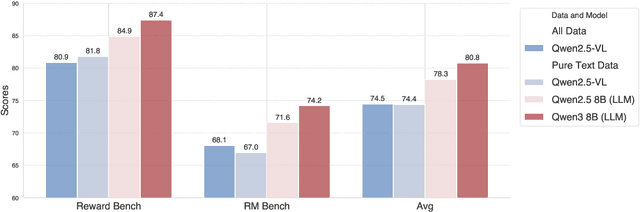
The rapid advancement of Multimodal Large Language Models (MLLMs) has made aligning them with human preferences a critical challenge. Reward Models (RMs) are a core technology for achieving this goal, but a systematic guide for building state-of-the-art Multimodal Reward Models (MRMs) is currently lacking in both academia and industry. Through exhaustive experimental analysis, this paper aims to provide a clear ``recipe'' for constructing high-performance MRMs. We systematically investigate every crucial component in the MRM development pipeline, including \textit{reward modeling paradigms} (e.g., Naive-RM, Critic-based RM, and Generative RM), \textit{reward head architecture}, \textit{training strategies}, \textit{data curation} (covering over ten multimodal and text-only preference datasets), \textit{backbone model} and \textit{model scale}, and \textit{ensemble methods}. Based on these experimental insights, we introduce \textbf{BaseReward}, a powerful and efficient baseline for multimodal reward modeling. BaseReward adopts a simple yet effective architecture, built upon a {Qwen2.5-VL} backbone, featuring an optimized two-layer reward head, and is trained on a carefully curated mixture of high-quality multimodal and text-only preference data. Our results show that BaseReward establishes a new SOTA on major benchmarks such as MM-RLHF-Reward Bench, VL-Reward Bench, and Multimodal Reward Bench, outperforming previous models. Furthermore, to validate its practical utility beyond static benchmarks, we integrate BaseReward into a real-world reinforcement learning pipeline, successfully enhancing an MLLM's performance across various perception, reasoning, and conversational tasks. This work not only delivers a top-tier MRM but, more importantly, provides the community with a clear, empirically-backed guide for developing robust reward models for the next generation of MLLMs.
SkyMath: Technical Report
Oct 26, 2023Large language models (LLMs) have shown great potential to solve varieties of natural language processing (NLP) tasks, including mathematical reasoning. In this work, we present SkyMath, a large language model for mathematics with 13 billion parameters. By applying self-compare fine-tuning, we have enhanced mathematical reasoning abilities of Skywork-13B-Base remarkably. On GSM8K, SkyMath outperforms all known open-source models of similar size and has established a new SOTA performance.