 Add to Chrome
 Add to Firefox
 Add to Edge
Out-of-Distribution Federated Distillation with Domain-Aware Proxy
Aug 09, 2026
Federated Learning is a distributed machine learning paradigm that trains a global model by aggregating local clients without sharing private data of each client. Federated Distillation (FD) builds upon this paradigm by leveraging knowledge distillation to exchange soft predictions on proxy data instead of model parameters, enabling more efficient communication and supporting heterogeneous model collaboration. However, FD models trained on In-Distribution data are hardly adapted to Out-of-Distribution (OOD) scenarios. In this paper, we propose a domain-aware proxy selection framework to better adopt proxy data for OOD problems. The experimental results show that the proposed models effectively address the challenges of distribution shifts under OOD with and without proxy data by achieving average 82.9\% and 80.6\% over existing works on standard benchmarks. The codes and data are released in https://anonymous.4open.science/r/DPS-FD-8596.

Data Assessment for Embodied Intelligence
Nov 12, 2025In embodied intelligence, datasets play a pivotal role, serving as both a knowledge repository and a conduit for information transfer. The two most critical attributes of a dataset are the amount of information it provides and how easily this information can be learned by models. However, the multimodal nature of embodied data makes evaluating these properties particularly challenging. Prior work has largely focused on diversity, typically counting tasks and scenes or evaluating isolated modalities, which fails to provide a comprehensive picture of dataset diversity. On the other hand, the learnability of datasets has received little attention and is usually assessed post-hoc through model training, an expensive, time-consuming process that also lacks interpretability, offering little guidance on how to improve a dataset. In this work, we address both challenges by introducing two principled, data-driven tools. First, we construct a unified multimodal representation for each data sample and, based on it, propose diversity entropy, a continuous measure that characterizes the amount of information contained in a dataset. Second, we introduce the first interpretable, data-driven algorithm to efficiently quantify dataset learnability without training, enabling researchers to assess a dataset's learnability immediately upon its release. We validate our algorithm on both simulated and real-world embodied datasets, demonstrating that it yields faithful, actionable insights that enable researchers to jointly improve diversity and learnability. We hope this work provides a foundation for designing higher-quality datasets that advance the development of embodied intelligence.
AIM 2024 Challenge on Compressed Video Quality Assessment: Methods and Results
Aug 21, 2024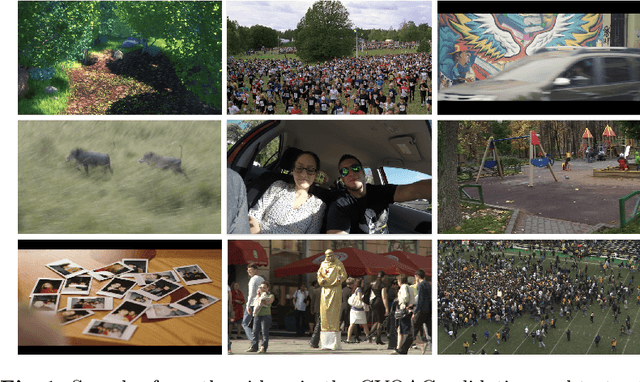
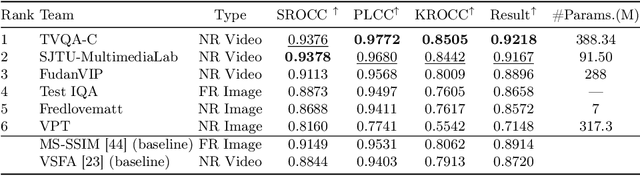
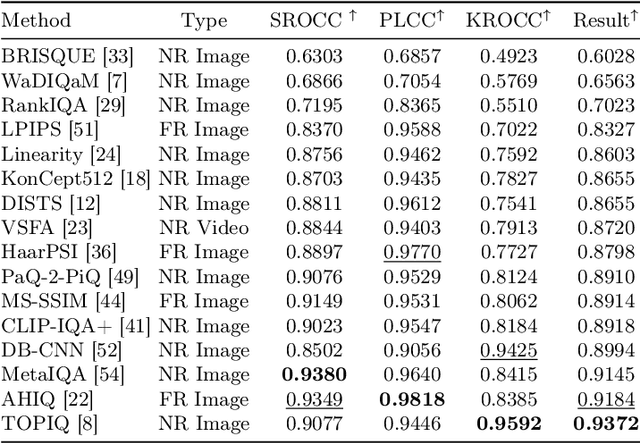
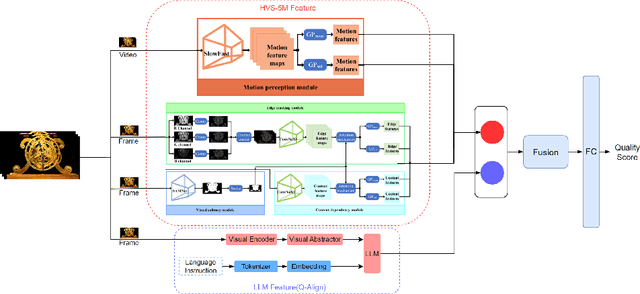
Video quality assessment (VQA) is a crucial task in the development of video compression standards, as it directly impacts the viewer experience. This paper presents the results of the Compressed Video Quality Assessment challenge, held in conjunction with the Advances in Image Manipulation (AIM) workshop at ECCV 2024. The challenge aimed to evaluate the performance of VQA methods on a diverse dataset of 459 videos, encoded with 14 codecs of various compression standards (AVC/H.264, HEVC/H.265, AV1, and VVC/H.266) and containing a comprehensive collection of compression artifacts. To measure the methods performance, we employed traditional correlation coefficients between their predictions and subjective scores, which were collected via large-scale crowdsourced pairwise human comparisons. For training purposes, participants were provided with the Compressed Video Quality Assessment Dataset (CVQAD), a previously developed dataset of 1022 videos. Up to 30 participating teams registered for the challenge, while we report the results of 6 teams, which submitted valid final solutions and code for reproducing the results. Moreover, we calculated and present the performance of state-of-the-art VQA methods on the developed dataset, providing a comprehensive benchmark for future research. The dataset, results, and online leaderboard are publicly available at https://challenges.videoprocessing.ai/challenges/compressed-video-quality-assessment.html.