 Add to Chrome
 Add to Firefox
 Add to Edge
Explaining and Tuning Transformer-based LLMs in Arithmetic Tasks with Human Strategies
Jul 19, 2026
Transformer-based large language models (LLMs) continue to achieve state-of-the-art performance across various natural language processing tasks. However, their subpar performance on seemingly elementary problems, such as basic arithmetic, raises concerns about model reliability, safety, and ethical deployment. In this study, we demonstrate that the performance of a vanilla Transformer model trained on integer arithmetic tasks can be improved using methods effective for human learners. We begin by decomposing the arithmetic task into well-defined subtasks and conducting loss convergence order analysis together with ablation studies for each subtask. Our findings reveal that LLMs exhibit learning patterns similar to those of human learners, with a faster learning speed for simpler subtasks compared to more complex ones. In addition, we successfully improved the accuracy of LLMs by applying problem-solving strategies and cognitive empowerment methods shown to enhance the performance of human learners. This suggests that transformer-based LLMs may share cognitive processes with human learners in arithmetic. Lastly, we provide a comprehensive demonstration of our method's effectiveness, including significant accuracy improvement experiments, visualization verification, and explanation-based analysis to illuminate the intricacies of LLMs in arithmetic learning. In general, this work explores the potential similarities between transformer-based LLMs and human learners, supported by explainable AI (XAI) verifications, ultimately fostering trust in LLMs for critical and high-stakes applications.

Resisting Out-of-Distribution Data Problem in Perturbation of XAI
Jul 27, 2021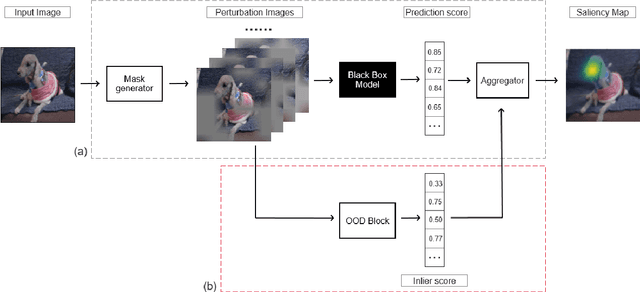
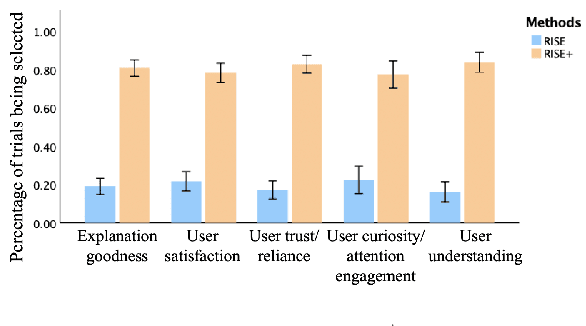
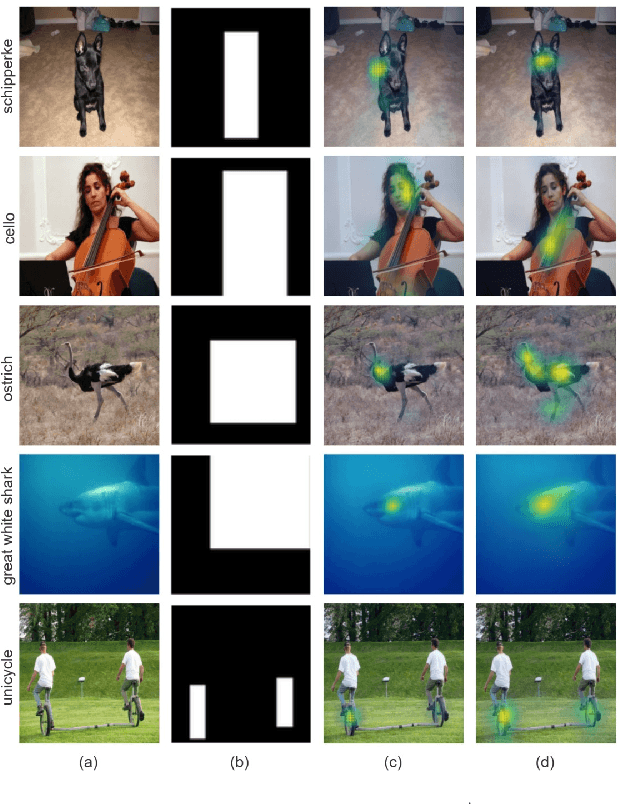
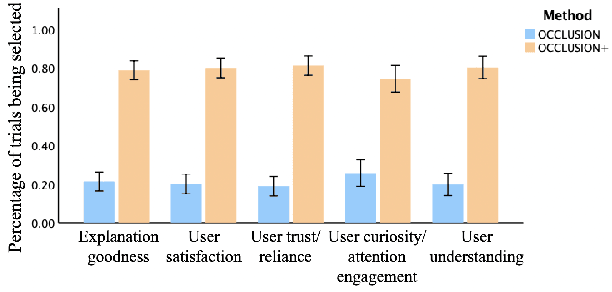
With the rapid development of eXplainable Artificial Intelligence (XAI), perturbation-based XAI algorithms have become quite popular due to their effectiveness and ease of implementation. The vast majority of perturbation-based XAI techniques face the challenge of Out-of-Distribution (OoD) data -- an artifact of randomly perturbed data becoming inconsistent with the original dataset. OoD data leads to the over-confidence problem in model predictions, making the existing XAI approaches unreliable. To our best knowledge, the OoD data problem in perturbation-based XAI algorithms has not been adequately addressed in the literature. In this work, we address this OoD data problem by designing an additional module quantifying the affinity between the perturbed data and the original dataset distribution, which is integrated into the process of aggregation. Our solution is shown to be compatible with the most popular perturbation-based XAI algorithms, such as RISE, OCCLUSION, and LIME. Experiments have confirmed that our methods demonstrate a significant improvement in general cases using both computational and cognitive metrics. Especially in the case of degradation, our proposed approach demonstrates outstanding performance comparing to baselines. Besides, our solution also resolves a fundamental problem with the faithfulness indicator, a commonly used evaluation metric of XAI algorithms that appears to be sensitive to the OoD issue.