 Add to Chrome
 Add to Firefox
 Add to Edge
Introducing the Privacy-HSD Trade-off: Hate Speech Detection, but not at the Cost of Privacy
Aug 19, 2026
Hate speech is a real and timely threat that affects a large portion of online users, especially youth and minority groups. While building reliable and robust automatic hate speech detection (HSD) systems is paramount, we argue that this must also be balanced with the individual right to privacy. Exploring the intersection of HSD and privacy, we demonstrate that HSD systems might unintentionally achieve performance at the cost of encoding authorship, posing a threat to privacy. Building on these findings, we establish the notion of a privacy-HSD trade-off, which demands a careful balance. We benchmark a series of text privatization methods, as well as our newly proposed domain-specific AgnoSpeech technique, showing that balancing privacy and HSD is difficult but feasible. The findings make a strong case for more research on the trade-offs between privacy and HSD, both of which have tangible implications for the safeguarding of online participation.

StylisticBias: A Few Human Visual Cues Drive Most Social Biases in MLLMs
Jun 18, 2026Multimodal large language models (MLLMs) are increasingly deployed in personally and societally consequential settings, yet the visual cues that shape how these models judge people remain poorly understood. Prior work often compares different (groups of) individuals, making it difficult to separate appearance effects from identity differences. We introduce StylisticBias, a controlled benchmark for evaluating attribute-level social bias in MLLMs. We generate 500 photorealistic base faces and create about 50 single-attribute variations per face, producing about 25K images. This design keeps identity fixed and changes one visual attribute at a time. It lets us measure how specific cues shift model judgments. We evaluate six MLLMs across 25 binary social judgment scenarios. We find that age and body type dominate identity-level effects, while fashion style and other visual cues drive the largest attribute-level shifts. We further find that about 15 attributes account for nearly 80\% of the total variation, showing that bias is concentrated in a small set of visual cues. Sensitivity is strongest in judgments that are semantically aligned with appearance, especially socioeconomic and style-related judgments. We release StylisticBias as a benchmark for fine-grained bias evaluation in multimodal models. Code and dataset: https://github.com/timo-cavelius/StylisticBias and https://hf.co/datasets/shaghayegh/stylistic-bias-dataset.
Who Flips? Self- and Cross-Model Counterarguments Reveal Answer Instability in LLMs
Jun 14, 2026Standard accuracy benchmarks are designed to test how closely large language models (LLMs) approach correct answers, but are not suitable for testing whether LLMs stick with a correct answer when that answer is challenged by a plausible counter-argument. We introduce a controlled protocol for evaluating answer stability: after a model answers a multiple-choice question correctly, we challenge the model's answer with a coherent argument for an incorrect option and measure whether the model flips. The setup a) isolates argumentative content from overt social pressure and b) varies argument length, self-attribution, and cross-model source. Across seven frontier models and 57 MMLU subjects, flip rates range from 17.5% to 97.3%, revealing large differences in stability that are not captured by accuracy metrics alone. We find that self-attribution consistently increases flip rates (mean +7.1pp, up to +18.7pp). Also, pooling wrong-answer arguments across models and selecting the most effective one per question yields stronger adversarial challenges than relying on any single source model. We further construct MaxFlip, a curated challenge set that amplifies flips by up to +23.6pp over standard self-generated challenges. We release the protocol, challenge records, and MaxFlip to support stability evaluation alongside standard accuracy benchmarks. Materials are available at https://github.com/nafisenik/WhoFlips and https://hf.co/datasets/nafisehNik/WhoFlips.
Neuron-Level Interventions for Gendered and Gender-Neutral Generation in Language Models
May 29, 2026Language models (LMs) can produce gendered language and stereotypes even when given neutral prompts. Most prior work on gender bias in LMs primarily examines gender through a binary lens (feminine vs. masculine), with limited attention to gender-neutral forms, such as they/them pronouns or neutrally phrased job titles. How gender-related signals are encoded in the internal representations of LMs remains an open question. In this work, we study gender-specific neurons in LMs across three categories: feminine, masculine, and gender-neutral. We propose a neuron-level intervention method to identify neurons that are strongly tied to each gender category. We then test these neurons through controlled generation, showing that activating or masking gender-related neurons can steer a sentence toward a target gender form while preserving its original meaning. To evaluate the effectiveness of our gender-intervention approach, we curate two datasets with controlled sentences labeled across all three gender categories and validate the data quality through human evaluation. Experiments on two open-source LMs show that gender-specific neurons are not evenly distributed across model layers; instead, they concentrate heavily in the earliest layers with smaller contributions from later layers. Compared to existing methods, our method achieves more precise gender control, with less leakage into non-target gender categories and stable output quality through two evaluation criteria. Overall, our work examines how gender is encoded in LMs and provides a simple yet effective approach toward controlled gender intervention for both neuron intervention evaluation and gender bias mitigation. Code and datasets are available at: https://github.com/zhiwenyou103/Gender-Neuron-Intervention
GlotOCR Bench: OCR Models Still Struggle Beyond a Handful of Unicode Scripts
Apr 14, 2026Optical character recognition (OCR) has advanced rapidly with the rise of vision-language models, yet evaluation has remained concentrated on a small cluster of high- and mid-resource scripts. We introduce GlotOCR Bench, a comprehensive benchmark evaluating OCR generalization across 100+ Unicode scripts. Our benchmark comprises clean and degraded image variants rendered from real multilingual texts. Images are rendered using fonts from the Google Fonts repository, shaped with HarfBuzz and rasterized with FreeType, supporting both LTR and RTL scripts. Samples of rendered images were manually reviewed to verify correct rendering across all scripts. We evaluate a broad suite of open-weight and proprietary vision-language models and find that most perform well on fewer than ten scripts, and even the strongest frontier models fail to generalize beyond thirty scripts. Performance broadly tracks script-level pretraining coverage, suggesting that current OCR systems rely on language model pretraining as much as on visual recognition. Models confronted with unfamiliar scripts either produce random noise or hallucinate characters from similar scripts they already know. We release the benchmark and pipeline for reproducibility. Pipeline Code: https://github.com/cisnlp/glotocr-bench, Benchmark: https://hf.co/datasets/cis-lmu/glotocr-bench.
Revisiting gender bias research in bibliometrics: Standardizing methodological variability using Scholarly Data Analysis (SoDA) Cards
Jan 30, 2025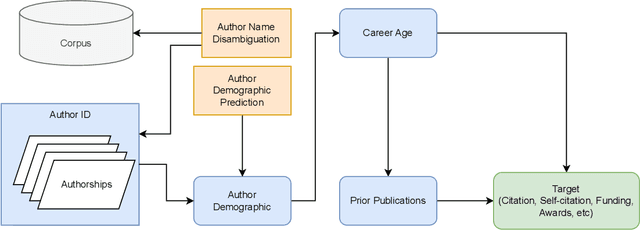
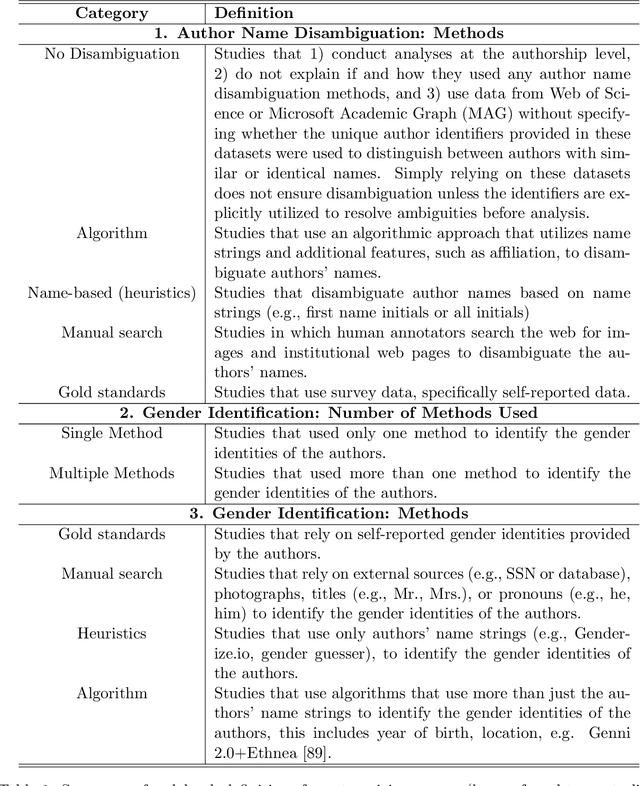
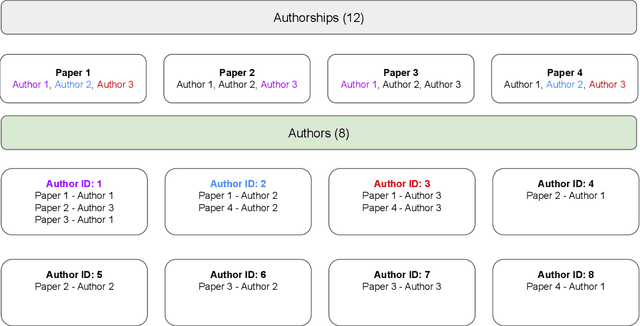
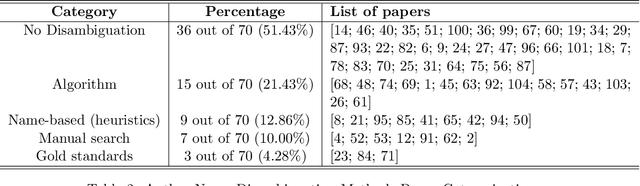
Gender biases in scholarly metrics remain a persistent concern, despite numerous bibliometric studies exploring their presence and absence across productivity, impact, acknowledgment, and self-citations. However, methodological inconsistencies, particularly in author name disambiguation and gender identification, limit the reliability and comparability of these studies, potentially perpetuating misperceptions and hindering effective interventions. A review of 70 relevant publications over the past 12 years reveals a wide range of approaches, from name-based and manual searches to more algorithmic and gold-standard methods, with no clear consensus on best practices. This variability, compounded by challenges such as accurately disambiguating Asian names and managing unassigned gender labels, underscores the urgent need for standardized and robust methodologies. To address this critical gap, we propose the development and implementation of ``Scholarly Data Analysis (SoDA) Cards." These cards will provide a structured framework for documenting and reporting key methodological choices in scholarly data analysis, including author name disambiguation and gender identification procedures. By promoting transparency and reproducibility, SoDA Cards will facilitate more accurate comparisons and aggregations of research findings, ultimately supporting evidence-informed policymaking and enabling the longitudinal tracking of analytical approaches in the study of gender and other social biases in academia.
Examining Alignment of Large Language Models through Representative Heuristics: The Case of Political Stereotypes
Jan 27, 2025
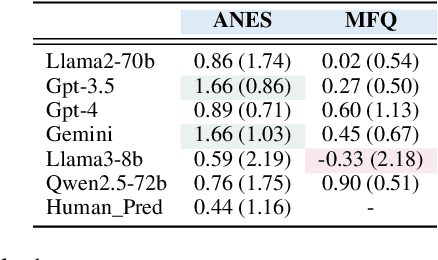
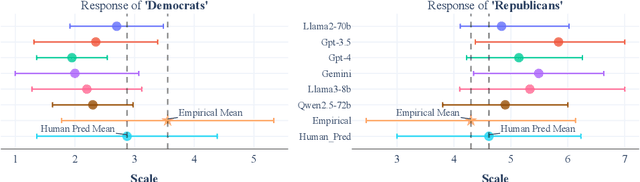
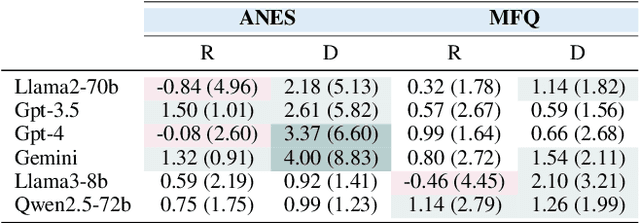
Examining the alignment of large language models (LLMs) has become increasingly important, particularly when these systems fail to operate as intended. This study explores the challenge of aligning LLMs with human intentions and values, with specific focus on their political inclinations. Previous research has highlighted LLMs' propensity to display political leanings, and their ability to mimic certain political parties' stances on various issues. However, the extent and conditions under which LLMs deviate from empirical positions have not been thoroughly examined. To address this gap, our study systematically investigates the factors contributing to LLMs' deviations from empirical positions on political issues, aiming to quantify these deviations and identify the conditions that cause them. Drawing on cognitive science findings related to representativeness heuristics -- where individuals readily recall the representative attribute of a target group in a way that leads to exaggerated beliefs -- we scrutinize LLM responses through this heuristics lens. We conduct experiments to determine how LLMs exhibit stereotypes by inflating judgments in favor of specific political parties. Our results indicate that while LLMs can mimic certain political parties' positions, they often exaggerate these positions more than human respondents do. Notably, LLMs tend to overemphasize representativeness to a greater extent than humans. This study highlights the susceptibility of LLMs to representativeness heuristics, suggeseting potential vulnerabilities to political stereotypes. We propose prompt-based mitigation strategies that demonstrate effectiveness in reducing the influence of representativeness in LLM responses.
MEXA: Multilingual Evaluation of English-Centric LLMs via Cross-Lingual Alignment
Oct 08, 2024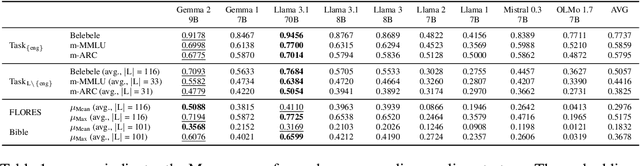
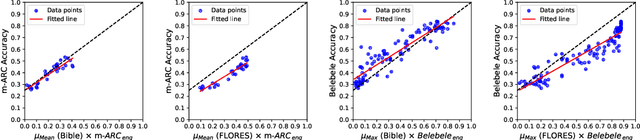
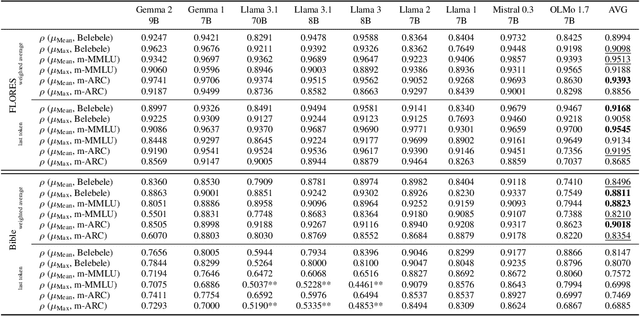

English-centric large language models (LLMs) often show strong multilingual capabilities. However, the multilingual performance of these models remains unclear and is not thoroughly evaluated for many languages. Most benchmarks for multilinguality focus on classic NLP tasks, or cover a minimal number of languages. We introduce MEXA, a method for assessing the multilingual capabilities of pre-trained English-centric LLMs using parallel sentences, which are available for more languages than existing downstream tasks. MEXA leverages the fact that English-centric LLMs use English as a kind of pivot language in their intermediate layers. It computes the alignment between English and non-English languages using parallel sentences to evaluate the transfer of language understanding from English to other languages. This alignment can be used to estimate model performance in other languages. We conduct studies using various parallel datasets (FLORES-200 and Bible), models (Llama family, Gemma family, Mistral, and OLMo), and established downstream tasks (Belebele, m-MMLU, and m-ARC). We explore different methods to compute embeddings in decoder-only models. Our results show that MEXA, in its default settings, achieves a statistically significant average Pearson correlation of 0.90 with three established downstream tasks across nine models and two parallel datasets. This suggests that MEXA is a reliable method for estimating the multilingual capabilities of English-centric LLMs, providing a clearer understanding of their multilingual potential and the inner workings of LLMs. Leaderboard: https://huggingface.co/spaces/cis-lmu/Mexa, Code: https://github.com/cisnlp/Mexa.
SciPrompt: Knowledge-augmented Prompting for Fine-grained Categorization of Scientific Topics
Oct 02, 2024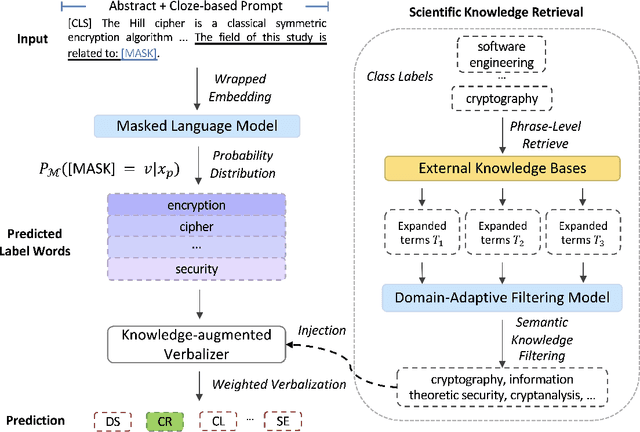
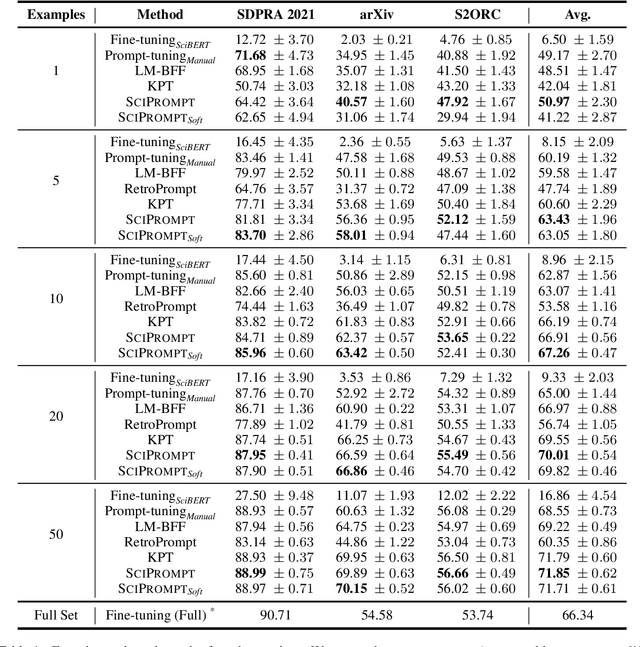
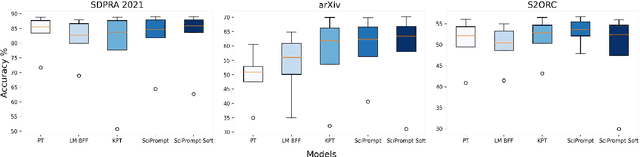
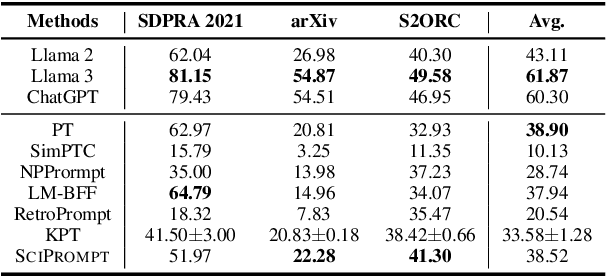
Prompt-based fine-tuning has become an essential method for eliciting information encoded in pre-trained language models for a variety of tasks, including text classification. For multi-class classification tasks, prompt-based fine-tuning under low-resource scenarios has resulted in performance levels comparable to those of fully fine-tuning methods. Previous studies have used crafted prompt templates and verbalizers, mapping from the label terms space to the class space, to solve the classification problem as a masked language modeling task. However, cross-domain and fine-grained prompt-based fine-tuning with an automatically enriched verbalizer remains unexplored, mainly due to the difficulty and costs of manually selecting domain label terms for the verbalizer, which requires humans with domain expertise. To address this challenge, we introduce SciPrompt, a framework designed to automatically retrieve scientific topic-related terms for low-resource text classification tasks. To this end, we select semantically correlated and domain-specific label terms within the context of scientific literature for verbalizer augmentation. Furthermore, we propose a new verbalization strategy that uses correlation scores as additional weights to enhance the prediction performance of the language model during model tuning. Our method outperforms state-of-the-art, prompt-based fine-tuning methods on scientific text classification tasks under few and zero-shot settings, especially in classifying fine-grained and emerging scientific topics.
Beyond Binary Gender Labels: Revealing Gender Biases in LLMs through Gender-Neutral Name Predictions
Jul 07, 2024Name-based gender prediction has traditionally categorized individuals as either female or male based on their names, using a binary classification system. That binary approach can be problematic in the cases of gender-neutral names that do not align with any one gender, among other reasons. Relying solely on binary gender categories without recognizing gender-neutral names can reduce the inclusiveness of gender prediction tasks. We introduce an additional gender category, i.e., "neutral", to study and address potential gender biases in Large Language Models (LLMs). We evaluate the performance of several foundational and large language models in predicting gender based on first names only. Additionally, we investigate the impact of adding birth years to enhance the accuracy of gender prediction, accounting for shifting associations between names and genders over time. Our findings indicate that most LLMs identify male and female names with high accuracy (over 80%) but struggle with gender-neutral names (under 40%), and the accuracy of gender prediction is higher for English-based first names than non-English names. The experimental results show that incorporating the birth year does not improve the overall accuracy of gender prediction, especially for names with evolving gender associations. We recommend using caution when applying LLMs for gender identification in downstream tasks, particularly when dealing with non-binary gender labels.