 Add to Chrome
 Add to Firefox
 Add to Edge
OPGAgent: An Agent for Auditable Dental Panoramic X-ray Interpretation
Feb 28, 2026
Orthopantomograms (OPGs) are the standard panoramic radiograph in dentistry, used for full-arch screening across multiple diagnostic tasks. While Vision Language Models (VLMs) now allow multi-task OPG analysis through natural language, they underperform task-specific models on most individual tasks. Agentic systems that orchestrate specialized tools offer a path to both versatility and accuracy, this approach remains unexplored in the field of dental imaging. To address this gap, we propose OPGAgent, a multi-tool agentic system for auditable OPG interpretation. OPGAgent coordinates specialized perception modules with a consensus mechanism through three components: (1) a Hierarchical Evidence Gathering module that decomposes OPG analysis into global, quadrant, and tooth-level phases with dynamically invoking tools, (2) a Specialized Toolbox encapsulating spatial, detection, utility, and expert zoos, and (3) a Consensus Subagent that resolves conflicts through anatomical constraints. We further propose OPG-Bench, a structured-report protocol based on (Location, Field, Value) triples derived from real clinical reports, which enables a comprehensive review of findings and hallucinations, extending beyond the limitations of VQA indicators. On our OPG-Bench and the public MMOral-OPG benchmark, OPGAgent outperforms current dental VLMs and medical agent frameworks across both structured-report and VQA evaluation. Code will be released upon acceptance.

Sustainable AI: Environmental Implications, Challenges and Opportunities
Oct 30, 2021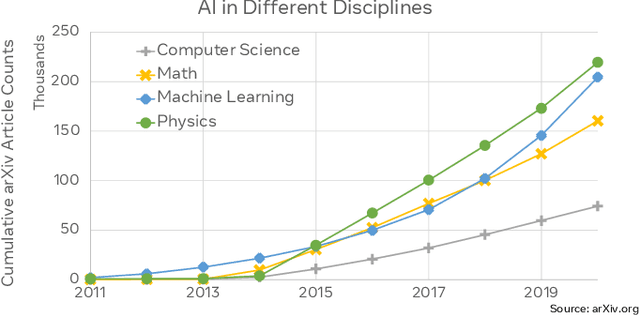
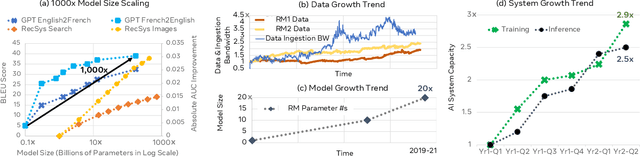
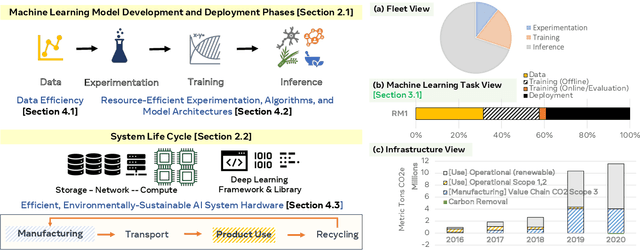
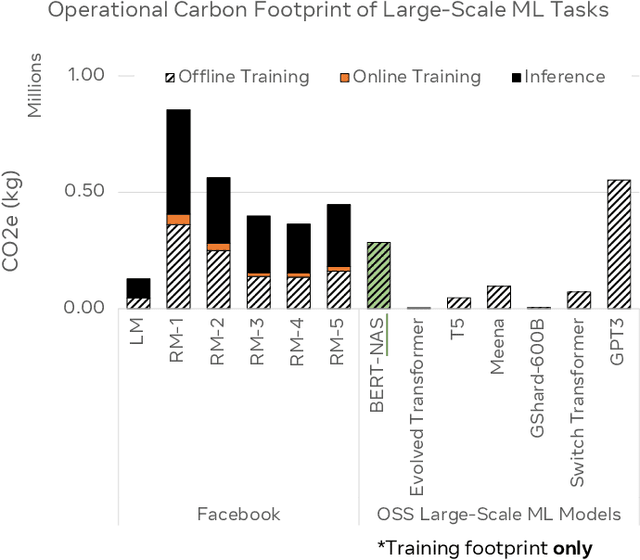
This paper explores the environmental impact of the super-linear growth trends for AI from a holistic perspective, spanning Data, Algorithms, and System Hardware. We characterize the carbon footprint of AI computing by examining the model development cycle across industry-scale machine learning use cases and, at the same time, considering the life cycle of system hardware. Taking a step further, we capture the operational and manufacturing carbon footprint of AI computing and present an end-to-end analysis for what and how hardware-software design and at-scale optimization can help reduce the overall carbon footprint of AI. Based on the industry experience and lessons learned, we share the key challenges and chart out important development directions across the many dimensions of AI. We hope the key messages and insights presented in this paper can inspire the community to advance the field of AI in an environmentally-responsible manner.