 Add to Chrome
 Add to Firefox
 Add to Edge
Universal CT Representations from Anatomy to Disease Phenotype through Agglomerative Pretraining
May 21, 2026
Computed tomography (CT) is a central to three-dimensional medical imaging, yet CT-based artificial intelligence remains fragmented across task-specific models for segmentation, classification, registration, and report analysis. Here we present FlexiCT, a family of CT foundation models trained by agglomerative continual pretraining on 266,227 CT volumes from 56 publicly available datasets, forming a large-scale public resource for CT representation learning. FlexiCT uses agglomerative pretraining across three stages: two-dimensional axial pretraining, three-dimensional anatomical pretraining and report-guided semantic alignment. This training strategy supports slice-level, volume-level and vision-language analysis. Across five downstream task families (segmentation, classification, registration, vision-language understanding and clinical retrieval), FlexiCT matches or exceeds prior task-specific approaches on multiple benchmarks. Its embeddings further organize CT scans along gradients associated with various tumor stages, suggesting that CT foundation models can capture imaging features relevant to disease phenotype characterization. Code is available at https://github.com/ricklisz/FlexiCT

Super Resolution for Root Imaging
Mar 30, 2020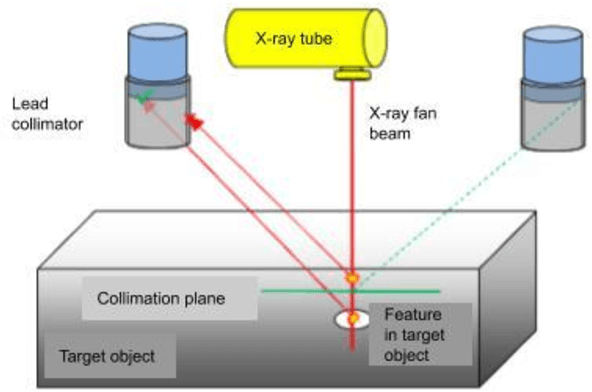
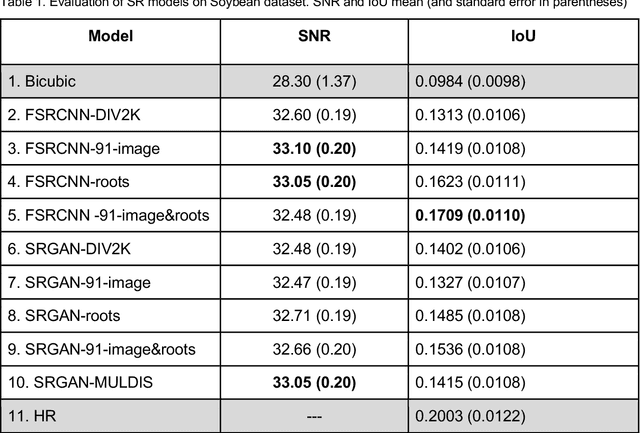
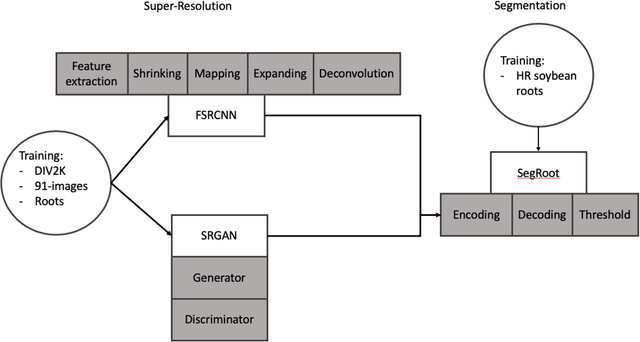
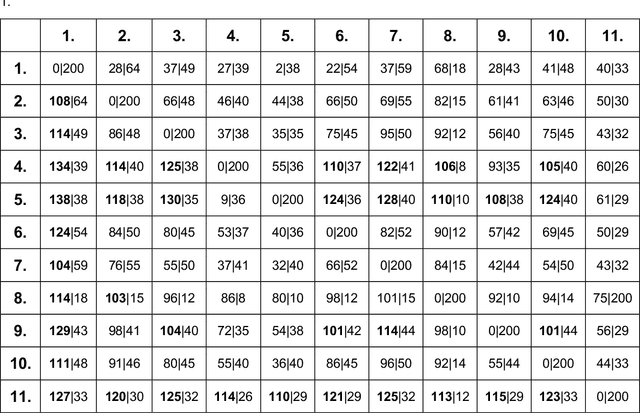
High-resolution cameras have become very helpful for plant phenotyping by providing a mechanism for tasks such as target versus background discrimination, and the measurement and analysis of fine-above-ground plant attributes, e.g., the venation network of leaves. However, the acquisition of high-resolution (HR) imagery of roots in situ remains a challenge. We apply super-resolution (SR) convolutional neural networks (CNNs) to boost the resolution capability of a backscatter X-ray system designed to image buried roots. To overcome limited available backscatter X-ray data for training, we compare three alternatives for training: i) non-plant-root images, ii) plant-root images, and iii) pretraining the model with non-plant-root images and fine-tuning with plant-root images and two deep learning approaches i) Fast Super Resolution Convolutional Neural Network and ii) Super Resolution Generative Adversarial Network). We evaluate SR performance using signal to noise ratio (SNR) and intersection over union (IoU) metrics when segmenting the SR images. In our experiments, we observe that the studied SR models improve the quality of the low-resolution images (LR) of plant roots of an unseen dataset in terms of SNR. Likewise, we demonstrate that SR pre-processing boosts the performance of a machine learning system trained to separate plant roots from their background. In addition, we show examples of backscatter X-ray images upscaled by using the SR model. The current technology for non-intrusive root imaging acquires noisy and LR images. In this study, we show that this issue can be tackled by the incorporation of a deep-learning based SR model in the image formation process.