 Add to Chrome
 Add to Firefox
 Add to Edge
Language Models (Mostly) Know What They Know
Jul 16, 2022
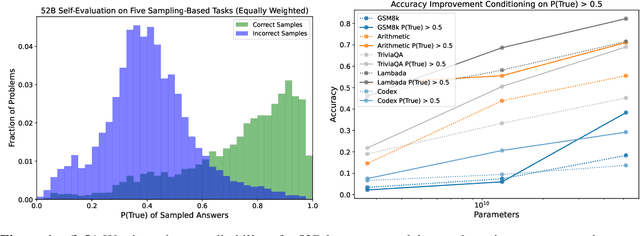
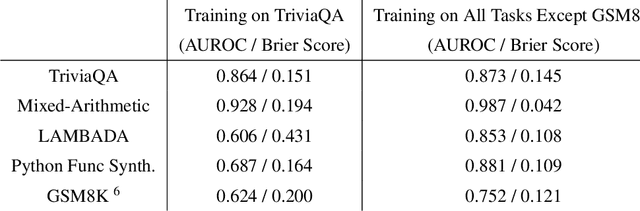
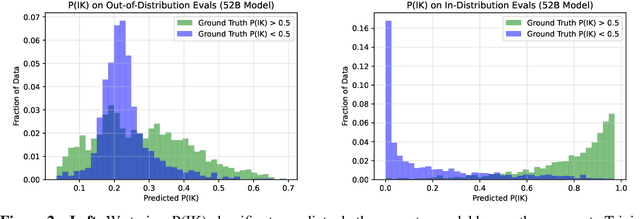

We study whether language models can evaluate the validity of their own claims and predict which questions they will be able to answer correctly. We first show that larger models are well-calibrated on diverse multiple choice and true/false questions when they are provided in the right format. Thus we can approach self-evaluation on open-ended sampling tasks by asking models to first propose answers, and then to evaluate the probability "P(True)" that their answers are correct. We find encouraging performance, calibration, and scaling for P(True) on a diverse array of tasks. Performance at self-evaluation further improves when we allow models to consider many of their own samples before predicting the validity of one specific possibility. Next, we investigate whether models can be trained to predict "P(IK)", the probability that "I know" the answer to a question, without reference to any particular proposed answer. Models perform well at predicting P(IK) and partially generalize across tasks, though they struggle with calibration of P(IK) on new tasks. The predicted P(IK) probabilities also increase appropriately in the presence of relevant source materials in the context, and in the presence of hints towards the solution of mathematical word problems. We hope these observations lay the groundwork for training more honest models, and for investigating how honesty generalizes to cases where models are trained on objectives other than the imitation of human writing.

The AI Index 2022 Annual Report
May 02, 2022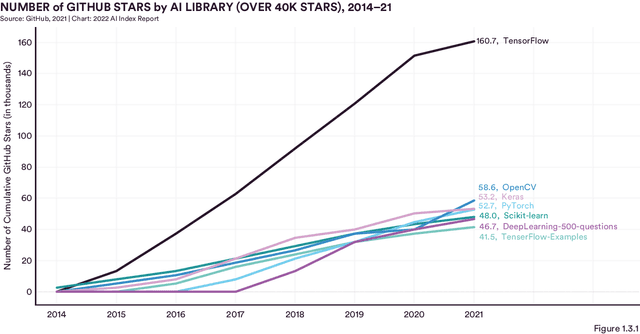
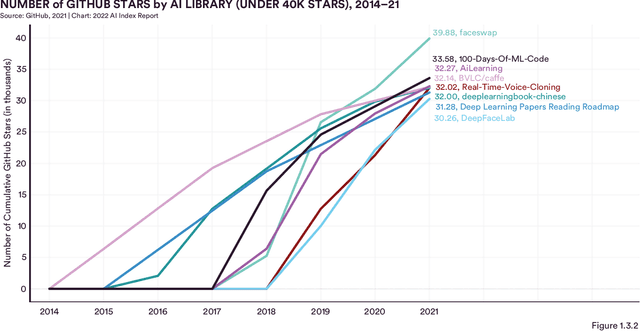
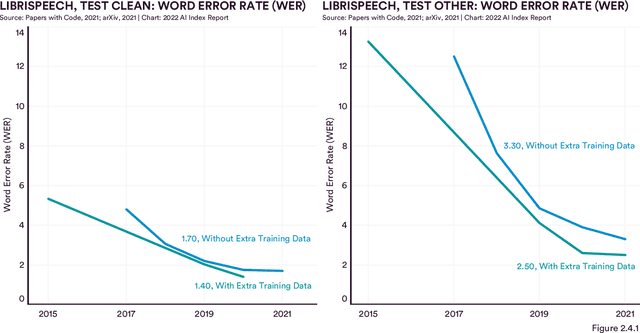
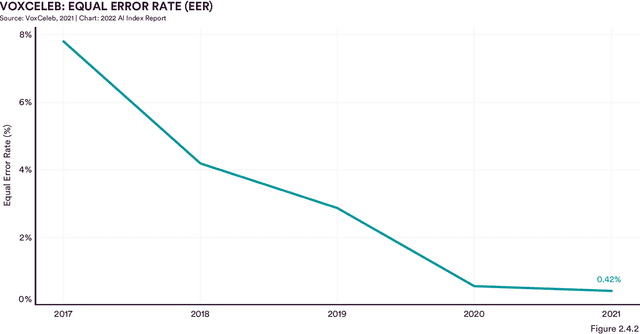
Welcome to the fifth edition of the AI Index Report! The latest edition includes data from a broad set of academic, private, and nonprofit organizations as well as more self-collected data and original analysis than any previous editions, including an expanded technical performance chapter, a new survey of robotics researchers around the world, data on global AI legislation records in 25 countries, and a new chapter with an in-depth analysis of technical AI ethics metrics. The AI Index Report tracks, collates, distills, and visualizes data related to artificial intelligence. Its mission is to provide unbiased, rigorously vetted, and globally sourced data for policymakers, researchers, executives, journalists, and the general public to develop a more thorough and nuanced understanding of the complex field of AI. The report aims to be the world's most credible and authoritative source for data and insights about AI.
Training a Helpful and Harmless Assistant with Reinforcement Learning from Human Feedback
Apr 12, 2022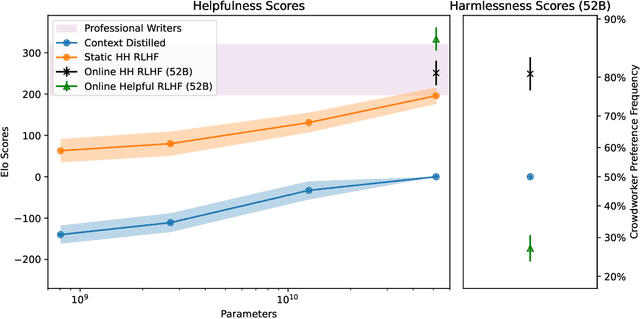
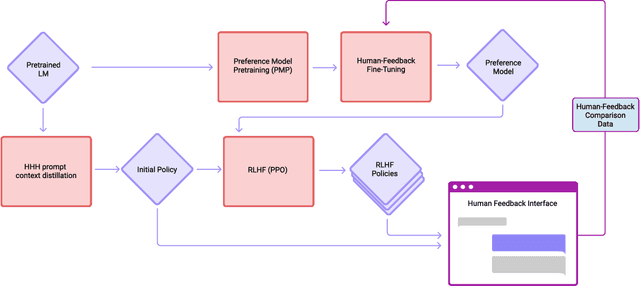
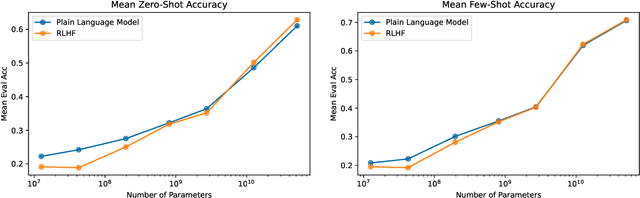
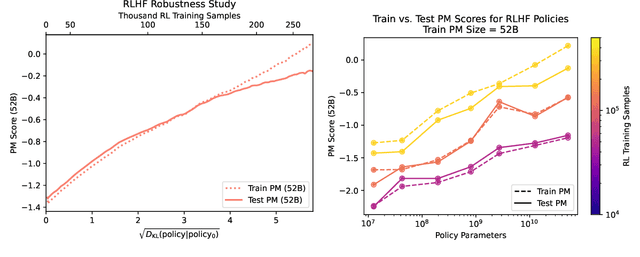
We apply preference modeling and reinforcement learning from human feedback (RLHF) to finetune language models to act as helpful and harmless assistants. We find this alignment training improves performance on almost all NLP evaluations, and is fully compatible with training for specialized skills such as python coding and summarization. We explore an iterated online mode of training, where preference models and RL policies are updated on a weekly cadence with fresh human feedback data, efficiently improving our datasets and models. Finally, we investigate the robustness of RLHF training, and identify a roughly linear relation between the RL reward and the square root of the KL divergence between the policy and its initialization. Alongside our main results, we perform peripheral analyses on calibration, competing objectives, and the use of OOD detection, compare our models with human writers, and provide samples from our models using prompts appearing in recent related work.
A General Language Assistant as a Laboratory for Alignment
Dec 09, 2021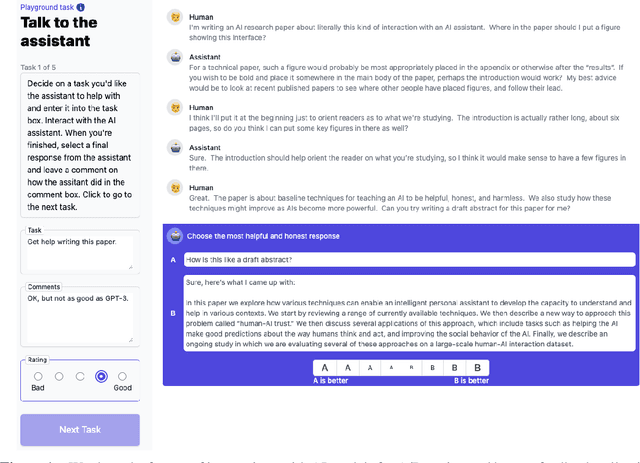
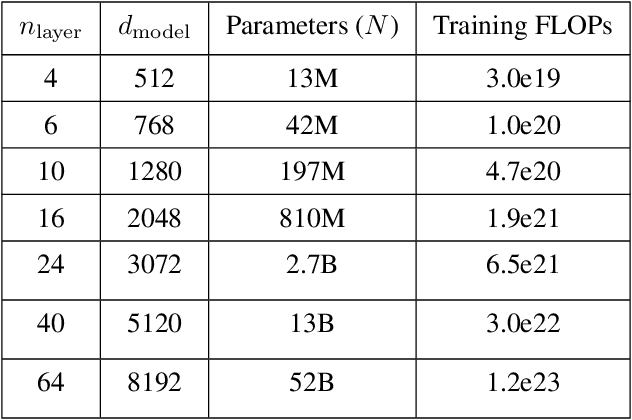
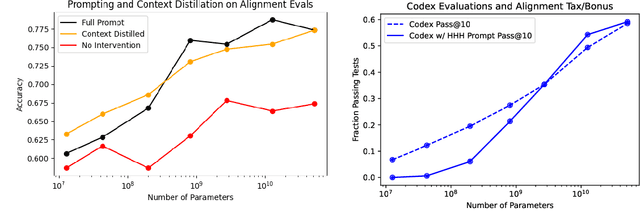
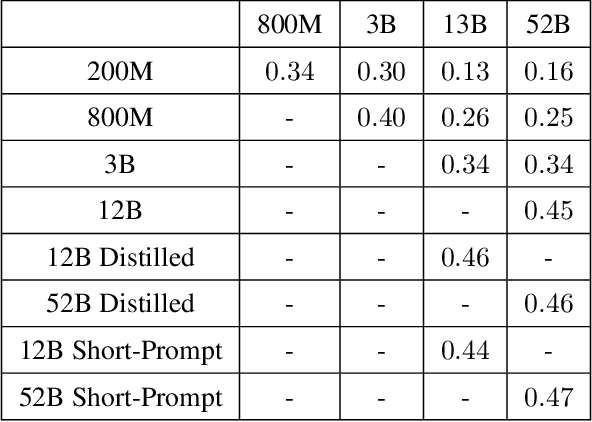
Given the broad capabilities of large language models, it should be possible to work towards a general-purpose, text-based assistant that is aligned with human values, meaning that it is helpful, honest, and harmless. As an initial foray in this direction we study simple baseline techniques and evaluations, such as prompting. We find that the benefits from modest interventions increase with model size, generalize to a variety of alignment evaluations, and do not compromise the performance of large models. Next we investigate scaling trends for several training objectives relevant to alignment, comparing imitation learning, binary discrimination, and ranked preference modeling. We find that ranked preference modeling performs much better than imitation learning, and often scales more favorably with model size. In contrast, binary discrimination typically performs and scales very similarly to imitation learning. Finally we study a `preference model pre-training' stage of training, with the goal of improving sample efficiency when finetuning on human preferences.
Why and How Governments Should Monitor AI Development
Aug 31, 2021In this paper we outline a proposal for improving the governance of artificial intelligence (AI) by investing in government capacity to systematically measure and monitor the capabilities and impacts of AI systems. If adopted, this would give governments greater information about the AI ecosystem, equipping them to more effectively direct AI development and deployment in the most societally and economically beneficial directions. It would also create infrastructure that could rapidly identify potential threats or harms that could occur as a consequence of changes in the AI ecosystem, such as the emergence of strategically transformative capabilities, or the deployment of harmful systems. We begin by outlining the problem which motivates this proposal: in brief, traditional governance approaches struggle to keep pace with the speed of progress in AI. We then present our proposal for addressing this problem: governments must invest in measurement and monitoring infrastructure. We discuss this proposal in detail, outlining what specific things governments could focus on measuring and monitoring, and the kinds of benefits this would generate for policymaking. Finally, we outline some potential pilot projects and some considerations for implementing this in practice.
Evaluating CLIP: Towards Characterization of Broader Capabilities and Downstream Implications
Aug 05, 2021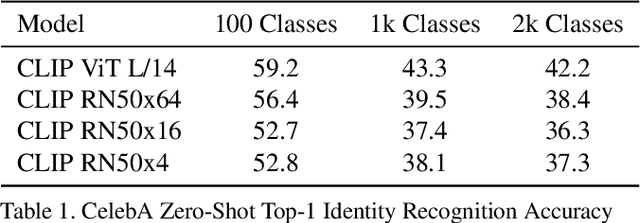
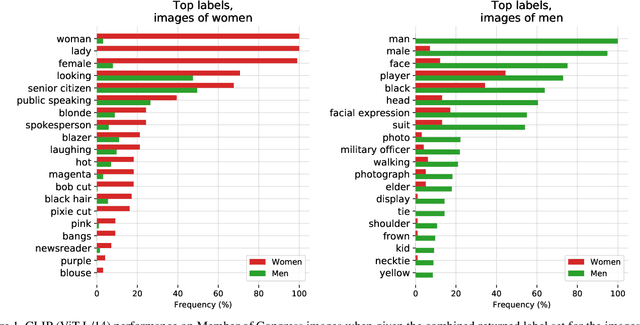


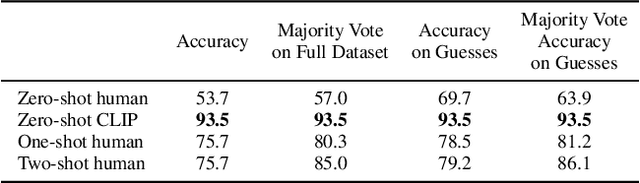
Recently, there have been breakthroughs in computer vision ("CV") models that are more generalizable with the advent of models such as CLIP and ALIGN. In this paper, we analyze CLIP and highlight some of the challenges such models pose. CLIP reduces the need for task specific training data, potentially opening up many niche tasks to automation. CLIP also allows its users to flexibly specify image classification classes in natural language, which we find can shift how biases manifest. Additionally, through some preliminary probes we find that CLIP can inherit biases found in prior computer vision systems. Given the wide and unpredictable domain of uses for such models, this raises questions regarding what sufficiently safe behaviour for such systems may look like. These results add evidence to the growing body of work calling for a change in the notion of a 'better' model--to move beyond simply looking at higher accuracy at task-oriented capability evaluations, and towards a broader 'better' that takes into account deployment-critical features such as different use contexts, and people who interact with the model when thinking about model deployment.
The AI Index 2021 Annual Report
Mar 09, 2021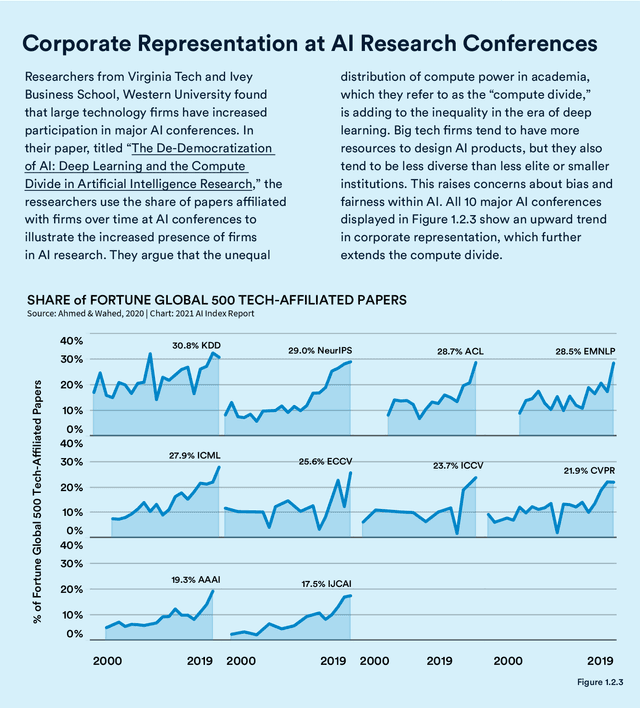
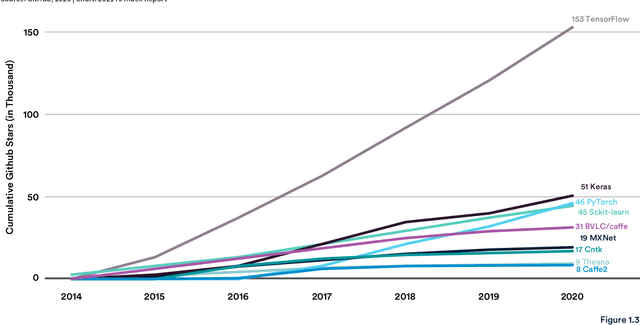
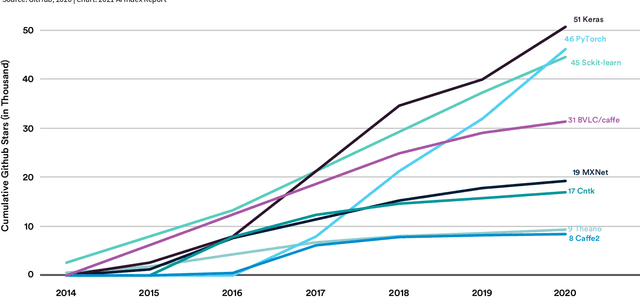
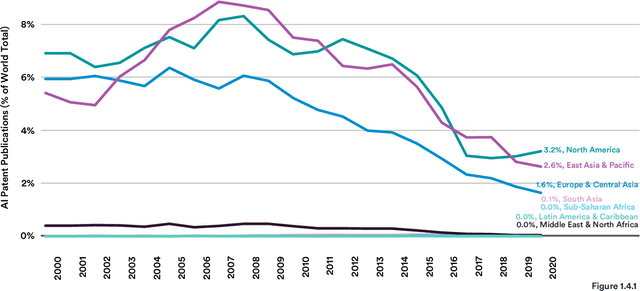
Welcome to the fourth edition of the AI Index Report. This year we significantly expanded the amount of data available in the report, worked with a broader set of external organizations to calibrate our data, and deepened our connections with the Stanford Institute for Human-Centered Artificial Intelligence (HAI). The AI Index Report tracks, collates, distills, and visualizes data related to artificial intelligence. Its mission is to provide unbiased, rigorously vetted, and globally sourced data for policymakers, researchers, executives, journalists, and the general public to develop intuitions about the complex field of AI. The report aims to be the most credible and authoritative source for data and insights about AI in the world.
Learning Transferable Visual Models From Natural Language Supervision
Feb 26, 2021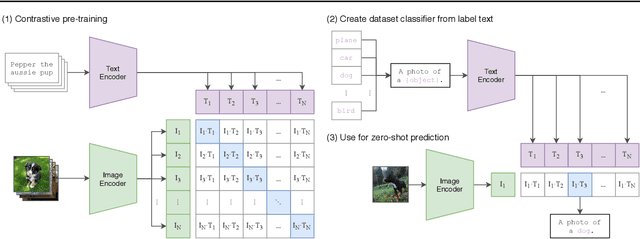
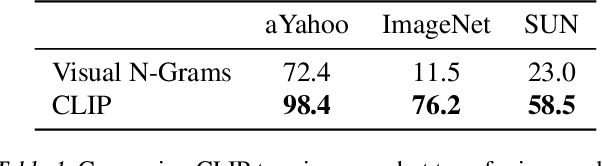
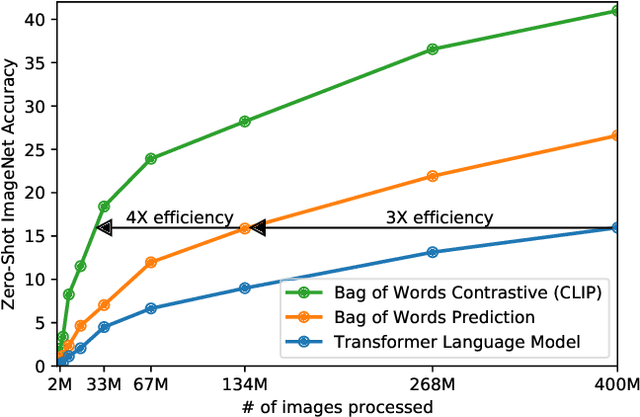
State-of-the-art computer vision systems are trained to predict a fixed set of predetermined object categories. This restricted form of supervision limits their generality and usability since additional labeled data is needed to specify any other visual concept. Learning directly from raw text about images is a promising alternative which leverages a much broader source of supervision. We demonstrate that the simple pre-training task of predicting which caption goes with which image is an efficient and scalable way to learn SOTA image representations from scratch on a dataset of 400 million (image, text) pairs collected from the internet. After pre-training, natural language is used to reference learned visual concepts (or describe new ones) enabling zero-shot transfer of the model to downstream tasks. We study the performance of this approach by benchmarking on over 30 different existing computer vision datasets, spanning tasks such as OCR, action recognition in videos, geo-localization, and many types of fine-grained object classification. The model transfers non-trivially to most tasks and is often competitive with a fully supervised baseline without the need for any dataset specific training. For instance, we match the accuracy of the original ResNet-50 on ImageNet zero-shot without needing to use any of the 1.28 million training examples it was trained on. We release our code and pre-trained model weights at https://github.com/OpenAI/CLIP.
Understanding the Capabilities, Limitations, and Societal Impact of Large Language Models
Feb 04, 2021On October 14th, 2020, researchers from OpenAI, the Stanford Institute for Human-Centered Artificial Intelligence, and other universities convened to discuss open research questions surrounding GPT-3, the largest publicly-disclosed dense language model at the time. The meeting took place under Chatham House Rules. Discussants came from a variety of research backgrounds including computer science, linguistics, philosophy, political science, communications, cyber policy, and more. Broadly, the discussion centered around two main questions: 1) What are the technical capabilities and limitations of large language models? 2) What are the societal effects of widespread use of large language models? Here, we provide a detailed summary of the discussion organized by the two themes above.
Language Models are Few-Shot Learners
Jun 05, 2020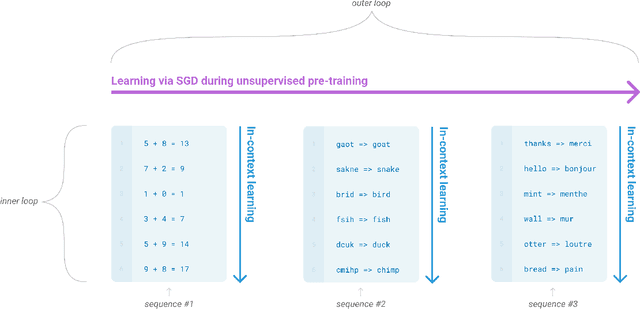
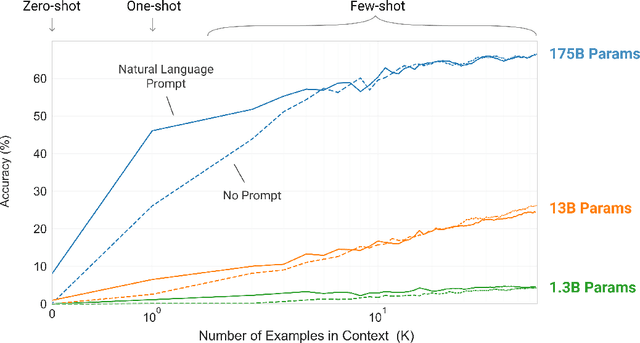
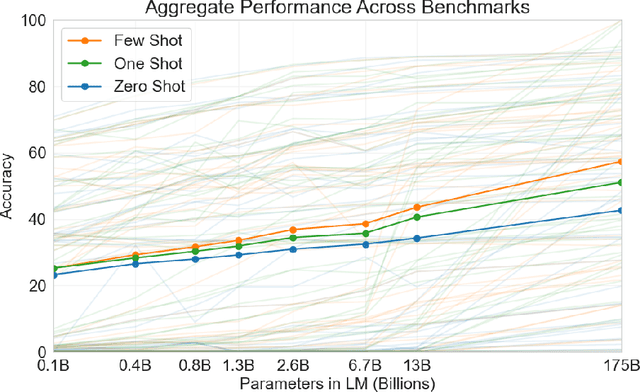
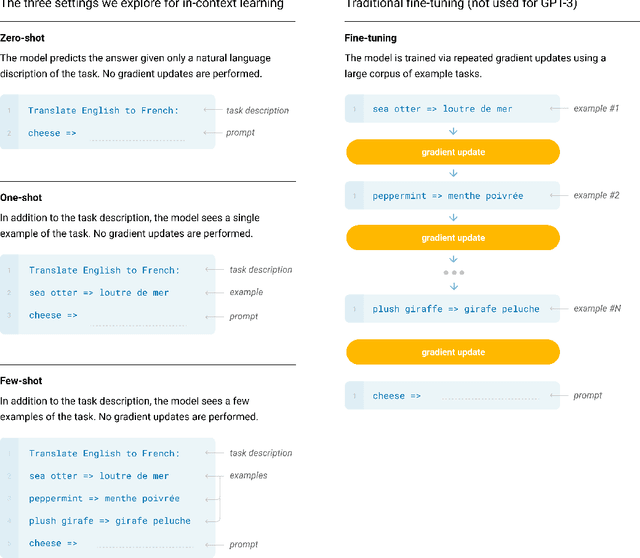
Recent work has demonstrated substantial gains on many NLP tasks and benchmarks by pre-training on a large corpus of text followed by fine-tuning on a specific task. While typically task-agnostic in architecture, this method still requires task-specific fine-tuning datasets of thousands or tens of thousands of examples. By contrast, humans can generally perform a new language task from only a few examples or from simple instructions - something which current NLP systems still largely struggle to do. Here we show that scaling up language models greatly improves task-agnostic, few-shot performance, sometimes even reaching competitiveness with prior state-of-the-art fine-tuning approaches. Specifically, we train GPT-3, an autoregressive language model with 175 billion parameters, 10x more than any previous non-sparse language model, and test its performance in the few-shot setting. For all tasks, GPT-3 is applied without any gradient updates or fine-tuning, with tasks and few-shot demonstrations specified purely via text interaction with the model. GPT-3 achieves strong performance on many NLP datasets, including translation, question-answering, and cloze tasks, as well as several tasks that require on-the-fly reasoning or domain adaptation, such as unscrambling words, using a novel word in a sentence, or performing 3-digit arithmetic. At the same time, we also identify some datasets where GPT-3's few-shot learning still struggles, as well as some datasets where GPT-3 faces methodological issues related to training on large web corpora. Finally, we find that GPT-3 can generate samples of news articles which human evaluators have difficulty distinguishing from articles written by humans. We discuss broader societal impacts of this finding and of GPT-3 in general.