 Add to Chrome
 Add to Firefox
 Add to Edge
Have I Solved This Before? Retrieving Similar Segmentation Problems for Evolutionary Learning
Jun 06, 2026
Reliable integration and solid configuration of monitoring systems constitute a fundamental prerequisites for achieving high efficiency and productivity in contemporary manufacturing environments. Design decisions on sensor type and system architecture have to be made at an early stage and under comparably high uncertainty. This work investigates a research direction that deviates from the traditional monitoring-system development process by shifting the attention from algorithm design to a deeper analysis of the inspection problem. In contrast to traditional design cycles, this paper proposes to gradually collect knowledge and store it in an abstract system model. This enables the retrieval of similar solutions for future use cases, preventing the need for expensive model training from scratch and allowing instead for the incremental refinement of existing base configurations. Reuse of previously generated pipelines reduces the risk of late and costly revisions. As there is little knowledge on cross-domain transferability of filter pipelines, this study analyzes the potential of retrieving filter pipelines to transfer them to different but similar segmentation problems. Finally, we statistically analyze the benefits of this `transfer learning' variant which is predominantly applied to image segmentation problems. In addition, we discuss how simple models help balancing the trade-off between complexity, technical requirements, and reliability in the design process.

Performance and Explainability Requirements of Evolutionary Algorithms in Real-World Physics-Informed Optimization
May 27, 2026Evolutionary computation offers a variety of tools to solve complex real-world optimization problems. However, research often focuses on smaller, simplified problems and optimization algorithms that sometimes miss expectations in real-world scenarios. Additionally, trust in the applied algorithm and the solutions it provides is often essential in such settings, but requires an understanding of the search process itself. This leads to evolutionary computation often not being seriously considered by practitioners in many application contexts, among them physics-based modeling. In this article, techniques from evolutionary computation are detailed that can alleviate these problems. First, five real-world physics-based optimization problems are introduced and described by domain experts. For each of these, the requirements for the evolutionary algorithm regarding performance and explainability to increase trust and usability are presented. We found that all domain experts expect fast convergence to a good solution and want some explanations for how the results were formed, while other requirements strongly depend on the respective problem. Finally, we present existing approaches that can be leveraged to improve those aspects of evolutionary algorithms but have to our knowledge never been employed in complex real-world scenarios. This implies a gap between both domains that needs to be closed to exploit the full potential of evolutionary computation.
Unsupervised Anomaly Detection in Process-Complex Industrial Time Series: A Real-World Case Study
Apr 15, 2026Industrial time-series data from real production environments exhibits substantially higher complexity than commonly used benchmark datasets, primarily due to heterogeneous, multi-stage operational processes. As a result, anomaly detection methods validated under simplified conditions often fail to generalize to industrial settings. This work presents an empirical study on a unique dataset collected from fully operational industrial machinery, explicitly capturing pronounced process-induced variability. We evaluate which model classes are capable of capturing this complexity, starting with a classical Isolation Forest baseline and extending to multiple autoencoder architectures. Experimental results show that Isolation Forest is insufficient for modeling the non-periodic, multi-scale dynamics present in the data, whereas autoencoders consistently perform better. Among them, temporal convolutional autoencoders achieve the most robust performance, while recurrent and variational variants require more careful tuning.
Pareto-Optimal Anytime Algorithms via Bayesian Racing
Mar 09, 2026Selecting an optimization algorithm requires comparing candidates across problem instances, but the computational budget for deployment is often unknown at benchmarking time. Current methods either collapse anytime performance into a scalar, require manual interpretation of plots, or produce conclusions that change when algorithms are added or removed. Moreover, methods based on raw objective values require normalization, which needs bounds or optima that are often unavailable and breaks coherent aggregation across instances. We propose a framework that formulates anytime algorithm comparison as Pareto optimization over time: an algorithm is non-dominated if no competitor beats it at every timepoint. By using rankings rather than objective values, our approach requires no bounds, no normalization, and aggregates coherently across arbitrary instance distributions without requiring known optima. We introduce PolarBear (Pareto-optimal anytime algorithms via Bayesian racing), a procedure that identifies the anytime Pareto set through adaptive sampling with calibrated uncertainty. Bayesian inference over a temporal Plackett-Luce ranking model provides posterior beliefs about pairwise dominance, enabling early elimination of confidently dominated algorithms. The output Pareto set together with the posterior supports downstream algorithm selection under arbitrary time preferences and risk profiles without additional experiments.
HOIverse: A Synthetic Scene Graph Dataset With Human Object Interactions
Jun 24, 2025When humans and robotic agents coexist in an environment, scene understanding becomes crucial for the agents to carry out various downstream tasks like navigation and planning. Hence, an agent must be capable of localizing and identifying actions performed by the human. Current research lacks reliable datasets for performing scene understanding within indoor environments where humans are also a part of the scene. Scene Graphs enable us to generate a structured representation of a scene or an image to perform visual scene understanding. To tackle this, we present HOIverse a synthetic dataset at the intersection of scene graph and human-object interaction, consisting of accurate and dense relationship ground truths between humans and surrounding objects along with corresponding RGB images, segmentation masks, depth images and human keypoints. We compute parametric relations between various pairs of objects and human-object pairs, resulting in an accurate and unambiguous relation definitions. In addition, we benchmark our dataset on state-of-the-art scene graph generation models to predict parametric relations and human-object interactions. Through this dataset, we aim to accelerate research in the field of scene understanding involving people.
Analysing the Influence of Reorder Strategies for Cartesian Genetic Programming
Oct 01, 2024
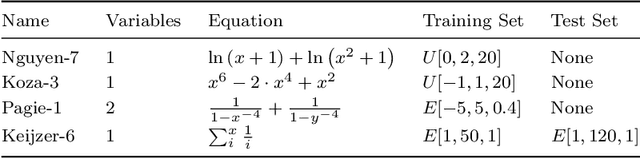
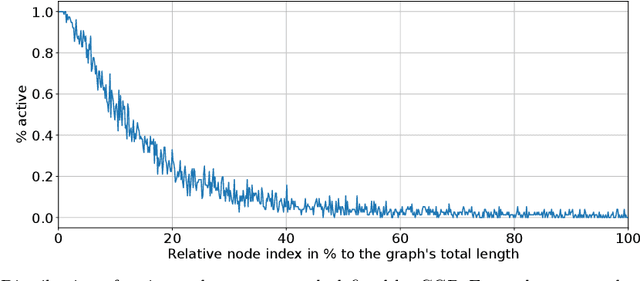
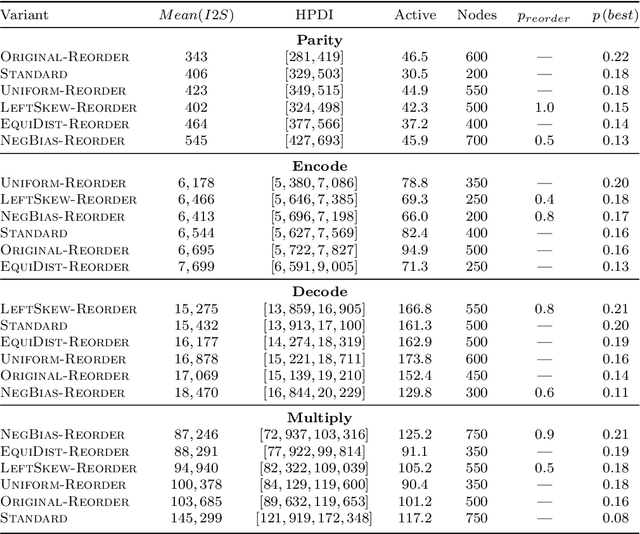
Cartesian Genetic Programming (CGP) suffers from a specific limitation: Positional bias, a phenomenon in which mostly genes at the start of the genome contribute to a program output, while genes at the end rarely do. This can lead to an overall worse performance of CGP. One solution to overcome positional bias is to introduce reordering methods, which shuffle the current genotype without changing its corresponding phenotype. There are currently two different reorder operators that extend the classic CGP formula and improve its fitness value. In this work, we discuss possible shortcomings of these two existing operators. Afterwards, we introduce three novel operators which reorder the genotype of a graph defined by CGP. We show empirically on four Boolean and four symbolic regression benchmarks that the number of iterations until a solution is found and/or the fitness value improves by using CGP with a reorder method. However, there is no consistently best performing reorder operator. Furthermore, their behaviour is analysed by investigating their convergence plots and we show that all behave the same in terms of convergence type.
PDPK: A Framework to Synthesise Process Data and Corresponding Procedural Knowledge for Manufacturing
Aug 16, 2023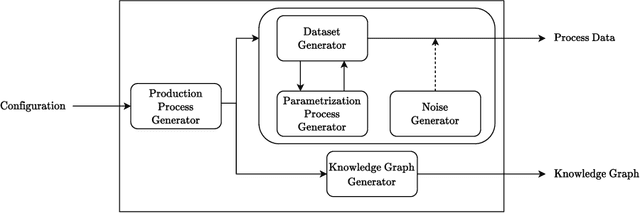
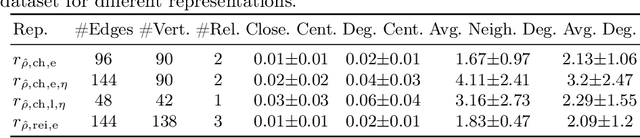
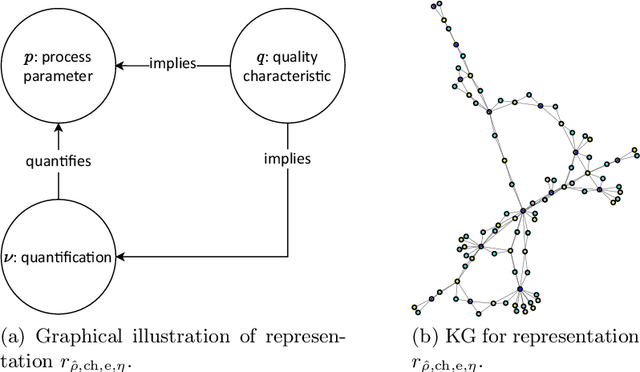
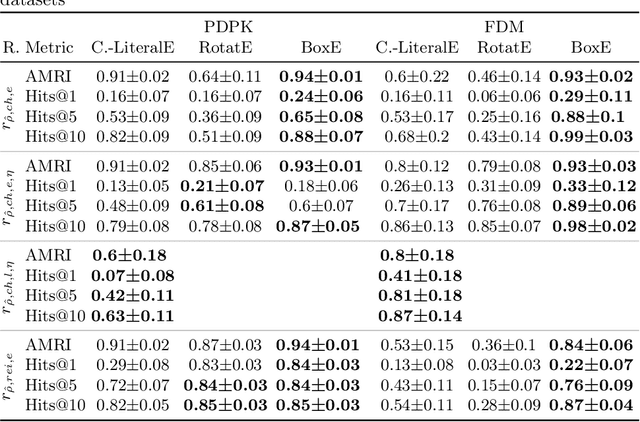
Procedural knowledge describes how to accomplish tasks and mitigate problems. Such knowledge is commonly held by domain experts, e.g. operators in manufacturing who adjust parameters to achieve quality targets. To the best of our knowledge, no real-world datasets containing process data and corresponding procedural knowledge are publicly available, possibly due to corporate apprehensions regarding the loss of knowledge advances. Therefore, we provide a framework to generate synthetic datasets that can be adapted to different domains. The design choices are inspired by two real-world datasets of procedural knowledge we have access to. Apart from containing representations of procedural knowledge in Resource Description Framework (RDF)-compliant knowledge graphs, the framework simulates parametrisation processes and provides consistent process data. We compare established embedding methods on the resulting knowledge graphs, detailing which out-of-the-box methods have the potential to represent procedural knowledge. This provides a baseline which can be used to increase the comparability of future work. Furthermore, we validate the overall characteristics of a synthesised dataset by comparing the results to those achievable on a real-world dataset. The framework and evaluation code, as well as the dataset used in the evaluation, are available open source.
Investigating the Impact of Independent Rule Fitnesses in a Learning Classifier System
Jul 12, 2022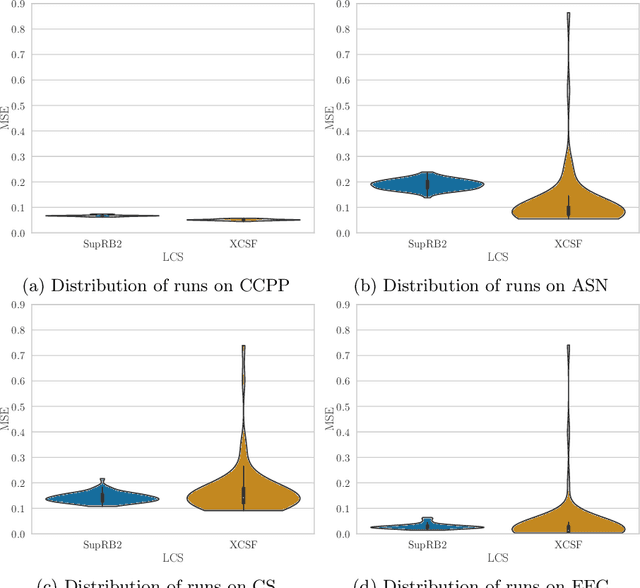
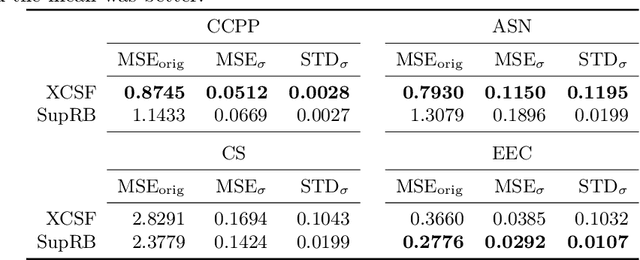
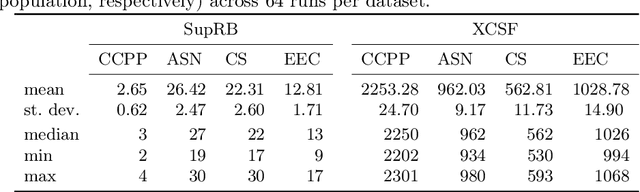
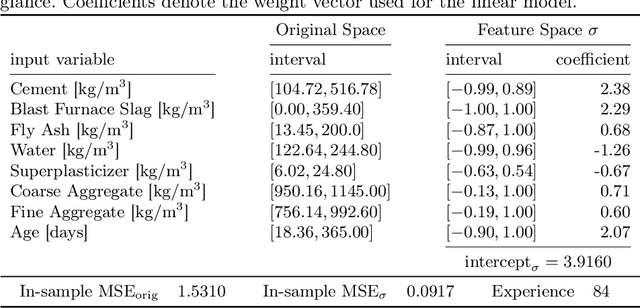
Achieving at least some level of explainability requires complex analyses for many machine learning systems, such as common black-box models. We recently proposed a new rule-based learning system, SupRB, to construct compact, interpretable and transparent models by utilizing separate optimizers for the model selection tasks concerning rule discovery and rule set composition.This allows users to specifically tailor their model structure to fulfil use-case specific explainability requirements. From an optimization perspective, this allows us to define clearer goals and we find that -- in contrast to many state of the art systems -- this allows us to keep rule fitnesses independent. In this paper we investigate this system's performance thoroughly on a set of regression problems and compare it against XCSF, a prominent rule-based learning system. We find the overall results of SupRB's evaluation comparable to XCSF's while allowing easier control of model structure and showing a substantially smaller sensitivity to random seeds and data splits. This increased control can aid in subsequently providing explanations for both training and final structure of the model.
Learning Classifier Systems for Self-Explaining Socio-Technical-Systems
Jul 01, 2022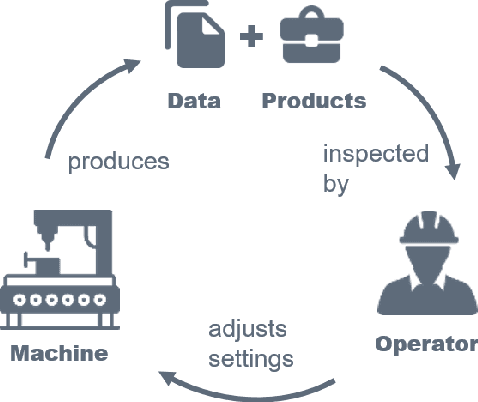
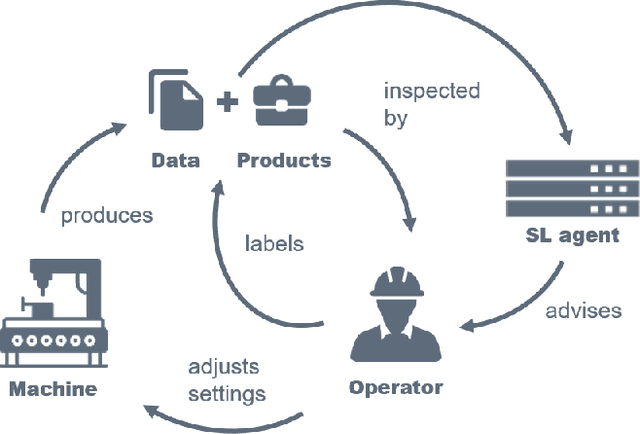
In socio-technical settings, operators are increasingly assisted by decision support systems. By employing these, important properties of socio-technical systems such as self-adaptation and self-optimization are expected to improve further. To be accepted by and engage efficiently with operators, decision support systems need to be able to provide explanations regarding the reasoning behind specific decisions. In this paper, we propose the usage of Learning Classifier Systems, a family of rule-based machine learning methods, to facilitate transparent decision making and highlight some techniques to improve that. We then present a template of seven questions to assess application-specific explainability needs and demonstrate their usage in an interview-based case study for a manufacturing scenario. We find that the answers received did yield useful insights for a well-designed LCS model and requirements to have stakeholders actively engage with an intelligent agent.
Separating Rule Discovery and Global Solution Composition in a Learning Classifier System
Feb 03, 2022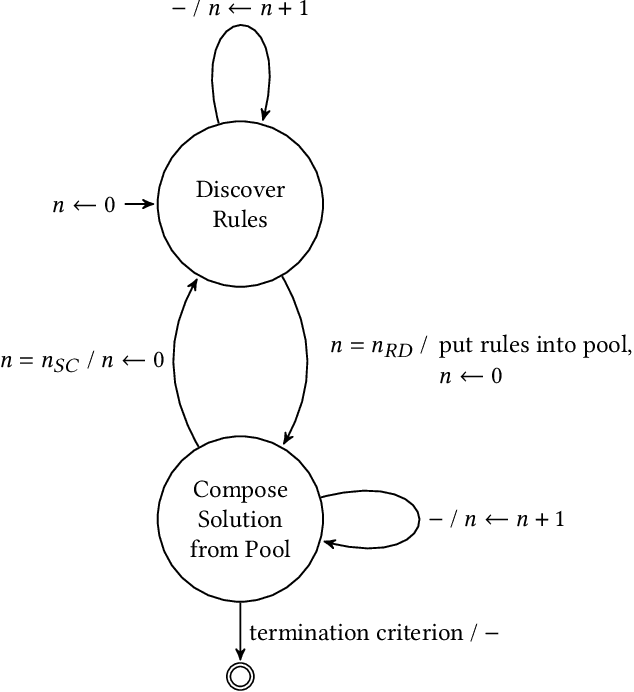
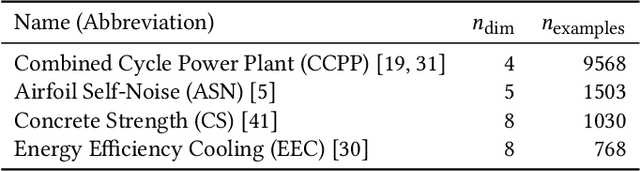
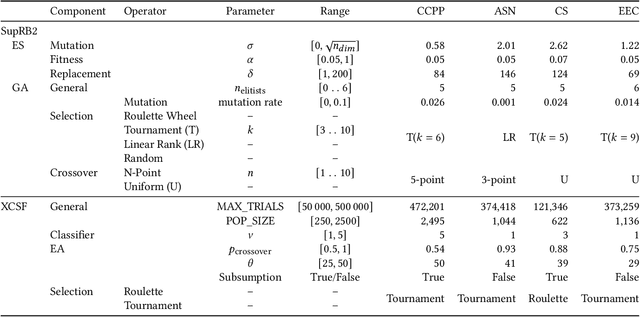
The utilization of digital agents to support crucial decision making is increasing in many industrial scenarios. However, trust in suggestions made by these agents is hard to achieve, though essential for profiting from their application, resulting in a need for explanations for both the decision making process as well as the model itself. For many systems, such as common deep learning black-box models, achieving at least some explainability requires complex post-processing, while other systems profit from being, to a reasonable extent, inherently interpretable. In this paper we propose an easily interpretable rule-based learning system specifically designed and thus especially suited for these scenarios and compare it on a set of regression problems against XCSF, a prominent rule-based learning system with a long research history. One key advantage of our system is that the rules' conditions and which rules compose a solution to the problem are evolved separately. We utilise independent rule fitnesses which allows users to specifically tailor their model structure to fit the given requirements for explainability. We find that the results of SupRB2's evaluation are comparable to XCSF's while allowing easier control of model structure and showing a substantially smaller sensitivity to random seeds and data splits. This increased control aids in subsequently providing explanations for both the training and the final structure of the model.