 Add to Chrome
 Add to Firefox
 Add to Edge
Information-seeking failures of large language models in agentic clinical reasoning
Jul 11, 2026
Large language models achieve high scores on medical knowledge assessments, yet clinical reasoning requires actively deciding what to investigate under uncertainty. We developed an agentic evaluation framework in hematologic oncology in which models must proactively request clinical data across three sequential rounds before committing to a diagnosis and treatment plan. Across 32 frontier models, the best achieved only 68% overall accuracy. Information utilization, the fraction of available data actually requested, was the strongest predictor of diagnostic accuracy (R = 0.69, P < 0.001), yet utilization collapsed from 57% to 26% in the final round, leaving molecular and cytogenetic data critical for treatment selection unexamined. Reasoning traces scored high on a clinical reasoning rubric (91% above threshold) but decorrelated from accuracy, revealing a gap between locally coherent rationales and globally correct conclusions. Error analysis identified search satisficing, anchoring and premature closure as the dominant failure modes, the same cognitive biases that characterize novice clinicians under dual-process models of diagnostic reasoning. These findings demonstrate that the primary limitation of current models in clinical oncology is not insufficient medical knowledge but a systematic failure of information-seeking under uncertainty.

Performance and Explainability Requirements of Evolutionary Algorithms in Real-World Physics-Informed Optimization
May 27, 2026Evolutionary computation offers a variety of tools to solve complex real-world optimization problems. However, research often focuses on smaller, simplified problems and optimization algorithms that sometimes miss expectations in real-world scenarios. Additionally, trust in the applied algorithm and the solutions it provides is often essential in such settings, but requires an understanding of the search process itself. This leads to evolutionary computation often not being seriously considered by practitioners in many application contexts, among them physics-based modeling. In this article, techniques from evolutionary computation are detailed that can alleviate these problems. First, five real-world physics-based optimization problems are introduced and described by domain experts. For each of these, the requirements for the evolutionary algorithm regarding performance and explainability to increase trust and usability are presented. We found that all domain experts expect fast convergence to a good solution and want some explanations for how the results were formed, while other requirements strongly depend on the respective problem. Finally, we present existing approaches that can be leveraged to improve those aspects of evolutionary algorithms but have to our knowledge never been employed in complex real-world scenarios. This implies a gap between both domains that needs to be closed to exploit the full potential of evolutionary computation.
Unsupervised Anomaly Detection in Process-Complex Industrial Time Series: A Real-World Case Study
Apr 15, 2026Industrial time-series data from real production environments exhibits substantially higher complexity than commonly used benchmark datasets, primarily due to heterogeneous, multi-stage operational processes. As a result, anomaly detection methods validated under simplified conditions often fail to generalize to industrial settings. This work presents an empirical study on a unique dataset collected from fully operational industrial machinery, explicitly capturing pronounced process-induced variability. We evaluate which model classes are capable of capturing this complexity, starting with a classical Isolation Forest baseline and extending to multiple autoencoder architectures. Experimental results show that Isolation Forest is insufficient for modeling the non-periodic, multi-scale dynamics present in the data, whereas autoencoders consistently perform better. Among them, temporal convolutional autoencoders achieve the most robust performance, while recurrent and variational variants require more careful tuning.
Pareto-Optimal Anytime Algorithms via Bayesian Racing
Mar 09, 2026Selecting an optimization algorithm requires comparing candidates across problem instances, but the computational budget for deployment is often unknown at benchmarking time. Current methods either collapse anytime performance into a scalar, require manual interpretation of plots, or produce conclusions that change when algorithms are added or removed. Moreover, methods based on raw objective values require normalization, which needs bounds or optima that are often unavailable and breaks coherent aggregation across instances. We propose a framework that formulates anytime algorithm comparison as Pareto optimization over time: an algorithm is non-dominated if no competitor beats it at every timepoint. By using rankings rather than objective values, our approach requires no bounds, no normalization, and aggregates coherently across arbitrary instance distributions without requiring known optima. We introduce PolarBear (Pareto-optimal anytime algorithms via Bayesian racing), a procedure that identifies the anytime Pareto set through adaptive sampling with calibrated uncertainty. Bayesian inference over a temporal Plackett-Luce ranking model provides posterior beliefs about pairwise dominance, enabling early elimination of confidently dominated algorithms. The output Pareto set together with the posterior supports downstream algorithm selection under arbitrary time preferences and risk profiles without additional experiments.
PDPK: A Framework to Synthesise Process Data and Corresponding Procedural Knowledge for Manufacturing
Aug 16, 2023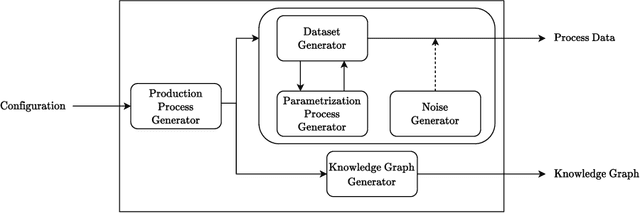
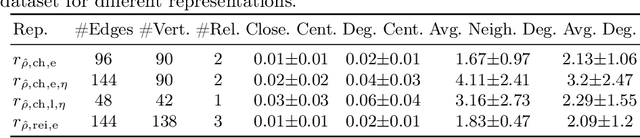
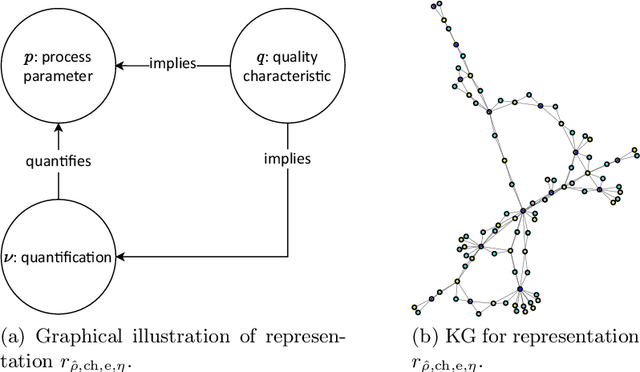
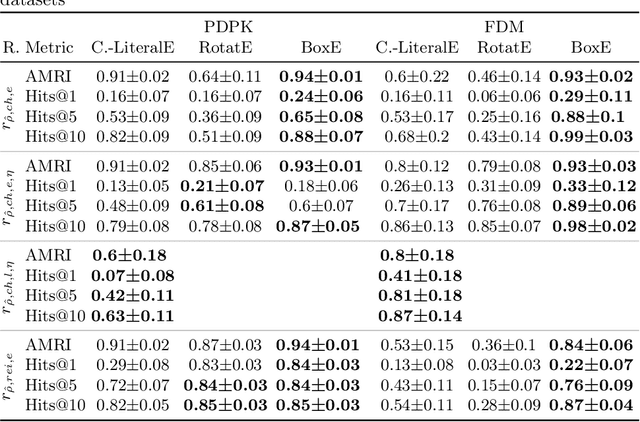
Procedural knowledge describes how to accomplish tasks and mitigate problems. Such knowledge is commonly held by domain experts, e.g. operators in manufacturing who adjust parameters to achieve quality targets. To the best of our knowledge, no real-world datasets containing process data and corresponding procedural knowledge are publicly available, possibly due to corporate apprehensions regarding the loss of knowledge advances. Therefore, we provide a framework to generate synthetic datasets that can be adapted to different domains. The design choices are inspired by two real-world datasets of procedural knowledge we have access to. Apart from containing representations of procedural knowledge in Resource Description Framework (RDF)-compliant knowledge graphs, the framework simulates parametrisation processes and provides consistent process data. We compare established embedding methods on the resulting knowledge graphs, detailing which out-of-the-box methods have the potential to represent procedural knowledge. This provides a baseline which can be used to increase the comparability of future work. Furthermore, we validate the overall characteristics of a synthesised dataset by comparing the results to those achievable on a real-world dataset. The framework and evaluation code, as well as the dataset used in the evaluation, are available open source.
Investigating the Impact of Independent Rule Fitnesses in a Learning Classifier System
Jul 12, 2022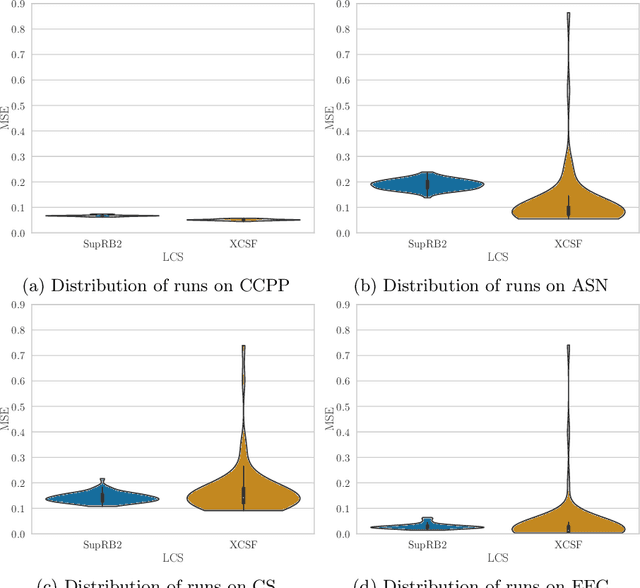
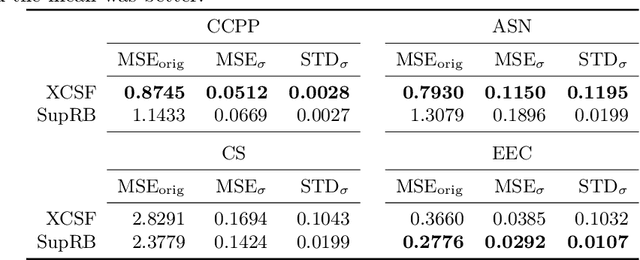
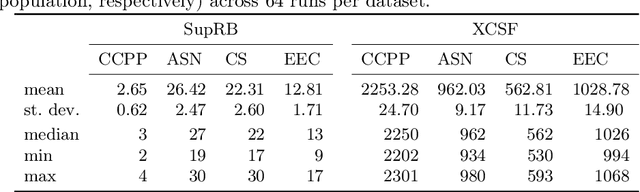
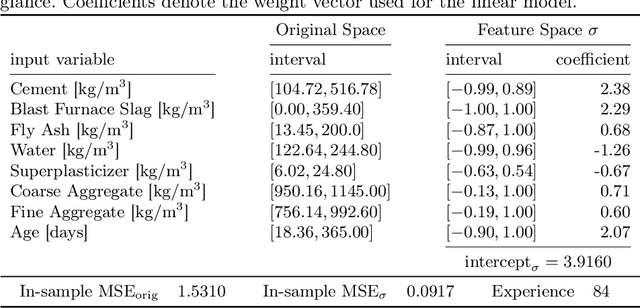
Achieving at least some level of explainability requires complex analyses for many machine learning systems, such as common black-box models. We recently proposed a new rule-based learning system, SupRB, to construct compact, interpretable and transparent models by utilizing separate optimizers for the model selection tasks concerning rule discovery and rule set composition.This allows users to specifically tailor their model structure to fulfil use-case specific explainability requirements. From an optimization perspective, this allows us to define clearer goals and we find that -- in contrast to many state of the art systems -- this allows us to keep rule fitnesses independent. In this paper we investigate this system's performance thoroughly on a set of regression problems and compare it against XCSF, a prominent rule-based learning system. We find the overall results of SupRB's evaluation comparable to XCSF's while allowing easier control of model structure and showing a substantially smaller sensitivity to random seeds and data splits. This increased control can aid in subsequently providing explanations for both training and final structure of the model.
Learning Classifier Systems for Self-Explaining Socio-Technical-Systems
Jul 01, 2022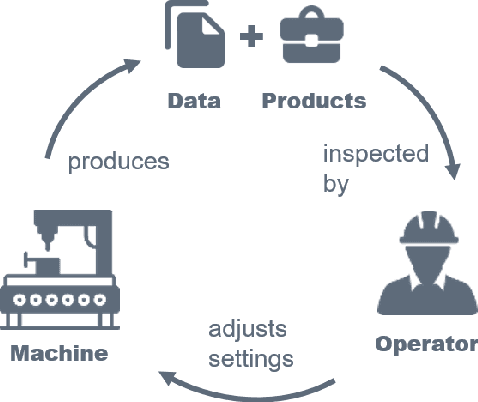
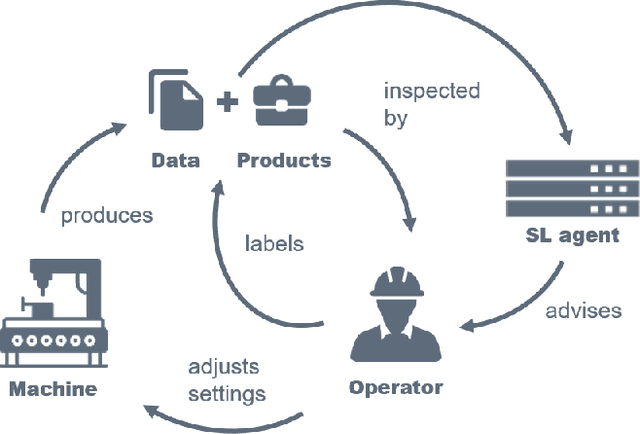
In socio-technical settings, operators are increasingly assisted by decision support systems. By employing these, important properties of socio-technical systems such as self-adaptation and self-optimization are expected to improve further. To be accepted by and engage efficiently with operators, decision support systems need to be able to provide explanations regarding the reasoning behind specific decisions. In this paper, we propose the usage of Learning Classifier Systems, a family of rule-based machine learning methods, to facilitate transparent decision making and highlight some techniques to improve that. We then present a template of seven questions to assess application-specific explainability needs and demonstrate their usage in an interview-based case study for a manufacturing scenario. We find that the answers received did yield useful insights for a well-designed LCS model and requirements to have stakeholders actively engage with an intelligent agent.
Separating Rule Discovery and Global Solution Composition in a Learning Classifier System
Feb 03, 2022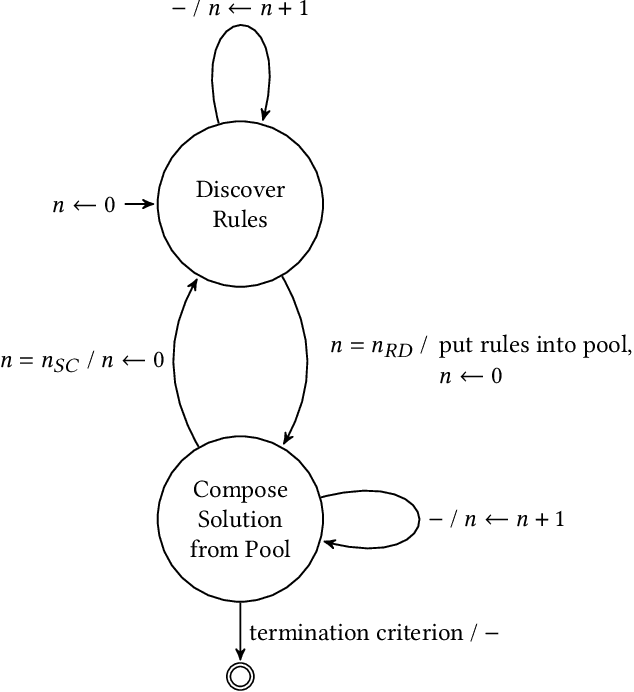
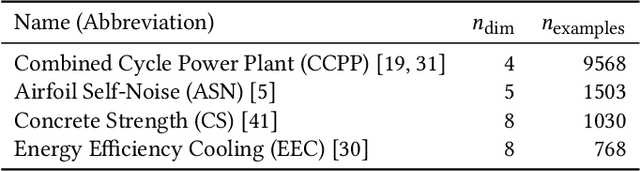
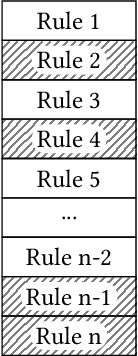
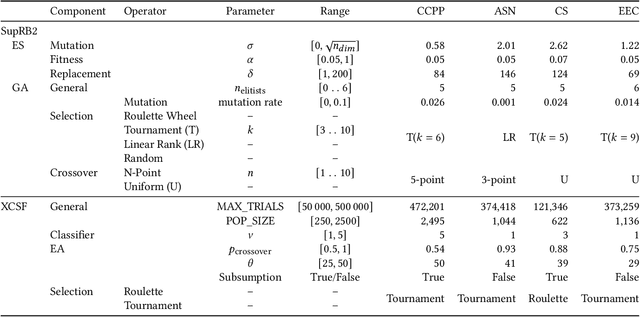
The utilization of digital agents to support crucial decision making is increasing in many industrial scenarios. However, trust in suggestions made by these agents is hard to achieve, though essential for profiting from their application, resulting in a need for explanations for both the decision making process as well as the model itself. For many systems, such as common deep learning black-box models, achieving at least some explainability requires complex post-processing, while other systems profit from being, to a reasonable extent, inherently interpretable. In this paper we propose an easily interpretable rule-based learning system specifically designed and thus especially suited for these scenarios and compare it on a set of regression problems against XCSF, a prominent rule-based learning system with a long research history. One key advantage of our system is that the rules' conditions and which rules compose a solution to the problem are evolved separately. We utilise independent rule fitnesses which allows users to specifically tailor their model structure to fit the given requirements for explainability. We find that the results of SupRB2's evaluation are comparable to XCSF's while allowing easier control of model structure and showing a substantially smaller sensitivity to random seeds and data splits. This increased control aids in subsequently providing explanations for both the training and the final structure of the model.
SupRB: A Supervised Rule-based Learning System for Continuous Problems
Feb 24, 2020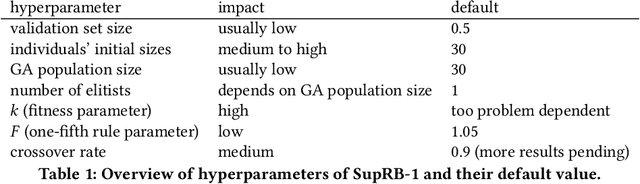
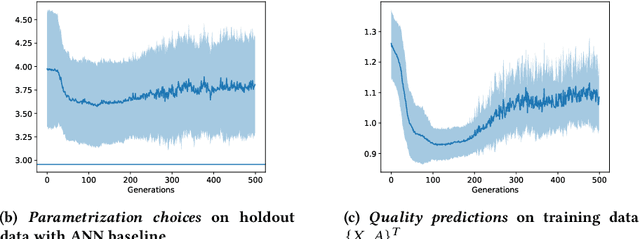
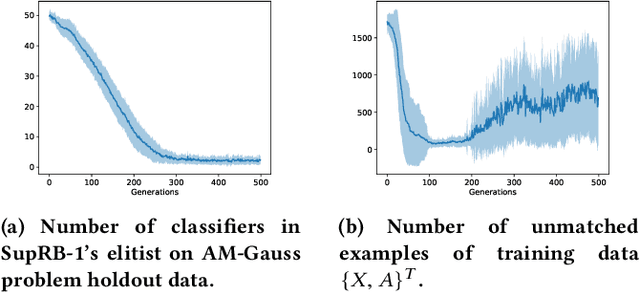
We propose the SupRB learning system, a new Pittsburgh-style learning classifier system (LCS) for supervised learning on multi-dimensional continuous decision problems. SupRB learns an approximation of a quality function from examples (consisting of situations, choices and associated qualities) and is then able to make an optimal choice as well as predict the quality of a choice in a given situation. One area of application for SupRB is parametrization of industrial machinery. In this field, acceptance of the recommendations of machine learning systems is highly reliant on operators' trust. While an essential and much-researched ingredient for that trust is prediction quality, it seems that this alone is not enough. At least as important is a human-understandable explanation of the reasoning behind a recommendation. While many state-of-the-art methods such as artificial neural networks fall short of this, LCSs such as SupRB provide human-readable rules that can be understood very easily. The prevalent LCSs are not directly applicable to this problem as they lack support for continuous choices. This paper lays the foundations for SupRB and shows its general applicability on a simplified model of an additive manufacturing problem.