 Add to Chrome
 Add to Firefox
 Add to Edge
Anatomical Positional Embeddings
Sep 16, 2024
We propose a self-supervised model producing 3D anatomical positional embeddings (APE) of individual medical image voxels. APE encodes voxels' anatomical closeness, i.e., voxels of the same organ or nearby organs always have closer positional embeddings than the voxels of more distant body parts. In contrast to the existing models of anatomical positional embeddings, our method is able to efficiently produce a map of voxel-wise embeddings for a whole volumetric input image, which makes it an optimal choice for different downstream applications. We train our APE model on 8400 publicly available CT images of abdomen and chest regions. We demonstrate its superior performance compared with the existing models on anatomical landmark retrieval and weakly-supervised few-shot localization of 13 abdominal organs. As a practical application, we show how to cheaply train APE to crop raw CT images to different anatomical regions of interest with 0.99 recall, while reducing the image volume by 10-100 times. The code and the pre-trained APE model are available at https://github.com/mishgon/ape .

Fourier Spectral Physics Informed Neural Network: An Efficient and Low-Memory PINN
Aug 29, 2024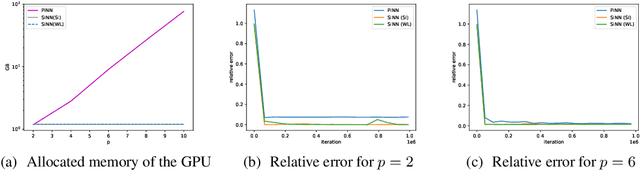
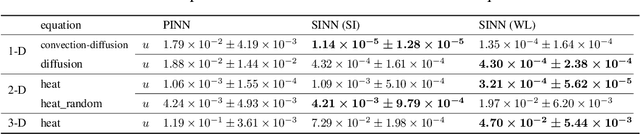
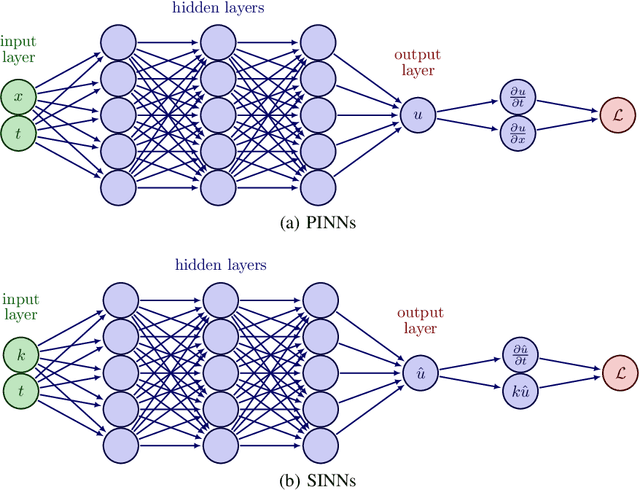
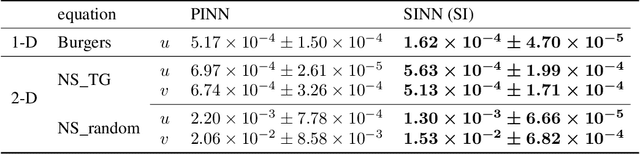
With growing investigations into solving partial differential equations by physics-informed neural networks (PINNs), more accurate and efficient PINNs are required to meet the practical demands of scientific computing. One bottleneck of current PINNs is computing the high-order derivatives via automatic differentiation which often necessitates substantial computing resources. In this paper, we focus on removing the automatic differentiation of the spatial derivatives and propose a spectral-based neural network that substitutes the differential operator with a multiplication. Compared to the PINNs, our approach requires lower memory and shorter training time. Thanks to the exponential convergence of the spectral basis, our approach is more accurate. Moreover, to handle the different situations between physics domain and spectral domain, we provide two strategies to train networks by their spectral information. Through a series of comprehensive experiments, We validate the aforementioned merits of our proposed network.
RECE: Reduced Cross-Entropy Loss for Large-Catalogue Sequential Recommenders
Aug 06, 2024Scalability is a major challenge in modern recommender systems. In sequential recommendations, full Cross-Entropy (CE) loss achieves state-of-the-art recommendation quality but consumes excessive GPU memory with large item catalogs, limiting its practicality. Using a GPU-efficient locality-sensitive hashing-like algorithm for approximating large tensor of logits, this paper introduces a novel RECE (REduced Cross-Entropy) loss. RECE significantly reduces memory consumption while allowing one to enjoy the state-of-the-art performance of full CE loss. Experimental results on various datasets show that RECE cuts training peak memory usage by up to 12 times compared to existing methods while retaining or exceeding performance metrics of CE loss. The approach also opens up new possibilities for large-scale applications in other domains.
Inverted Activations
Jul 22, 2024The scaling of neural networks with increasing data and model sizes necessitates more efficient deep learning algorithms. This paper addresses the memory footprint challenge in neural network training by proposing a modification to the handling of activation tensors in pointwise nonlinearity layers. Traditionally, these layers save the entire input tensor for the backward pass, leading to substantial memory use. Our method involves saving the output tensor instead, reducing the memory required when the subsequent layer also saves its input tensor. This approach is particularly beneficial for transformer-based architectures like GPT, BERT, Mistral, and Llama. Application of our method involves taken an inverse function of nonlinearity. To the best of our knowledge, that can not be done analitically and instead we buid an accurate approximations using simpler functions. Experimental results confirm that our method significantly reduces memory usage without affecting training accuracy. The implementation is available at https://github.com/PgLoLo/optiacts.
ConDiff: A Challenging Dataset for Neural Solvers of Partial Differential Equations
Jun 07, 2024We present ConDiff, a novel dataset for scientific machine learning. ConDiff focuses on the diffusion equation with varying coefficients, a fundamental problem in many applications of parametric partial differential equations (PDEs). The main novelty of the proposed dataset is that we consider discontinuous coefficients with high contrast. These coefficient functions are sampled from a selected set of distributions. This class of problems is not only of great academic interest, but is also the basis for describing various environmental and industrial problems. In this way, ConDiff shortens the gap with real-world problems while remaining fully synthetic and easy to use. ConDiff consists of a diverse set of diffusion equations with coefficients covering a wide range of contrast levels and heterogeneity with a measurable complexity metric for clearer comparison between different coefficient functions. We baseline ConDiff on standard deep learning models in the field of scientific machine learning. By providing a large number of problem instances, each with its own coefficient function and right-hand side, we hope to encourage the development of novel physics-based deep learning approaches, such as neural operators and physics-informed neural networks, ultimately driving progress towards more accurate and efficient solutions of complex PDE problems.
Astral: training physics-informed neural networks with error majorants
Jun 04, 2024The primal approach to physics-informed learning is a residual minimization. We argue that residual is, at best, an indirect measure of the error of approximate solution and propose to train with error majorant instead. Since error majorant provides a direct upper bound on error, one can reliably estimate how close PiNN is to the exact solution and stop the optimization process when the desired accuracy is reached. We call loss function associated with error majorant $\textbf{Astral}$: neur$\textbf{A}$l a po$\textbf{ST}$erio$\textbf{RI}$ function$\textbf{A}$l Loss. To compare Astral and residual loss functions, we illustrate how error majorants can be derived for various PDEs and conduct experiments with diffusion equations (including anisotropic and in the L-shaped domain), convection-diffusion equation, temporal discretization of Maxwell's equation, and magnetostatics problem. The results indicate that Astral loss is competitive to the residual loss, typically leading to faster convergence and lower error (e.g., for Maxwell's equations, we observe an order of magnitude better relative error and training time). We also report that the error estimate obtained with Astral loss is usually tight enough to be informative, e.g., for a highly anisotropic equation, on average, Astral overestimates error by a factor of $1.5$, and for convection-diffusion by a factor of $1.7$.
Learning from Linear Algebra: A Graph Neural Network Approach to Preconditioner Design for Conjugate Gradient Solvers
May 24, 2024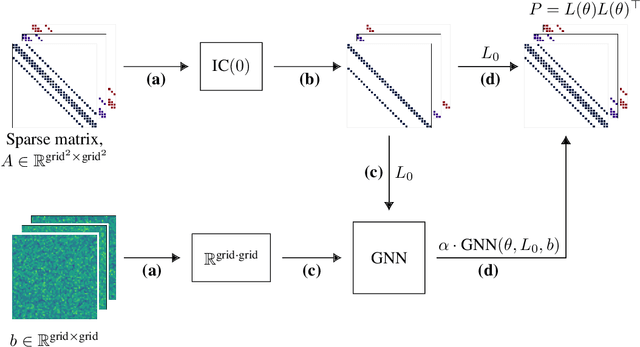
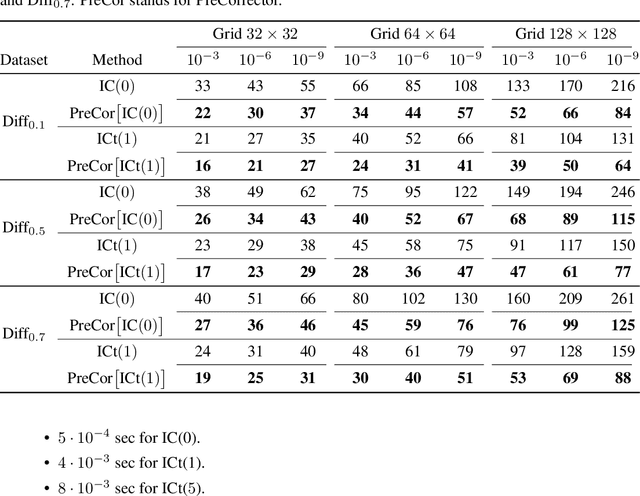
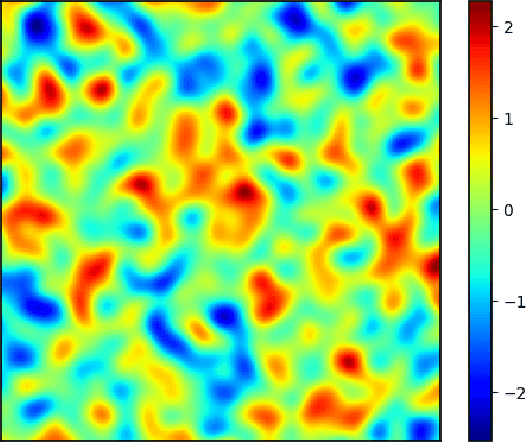
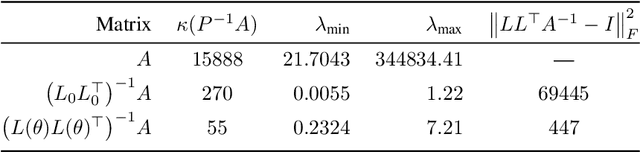
Large linear systems are ubiquitous in modern computational science. The main recipe for solving them is iterative solvers with well-designed preconditioners. Deep learning models may be used to precondition residuals during iteration of such linear solvers as the conjugate gradient (CG) method. Neural network models require an enormous number of parameters to approximate well in this setup. Another approach is to take advantage of small graph neural networks (GNNs) to construct preconditioners of the predefined sparsity pattern. In our work, we recall well-established preconditioners from linear algebra and use them as a starting point for training the GNN. Numerical experiments demonstrate that our approach outperforms both classical methods and neural network-based preconditioning. We also provide a heuristic justification for the loss function used and validate our approach on complex datasets.
Your Transformer is Secretly Linear
May 19, 2024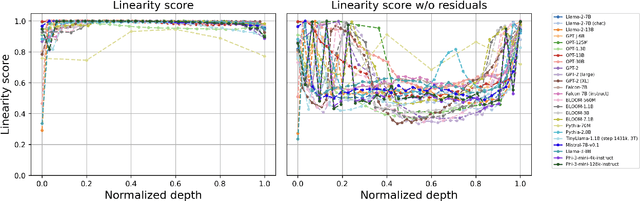


This paper reveals a novel linear characteristic exclusive to transformer decoders, including models such as GPT, LLaMA, OPT, BLOOM and others. We analyze embedding transformations between sequential layers, uncovering a near-perfect linear relationship (Procrustes similarity score of 0.99). However, linearity decreases when the residual component is removed due to a consistently low output norm of the transformer layer. Our experiments show that removing or linearly approximating some of the most linear blocks of transformers does not affect significantly the loss or model performance. Moreover, in our pretraining experiments on smaller models we introduce a cosine-similarity-based regularization, aimed at reducing layer linearity. This regularization improves performance metrics on benchmarks like Tiny Stories and SuperGLUE and as well successfully decreases the linearity of the models. This study challenges the existing understanding of transformer architectures, suggesting that their operation may be more linear than previously assumed.
GLiRA: Black-Box Membership Inference Attack via Knowledge Distillation
May 13, 2024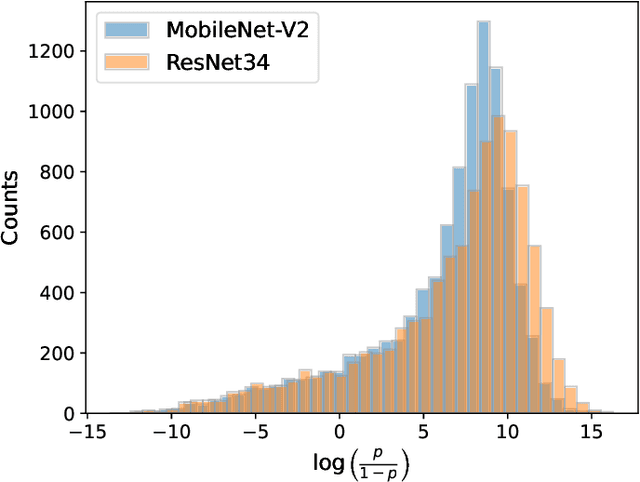
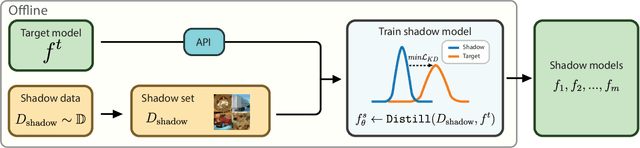
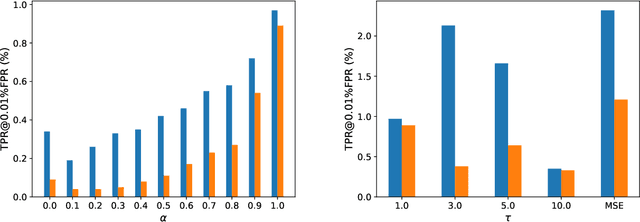
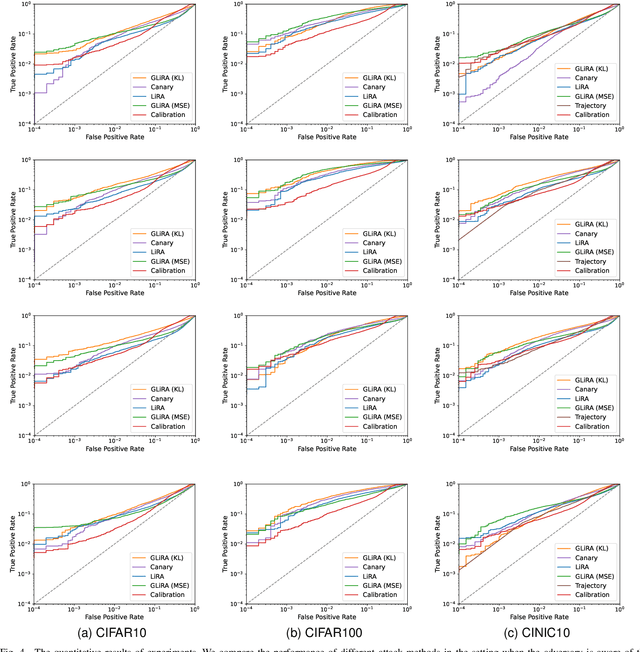
While Deep Neural Networks (DNNs) have demonstrated remarkable performance in tasks related to perception and control, there are still several unresolved concerns regarding the privacy of their training data, particularly in the context of vulnerability to Membership Inference Attacks (MIAs). In this paper, we explore a connection between the susceptibility to membership inference attacks and the vulnerability to distillation-based functionality stealing attacks. In particular, we propose {GLiRA}, a distillation-guided approach to membership inference attack on the black-box neural network. We observe that the knowledge distillation significantly improves the efficiency of likelihood ratio of membership inference attack, especially in the black-box setting, i.e., when the architecture of the target model is unknown to the attacker. We evaluate the proposed method across multiple image classification datasets and models and demonstrate that likelihood ratio attacks when guided by the knowledge distillation, outperform the current state-of-the-art membership inference attacks in the black-box setting.
Certification of Speaker Recognition Models to Additive Perturbations
Apr 29, 2024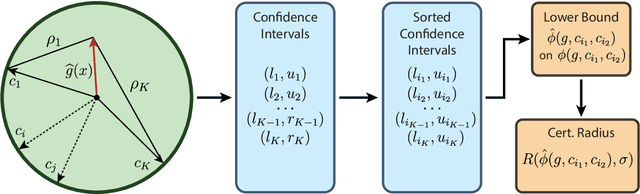
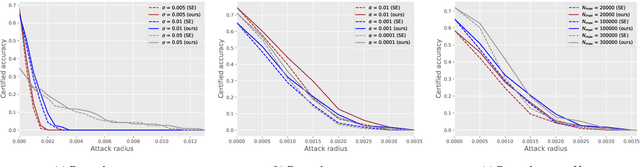
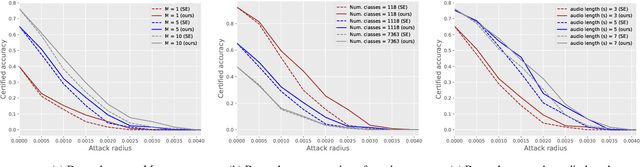
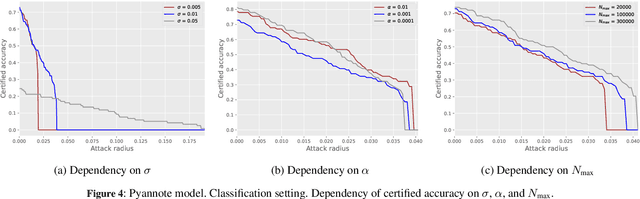
Speaker recognition technology is applied in various tasks ranging from personal virtual assistants to secure access systems. However, the robustness of these systems against adversarial attacks, particularly to additive perturbations, remains a significant challenge. In this paper, we pioneer applying robustness certification techniques to speaker recognition, originally developed for the image domain. In our work, we cover this gap by transferring and improving randomized smoothing certification techniques against norm-bounded additive perturbations for classification and few-shot learning tasks to speaker recognition. We demonstrate the effectiveness of these methods on VoxCeleb 1 and 2 datasets for several models. We expect this work to improve voice-biometry robustness, establish a new certification benchmark, and accelerate research of certification methods in the audio domain.