 Add to Chrome
 Add to Firefox
 Add to Edge
PoDAR: Power-Disentangled Audio Representation for Generative Modeling
May 11, 2026
The performance of audio latent diffusion models is primarily governed by generator expressivity and the modelability of the underlying latent space. While recent research has focused primarily on the former, as well as improving the reconstruction fidelity of audio codecs, we demonstrate that latent modelability can be significantly improved through explicit factor disentanglement. We present PoDAR (Power-Disentangled Audio Representation), a framework that utilizes a randomized power augmentation and latent consistency objective to decouple signal power from invariant semantic content. This factorization makes the latent space easier to model, which both accelerates the convergence of downstream generative models and improves final overall performance. When applied to a Stable Audio 1.0 VAE with an F5-TTS generator, PoDAR achieves about a $2\times$ acceleration in convergence to match baseline performance, while increasing final speaker similarity by 0.055 and UTMOS by 0.22 on the LibriSpeech-PC dataset. Furthermore, isolating power into dedicated channels enables the application of CFG exclusively to power-invariant content, effectively extending the stable guidance regime to higher scales.

UpstreamQA: A Modular Framework for Explicit Reasoning on Video Question Answering Tasks
Apr 25, 2026Video Question Answering (VideoQA) demands models that jointly reason over spatial, temporal, and linguistic cues. However, the task's inherent complexity often requires multi-step reasoning that current large multimodal models (LMMs) perform implicitly, leaving their internal decision process opaque. In contrast, large reasoning models (LRMs) explicitly generate intermediate logical steps that enhance interpretability and can improve multi-hop reasoning accuracy. Yet, these models are not designed for native video understanding, as they typically rely on static frame sampling. We propose UpstreamQA, a modular framework that disentangles and evaluates core video reasoning components through explicit upstream reasoning modules. Specifically, we employ multimodal LRMs to perform object identification and scene context generation before passing enriched reasoning traces to downstream LMMs for VideoQA. We evaluate UpstreamQA on the OpenEQA and NExTQA datasets using two LRMs (o4-mini, Gemini 2.5 Pro) and two LMMs (GPT-4o, Gemini 2.5 Flash). Our results demonstrate that introducing explicit reasoning can significantly boost performance and interpretability of downstream VideoQA, but can also lead to performance degradation when baseline performance is sufficiently high. Overall, UpstreamQA offers a principled framework for combining explicit reasoning and multimodal understanding, advancing both performance and diagnostic transparency in VideoQA in several scenarios.
High-Fidelity Audio Compression with Improved RVQGAN
Jun 11, 2023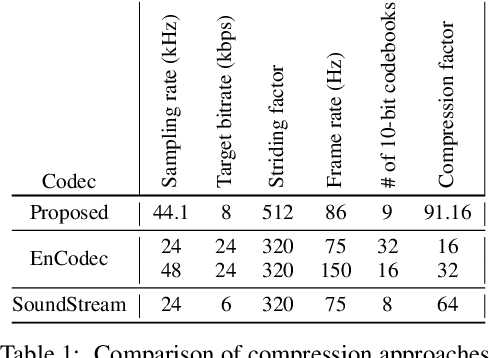
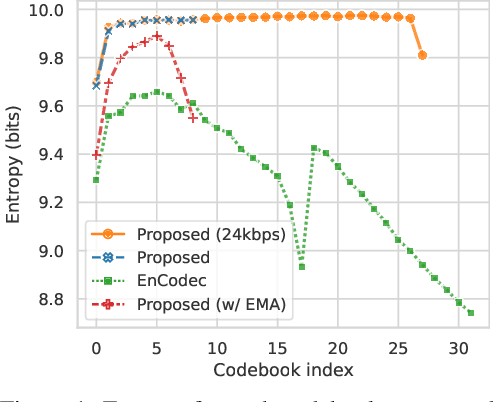
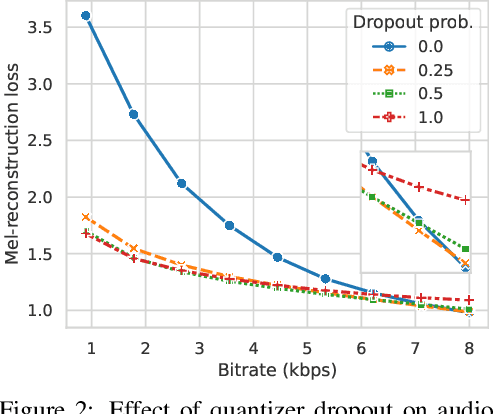
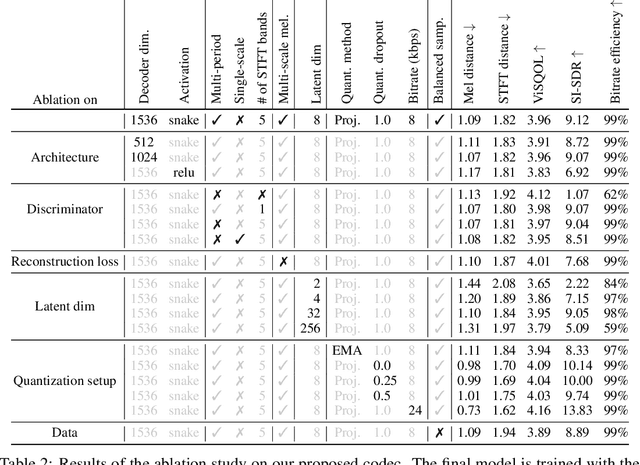
Language models have been successfully used to model natural signals, such as images, speech, and music. A key component of these models is a high quality neural compression model that can compress high-dimensional natural signals into lower dimensional discrete tokens. To that end, we introduce a high-fidelity universal neural audio compression algorithm that achieves ~90x compression of 44.1 KHz audio into tokens at just 8kbps bandwidth. We achieve this by combining advances in high-fidelity audio generation with better vector quantization techniques from the image domain, along with improved adversarial and reconstruction losses. We compress all domains (speech, environment, music, etc.) with a single universal model, making it widely applicable to generative modeling of all audio. We compare with competing audio compression algorithms, and find our method outperforms them significantly. We provide thorough ablations for every design choice, as well as open-source code and trained model weights. We hope our work can lay the foundation for the next generation of high-fidelity audio modeling.