 Add to Chrome
 Add to Firefox
 Add to Edge
Voxtral TTS
Mar 26, 2026
We introduce Voxtral TTS, an expressive multilingual text-to-speech model that generates natural speech from as little as 3 seconds of reference audio. Voxtral TTS adopts a hybrid architecture that combines auto-regressive generation of semantic speech tokens with flow-matching for acoustic tokens. These tokens are encoded and decoded with Voxtral Codec, a speech tokenizer trained from scratch with a hybrid VQ-FSQ quantization scheme. In human evaluations conducted by native speakers, Voxtral TTS is preferred for multilingual voice cloning due to its naturalness and expressivity, achieving a 68.4\% win rate over ElevenLabs Flash v2.5. We release the model weights under a CC BY-NC license.

Voxtral Realtime
Feb 11, 2026We introduce Voxtral Realtime, a natively streaming automatic speech recognition model that matches offline transcription quality at sub-second latency. Unlike approaches that adapt offline models through chunking or sliding windows, Voxtral Realtime is trained end-to-end for streaming, with explicit alignment between audio and text streams. Our architecture builds on the Delayed Streams Modeling framework, introducing a new causal audio encoder and Ada RMS-Norm for improved delay conditioning. We scale pretraining to a large-scale dataset spanning 13 languages. At a delay of 480ms, Voxtral Realtime achieves performance on par with Whisper, the most widely deployed offline transcription system. We release the model weights under the Apache 2.0 license.
Treehouse: A Case For Carbon-Aware Datacenter Software
Jan 06, 2022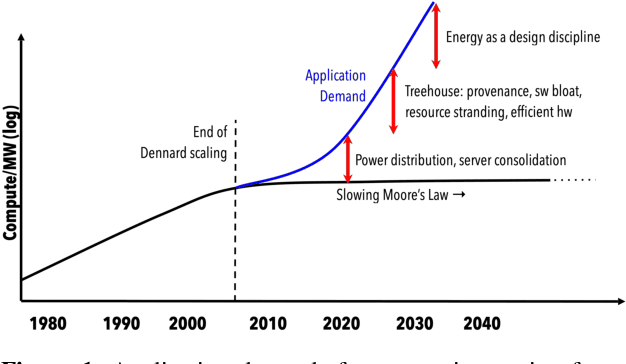
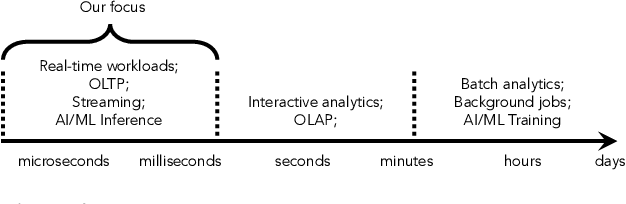
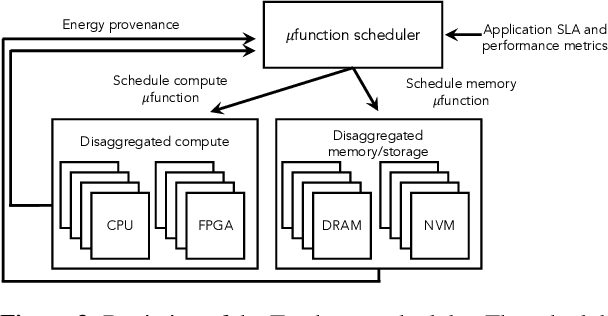
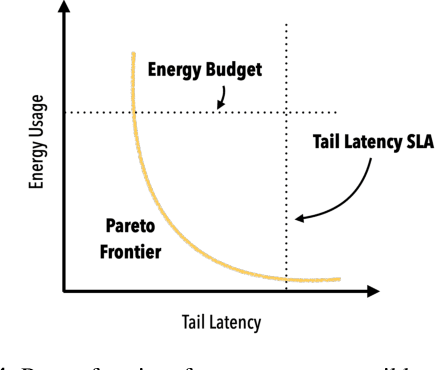
The end of Dennard scaling and the slowing of Moore's Law has put the energy use of datacenters on an unsustainable path. Datacenters are already a significant fraction of worldwide electricity use, with application demand scaling at a rapid rate. We argue that substantial reductions in the carbon intensity of datacenter computing are possible with a software-centric approach: by making energy and carbon visible to application developers on a fine-grained basis, by modifying system APIs to make it possible to make informed trade offs between performance and carbon emissions, and by raising the level of application programming to allow for flexible use of more energy efficient means of compute and storage. We also lay out a research agenda for systems software to reduce the carbon footprint of datacenter computing.