 Add to Chrome
 Add to Firefox
 Add to Edge
MISTac: A Vision-Based Tactile Sensor for Minimally Invasive Surgery
Aug 14, 2026
Minimally invasive and robot-assisted surgery offer many advantages over traditional open surgery, but deprive surgeons of tactile feedback and the ability to palpate tissue with their fingers. To address this lack of tactile feedback, we introduce the MISTac, a high resolution vision-based tactile sensor specifically designed for palpation in MIS. The sensor has a replaceable sensor tip with a diameter of 8 mm which allows it to fit through the trocars used in minimally invasive surgery. Its modular 3D-printed case design allows the use of bulky off-the-shelf illumination and imaging hardware that can easily be exchanged and upgraded. The sensor has an optical resolution of 176.68 $μm$, a tactile resolution of 250 $μm$, and can resolve forces as little as 24.3 mN. An in vivo study with the sensor shows its usability in minimally invasive surgery. We trained a machine learning model with the tactile data collected in the trial on a tissue classification task achieving an aggregate accuracy of ~84% in a leave-one-out cross validation. Tactile sensors have the potential to one day aid surgeons during minimally invasive surgery with tasks such as tissue classification or intra-operative tumor localization; MISTac is a small step towards this vision. We open-source MISTac at https://github.com/lasr-lab/mistac

Classification of Microplastic Particles in Water using Polarized Light Scattering and Machine Learning Methods
Nov 10, 2025
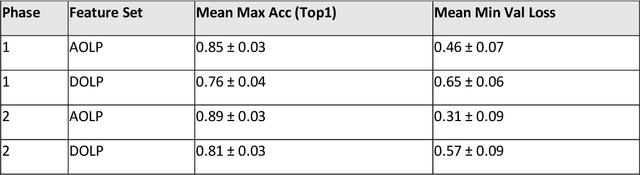
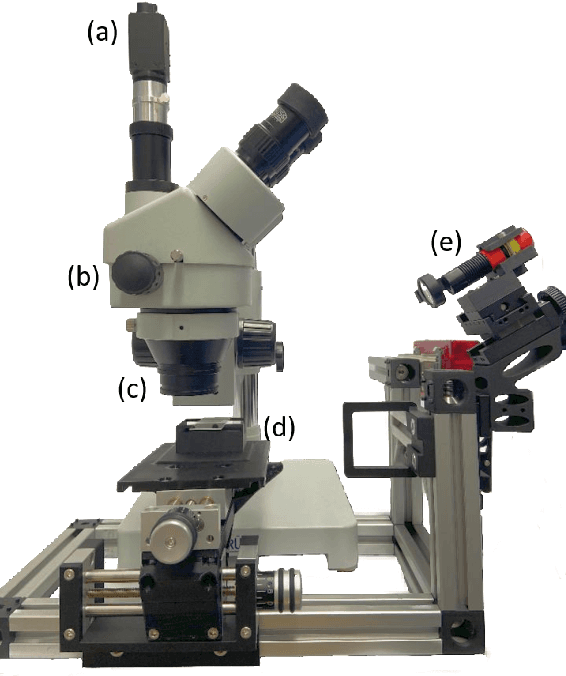
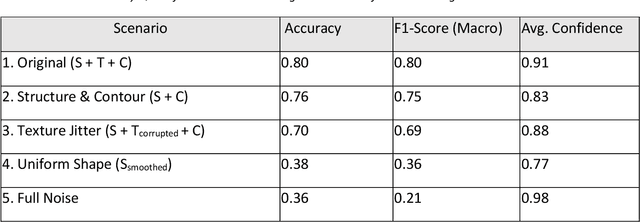
Facing the critical need for continuous, large-scale microplastic monitoring, which is hindered by the limitations of gold-standard methods in aquatic environments, this paper introduces and validates a novel, reflection-based approach for the in-situ classification and identification of microplastics directly in water bodies, which is based on polarized light scattering. In this experiment, we classify colorless microplastic particles (50-300 $μ$m) by illuminating them with linearly polarized laser light and capturing their reflected signals using a polarization-sensitive camera. This reflection-based technique successfully circumvents the transmission-based interference issues that plague many conventional methods when applied in water. Using a deep convolutional neural network (CNN) for image-based classification, we successfully identified three common polymer types, high-density polyethylene, low-density polyethylene, and polypropylene, achieving a peak mean classification accuracy of 80% on the test dataset. A subsequent feature hierarchy analysis demonstrated that the CNN's decision-making process relies mainly on the microstructural integrity and internal texture (polarization patterns) of the particle rather than its macroshape. Critically, we found that the Angle of Linear Polarization (AOLP) signal is significantly more robust against contextual noise than the Degree of Linear Polarization (DOLP) signal. While the AOLP-based classification achieved superior overall performance, its strength lies in distinguishing between the two polyethylene plastics, showing a lower confusion rate between high-density and low-density polyethylene. Conversely, the DOLP signal demonstrated slightly worse overall classification results but excels at accurately identifying the polypropylene class, which it isolated with greater success than AOLP.