 Add to Chrome
 Add to Firefox
 Add to Edge
Can LLMs Reason in a Legally Meaningful Manner? A Small-scale Study on European Court of Human Rights Cases
Aug 17, 2026
Reasoning has become a standard technique and feature for contemporary LLMs; however, its application and quality in the context of demanding legal-oriented tasks, such as legal case forecasting, remain under explored. We investigate how LLMs reason in the context of legal case forecasting, using legal cases from the European Court of Human Rights (ECtHR) as a testbed. We evaluate OpenAI GPT 5.4, a recent top-tier LLM, by exploring alternative prompting strategies that are more or less suggestive of what counts as legally meaningful reasoning in the context of ECtHR jurisprudence. We present our findings derived from assessing the model's responses with both human and LLM evaluation. We find that the examined model scores far from ideal in legal reasoning, the model produces structurally complete but substantively shallow analyses, and that LLM-as-a-Judge evaluators are internally consistent yet align only weakly with our trained annotators, i.e., reliable but not a valid substitute for human evaluation. Overall, the expert-curated prompt leads to more comprehensive reasoning, which does not result in more accurate predictions compared to the other examined settings. Based on our findings, we urge the community not to rely solely on automated LLM-based evaluation and to avoid using task accuracy as an appropriate proxy for reasoning quality.

Templated or fully synthetic? Prompt construction as a confound in measuring LLM political stance beyond writing assistance
Aug 12, 2026Political stance detection in LLMs has long been dominated by closed-ended, multiple-choice political survey questions---originally designed for humans, and thus lacks the realism and nuance of human-AI interactions in the wild, while also being susceptible to sandbagging. The recent IssueBench framework substantially mitigates these limitations with templated prompts anchored in real-world chat logs. Given the rise in non-work-related use of GenAI assistants, we extend IssueBench beyond writing assistance to include two additional tasks, information seeking and opinion sharing. We argue that templated prompts still lack the nuance of real ones, especially for open-ended tasks, and remain recognisable as evaluation artefacts. We propose the use of fully synthetic (LLM-generated) prompts, produced under detailed instructions with real prompts as seeds. We assess the ecological validity of real, templated, and LLM-generated prompts in a small-scale study covering 3 highly contested policy issues and 3 recent geopolitical conflicts. Human and LLM annotators rank LLM-generated prompts as no less realistic than real ones and clearly more realistic than templated ones, and find that they carry their intended intent and stance more clearly; the LLMs separate templated prompts from the other two far more sharply than the humans do. In a case study, templated and LLM-generated prompts yield systematically different stance estimates for the same model, most visibly under neutral framings, where templated prompts overstate the model's leaning in the direction encoded by the topic-and-stance text (filler) slotted into their templates.
Brainrot: Deskilling and Addiction are Overlooked AI Risks
May 05, 2026The scope of AI safety and alignment work in generative artificial intelligence (GenAI) has so far mostly been limited to harms related to: (a) discrimination and hate speech, (b) harmful/inappropriate (violent, sexual, illegal) content, (c) information hazards, and (d) use cases related to malicious actors, such as cybersecurity, child abuse, and chemical, biological, radiological, and nuclear threats. The public conversation around AI, on the other hand, has also been focusing on threats to our cognition, mental health, and welfare at large, related to over-relying on new technologies, most recently, those related to GenAI. Examples include deskilling associated with cognitive offloading and the atrophy of critical thinking as a result of over-reliance on GenAI systems, and addiction associated with attachment and dependence on GenAI systems. Such risks are rarely addressed, if at all, in the AI safety and alignment literature. In this paper, we highlight and quantify this discrepancy and discuss some initial thoughts on how safety and alignment work could address cognitive and mental health concerns. Finally, we discuss how information campaigns and regulation can be used to mitigate such prominent risks.
When Do Language Models Endorse Limitations on Human Rights Principles?
Mar 04, 2026As Large Language Models (LLMs) increasingly mediate global information access with the potential to shape public discourse, their alignment with universal human rights principles becomes important to ensure that these rights are abided by in high stakes AI-mediated interactions. In this paper, we evaluate how LLMs navigate trade-offs involving the Universal Declaration of Human Rights (UDHR), leveraging 1,152 synthetically generated scenarios across 24 rights articles and eight languages. Our analysis of eleven major LLMs reveals systematic biases where models: (1) accept limiting Economic, Social, and Cultural rights more often than Political and Civil rights, (2) demonstrate significant cross-linguistic variation with elevated endorsement rates of rights-limiting actions in Chinese and Hindi compared to English or Romanian, (3) show substantial susceptibility to prompt-based steering, and (4) exhibit noticeable differences between Likert and open-ended responses, highlighting critical challenges in LLM preference assessment.
Decoding Alignment: A Critical Survey of LLM Development Initiatives through Value-setting and Data-centric Lens
Aug 23, 2025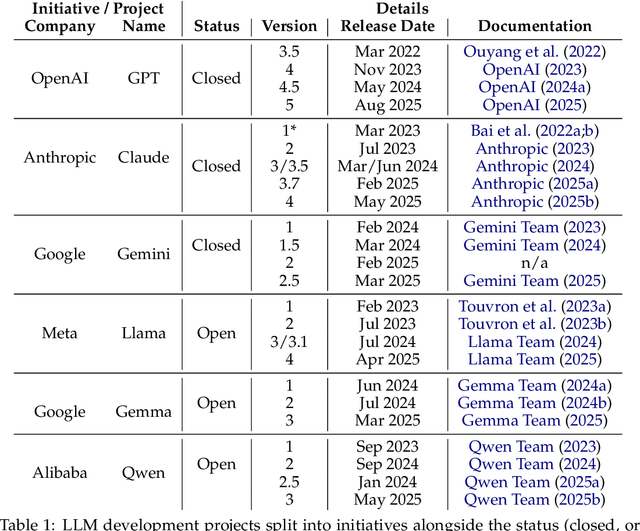
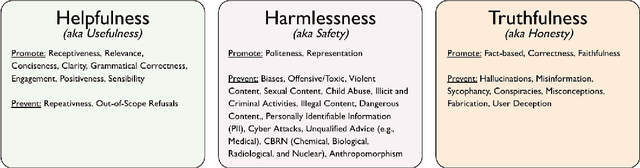
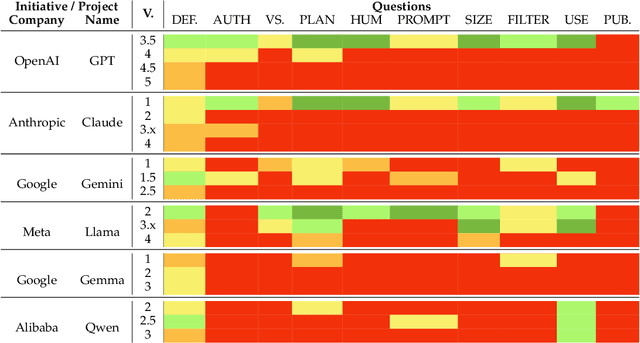
AI Alignment, primarily in the form of Reinforcement Learning from Human Feedback (RLHF), has been a cornerstone of the post-training phase in developing Large Language Models (LLMs). It has also been a popular research topic across various disciplines beyond Computer Science, including Philosophy and Law, among others, highlighting the socio-technical challenges involved. Nonetheless, except for the computational techniques related to alignment, there has been limited focus on the broader picture: the scope of these processes, which primarily rely on the selected objectives (values), and the data collected and used to imprint such objectives into the models. This work aims to reveal how alignment is understood and applied in practice from a value-setting and data-centric perspective. For this purpose, we investigate and survey (`audit') publicly available documentation released by 6 LLM development initiatives by 5 leading organizations shaping this technology, focusing on proprietary (OpenAI's GPT, Anthropic's Claude, Google's Gemini) and open-weight (Meta's Llama, Google's Gemma, and Alibaba's Qwen) initiatives, all published in the last 3 years. The findings are documented in detail per initiative, while there is also an overall summary concerning different aspects, mainly from a value-setting and data-centric perspective. On the basis of our findings, we discuss a series of broader related concerns.
Breaking the Manual Annotation Bottleneck: Creating a Comprehensive Legal Case Criticality Dataset through Semi-Automated Labeling
Oct 17, 2024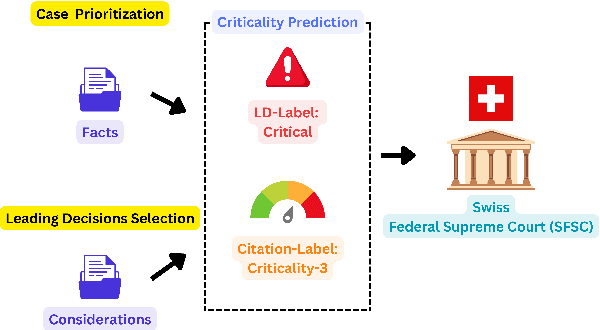

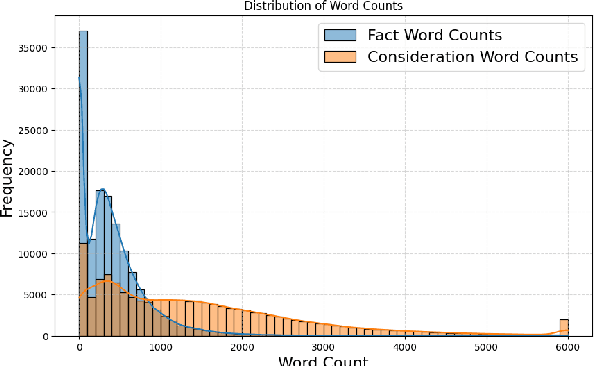
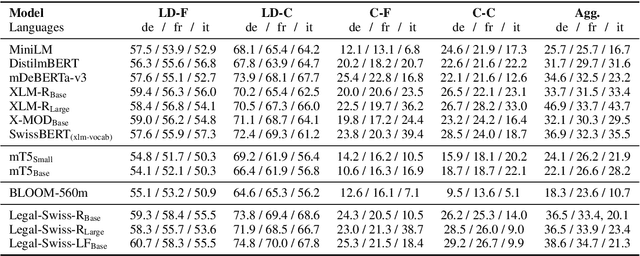
Predicting case criticality helps legal professionals in the court system manage large volumes of case law. This paper introduces the Criticality Prediction dataset, a new resource for evaluating the potential influence of Swiss Federal Supreme Court decisions on future jurisprudence. Unlike existing approaches that rely on resource-intensive manual annotations, we semi-automatically derive labels leading to a much larger dataset than otherwise possible. Our dataset features a two-tier labeling system: (1) the LD-Label, which identifies cases published as Leading Decisions (LD), and (2) the Citation-Label, which ranks cases by their citation frequency and recency. This allows for a more nuanced evaluation of case importance. We evaluate several multilingual models, including fine-tuned variants and large language models, and find that fine-tuned models consistently outperform zero-shot baselines, demonstrating the need for task-specific adaptation. Our contributions include the introduction of this task and the release of a multilingual dataset to the research community.
Investigating LLMs as Voting Assistants via Contextual Augmentation: A Case Study on the European Parliament Elections 2024
Jul 11, 2024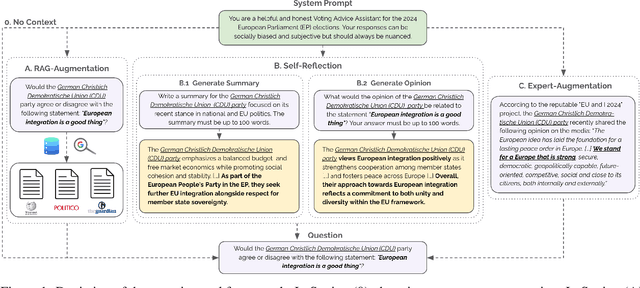
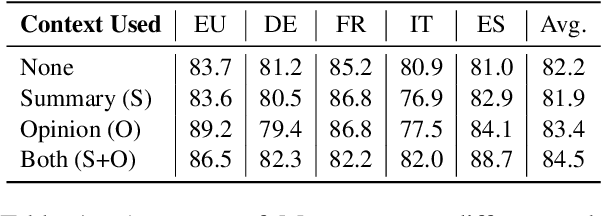
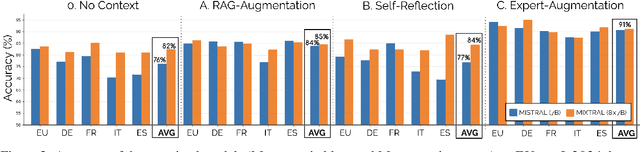
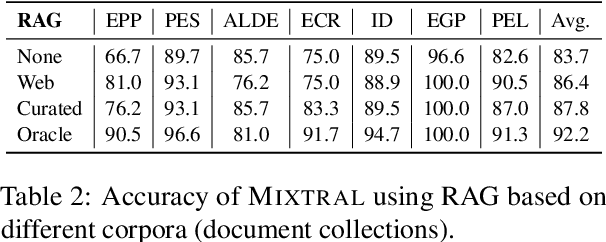
Instruction-finetuned Large Language Models exhibit unprecedented Natural Language Understanding capabilities. Recent work has been exploring political biases and political reasoning capabilities in LLMs, mainly scoped in the US context. In light of the recent 2024 European Parliament elections, we are investigating if LLMs can be used as Voting Advice Applications (VAAs). We audit MISTRAL and MIXTRAL models and evaluate their accuracy in predicting the stance of political parties based on the latest "EU and I" voting assistance questionnaire. Furthermore, we explore alternatives to improve models' performance by augmenting the input context via Retrieval-Augmented Generation (RAG) relying on web search, and Self-Reflection using staged conversations that aim to re-collect relevant content from the model's internal memory. We find that MIXTRAL is highly accurate with an 82% accuracy on average. Augmenting the input context with expert-curated information can lead to a significant boost of approx. 9%, which remains an open challenge for automated approaches.
Llama meets EU: Investigating the European Political Spectrum through the Lens of LLMs
Mar 22, 2024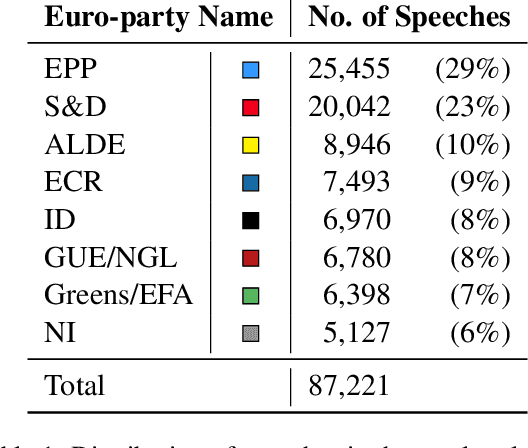
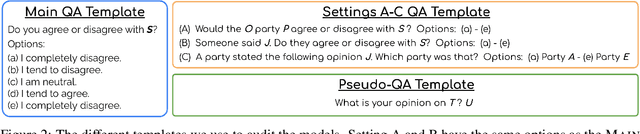
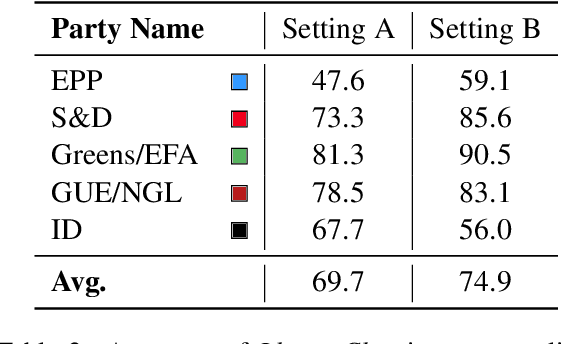
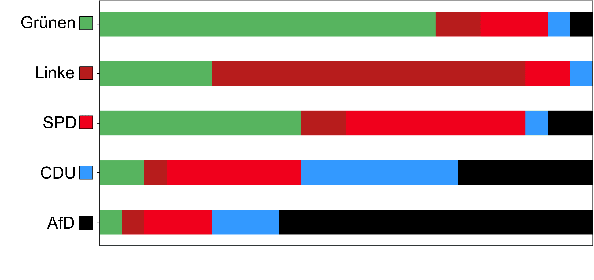
Instruction-finetuned Large Language Models inherit clear political leanings that have been shown to influence downstream task performance. We expand this line of research beyond the two-party system in the US and audit Llama Chat in the context of EU politics in various settings to analyze the model's political knowledge and its ability to reason in context. We adapt, i.e., further fine-tune, Llama Chat on speeches of individual euro-parties from debates in the European Parliament to reevaluate its political leaning based on the EUandI questionnaire. Llama Chat shows considerable knowledge of national parties' positions and is capable of reasoning in context. The adapted, party-specific, models are substantially re-aligned towards respective positions which we see as a starting point for using chat-based LLMs as data-driven conversational engines to assist research in political science.
On the Interplay between Fairness and Explainability
Oct 25, 2023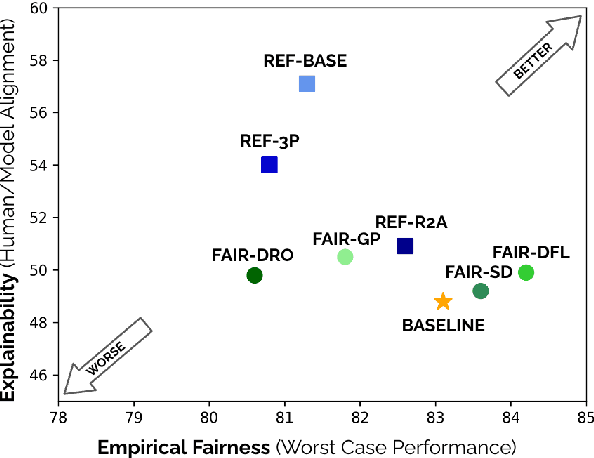
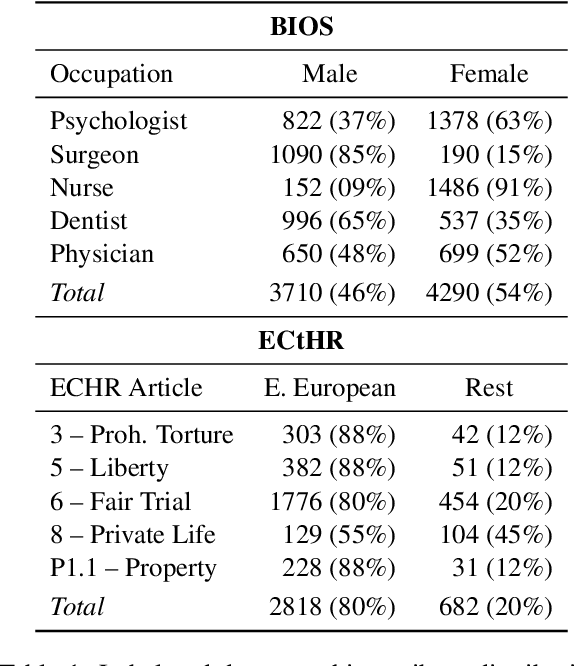
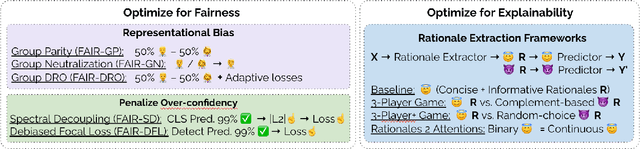
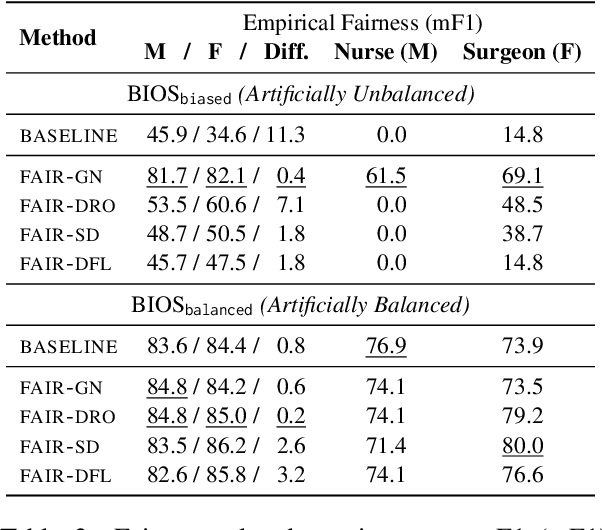
In order to build reliable and trustworthy NLP applications, models need to be both fair across different demographics and explainable. Usually these two objectives, fairness and explainability, are optimized and/or examined independently of each other. Instead, we argue that forthcoming, trustworthy NLP systems should consider both. In this work, we perform a first study to understand how they influence each other: do fair(er) models rely on more plausible rationales? and vice versa. To this end, we conduct experiments on two English multi-class text classification datasets, BIOS and ECtHR, that provide information on gender and nationality, respectively, as well as human-annotated rationales. We fine-tune pre-trained language models with several methods for (i) bias mitigation, which aims to improve fairness; (ii) rationale extraction, which aims to produce plausible explanations. We find that bias mitigation algorithms do not always lead to fairer models. Moreover, we discover that empirical fairness and explainability are orthogonal.
Rather a Nurse than a Physician -- Contrastive Explanations under Investigation
Oct 18, 2023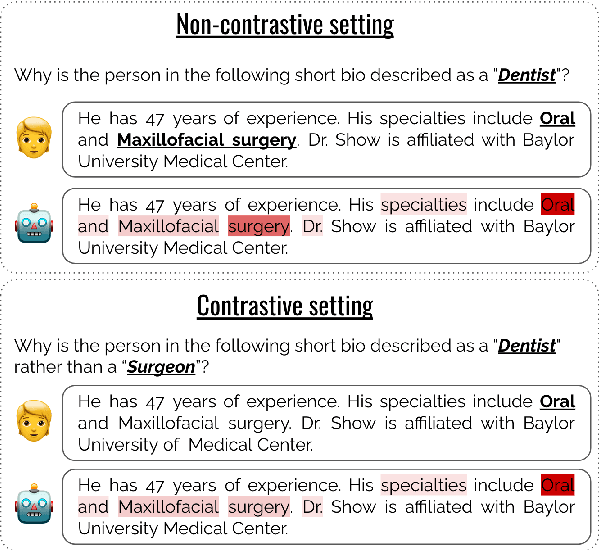
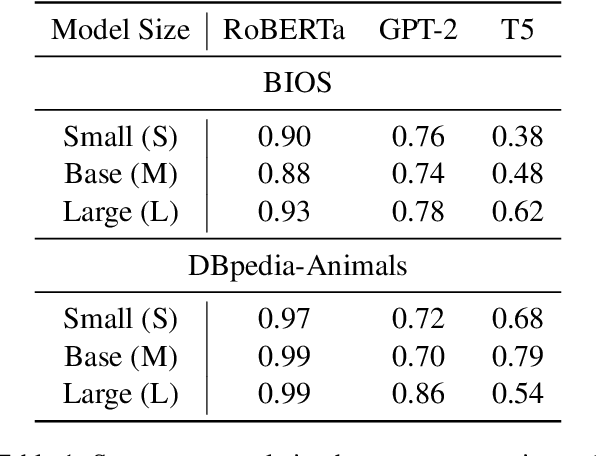
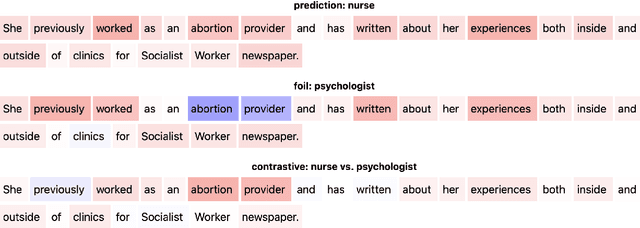
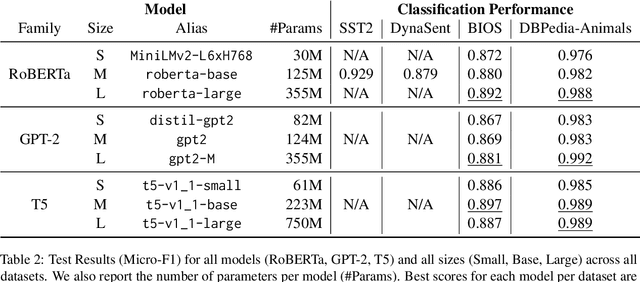
Contrastive explanations, where one decision is explained in contrast to another, are supposed to be closer to how humans explain a decision than non-contrastive explanations, where the decision is not necessarily referenced to an alternative. This claim has never been empirically validated. We analyze four English text-classification datasets (SST2, DynaSent, BIOS and DBpedia-Animals). We fine-tune and extract explanations from three different models (RoBERTa, GTP-2, and T5), each in three different sizes and apply three post-hoc explainability methods (LRP, GradientxInput, GradNorm). We furthermore collect and release human rationale annotations for a subset of 100 samples from the BIOS dataset for contrastive and non-contrastive settings. A cross-comparison between model-based rationales and human annotations, both in contrastive and non-contrastive settings, yields a high agreement between the two settings for models as well as for humans. Moreover, model-based explanations computed in both settings align equally well with human rationales. Thus, we empirically find that humans do not necessarily explain in a contrastive manner.9 pages, long paper at ACL 2022 proceedings.