 Add to Chrome
 Add to Firefox
 Add to Edge
Pri4R: Learning World Dynamics for Vision-Language-Action Models with Privileged 4D Representation
Mar 02, 2026
Humans learn not only how their bodies move, but also how the surrounding world responds to their actions. In contrast, while recent Vision-Language-Action (VLA) models exhibit impressive semantic understanding, they often fail to capture the spatiotemporal dynamics governing physical interaction. In this paper, we introduce Pri4R, a simple yet effective approach that endows VLA models with an implicit understanding of world dynamics by leveraging privileged 4D information during training. Specifically, Pri4R augments VLAs with a lightweight point track head that predicts 3D point tracks. By injecting VLA features into this head to jointly predict future 3D trajectories, the model learns to incorporate evolving scene geometry within its shared representation space, enabling more physically aware context for precise control. Due to its architectural simplicity, Pri4R is compatible with dominant VLA design patterns with minimal changes. During inference, we run the model using the original VLA architecture unchanged; Pri4R adds no extra inputs, outputs, or computational overhead. Across simulation and real-world evaluations, Pri4R significantly improves performance on challenging manipulation tasks, including a +10% gain on LIBERO-Long and a +40% gain on RoboCasa. We further show that 3D point track prediction is an effective supervision target for learning action-world dynamics, and validate our design choices through extensive ablations.

Holistic Order Prediction in Natural Scenes
Oct 02, 2025Even in controlled settings, understanding instance-wise geometries is a challenging task for a wide range of visual models. Although specialized systems exist, modern arts rely on expensive input formats (category labels, binary segmentation masks) and inference costs (a quadratic amount of forward passes). We mitigate these limitations by proposing InstaFormer, a network capable of holistic order prediction. That is, solely given an input RGB image, InstaFormer returns the full occlusion and depth orderings for all the instances in the scene in a single forward pass. At its core, InstaFormer relies on interactions between object queries and latent mask descriptors that semantically represent the same objects while carrying complementary information. We comprehensively benchmark and ablate our approach to highlight its effectiveness. Our code and models are open-source and available at this URL: https://github.com/SNU-VGILab/InstaOrder.
* 25 pages, 11 figures, 6 tables
Consistent Zero-shot 3D Texture Synthesis Using Geometry-aware Diffusion and Temporal Video Models
Jun 26, 2025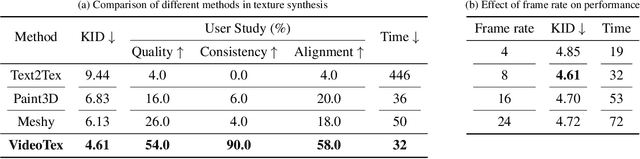
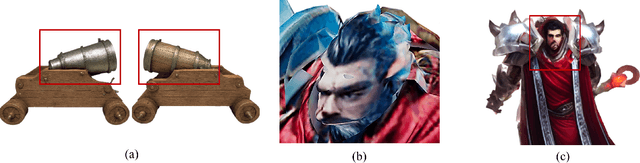
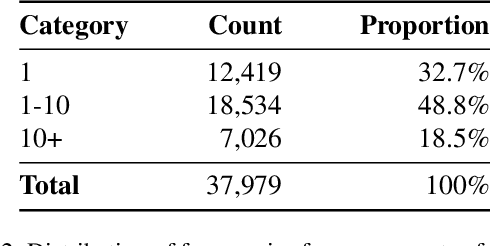
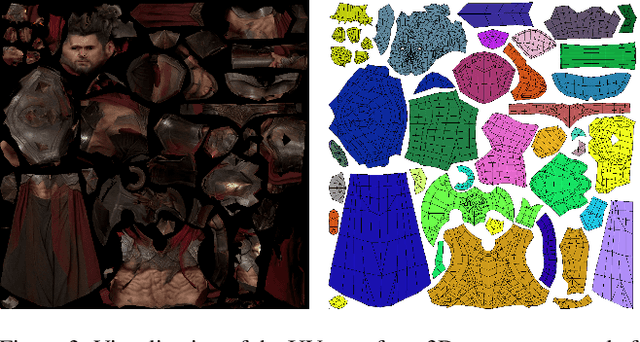
Current texture synthesis methods, which generate textures from fixed viewpoints, suffer from inconsistencies due to the lack of global context and geometric understanding. Meanwhile, recent advancements in video generation models have demonstrated remarkable success in achieving temporally consistent videos. In this paper, we introduce VideoTex, a novel framework for seamless texture synthesis that leverages video generation models to address both spatial and temporal inconsistencies in 3D textures. Our approach incorporates geometry-aware conditions, enabling precise utilization of 3D mesh structures. Additionally, we propose a structure-wise UV diffusion strategy, which enhances the generation of occluded areas by preserving semantic information, resulting in smoother and more coherent textures. VideoTex not only achieves smoother transitions across UV boundaries but also ensures high-quality, temporally stable textures across video frames. Extensive experiments demonstrate that VideoTex outperforms existing methods in texture fidelity, seam blending, and stability, paving the way for dynamic real-time applications that demand both visual quality and temporal coherence.
VLM-HOI: Vision Language Models for Interpretable Human-Object Interaction Analysis
Nov 27, 2024


The Large Vision Language Model (VLM) has recently addressed remarkable progress in bridging two fundamental modalities. VLM, trained by a sufficiently large dataset, exhibits a comprehensive understanding of both visual and linguistic to perform diverse tasks. To distill this knowledge accurately, in this paper, we introduce a novel approach that explicitly utilizes VLM as an objective function form for the Human-Object Interaction (HOI) detection task (\textbf{VLM-HOI}). Specifically, we propose a method that quantifies the similarity of the predicted HOI triplet using the Image-Text matching technique. We represent HOI triplets linguistically to fully utilize the language comprehension of VLMs, which are more suitable than CLIP models due to their localization and object-centric nature. This matching score is used as an objective for contrastive optimization. To our knowledge, this is the first utilization of VLM language abilities for HOI detection. Experiments demonstrate the effectiveness of our method, achieving state-of-the-art HOI detection accuracy on benchmarks. We believe integrating VLMs into HOI detection represents important progress towards more advanced and interpretable analysis of human-object interactions.
Instance-wise Occlusion and Depth Orders in Natural Scenes
Nov 30, 2021


In this paper, we introduce a new dataset, named InstaOrder, that can be used to understand the spatial relationships of instances in a 3D space. The dataset consists of 2.9M annotations of geometric orderings for class-labeled instances in 101K natural scenes. The scenes were annotated by 3,659 crowd-workers regarding (1) occlusion order that identifies occluder/occludee and (2) depth order that describes ordinal relations that consider relative distance from the camera. The dataset provides joint annotation of two kinds of orderings for the same instances, and we discover that the occlusion order and depth order are complementary. We also introduce a geometric order prediction network called InstaOrderNet, which is superior to state-of-the-art approaches. Moreover, we propose InstaDepthNet that uses auxiliary geometric order loss to boost the instance-wise depth prediction accuracy of MiDaS. These contributions to geometric scene understanding will help to improve the accuracy of various computer vision tasks.