 Add to Chrome
 Add to Firefox
 Add to Edge
LLM-Assisted LDPC Decoding via Syndrome-Verified Semantic Priors
Aug 14, 2026
Semantic communication exploits the meaning of the payload, which bit-level processing discards. When channel decoding fails on a natural language payload, the errors appear as corrupted characters in the recovered text. A large language model (LLM) infers the intended characters from the semantic context, but it can also produce incorrect corrections. Applying them directly introduces new bit errors when the LLM modifies characters incorrectly. In this paper, we propose an LLM-assisted decoding framework for low-density parity-check (LDPC) codes. Rather than trusting LLM predictions, the decoder evaluates the modified characters jointly against the parity-check constraints and admits only the accepted corrections as verified semantic priors. These priors are injected as soft updates to the channel log-likelihood ratios, preserving the original channel evidence without modifying the decoder. A subsequent belief propagation pass distributes the injected evidence across the check nodes, recovering not only the injected bits but also the residual errors that the LLM fails to correct. Simulations demonstrate a 73% bit error rate reduction over a conventional decoder at 2.0 dB, whereas doubling its iterations to the same budget yields only 21%. The verification maintains an injection precision above 0.88 despite inaccurate LLM predictions, demonstrating that semantic knowledge can be reliably translated into physical-layer reliability gains.

SceneBaker: Radio-Ready Scene Generation for Sionna Ray-Tracing
Aug 05, 2026Wireless digital-twin (DT) research needs ray-tracing (RT) scenes that can be generated, versioned, and checked reproducibly. Current visual-authoring workflows can produce plausible city models, but they are poorly matched to repeated radio-simulation studies because geometry, terrain contact, and material semantics often require manual repair after export. This paper presents SceneBaker, a programmatic scene-generation pipeline that turns map and terrain data into Sionna RT-ready Mitsuba scenes without a GUI authoring step. Across four campus scenes, SceneBaker generates Sionna RT-ready scenes over the same geographic bounds as a Blender-generated baseline. The generated scenes avoid representative building-generation and terrain-contact faults while preserving comparable coverage-field and link-level channel-response behavior. The implementation and generated comparison assets are available at https://github.com/hslyu/sionna-scene-baker.
Temporal Channel Estimation for Generalized CSI Feedback
Aug 03, 2026Efficient Channel State Information (CSI) feedback is indispensable for frequency division duplex (FDD) massive multiple-input multiple-output (MIMO) systems. Existing compressed sensing (CS) algorithms exploit delay-domain sparsity but suffer from prohibitive iterative latency and discrete grid mismatch. Conversely, deep learning (DL) approaches achieve rapid inference but lack spatial scalability and domain adaptability, failing to generalize to unseen propagation environments, and demand computationally heavy encoders and decoder. In this paper, we propose TAP, a Tap-Assisted Parametric CSI Compression. TAP is a one-shot neural framework that unifies the speed of DL with the mathematical interpretability of CS. TAP replaces iterative pursuit with a lightweight 1D neural network that extracts dominant continuous propagation delays from temporal channel sequences via a differentiable sub-grid interpolation operator. TAP achieves true architecture independence, enabling zero-shot generalization across diverse array geometries and unseen propagation environments. Furthermore, TAP yields a completely decoder-free payload, allowing the BS to reconstruct the channel via a simple inverse fast Fourier transform (IFFT). Extensive evaluations across five 3GPP environments demonstrate that TAP achieves a 3.13 to 12.22 dB channel frequency response normalized mean square error (CFR-NMSE) improvement over CsiNet while shrinking the model footprint by 660 times to under 1 MB. Operating with sub-millisecond latencies, TAP accelerates inference by 2700 times over classical iterative OMP, providing a scalable and deployment-ready solution for next-generation networks.
Semantic-Aware Data-Aided Channel Estimation with Large Language Models for MIMO Systems
Jul 21, 2026Data-aided channel estimation enhances spectral efficiency by reusing detected symbols as virtual pilots. In this process, selecting only reliable symbols is crucial to prevent misdetected symbols from corrupting the channel estimate. However, conventional methods rely exclusively on physical-layer statistics. Beyond physical-layer information, transmitted payloads possess inherent semantic structures that can be exploited to resolve detection errors. In this paper, we propose a novel semantic-aware channel estimation framework for multiple-input multiple-output (MIMO) systems that utilizes a fine-tuned large language model (LLM) to perform reliable symbol selection and correction based on semantic information. The framework employs a two-layer mechanism: one layer selects reliable decoded symbols through semantic verification, while the other selects accurately LLM-corrected symbols by cross-validating them against the received signal using physical-layer information. We prove that corrected symbols yield a strictly larger expected reduction in estimation error than initially correctly decoded symbols. Extensive simulations demonstrate that the proposed framework significantly outperforms conventional data-aided schemes in both normalized mean squared error and bit error rate, closely approaching the performance of an oracle estimator.
Advancing Multi-Robot Networks via MLLM-Driven Sensing, Communication, and Computation: A Comprehensive Survey
Mar 31, 2026Imagine advanced humanoid robots, powered by multimodal large language models (MLLMs), coordinating missions across industries like warehouse logistics, manufacturing, and safety rescue. While individual robots show local autonomy, realistic tasks demand coordination among multiple agents sharing vast streams of sensor data. Communication is indispensable, yet transmitting comprehensive data can overwhelm networks, especially when a system-level orchestrator or cloud-based MLLM fuses multimodal inputs for route planning or anomaly detection. These tasks are often initiated by high-level natural language instructions. This intent serves as a filter for resource optimization: by understanding the goal via MLLMs, the system can selectively activate relevant sensing modalities, dynamically allocate bandwidth, and determine computation placement. Thus, R2X is fundamentally an intent-to-resource orchestration problem where sensing, communication, and computation are jointly optimized to maximize task-level success under resource constraints. This survey examines how integrated design paves the way for multi-robot coordination under MLLM guidance. We review state-of-the-art sensing modalities, communication strategies, and computing approaches, highlighting how reasoning is split between on-device models and powerful edge/cloud servers. We present four end-to-end demonstrations (sense -> communicate -> compute -> act): (i) digital-twin warehouse navigation with predictive link context, (ii) mobility-driven proactive MCS control, (iii) a FollowMe robot with a semantic-sensing switch, and (iv) real-hardware open-vocabulary trash sorting via edge-assisted MLLM grounding. We emphasize system-level metrics -- payload, latency, and success -- to show why R2X orchestration outperforms purely on-device baselines.
Accuracy-Delay Trade-Off in LLM Offloading via Token-Level Uncertainty
Feb 08, 2026Large language models (LLMs) offer significant potential for intelligent mobile services but are computationally intensive for resource-constrained devices. Mobile edge computing (MEC) allows such devices to offload inference tasks to edge servers (ESs), yet introduces latency due to communication and serverside queuing, especially in multi-user environments. In this work, we propose an uncertainty-aware offloading framework that dynamically decides whether to perform inference locally or offload it to the ES, based on token-level uncertainty and resource constraints. We define a margin-based token-level uncertainty metric and demonstrate its correlation with model accuracy. Leveraging this metric, we design a greedy offloading algorithm (GOA) that minimizes delay while maintaining accuracy by prioritizing offloading for highuncertainty queries. Our experiments show that GOA consistently achieves a favorable trade-off, outperforming baseline strategies in both accuracy and latency across varying user densities, and operates with practical computation time. These results establish GOA as a scalable and effective solution for LLM inference in MEC environments.
End-to-End Secure Connection Probability in MultiLayer Networks with Heterogeneous Rician Fading
Feb 08, 2026Ensuring physical-layer security in non-terrestrial networks (NTNs) is challenging due to their global coverage and multi-hop relaying across heterogeneous network layers, where the locations and channels of potential eavesdroppers are typically unknown. In this work, we derive a tractable closedform expression of the end-to-end secure connection probability (SCP) of multi-hop relay routes under heterogeneous Rician fading. The resulting formula shares the same functional form as prior Rayleigh-based approximations but for the coefficients, thereby providing analytical support for the effectiveness of heuristic posterior coefficient calibration adopted in prior work. Numerical experiments under various conditions show that the proposed scheme estimates the SCP with an 1%p error in most cases; and doubles the accuracy compared with the conventional scheme even in the worst case. As a case study, we apply the proposed framework to real-world space-air-groundsea integrated network dataset, showing that the derived SCP accurately captures observed security trends in practical settings.
Semantic Pilot Design for Data-Aided Channel Estimation Using a Large Language Model
Feb 04, 2026This paper proposes a semantic pilot design for data-aided channel estimation in text-inclusive data transmission, using a large language model (LLM). In this scenario, channel impairments often appear as typographical errors in the decoded text, which can be corrected using an LLM. The proposed method compares the initially decoded text with the LLM-corrected version to identify reliable decoded symbols. A set of selected symbols, referred to as a semantic pilot, is used as an additional pilot for data-aided channel estimation. To the best of our knowledge, this work is the first to leverage semantic information for reliable symbol selection. Simulation results demonstrate that the proposed scheme outperforms conventional pilot-only estimation, achieving lower normalized mean squared error and phase error of the estimated channel, as well as reduced bit error rate.
User-Centric Stream Sensing for Grant-Free Access: Deep Learning with Covariance Differencing
Jan 14, 2026Grant-free (GF) access is essential for massive connectivity but faces collision risks due to uncoordinated transmissions. While user-side sensing can mitigate these collisions by enabling autonomous transmission decisions, conventional methods become ineffective in overloaded scenarios where active streams exceed receive antennas. To address this problem, we propose a differential stream sensing framework that reframes the problem from estimating the total stream count to isolating newly activated streams via covariance differencing. We analyze the covariance deviation induced by channel variations to establish a theoretical bound based on channel correlation for determining the sensing window size. To mitigate residual interference from finite sampling, a deep learning (DL) classifier is integrated. Simulations across both independent and identically distributed flat Rayleigh fading and standardized channel environments demonstrate that the proposed method consistently outperforms non-DL baselines and remains robust in overloaded scenarios.
ALERT Open Dataset and Input-Size-Agnostic Vision Transformer for Driver Activity Recognition using IR-UWB
Dec 13, 2025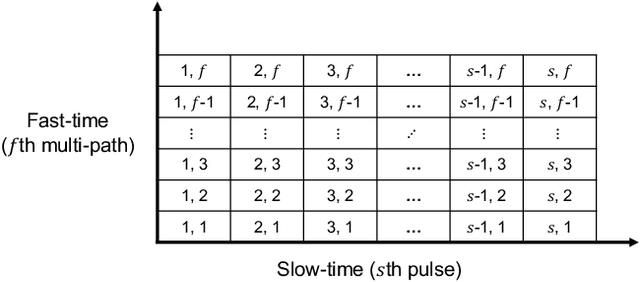
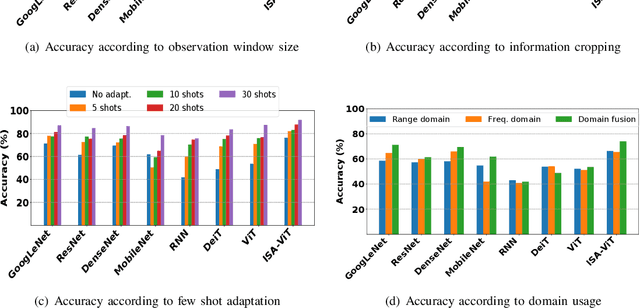
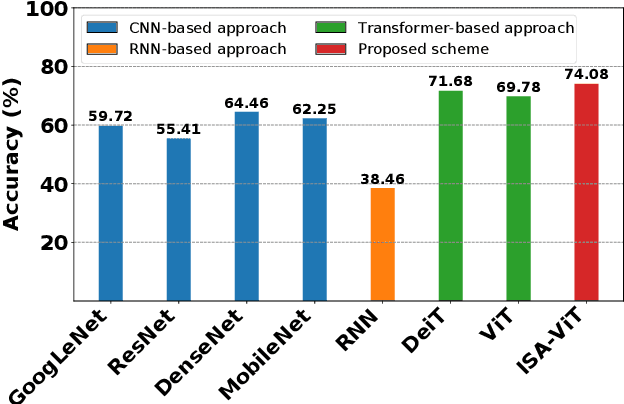
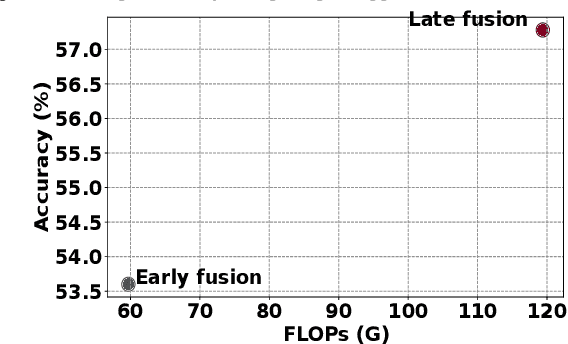
Distracted driving contributes to fatal crashes worldwide. To address this, researchers are using driver activity recognition (DAR) with impulse radio ultra-wideband (IR-UWB) radar, which offers advantages such as interference resistance, low power consumption, and privacy preservation. However, two challenges limit its adoption: the lack of large-scale real-world UWB datasets covering diverse distracted driving behaviors, and the difficulty of adapting fixed-input Vision Transformers (ViTs) to UWB radar data with non-standard dimensions. This work addresses both challenges. We present the ALERT dataset, which contains 10,220 radar samples of seven distracted driving activities collected in real driving conditions. We also propose the input-size-agnostic Vision Transformer (ISA-ViT), a framework designed for radar-based DAR. The proposed method resizes UWB data to meet ViT input requirements while preserving radar-specific information such as Doppler shifts and phase characteristics. By adjusting patch configurations and leveraging pre-trained positional embedding vectors (PEVs), ISA-ViT overcomes the limitations of naive resizing approaches. In addition, a domain fusion strategy combines range- and frequency-domain features to further improve classification performance. Comprehensive experiments demonstrate that ISA-ViT achieves a 22.68% accuracy improvement over an existing ViT-based approach for UWB-based DAR. By publicly releasing the ALERT dataset and detailing our input-size-agnostic strategy, this work facilitates the development of more robust and scalable distracted driving detection systems for real-world deployment.